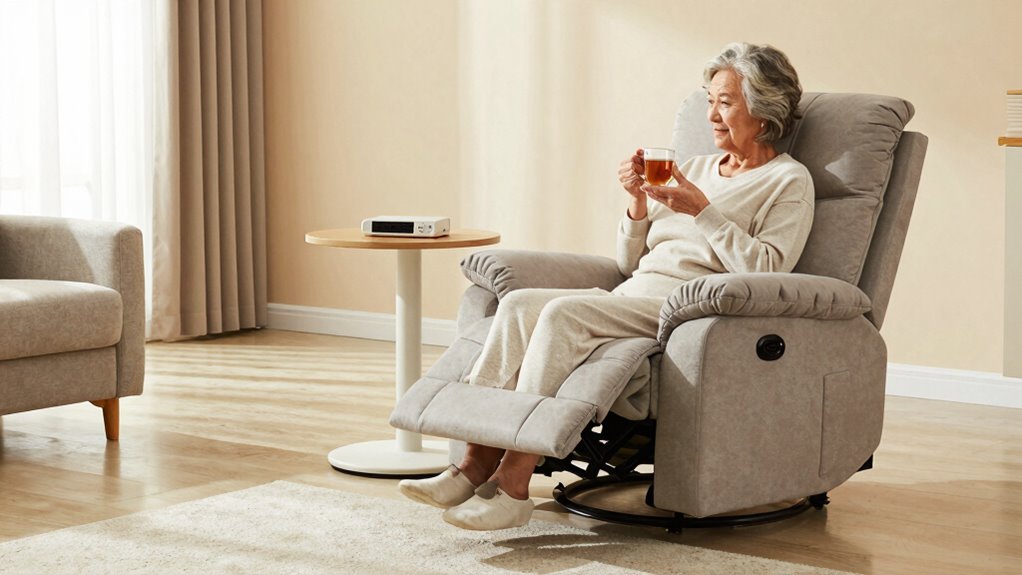

To make your home safer and easier to navigate, consider adding voice-activated or motion-sensor lighting to reduce the effort of turning lights on. Install grab bars near toilets and in showers for stability, and replace thresholds with ramps for smoother movement between rooms. Use lever-style door handles instead of knobs and guarantee pathways are clear of clutter and cords. These simple adjustments can boost your independence and comfort—keep going to discover even more helpful tips.

Get the little things that make your day delivered free with Prime
- Fast, free delivery on millions of items
- Prime Video, Amazon Music and more included
- Member-only deals all year
Key Takeaways
- Install motion-activated and touch-controlled lighting to reduce effort and improve visibility.
- Use lever-style door handles and low-threshold ramps for easier access and movement.
- Secure loose rugs and clear clutter to minimize trips and conserve energy.
- Incorporate assistive devices like grab bars with pressure sensors for stability.
- Reevaluate and adapt the home layout regularly to maintain safety and reduce physical strain.
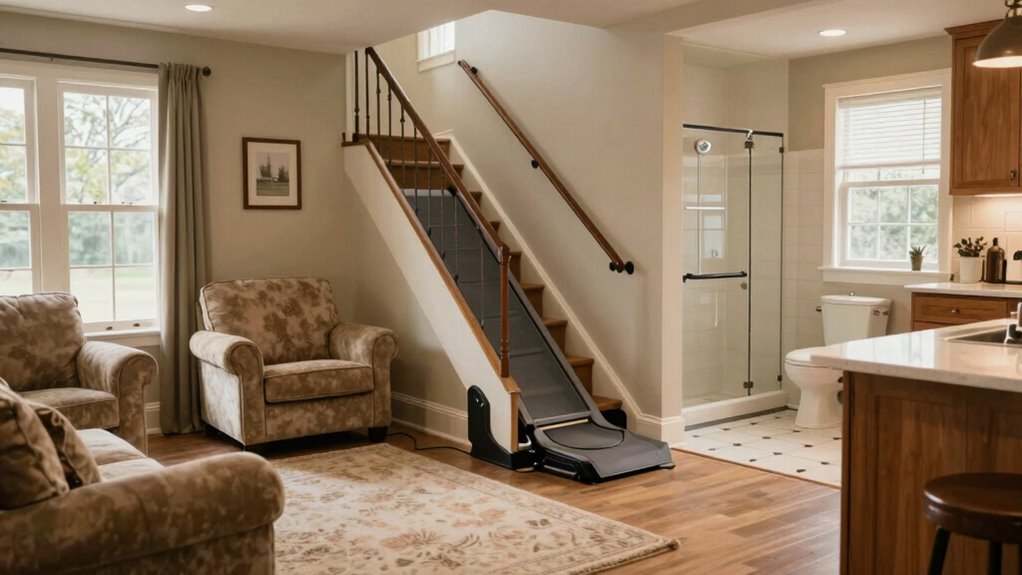
As you age, making simple adjustments to your home can markedly enhance safety and independence. If you find yourself tiring more easily, these modifications can help you move around comfortably and reduce the risk of falls or injuries. One of the most effective ways to support your changing needs is by incorporating assistive technology into your daily routine. Devices like voice-activated lighting, automated door openers, and easy-to-use remote controls can lessen physical effort and make tasks simpler. For example, motion-sensor lights eliminate the need to fumble with switches, providing immediate illumination when you enter a room. Similarly, assistive technology such as grab bars with pressure sensors or voice-activated systems can help you perform daily activities without exhausting yourself.
Incorporating assistive technology and simple home modifications enhances safety and independence as you age.
Safety modifications in your home are vital to create a supportive environment. Re-evaluating your space to remove tripping hazards can substantially decrease the likelihood of falls. Secure loose rugs, clear walkways of clutter, and ensure cords are tucked away. Installing grab bars near the toilet and in the shower provides stability, especially when you’re feeling tired or unsteady. You might also consider replacing traditional thresholds with low-profile ramps, making it easier to navigate between rooms or enter the house. Lever-style door handles are easier to operate than knobs, especially if your grip weakens over time. These small adjustments can make a big difference in how comfortably and safely you move around. Additionally, incorporating home safety assessments can help identify specific hazards tailored to your needs. Regularly updating your environment with ergonomic modifications can further enhance comfort and reduce strain, ensuring your home adapts to your evolving physical needs. Consulting professionals for home modifications can provide personalized solutions that maximize safety and accessibility.
Lighting plays an essential role in maintaining safety and reducing fatigue. Bright, evenly distributed lighting helps you see clearly without straining your eyes. Installing motion-activated or touch-controlled lighting in hallways, staircases, and bathrooms ensures you won’t have to fumble for switches in the dark. Additionally, using higher-wattage bulbs or daylight-spectrum bulbs can brighten spaces and improve visibility, which is especially helpful when you’re feeling tired. Consider adding nightlights in strategic locations to prevent accidental trips during nighttime visits to the bathroom. Incorporating projector technology into your home entertainment setup can also create a relaxing environment that requires minimal effort to enjoy, offering a calming distraction and entertainment option. Creating a well-lit environment is crucial for maintaining independence and minimizing fatigue during daily routines. Proper lighting design and placement are essential to reduce eye strain and promote safety throughout your home.
motion sensor LED nightlights for seniors
As an affiliate, we earn on qualifying purchases.
As an affiliate, we earn on qualifying purchases.
Frequently Asked Questions
How Do I Detect When My Loved One Needs Home Modifications?
You can detect when your loved one needs home modifications by observing signs of mobility challenges like difficulty walking or frequent falls, and vision impairments such as trouble seeing stairs or objects. Pay attention to their hesitation in certain areas or complaints about discomfort. If you notice these signs, it’s time to think about adjustments like grab bars, better lighting, or removing tripping hazards to make their home safer and more comfortable.
Are There Financial Assistance Programs for Senior Home Adjustments?
Yes, there are financial resources and government aid programs available to help fund senior home adjustments. You can explore options like Medicaid waivers, HUD programs, or local grants designed for home modifications. These programs often provide financial assistance specifically for modifications that improve safety and accessibility. Reach out to your local aging agency or social services office to learn about eligibility requirements and application procedures for these helpful resources.
How Often Should Home Safety Assessments Be Conducted?
You should schedule home safety assessments at least once a year, visualizing your space as a fortress protecting your wellbeing. During these check-ups, consider emergency preparedness plans and how technology integration can enhance safety. Regular assessments help identify hazards before they cause trouble, keeping your environment secure and comfortable. As your needs evolve, more frequent evaluations ensure your home remains a safe haven, allowing you to age in place confidently.
What Are the Best Types of Furniture for Seniors With Limited Energy?
You should choose ergonomic furniture and lightweight designs to support seniors with limited energy. Look for chairs with firm, supportive cushions and easy-to-reach armrests to reduce strain. Opt for lightweight tables and beds that are easy to move or adjust. These furniture types help seniors conserve energy, promote comfort, and make daily activities easier, ensuring their home remains safe and accessible without causing unnecessary fatigue.
How Can I Involve Seniors in Planning Their Home Adjustments?
Think of planning home adjustments as charting a shared journey. You can involve seniors by discussing their needs and preferences openly, encouraging their input on senior mobility and home technology integration. Walk through potential changes together, ask for their ideas, and respect their choices. This collaborative approach guarantees they feel empowered and comfortable, making the adjustments feel like a natural extension of their home, tailored perfectly to their lifestyle.
Conclusion
Making these home adjustments can truly transform your daily life, offering safety, comfort, and independence. Isn’t it worth creating a space that adapts to your needs, allowing you to enjoy each day to the fullest? By taking these simple steps, you’re not just modifying your home—you’re investing in your well-being and peace of mind. After all, isn’t feeling secure and comfortable in your own space what everyone deserves?
Halloween Picks
halloween
As an affiliate, we earn on qualifying purchases.