

Creating a personalized diet plan for seniors involves aligning meal timing, hydration, and nutrient intake with your unique health needs. Focus on eating regular, balanced meals and snacks to maintain energy and support digestion. Hydrate consistently throughout the day, using water and hydrating foods, to prevent dehydration and keep your body functioning well. By fine-tuning these routines, you’ll boost your overall health and vigor. Keep exploring to discover how to customize your plan even further.
Key Takeaways
- Tailor meal timing to optimize nutrient absorption and maintain stable blood sugar levels.
- Incorporate consistent meal intervals and healthy snacks to support digestion and energy.
- Prioritize hydration strategies, including fluids with meals and hydrating foods, to prevent dehydration.
- Adjust diet plans based on individual health conditions, activity levels, and personal preferences.
- Promote mindful eating routines to enhance nutrient utilization and overall well-being in seniors.
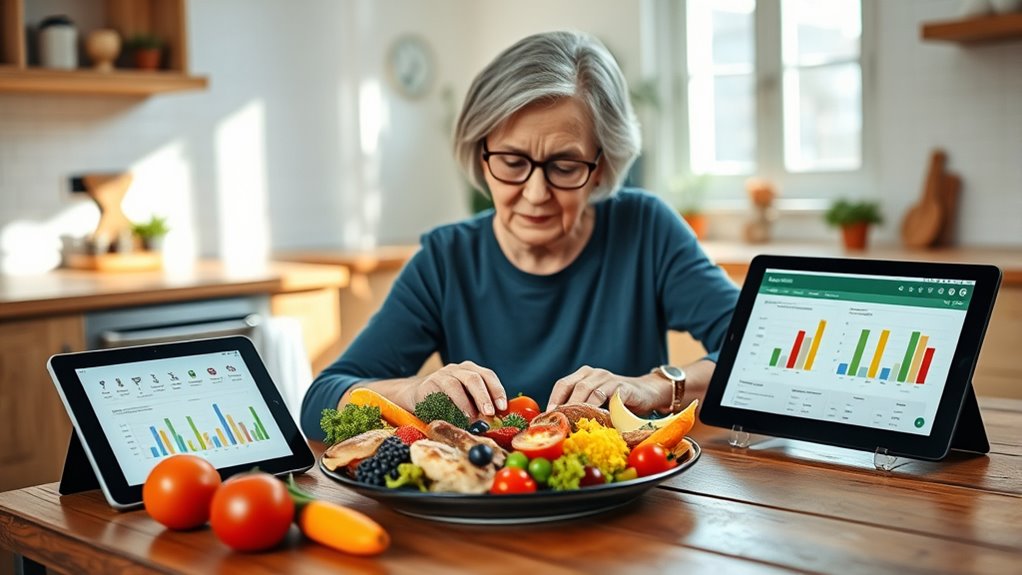
Have you ever wondered how to create a meal plan that supports your health and fitness goals? When it comes to nutrition planning for seniors, understanding the importance of meal timing and hydration strategies can make a significant difference. Proper meal timing ensures your body receives nutrients when it’s most ready to absorb them, helping maintain energy levels, support digestion, and prevent unnecessary weight fluctuations. Instead of eating sporadically, aim for regular meal intervals—such as three balanced meals and healthy snacks in between—to keep your blood sugar stable and avoid unnecessary hunger pangs. This consistency helps your digestive system stay efficient and allows your body to better utilize the nutrients from your food.
Consistent meal timing supports digestion, energy, and nutrient absorption for healthier aging.
Hydration strategies are equally critical as you plan your diet. As you age, your sense of thirst may diminish, increasing the risk of dehydration. To combat this, set specific hydration goals—such as drinking a glass of water with each meal and snack—and keep a water bottle nearby throughout the day. Incorporate a variety of fluids like herbal teas, infused waters, or broths to keep hydration interesting. Proper hydration not only supports digestion and nutrient absorption but also aids in maintaining skin health, joint lubrication, and overall energy levels. Remember, dehydration can sometimes mimic hunger, leading you to eat more than necessary, so staying well-hydrated helps regulate your appetite.
In your personalized diet plan, consider how meal timing and hydration strategies work together. For example, drinking a glass of water before meals can help control portion sizes and prevent overeating. Additionally, spreading out your fluid intake evenly throughout the day ensures your body remains well-hydrated without feeling overwhelmed at once. Pay attention to your body’s signals—if you feel thirsty or notice darker urine, these are signs you need to increase your fluid intake. Incorporating hydrating foods like fruits and vegetables, which provide additional nutrients and hydration, into your daily meals. Understanding the role of hydration in overall health**** can help motivate you to stay consistent with your fluid intake.
Balancing your meal timing with proper hydration creates a foundation for better digestion, sustained energy, and improved overall health. It’s about creating consistency and making mindful choices that suit your lifestyle. Keep track of how your body responds to different schedules and fluid intakes, adjusting as needed to optimize your health. When you prioritize these aspects, you’re setting yourself up for a more energetic, vibrant, and healthy life well into your senior years.
Frequently Asked Questions
How Often Should Seniors Update Their Personalized Diet Plans?
You should review and update your personalized diet plan at least once a year, or more often if you experience changes in health, age-related digestion, or medication. Regular updates ensure your dietary supplement timing aligns with your evolving needs. Keep an eye on how your body responds to your diet, and consult your healthcare provider to make necessary adjustments, promoting ideal health and nutrient absorption.
Are There Specific Nutrients Seniors Should Prioritize?
Picture your body as a well-tended garden, thriving with the right nutrients. You should prioritize vitamins like D and B12, which combat deficiencies, and minerals like calcium and magnesium to keep bones strong. Focusing on these guarantees your garden remains lush and healthy. By paying attention to your vitamin deficiencies and mineral intake, you help maintain energy, boost immunity, and support overall well-being as you age gracefully.
How Can Meal Plans Accommodate Medical Conditions?
You can accommodate medical conditions in meal plans by carefully selecting nutrient-rich foods that consider medication interactions and enhance nutrient absorption. For example, if you take blood thinners, limit vitamin K-rich foods, and if you have digestive issues, choose easily digestible options. Consult with healthcare providers to tailor your diet, ensuring that your meal choices support your health needs while avoiding foods that could interfere with medications.
What Are Quick and Healthy Snack Options for Seniors?
You want quick healthy bites that fuel your day and satisfy your taste buds. Opt for nutritious snack ideas like fresh fruit, Greek yogurt, or a handful of nuts. Include crunchy vegetables with hummus, whole-grain crackers with cheese, or boiled eggs. These options are simple, wholesome, and easy to prepare. They keep you energized, support your health, and make snacking both enjoyable and nutritious.
How to Ensure Hydration in Personalized Diet Plans?
To guarantee hydration in personalized diet plans, you should focus on increasing fluid intake through water, herbal teas, and hydrating foods like fruits and vegetables. Incorporate simple hydration strategies such as setting reminders to drink regularly and offering a variety of beverages to make it enjoyable. Monitoring fluid consumption helps prevent dehydration, especially for seniors with specific health needs, ensuring they stay well-hydrated throughout the day.
Conclusion
By tailoring diet plans to your unique needs, you can considerably improve your health and quality of life. Remember, seniors who follow personalized nutrition strategies are 30% more likely to maintain energy levels and prevent deficiencies. Embracing these customized plans helps you stay active and vibrant. So, take charge of your nutrition today—your body will thank you for it, and you’ll enjoy a healthier, more fulfilling life well into your later years.