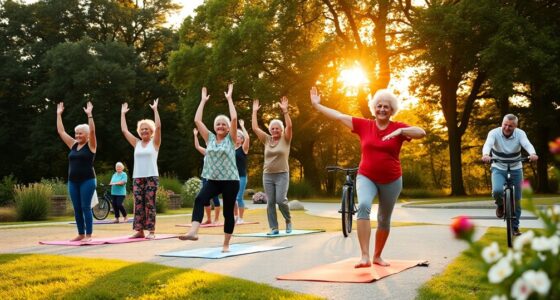
Engaging in low-impact activities like walking, swimming, or yoga can boost your strength, flexibility, and balance without putting too much stress on your joints. These exercises are gentle yet effective, making them perfect for beginners or anyone managing joint issues. By practicing regularly and staying mindful of your movements, you can enhance your overall well-being and prevent injuries. Keep exploring how incorporating mindfulness and proper nutrition can further support your fitness journey.
Key Takeaways
- Low-impact activities like yoga and swimming enhance strength, flexibility, and balance without stressing joints.
- Incorporating mindfulness during exercise improves focus, form, and reduces injury risk.
- These exercises support joint health and are suitable for beginners and individuals with joint issues.
- Combining proper nutrition and hydration boosts energy, recovery, and overall exercise effectiveness.
- Regular practice of low-impact activities promotes a sustainable, injury-free routine for long-term health benefits.
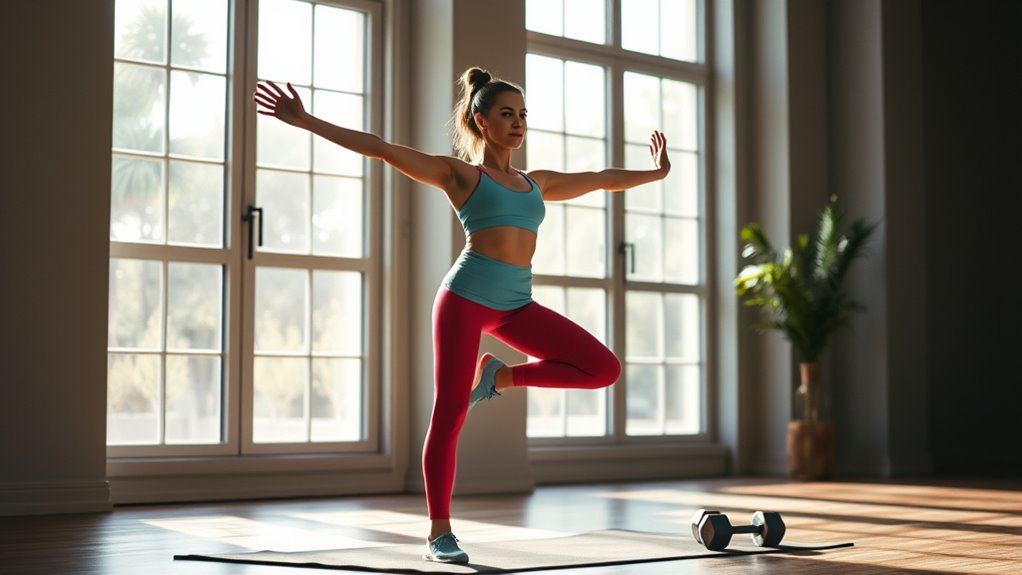
Have you ever wondered how regular exercise can transform your life? Incorporating low-impact activities into your routine offers a fantastic way to boost strength, flexibility, and balance without putting excessive stress on your joints. These exercises are ideal whether you’re just starting out or looking to maintain your fitness level safely. To get the most out of your efforts, combining mindfulness techniques with proper nutritional guidance can make a significant difference. Mindfulness helps you stay present during your workouts, encouraging better form and deeper focus, which reduces injury risk and enhances effectiveness. Paying attention to your breathing and body signals keeps you connected to how you feel, making each movement more purposeful and beneficial.
When you choose low-impact activities like walking, swimming, or yoga, you’re engaging muscles gently while still challenging your stability and flexibility. These exercises support your joints and tendons, making them perfect options for those with arthritis or joint issues. As you perform these movements, practicing mindfulness techniques allows you to notice tension or discomfort, so you can adjust accordingly and avoid overexertion. Over time, this mindful approach helps you develop a more intuitive sense of your body, improving your overall movement patterns and reducing the likelihood of injuries. Incorporating principles like comparative advantage can further optimize your activity choices by helping you focus on exercises that yield the most benefit with minimal strain.
Nutritional guidance plays an essential role in optimizing your exercise routine. Fueling your body with the right nutrients ensures you have enough energy for your workouts and aids in recovery afterward. Focus on a balanced diet rich in lean proteins, healthy fats, whole grains, and plenty of fruits and vegetables. Proper hydration is also vital, especially when engaging in consistent physical activity. When combined with mindfulness techniques, paying attention to how different foods and hydration levels affect your energy and performance can lead to smarter choices. For instance, you might notice that eating a small, nutritious snack before exercising helps you feel more energized, or that staying well-hydrated prevents fatigue and muscle cramps.
As you integrate these elements into your low-impact exercise routine, you’ll likely find that your strength, flexibility, and balance improve steadily. Consistency is key, and listening to your body through mindfulness techniques keeps you motivated and safe. Remember, the goal isn’t to push yourself to exhaustion but to cultivate a sustainable habit that promotes overall well-being. With mindful attention and proper nutrition, your low-impact workouts become more than just physical activity—they become a pathway to a healthier, more balanced life.
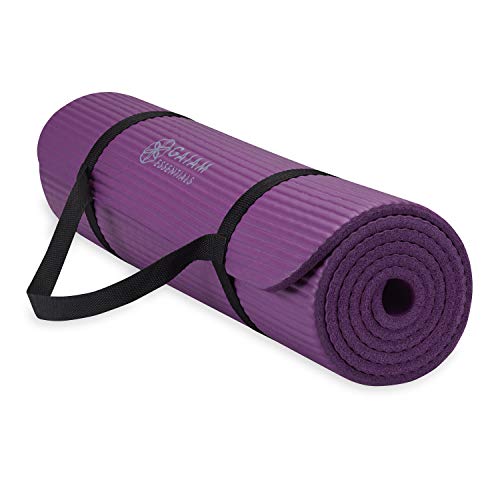
Gaiam Essentials Thick Yoga Mat Fitness & Exercise Mat with Easy-Cinch Carrier Strap, Purple, 72"L X 24"W X 2/5 Inch Thick, 10mm
Extra-Thick Cushioning for Joint Comfort : Made with 10mm (2/5") high-density NBR foam, this mat delivers plush cushioning…
As an affiliate, we earn on qualifying purchases.
As an affiliate, we earn on qualifying purchases.
Frequently Asked Questions
Can Low-Impact Exercises Help With Chronic Joint Pain?
Yes, low-impact exercises can help with joint pain management. They strengthen muscles around your joints, improve flexibility, and support better balance, all of which diminish stress on painful joints. Just guarantee you follow exercise safety guidelines to prevent injury. Start slowly, listen to your body, and consult a healthcare professional if needed. Incorporating these activities into your routine can make a positive difference in managing chronic joint pain.
How Often Should I Do Low-Impact Workouts for Best Results?
Ever wondered how often you should exercise to see real benefits? For best results, aim for low-impact workouts 3 to 5 times a week. Consistency is key, so find a routine that fits your schedule and stick with it. Regular exercise frequency helps improve strength, flexibility, and balance over time, reducing joint pain and boosting your overall well-being. Keep at it, and you’ll notice the positive changes!
Are Low-Impact Activities Suitable for Seniors or Those With Mobility Issues?
Yes, low-impact activities are suitable for seniors and those with mobility issues. They offer age-appropriate activities and mobility-friendly options that help improve strength, flexibility, and balance without straining your joints. You can try chair exercises, gentle yoga, or water aerobics, which are all safe and effective. Always consult your healthcare provider first, and choose activities that match your comfort level and mobility needs.
What Equipment Is Needed for Low-Impact Strength and Flexibility Exercises?
You only need a few pieces of equipment for low-impact strength and flexibility exercises. Resistance bands are perfect for building strength without straining your joints, while a yoga mat provides cushioning for floor exercises and stretches. Both are lightweight, affordable, and easy to store. With just these, you can perform a variety of effective routines that improve your flexibility, balance, and overall strength safely and comfortably at home or in a class.
Can Low-Impact Exercises Improve Athletic Performance or Prevent Injuries?
Studies show that low-impact exercises can boost muscle endurance by up to 30%, enhancing your athletic performance and reducing injury risk. By improving cardiovascular health and strengthening stabilizer muscles, these activities help prevent strains and falls. Incorporate activities like swimming or yoga regularly, and you’ll notice better agility, resilience, and overall athletic ability. So, yes, low-impact exercises are a smart way to elevate performance while minimizing injury chances.

Sunlite Sports Swimming Kickboard with Ergonomic Grip Handles, One Size Fits All, for Children and Adults, Pool Training Swimming Aid, for Beginner and Advanced Swimmers
ERGONOMIC GRIP HANDLES – Featuring two ergonomic grip handle cutouts with grooves for your fingers, this kickboard allows…
As an affiliate, we earn on qualifying purchases.
As an affiliate, we earn on qualifying purchases.
Conclusion
So, as you discover the joy of low-impact activities, it’s funny how staying active naturally fits into your daily routine. You might find yourself stretching in the morning or walking during lunch, and suddenly, those small moments boost your strength, flexibility, and balance. It’s almost like the universe nudges you toward better health without much effort. Embrace these simple exercises, and you’ll likely notice a surprising boost in your overall well-being—just when you least expect it.

Merach Rocking Steppers for Exercise at Home, 3D Motion Stair Stepper with Resistance Bands for Full Body Workout & Low-Impact Balance Board, 330 LBS Loading Capacity Exercise Equipment(Black)
Lateral Rocking Motion: Unlike Standard Up-And-Down Steppers. The Side-To-Side Rocking Motion Specifically Activates The Hips, Thighs, Glutes, And…
As an affiliate, we earn on qualifying purchases.
As an affiliate, we earn on qualifying purchases.

Allura & Arcia 52 Stress Less & Self Care Cards – Mindfulness & Meditation Exercises – Anxiety Relief & Relaxation
52 EASY EXERCISES FOR EVERYONE: This unique Self Care Deck contains 52 extremely effective exercises for mindfulness, meditation,…
As an affiliate, we earn on qualifying purchases.
As an affiliate, we earn on qualifying purchases.