

To create a restful sleep environment, keep your room cool, dark, and quiet to support your sleep stages. Avoid caffeine, heavy meals, and alcohol before bed, as they can disturb your rest. Turn off screens an hour before sleep to reduce blue light, which interferes with melatonin production. Consistent routines and small adjustments to your space can make a big difference. If you want to learn more about optimizing your sleep setup, keep going for helpful tips.
Key Takeaways
- Keep your bedroom cool, dark, and quiet to promote deep, uninterrupted sleep.
- Use blackout curtains and eliminate noise with earplugs or white noise machines.
- Avoid screens and blue light at least an hour before bedtime to support melatonin production.
- Choose comfortable bedding and maintain a clean, clutter-free sleep space.
- Limit caffeine, alcohol, and heavy meals before bed to prevent sleep disruptions.
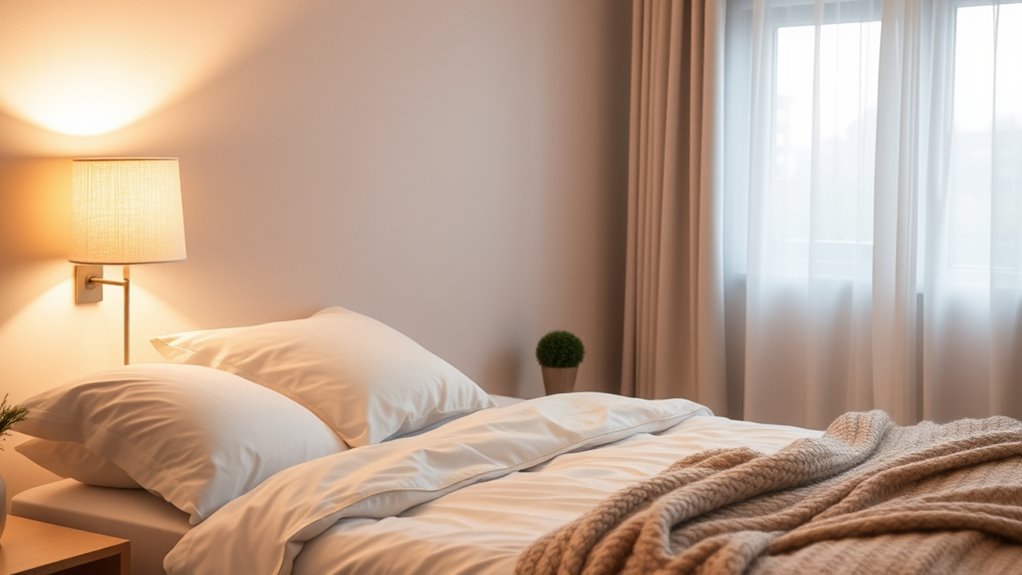
Have you ever wondered why some nights you wake up feeling refreshed while others leave you exhausted? The secret often lies in your sleep hygiene—the habits and environment that influence the quality of your rest. One pivotal aspect is understanding your sleep cycle. Your sleep isn’t just about hours clocked; it involves a series of stages that cycle throughout the night. These stages include light sleep, deep sleep, and REM sleep, each serving an essential purpose for your physical and mental health. When you disrupt this cycle—by irregular sleep times, inconsistent routines, or poor sleep environments—you risk waking up feeling groggy and unrested. Creating a consistent sleep cycle means going to bed and waking up at the same times every day, helping your body establish a natural rhythm. This regularity supports smoother transitions through the sleep stages, leading to more restorative sleep and waking up feeling truly refreshed.
Nighttime routines also play a significant role in maintaining your sleep hygiene. Establishing calming pre-sleep habits signals your brain that it’s time to wind down, making it easier to fall asleep and stay asleep. For instance, turning off screens at least an hour before bed minimizes exposure to blue light, which can interfere with melatonin production—the hormone responsible for regulating sleep. Incorporating relaxing activities like reading, gentle stretching, or listening to soothing music can further prepare your body for rest. Consistency is key here; sticking to a routine every night reinforces your body’s natural cues, making it easier to shift into restful sleep.
Your sleep environment, while not part of the subtopic, intertwines with your routines and cycle. A cool, dark, and quiet room supports your body’s natural sleep processes, preventing disturbances that could fragment your sleep stages. Avoiding caffeine, heavy meals, and alcohol close to bedtime also helps maintain your sleep cycle’s integrity, ensuring you progress seamlessly through each stage. Over time, these small adjustments bolster your sleep quality, helping you wake up feeling energized rather than drained.
Frequently Asked Questions
How Does Room Temperature Affect Sleep Quality?
You notice that room temperature greatly influences your sleep quality. When climate control and temperature regulation are optimized, typically between 60-67°F (15-19°C), you fall asleep faster and stay asleep longer. Too hot or too cold disrupts your sleep cycles, making it harder to rest deeply. By maintaining a comfortable environment, you help your body regulate itself naturally, leading to more restorative sleep and waking up refreshed.
Can Plants Improve My Sleep Environment?
Yes, plants can improve your sleep environment. They offer plant benefits like releasing oxygen and increasing humidity, which can boost your sleep quality. Plus, having greenery nearby can reduce stress and promote relaxation, making it easier to fall asleep. Just choose low-maintenance plants like snake plants or peace lilies, and place them in your bedroom to enjoy these benefits without cluttering your space.
What’s the Ideal Lighting for Sleep?
Imagine trying to sleep in a lighthouse—bright, relentless, impossible to ignore. That’s what high light intensity feels like. Your ideal sleep lighting is dim, soft, and calming. Use blackout curtains to block out streetlights and early dawn. Keep your room dark, cozy, and free of bright screens. Your eyes and brain will thank you, allowing you to drift into restful sleep without the lighthouse beam ruining your night.
Do Sound Machines Really Enhance Sleep?
Yes, sound machines can really enhance your sleep. They produce white noise or ambient sounds that mask disruptive noises, helping you fall asleep faster and stay asleep longer. By creating a consistent, soothing background, these machines reduce sudden sounds that might wake you up. If you struggle with noise disruptions, using a sound machine with calming white noise or gentle ambient sounds can markedly improve your overall sleep quality.
How Often Should I Change My Bedding?
Think of your bedding as a garden that needs regular tending. You should change your bedding materials at least once a week, or more if you sweat heavily or have allergies. Laundry frequency keeps dust mites and bacteria at bay, creating a cleaner sleep zone. Regularly swapping out sheets and pillowcases guarantees your sleep environment stays fresh, cozy, and inviting—making every night feel like a peaceful retreat.
Conclusion
By building a beautiful, breezy bedtime basin, you bolster better sleep and banish bothersome barriers. Keep your space serene, switch off screens, and stay consistent. Creating a calming, clutter-free cocoon makes nighttime nurturing natural. Remember, restful nights result from deliberate decor and dedicated discipline. So, step softly into your sanctuary, and let the soothing silence sweep you into a sweet, satisfying slumber. Sleep soundly, succeed surely, and savor the serenity of a well-crafted sleep space.