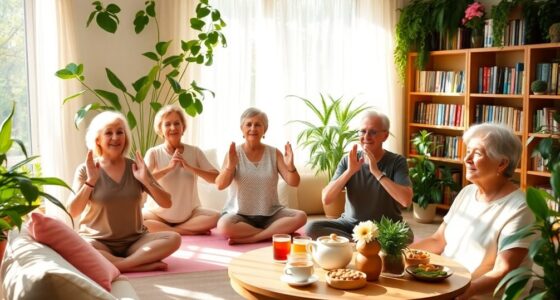
To manage stress effectively, try combining simple techniques like slow, deep breathing exercises, meditation, and aromatherapy with calming essential oils like lavender or chamomile. Laughter therapy, such as watching funny videos or sharing jokes, can boost your mood and reduce stress hormones. These strategies work best when integrated into your daily routine, promoting emotional stability and relaxation. Keep exploring these methods further to discover personalized ways to enhance your well-being.
Key Takeaways
- Incorporate deep breathing exercises, such as inhale for four seconds, hold, and exhale slowly to activate relaxation responses.
- Practice daily meditation, like guided or breath-focused sessions, to reduce anxiety and improve emotional resilience.
- Use aromatherapy with calming essential oils like lavender or chamomile to create a soothing environment for stress relief.
- Engage in laughter therapy through funny movies or social activities to boost endorphins and lower stress hormones.
- Combine multiple techniques—breathing, meditation, aromatherapy, and laughter—for a holistic approach to managing stress effectively.
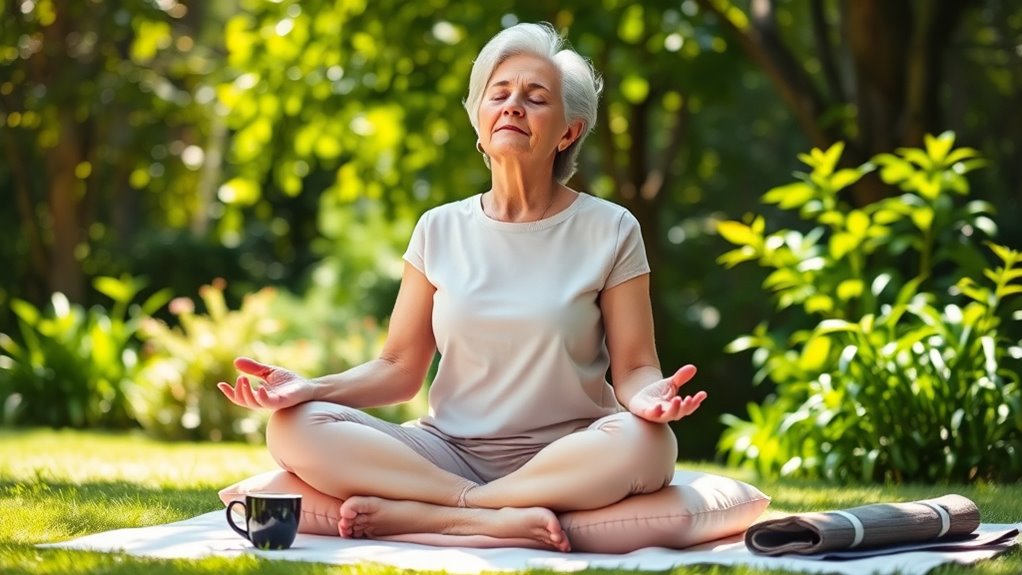
As you age, managing stress becomes increasingly important for maintaining your overall well-being. Stress can take a toll on your physical health, mental clarity, and emotional stability, so finding effective techniques to keep it in check is essential. One approach that many seniors find helpful is aromatherapy relaxation. Using essential oils like lavender, chamomile, or eucalyptus during meditation or simply diffusing them in your living space can create a calming environment. The soothing scents help lower cortisol levels, reduce anxiety, and promote a sense of peace. Aromatherapy isn’t just pleasant; it’s a powerful tool to ease tension and foster relaxation, especially when combined with deep breathing exercises or gentle stretches. Incorporating knowledge about industry transformations, such as advancements in aromatherapy products, can help you select the most effective and safe options for your needs. Laughter therapy is another simple yet profound way to manage stress. It might sound trivial, but laughter triggers the release of endorphins, your body’s natural feel-good chemicals. When you laugh, your heart rate increases slightly, and you breathe more deeply—both of which help reduce stress hormones like cortisol and adrenaline. Incorporating laughter therapy into your routine can be as easy as watching a funny movie, sharing jokes with friends, or engaging in activities that make you smile. Over time, laughter becomes a natural antidote to tension, helping you feel more resilient against daily worries. Breathing exercises serve as a cornerstone of effective stress management. When you focus on slow, deep breaths, you activate your parasympathetic nervous system, which signals your body to relax. Try inhaling slowly through your nose for a count of four, holding your breath for a count of four, then exhaling gently through your mouth for another four counts. Repeat this cycle several times to calm your mind and reduce physical symptoms of stress, such as rapid heartbeat or muscle tension. Combining mindful breathing with aromatherapy or laughter therapy amplifies their benefits, creating a holistic approach to relaxation. Meditation is another powerful technique that sharpens your focus and calms your mind. Even just a few minutes daily can reduce feelings of anxiety and improve your mood. You might sit quietly, close your eyes, and concentrate on your breath or a calming word or phrase. Guided meditations, available through apps or recordings, can help you stay focused and deepen your practice. Integrating meditation with other stress-relief methods like aromatherapy and laughter therapy can provide a thorough approach that enhances your emotional resilience and overall health.
Frequently Asked Questions
Are There Specific Breathing Techniques Recommended for Seniors?
Yes, there are gentle breathing techniques recommended for seniors. You can try adaptive techniques like deep diaphragmatic breathing, where you breathe slowly through your nose, expanding your abdomen, and then exhale gently through your mouth. These methods help reduce stress and improve relaxation. Practice these breathing exercises regularly, and adjust them to your comfort level to maximize their calming effects and support your overall well-being.
How Does Meditation Benefit Seniors Differently Than Younger Adults?
Meditation benefits you as a senior by enhancing your mindfulness practice and emotional resilience more deeply than in younger adults. It helps you stay present, manage aging-related stress, and improve mood. Regular meditation can reduce feelings of loneliness and boost mental clarity. As you age, these benefits become more essential, supporting your overall well-being and helping you navigate life’s changes with greater calm and emotional strength.
Can Stress Management Improve Seniors’ Sleep Quality?
You bet stress management can be a game-changer for your sleep quality. When you actively practice stress reduction techniques like meditation or deep breathing, you help your body relax and unwind, making it easier to fall asleep and stay asleep. This “peace of mind” approach promotes sleep improvement by calming your mind and reducing anxiety, so you wake up feeling refreshed and ready to face the day.
Are There Any Risks Associated With Meditation for Seniors?
Meditation is generally safe for seniors, but you should be aware of some risks related to meditation safety and senior health concerns. If you have cognitive issues, severe anxiety, or certain medical conditions, meditation might cause discomfort or exacerbate symptoms. Always consult your healthcare provider before starting new practices. Ensuring gentle techniques and guided sessions can help you enjoy meditation’s benefits while minimizing potential risks related to senior health concerns.
How Can Family Members Support Seniors in Stress Management?
Think of supporting seniors like tending a garden—you nurture emotional support and social engagement to help stress fade away. You can listen actively, encourage participation in social activities, and check in regularly. For example, inviting them to join a club or simply sharing a heartfelt conversation shows you care. Your involvement boosts their emotional resilience, making stress easier to manage and helping their well-being flourish.
Conclusion
By embracing these stress management techniques, you’re like a skilled gardener tending to your inner peace, gently pruning worries and nurturing calm. Just as a river flows around stones, let breathing and meditation guide you smoothly through life’s challenges. Remember, you hold the brush to paint a serene, resilient life. With patience and practice, you’ll find your own oasis of tranquility, where stress dissolves like mist in the morning sun.