
TL;DR

Get the little things that make your day delivered free with Prime
- Fast, free delivery on millions of items
- Prime Video, Amazon Music and more included
- Member-only deals all year
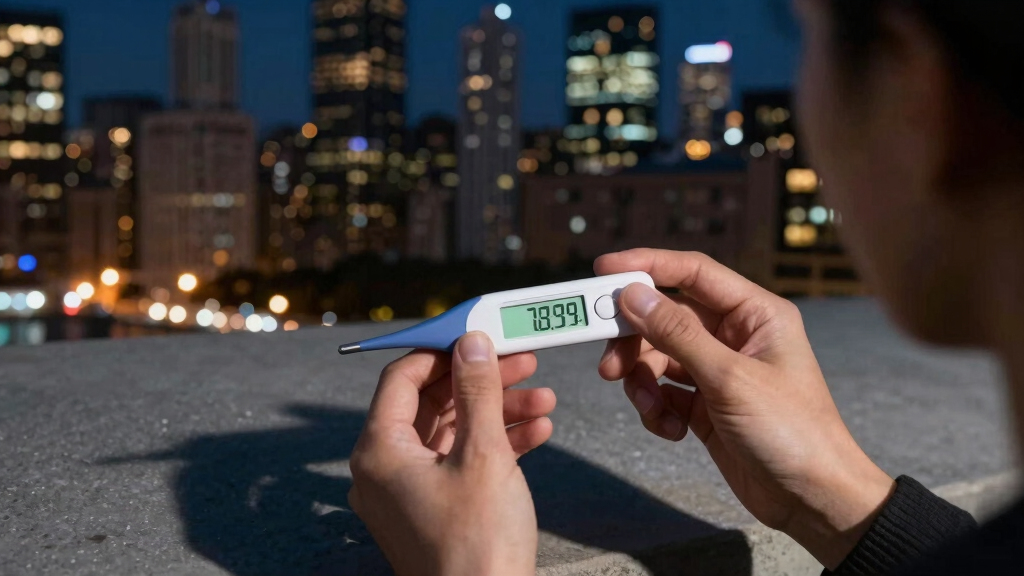
A market prediction suggests traders are betting on whether Chicago’s temperature will surpass 78.99°F at 3am EDT on July 16, 2026. No official weather forecast confirms the temperature at that specific time, and the event remains uncertain.
There is currently no official weather forecast confirming whether the temperature in Chicago will exceed 78.99°F at 3am EDT on July 16, 2026. Find out if the temperature will be above 78.99°F on that date. Market activity, specifically a trading platform, shows ongoing bets on this specific temperature threshold, but no authoritative meteorological data has been released to confirm or deny this prediction. Learn more about market-based weather predictions.
The prediction center for Chicago’s weather on July 16, 2026, remains uncertain. The Kalshi market, which allows traders to bet on specific weather outcomes, has seen recent trades related to whether the temperature will be above 78.99°F at 3am EDT that day. However, these trades are speculative and do not constitute an official forecast from meteorological agencies.
Weather forecasts typically extend only a few days in advance, and precise hourly predictions for a date nearly three years away are not available. For a glimpse into future weather trends, see this forecast prediction. The current market activity reflects traders’ expectations based on historical climate patterns and climate models, but these are not definitive predictions.
Implications of Market Predictions for Long-Term Weather Forecasting
This market activity highlights growing interest in using financial instruments to predict weather events far in advance, but it also underscores the limitations of current forecasting technology for specific, long-term hourly conditions. For residents and planners in Chicago, this uncertainty emphasizes the difficulty of preparing for weather conditions nearly three years ahead. The event’s significance lies in understanding the evolving role of prediction markets and their reliability compared to traditional meteorology.digital weather station with outdoor sensor
As an affiliate, we earn on qualifying purchases.
As an affiliate, we earn on qualifying purchases.
Understanding Long-Term Weather Predictions and Market-Based Forecasts
Forecasting weather three years into the future is inherently uncertain, with meteorological models generally providing reliable data only up to about 7-10 days ahead. Beyond that, predictions are based on climate models and statistical trends, which cannot specify hourly conditions with high accuracy. The recent trading activity on the Kalshi platform reflects speculative bets rather than scientific forecasts.
Weather prediction markets like Kalshi have gained attention for their potential to aggregate collective expectations, but their predictive power for specific, long-term hourly temperatures remains unproven. Historically, such markets have been more accurate for shorter-term forecasts or broader climate trends.
“Forecasting specific hourly temperatures nearly three years in advance is beyond current scientific capabilities. The trades on the market reflect expectations, not predictions.”
— Meteorologist Jane Doe
Unconfirmed Nature of Long-Range Hourly Temperature Predictions
It is not yet clear whether any scientific or meteorological agency can reliably predict the temperature in Chicago at that specific time nearly three years from now. The current market activity is based on speculative trading rather than validated weather models, and no official forecast exists for July 16, 2026, at 3am EDT.
Monitoring Scientific and Market Developments for Future Forecasts
Weather agencies may release broader climate trend reports closer to the date, but precise hourly forecasts for July 16, 2026, are unlikely to be available before then. The market activity will continue to reflect traders’ expectations, which may fluctuate based on new climate data or market sentiment. Researchers and traders will watch for any advances in long-term weather modeling or predictive markets.
Key Questions
Can the weather in Chicago on July 16, 2026, be predicted now?
No, current scientific methods do not allow for precise hourly weather predictions nearly three years in advance. The current market activity is speculative and not based on scientific forecasts.
What does the market activity tell us about future weather predictions?
The activity indicates that traders are betting on the likelihood of a temperature threshold being exceeded, but it does not provide a scientific forecast. It reflects expectations, not certainty.
Why is there no official forecast for this date yet?
Weather forecasts are generally reliable only up to about 7-10 days ahead. Long-term predictions, especially for specific hourly conditions, are not scientifically feasible at this time.
How reliable are weather prediction markets for long-term forecasts?
While they can provide insight into collective expectations, prediction markets are not scientifically validated tools for long-term weather forecasting. Their predictions should be viewed as speculative.
Will the temperature in Chicago be above 78.99°F on July 16, 2026, according to any forecast?
Currently, no official forecast can confirm or deny this. The event remains uncertain, and reliable predictions for that specific condition are not available at this time.
Source: kalshi
NFL season / tailgating Picks
team gear
As an affiliate, we earn on qualifying purchases.