When remodeling your bathroom for safety and accessibility, focus on proper lighting, like layered, motion-activated fixtures, to prevent slips and improve visibility. Upgrade plumbing with corrosion-resistant pipes and install fixtures designed for easy use, such as lever handles and low-threshold showers. Incorporate safety features like grab bars, non-slip flooring, and wider doorways. Combining these elements guarantees a secure, functional space that’s welcoming for everyone. Stay tuned to learn how to seamlessly integrate these features into your project.
Key Takeaways
- Incorporate proper lighting layers, including motion-activated fixtures, to enhance visibility and prevent accidents.
- Upgrade plumbing with corrosion-resistant pipes and safety features like thermostatic valves for reliable, safe water flow.
- Install accessibility features such as grab bars, non-slip flooring, and wider doorways to improve safety and ease of use.
- Integrate high-tech safety solutions like sensor lighting and automatic fixtures seamlessly into the bathroom design.
- Collaborate with professionals to ensure compliance with safety standards and create a cohesive, accessible remodeling plan.
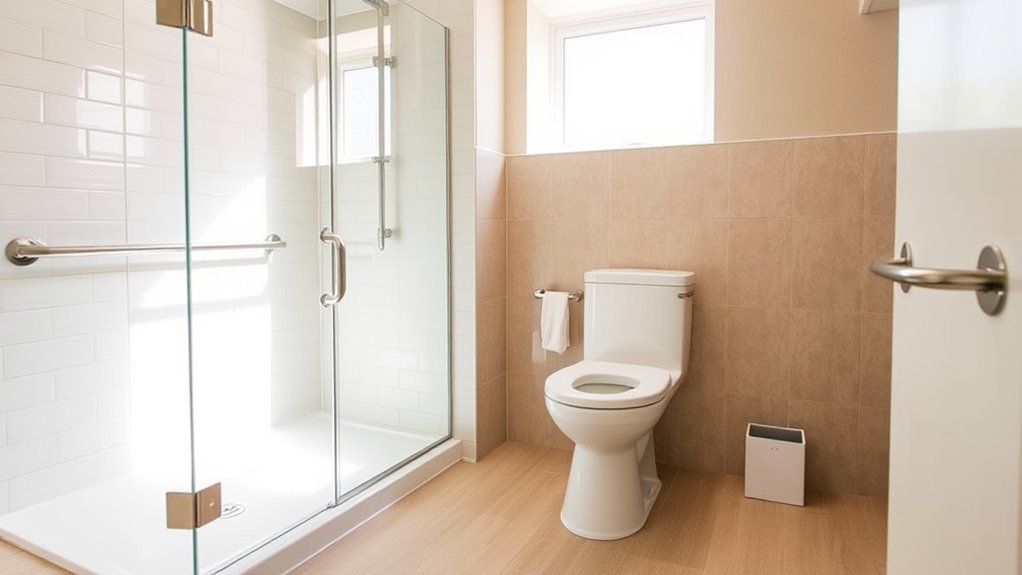
Remodeling your bathroom can transform a functional space into a relaxing retreat, but it requires careful planning and decision-making. One of the key aspects to contemplate is creating a space that’s both safe and accessible, especially if you or someone in your household has mobility challenges. To achieve this, start with lighting design—good lighting isn’t just about brightness; it’s about ensuring every corner is well-lit to prevent slips or falls. Incorporate layered lighting with a mix of overhead lights, task lighting around mirrors, and possibly motion-activated fixtures. This not only enhances visibility but also adds ambiance, making your bathroom safer and more inviting.
Smart lighting and thoughtful design make your bathroom safer and more inviting.
Equally important are plumbing upgrades. Outdated or improperly installed plumbing can lead to leaks, water damage, or difficulty in using fixtures safely. When remodeling, think about replacing old pipes with modern, corrosion-resistant materials, and install fixtures designed for safety. Low-threshold showers, walk-in tubs, or curb-free entries can considerably reduce tripping hazards. Upgrading to pressure-balanced or thermostatic valves helps prevent sudden temperature changes that could cause burns or discomfort. These plumbing improvements make the space not just more functional but also safer for everyone.
Designing your bathroom with accessibility in mind means paying attention to details like grab bars, non-slip flooring, and wider door openings. When planning lighting, think about how it interacts with these features—bright, even illumination around grab bars and shower areas helps users feel more secure. For plumbing, ensure fixtures are reachable and easy to operate, with lever handles rather than knobs, which can be difficult to turn for some users. These small but meaningful modifications create a space that’s easier and safer to use daily.
Additionally, incorporating high-tech safety features such as sensor-activated lighting or automatic fixtures can further enhance safety and convenience. As you plan your remodel, don’t overlook the importance of integrating safety features seamlessly into your overall design. Effective lighting design can highlight safety features and make the space visually appealing, while plumbing upgrades ensure reliable, safe operation of all fixtures. Together, these elements contribute to a bathroom that prioritizes safety without sacrificing style or comfort. Remember to work with professionals who understand accessibility standards and local building codes to ensure your renovation meets all safety requirements. By combining thoughtful lighting, strategic plumbing upgrades, and accessibility features, you can create a bathroom that’s both beautiful and safe for years to come.

Merexcint LED Modern Bathroom Vanity Light Fixtures 3-Light, 19 inch 3CCT Dimmable Nickel Motion Sensor Vanity Lights for Bathroom Lighting Fixtures Over Mirror, with 350° Rotatable Acrylic Heads
Motion Sensor Vanity Lights: Turn the switch to the right to activate motion sensor mode, automatically turning on…
As an affiliate, we earn on qualifying purchases.
As an affiliate, we earn on qualifying purchases.
Frequently Asked Questions
What Are the Latest Trends in Accessible Bathroom Designs?
You’ll love the latest accessible bathroom design trends, like walk-in showers with no-threshold entry and built-in seating. You can also incorporate features like grab bars that blend seamlessly into the decor for safety without sacrificing style. Many designs now include a combined bathtub shower, offering versatility and ease of use. These updates make your bathroom safer and more functional while maintaining a modern, attractive look.
How Can I Finance a Bathroom Remodeling Project?
Thinking about financing your bathroom remodel? Why not explore various options to fit your bathroom budget? You can consider personal loans, home equity lines of credit, or credit cards with promotional rates. Have you checked with your bank or credit union? These financing options can help you manage costs easily, making your dream bathroom a reality without upfront financial strain. Which method suits your financial situation best?
What Permits Are Required for Bathroom Modifications?
You need to check your local building codes to determine the permits required for bathroom modifications. Typically, you’ll need a building permit, especially if you’re doing major changes like plumbing or electrical work. The permit process involves submitting plans and paying fees. Contact your city or county building department to get specific requirements and make sure your project complies with all regulations, avoiding potential fines or delays.
How Long Does a Typical Bathroom Remodel Take?
It usually takes about 2 to 4 weeks to complete a bathroom remodel, so you’re not biting off more than you can chew. During this time, you’ll be updating bathroom fixtures, choosing lighting options, and making your space safer and more accessible. Keep in mind, factors like scope and permits can influence the timeline, but with good planning, you’ll have your dream bathroom in no time.
What Are the Most Cost-Effective Safety Upgrades?
To upgrade your bathroom cost-effectively, focus on installing grab bars and non-slip flooring. Grab bars provide essential support and prevent falls, while non-slip flooring reduces slipperiness, especially when wet. These upgrades are affordable, easy to install, and markedly enhance safety. You can often do these yourself or hire a handyman, making them a smart investment for creating a safer, more accessible bathroom without breaking the bank.

TAILI Grab Bars for Bathtubs and Showers 2 Pack Suction Grab Bar, Heavy Duty Shower Handle Removable Bath Handrails for Seniors and Elderly, Bathroom Safety Grip No Drilling Waterproof,Grey
Matters need Attention: Only suitable for tiles measuring 4×4 inches or larger. For the safety of the seniors…
As an affiliate, we earn on qualifying purchases.
As an affiliate, we earn on qualifying purchases.
Conclusion
By remodeling your bathroom for safety and accessibility, you’re paving a smooth pathway through your daily routine. Think of it as planting a sturdy tree—its roots grow deep, supporting every step you take. When you prioritize safety, you’re not just fixing a space; you’re crafting a sanctuary where confidence blossoms. With every thoughtful upgrade, you turn your bathroom into a oasis that welcomes you home, safe and sound, rain or shine.

Nexus Self Adhesive 12-Inch Vinyl Floor Tiles, 20 Tiles – 12" x 12", Bianco Marble Pattern – Peel & Stick, DIY Flooring for Kitchen, Dining Room, Bedrooms & Bathrooms by Achim Home Decor
Nexus Vinyl Tiles: Refresh your home for a low cost and no hassle with the Nexus Vinyl Floor…
As an affiliate, we earn on qualifying purchases.
As an affiliate, we earn on qualifying purchases.

KOLET Offset Door Hinges, 4 Inches Expandable Door Hinges, 1/4" Radius Corner Ball Bearing Hinges, 2 Inches Widen Doorway, Smooth and Easy Installation, Matte Black, 3 Packs
NO SQUEAK AND SMOOTH OPENING – Different than regular offset hinges, our ball bearing offet door hinges comes…
As an affiliate, we earn on qualifying purchases.
As an affiliate, we earn on qualifying purchases.