
To enhance safety at home, you can install grab bars in bathrooms, replace knobs with lever handles, and add non-slip mats in wet areas. Focus on hardware that’s easy to operate and slip-resistant to prevent falls. Securing hinges and fixtures also makes daily tasks easier and safer. Small hardware tweaks make a big difference in independence and safety—keep exploring to discover even more simple upgrades that can protect your loved ones.
Key Takeaways
- Install lever-style door handles and easy-to-open hinges to minimize grip strength requirements.
- Use wall-mounted pull handles and grab bars in bathrooms and hallways for added support.
- Incorporate threshold-free doorways and low-threshold entries to improve wheelchair and walker access.
- Select hardware with textured, slip-resistant surfaces for enhanced grip and safety.
- Regularly inspect and maintain hardware to ensure stability and prevent accidents.
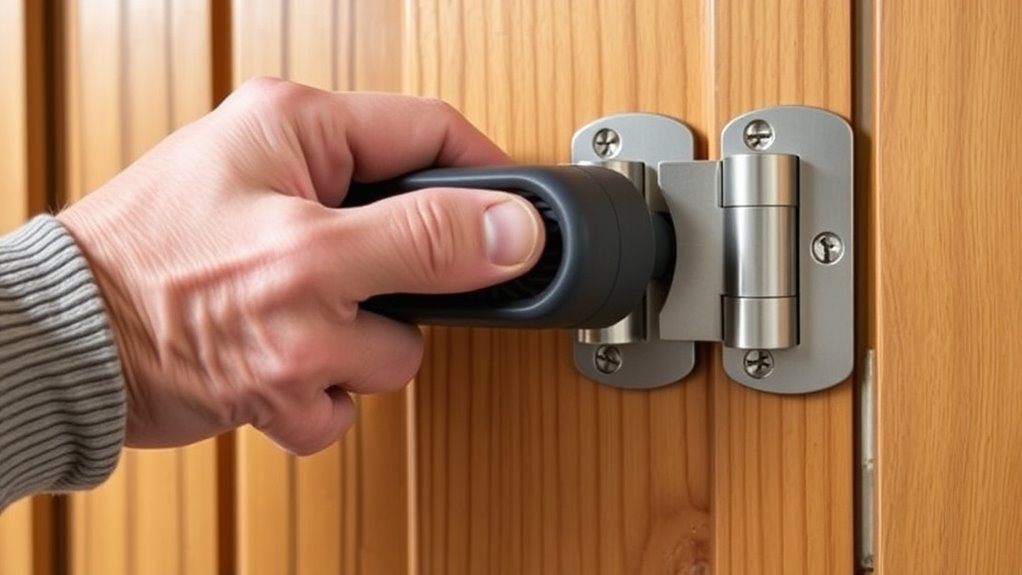
Are your loved ones living comfortably and safely at home? If so, you’re probably always looking for ways to improve their safety and independence. Small hardware tweaks can make a big difference, especially when it comes to falls prevention and mobility assistance. Simple adjustments like installing grab bars, non-slip handles, and easy-to-use hinges can reduce risks and promote confidence while moving around the house. These changes are straightforward, affordable, and can substantially impact your loved one’s quality of life.
Falls are one of the leading causes of injury among seniors, but many accidents can be prevented with the right hardware. Installing grab bars in the bathroom, near the toilet, and inside the shower provides sturdy support where your loved one needs it most. These bars offer stability during transfers and reduce the chance of slipping on wet surfaces. Non-slip adhesive strips or mats in the bathtub and on bathroom floors also help prevent falls, especially in areas prone to moisture. Beyond the bathroom, consider adding handrails along hallways and staircases to offer continuous support. When selecting these fixtures, opt for textured, slip-resistant surfaces that are easy to grip, matching the user’s strength and mobility levels.
Mobility assistance is another critical aspect of home safety. Easy-to-open hinges on cabinets and doors make steering through the home less strenuous. Lever-style door handles require less grip strength than knobs, making it easier for seniors with arthritis or limited hand mobility to open doors independently. Installing low-threshold or threshold-free entryways reduces trip hazards and makes wheelchair or walker access smoother. Additionally, you can add wall-mounted pull handles in key areas like the laundry room or kitchen to help with standing and balance. These hardware upgrades foster independence while decreasing the likelihood of accidents caused by unstable footing or difficulty maneuvering. Incorporating home safety products that are designed for elderly users can further enhance security and ease of use.
Frequently Asked Questions
How Do I Identify the Most Hazardous Areas in My Home?
To identify the most hazardous areas in your home, start with a thorough hazard assessment focused on fall prevention. Look for spots where you or your loved ones might trip or slip, such as uneven flooring, cluttered walkways, or loose rugs. Pay special attention to stairs, bathrooms, and entryways. Walk through each room slowly, noting any risks, and consider asking a family member for an extra perspective to guarantee you catch all potential dangers.
Are There Budget-Friendly Options for Senior-Friendly Hardware Upgrades?
Imagine finding hidden treasures that protect your loved ones—affordable solutions that keep safety in reach. You can upgrade hardware with cost-effective options like lever handles, non-slip grips, or adjustable hinges, all without breaking the bank. These small, budget-friendly tweaks make a big difference, enhancing safety and independence. With a little research, you’ll discover simple, effective ways to create a safer home environment without overspending.
Can Hardware Modifications Be DIY or Should Professionals Handle Them?
When considering hardware modifications, you might wonder if DIY safety is adequate or if professional installation is better. For simple tasks like replacing door handles or installing grab bars, DIY safety can work if you follow instructions carefully. However, for more complex or structural changes, it’s wise to opt for professional installation to ensure safety and proper functioning. Always assess your skill level and the complexity of the project before deciding.
What Legal Considerations Are Involved in Modifying My Home for Safety?
Imagine your home as a safe harbor, and any modifications are like sturdy anchors. When you tweak hardware for safety, you must consider liability concerns if accidents happen. Failing to follow building codes could lead to fines or insurance issues. Always check local regulations before making changes, and consider consulting professionals to guarantee your modifications meet legal standards and keep everyone safe.
How Often Should Hardware Updates Be Reviewed or Replaced?
You should review your hardware regularly as part of your maintenance schedule, ideally every 1-2 years. Replacement intervals depend on usage and wear; inspect handles, hinges, and locks for looseness or damage. If they show signs of deterioration, replace them promptly to guarantee safety and functionality. Staying proactive helps prevent accidents and keeps your home secure. Regular checks maintain peak performance and extend the lifespan of your hardware.
Conclusion
Making small hardware tweaks can feel like turning a tiny steering wheel, guiding your home safely and smoothly. I once helped my neighbor install grab bars, and she told me it was like adding a safety net under her daily routine. Just like a sturdy bridge supports every step, simple upgrades guarantee you stay steady and secure. Remember, these small changes can make a big difference—keeping your home a safe haven for years to come.