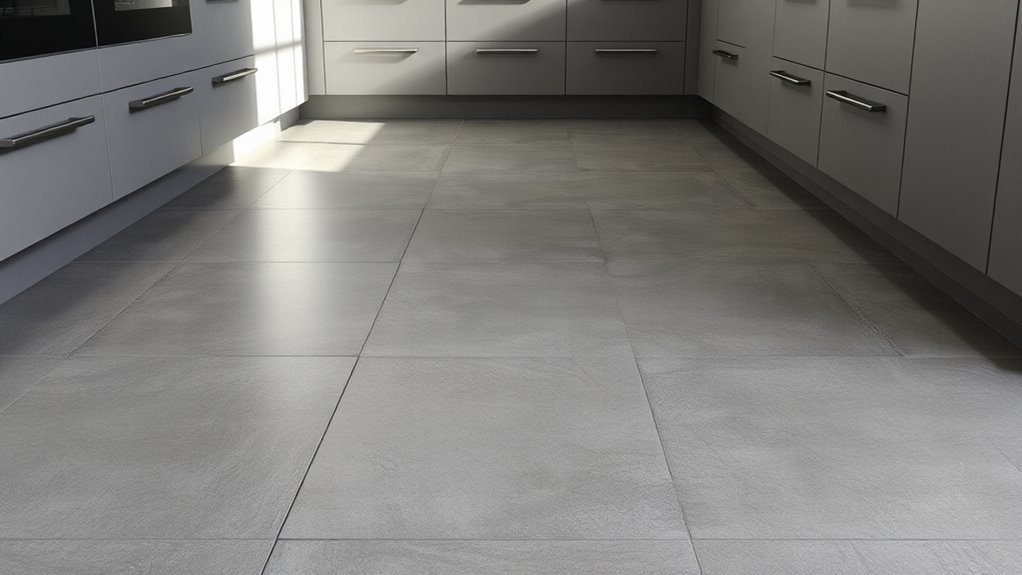
When upgrading your flooring, choose non-slip materials like textured vinyl, rubber, or textured porcelain tiles for safety in moisture or high-traffic areas. These options are low maintenance, resist stains, and are easy to clean with regular sweeping and damp mopping. To keep their grip intact, avoid harsh chemicals and consider anti-slip coatings if needed. By selecting the right surfaces and caring for them properly, you’ll enjoy safer, easier-to-maintain floors that last longer—discover more tips to maximize your upgrade.
Key Takeaways
- Select textured vinyl, rubber, or textured porcelain tiles for optimal slip resistance in moisture-prone or high-traffic areas.
- Prioritize materials with built-in grip patterns or matte finishes to enhance safety when wet.
- Choose low-maintenance flooring like rubber or sealed ceramic tiles for easy cleaning and durability.
- Regularly clean and inspect surfaces to maintain slip resistance and prevent buildup of dirt or oils.
- Consider applying anti-slip coatings or treatments to improve traction in frequently wet or high-traffic zones.
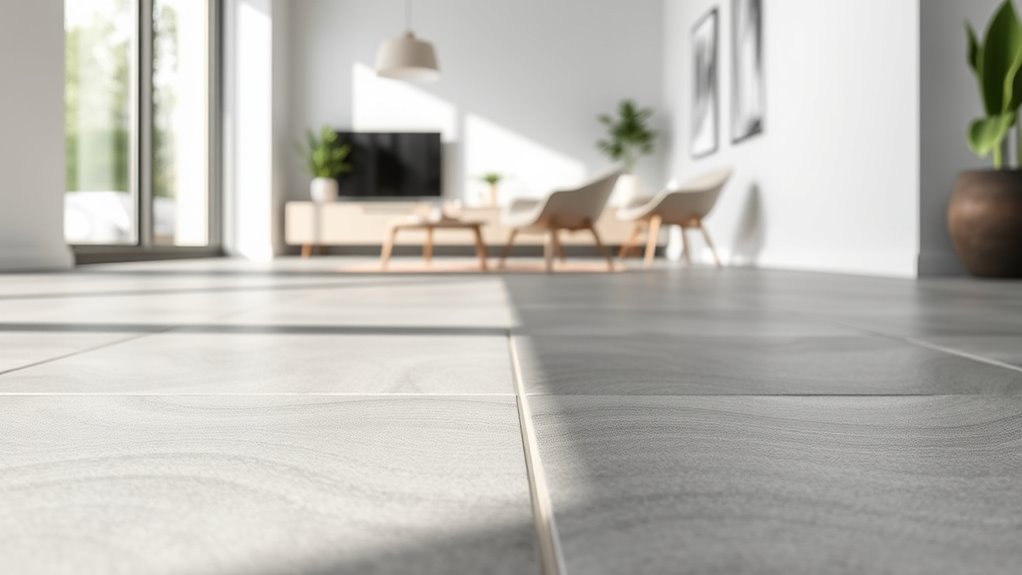
Upgrading your flooring can dramatically transform the look and feel of your space. When you focus on choosing materials that prioritize slip resistance and low maintenance, you guarantee your environment is both stylish and safe. Non-slip flooring options are essential, especially in areas prone to moisture or heavy foot traffic. Materials like textured vinyl, rubber, or textured porcelain tiles provide excellent slip resistance, reducing the risk of accidents. These surfaces often feature built-in grip patterns or matte finishes that help prevent slips, even when wet. As you select new flooring, consider the specific needs of each area; for example, rubber flooring works well in gyms or laundry rooms, while textured ceramic tiles are suitable for kitchens or entryways.
Maintaining your new flooring doesn’t have to be complicated. To keep it looking its best, adopt some straightforward maintenance tips. Regular sweeping or vacuuming removes dirt and debris that can dull the surface or cause scratches. For spills or stains, respond promptly—blot rather than wipe—to prevent liquids from seeping into the material. When cleaning, use a damp mop with a mild, non-abrasive cleaner tailored to your flooring type. Avoid harsh chemicals or abrasive scrubbers, as they can damage the surface or compromise slip resistance. For areas with textured surfaces, gentle cleaning tools help maintain the grip without wearing down the patterns. Periodically inspecting your flooring for signs of wear or damage allows you to address issues early, preserving slip resistance and overall appearance.
If you opt for vinyl or rubber flooring, these materials naturally resist stains and are easy to clean, making your maintenance routine more manageable. Ceramic or porcelain tiles may require sealing to prevent staining and maintain slip resistance over time, but once sealed, they become very low-maintenance. Remember, the key to preserving slip resistance is to keep the surface free of buildup—regular cleaning ensures dirt and oils don’t compromise grip. Also, consider adding anti-slip coatings or treatments if you notice a loss of traction over time, especially in high-traffic zones or wet areas. Incorporating performance tuning knowledge about surface treatments can help select effective anti-slip solutions that extend the lifespan of your flooring.
Choosing the right flooring that combines slip resistance with low maintenance benefits you in the long run. It reduces the risk of slips and falls while minimizing cleaning efforts. By selecting durable materials and following simple maintenance tips, you can enjoy a safer, more attractive space that stays fresh and functional with minimal effort. Upgrading your flooring with these considerations in mind creates a safer environment and saves you time and money in upkeep, making your space more comfortable and secure for everyone.
Frequently Asked Questions
Are Non-Slip Flooring Options Suitable for Outdoor Patios?
Yes, non-slip flooring options are suitable for outdoor patios because they offer excellent outdoor durability and help prevent slips, especially when wet. You should look for materials that have undergone slip resistance testing to guarantee safety. These floors are low-maintenance, durable, and perfect for outdoor use, giving you peace of mind while enjoying your patio. Just make sure to select options specifically designed for outdoor environments to maximize longevity and safety.
Which Low-Maintenance Flooring Materials Are Eco-Friendly?
You should consider eco-friendly, low-maintenance flooring materials like bamboo or cork, which are sustainably sourced and easy to care for. Both options have excellent recycling options, reducing waste. Bamboo grows quickly and absorbs carbon, making it highly sustainable. Cork is renewable and naturally resistant to moisture and pests. By choosing these materials, you support eco-friendly practices while enjoying durable, low-maintenance flooring that benefits the environment.
How Do I Prevent Scratches on Non-Slip Surfaces?
Did you know that applying anti-scratch coatings can extend your flooring’s lifespan by up to 50%? To prevent scratches on non-slip surfaces, regularly clean the surface and avoid dragging heavy furniture. Use protective mats under furniture and high-traffic areas. Consider applying anti-scratch coatings for added protection, and place protective mats in areas prone to scuffs. These simple steps keep your floors looking new longer and maintain their safety.
Are There Hypoallergenic Flooring Choices for Sensitive Individuals?
Yes, you can choose hypoallergenic options for allergy-friendly flooring. Look for materials like cork, bamboo, or vinyl designed to be resistant to dust, pet dander, and mold. These options help minimize allergic reactions and are easy to clean, reducing allergen buildup. When selecting allergy-friendly flooring, guarantee it’s certified hypoallergenic and low-maintenance, so you can enjoy a healthier indoor environment with less worry about triggering sensitivities.
What Is the Typical Lifespan of Non-Slip, Low-Maintenance Flooring?
Non-slip, low-maintenance flooring typically lasts 10 to 20 years, depending on durability expectations and usage. You can expect minimal maintenance, often just regular sweeping and occasional cleaning, which extends its lifespan. High-quality materials like vinyl or rubber are especially durable. To maximize longevity, avoid harsh chemicals and follow manufacturer instructions. Proper care guarantees your flooring remains safe, attractive, and functional for years to come.
Conclusion
Choosing non-slip, low-maintenance flooring isn’t just about safety and convenience—it’s about investing in peace of mind. While some might believe that durable materials compromise style, modern options prove otherwise, blending function with aesthetics. Research shows that implementing these flooring types can reduce accidents and upkeep costs over time. So, trust that your upgrade not only enhances your space but also supports long-term safety and savings, making it a smart, practical choice.