When installing stair lifts and home elevators, safety standards are essential to guarantee reliable and secure operation. You should choose certified professionals for proper installation, which affects safety and long-term performance. Costs vary depending on the system’s complexity, with stair lifts typically costing $3,000 to $5,000 and home elevators starting around $10,000. Investing in quality equipment and adherence to local codes helps prevent accidents. Keep going for more tips to make your installation safe and effective.
Key Takeaways
- Ensure equipment meets strict safety standards and complies with local building codes for reliable, secure operation.
- Budget for both installation costs and ongoing maintenance to maintain safety and functionality.
- Choose certified professional installers to guarantee proper setup and adherence to safety guidelines.
- Evaluate space requirements and customization options to ensure the equipment fits your home and needs.
- Prioritize safety features such as seat belts, emergency stops, and secure mounting during selection and installation.
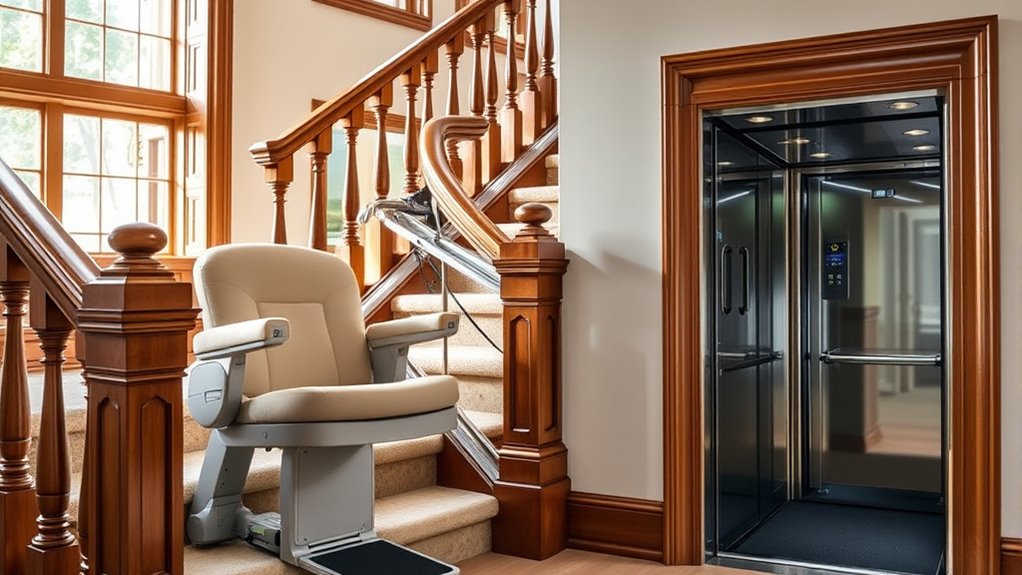
If you’re considering ways to improve mobility at home, installing a stair lift or home elevator can make a significant difference. These solutions not only enhance independence but also add convenience and safety for you or your loved ones. Before making a decision, it’s essential to understand the safety standards involved and the installation costs you can expect. Safety is paramount when it comes to mobility devices, so ensure that any stair lift or elevator you choose complies with the industry’s safety standards. Reputable manufacturers follow strict guidelines to prevent accidents, such as ensuring proper seat belts, emergency stop features, and secure mounting. Verifying that the equipment adheres to these standards helps you avoid potential hazards and guarantees a reliable, safe transfer between floors.
Prioritize safety standards when choosing and installing stair lifts or home elevators to ensure reliable and secure mobility solutions.
Installation costs can vary widely depending on several factors, including the type of lift or elevator, the complexity of the installation, and any custom modifications needed to fit your space. Basic stair lifts tend to be more affordable, typically ranging from $3,000 to $5,000, but prices can increase if your staircase has unique features or if you opt for additional safety features. Home elevators, on the other hand, are generally more expensive, with costs starting around $10,000 and potentially exceeding $30,000 for high-end models or custom installations. Remember, the initial expense is only part of the picture; ongoing maintenance and potential repairs should also be factored into your budget to ensure continued safety and functionality over time.
When planning your installation, it’s wise to get multiple quotes from certified professionals who understand local safety standards and building codes. They can evaluate your space, recommend suitable options, and provide transparent estimates of installation costs. Proper installation is critical; a poorly installed lift or elevator can compromise safety, leading to accidents or mechanical failures. Make sure your installer is experienced and certified, and ask about warranties and post-installation support. Keep in mind that investing in quality equipment and professional installation pays off in the long run by minimizing risks and ensuring smooth operation.
Ultimately, choosing the right stair lift or home elevator involves balancing safety, budget, and your specific mobility needs. By prioritizing adherence to safety standards and understanding the full scope of installation costs, you’ll make a well-informed decision that enhances your home’s accessibility and your quality of life. Additionally, researching safety standards and standards compliance can help you select the most reliable and secure equipment for your home.
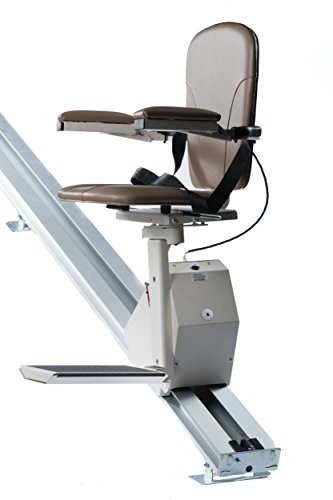
Universal Stair Lift – 350lb Capacity – Folds Flat to Wall – Includes Warranty
Made in America! 3 Safety Mechanisms. Wireless Remote. 350lb Capacity. Warranty
As an affiliate, we earn on qualifying purchases.
As an affiliate, we earn on qualifying purchases.
Frequently Asked Questions
What Is the Average Lifespan of a Stair Lift or Elevator?
The average lifespan of a stair lift or elevator is about 10 to 15 years, depending on product durability and usage. Proper maintenance and timely repairs can extend installation longevity, ensuring your equipment stays reliable. You should expect high-quality models to last longer, but regular servicing is key to maximizing your investment. Keep an eye on wear and tear to maintain safety and performance over the years.
Are There Any Safety Certifications Required for Installation?
Yes, safety standards and certification requirements are essential for installing stair lifts and home elevators. You should make certain that the manufacturer’s products meet recognized safety standards like ANSI and UL certifications. When hiring an installer, verify they are licensed and certified to adhere to local codes and regulations. This guarantees your equipment is safe, reliable, and compliant, giving you peace of mind knowing that safety is prioritized during installation.
How Do I Finance or Insurance Coverage for These Installations?
You can explore financial assistance options like grants or low-interest loans to help cover stair lift or home elevator costs. Additionally, check with your insurance provider about coverage, as some policies may reimburse part of the installation if it’s medically necessary. Contact your insurer and a local financial advisor to understand your options, ensuring you get the support you need to make your home safer and more accessible.
Can Stair Lifts Be Installed Outdoors or in Wet Areas?
Think of a stair lift as a brave explorer ready to brave the elements. You can have outdoor installation, but it requires special outdoor stair lifts designed for weather resistance. Wet area adaptations are essential for humid or rainy spots, ensuring safety and durability. These lifts are built with weatherproof materials, making outdoor and wet area installations feasible, so you can enjoy added accessibility no matter where your stairs lead.
What Maintenance Is Needed to Keep the Systems Functioning Properly?
To keep your stair lift or home elevator working smoothly, you should perform routine inspections regularly. Check for any signs of wear, loose parts, or unusual noises. Follow the manufacturer’s lubrication schedule to keep moving parts well-oiled and prevent friction. Keep the system clean and free of debris. If you notice any issues, contact a professional promptly to guarantee safety and proper functioning. Regular maintenance extends your system’s lifespan.

46 PCS Car Lift Install Kit, Leveling Kit for 2 Post Car Lift Installation, 3/4" x 5. 5" Steel Wedge Anchor Bolts, 1/4" 1/8" 1/16" Leveling Shim for Two Post Lift Kit
16 galvanized wedge-anchor bolts (¾" × 5½"), 30 color-coded shims (10 × ¼" black, 10 × ⅛" red,…
As an affiliate, we earn on qualifying purchases.
As an affiliate, we earn on qualifying purchases.
Conclusion
Installing a stair lift or home elevator is like giving your home a new heartbeat—bringing life, accessibility, and independence back into your space. With the right choices, you’ll smooth out the bumps in your daily routine and turn your home into a sanctuary that adapts to your needs. Think of it as planting a sturdy tree that grows stronger with each passing year, offering comfort and support whenever you need it most.

Stairlift Charger Compatible with Bruno Stair Lifts 2402,2402N,24024,24018,2110,1550,2000,2010,2750 Models (24V 2A)
24V 2A battery charger fits Bruno 2402,2402N,24024,24018,2110,1550,2000,2010,2750 Models
As an affiliate, we earn on qualifying purchases.
As an affiliate, we earn on qualifying purchases.

Elevator Disconnect Emergency Metal Warning Plate 8"x12", Tin Sturdy, Elevator Mechanical Rooms Indoor Safety Compliance Alert
【Premium Aluminum for Lasting Durability】Built from robust, industrial-grade aluminum alloy, this 12×8 inch metal sign withstands impacts, bending,…
As an affiliate, we earn on qualifying purchases.
As an affiliate, we earn on qualifying purchases.