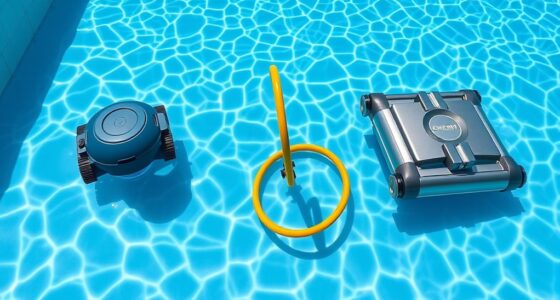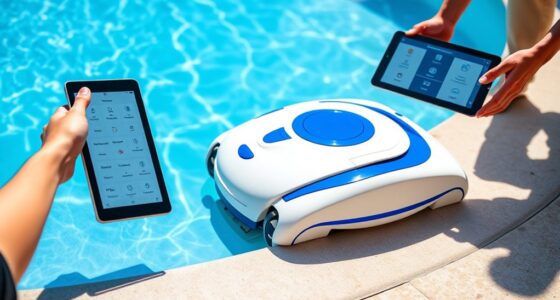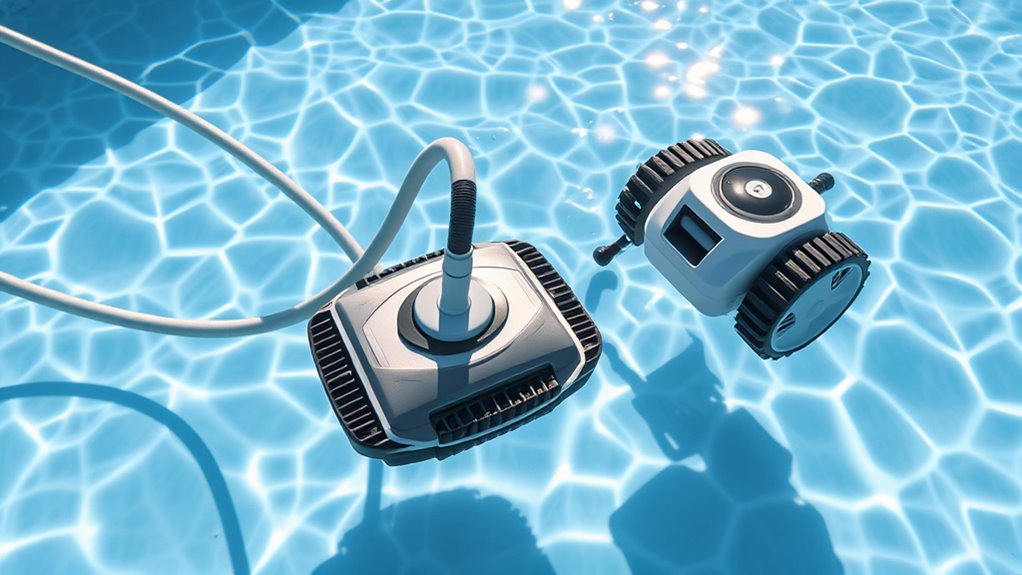
Suction pool cleaners attach to your pool’s filtration system and use the existing pump’s power to vacuum debris, making them energy-efficient and effective at trapping small particles. Pressure cleaners, on the other hand, run on a dedicated boost pump and use pressurized water to move around and clean. Each has advantages and drawbacks, so understanding their differences can help you choose the right one. Keep exploring to uncover which option suits your pool best.
Key Takeaways
- Suction cleaners use the pool’s pump for debris removal, while pressure cleaners operate with an external pressure source.
- Suction cleaners are generally quieter and more energy-efficient, relying on existing filtration systems.
- Pressure cleaners are more powerful and better suited for larger debris or heavily soiled pools.
- Suction cleaners excel at trapping smaller particles but may require more filter maintenance.
- Pressure cleaners are often easier to operate on complex pool shapes but consume more energy.
As an affiliate, we earn on qualifying purchases.
How Each Type Operates and Their Mechanisms
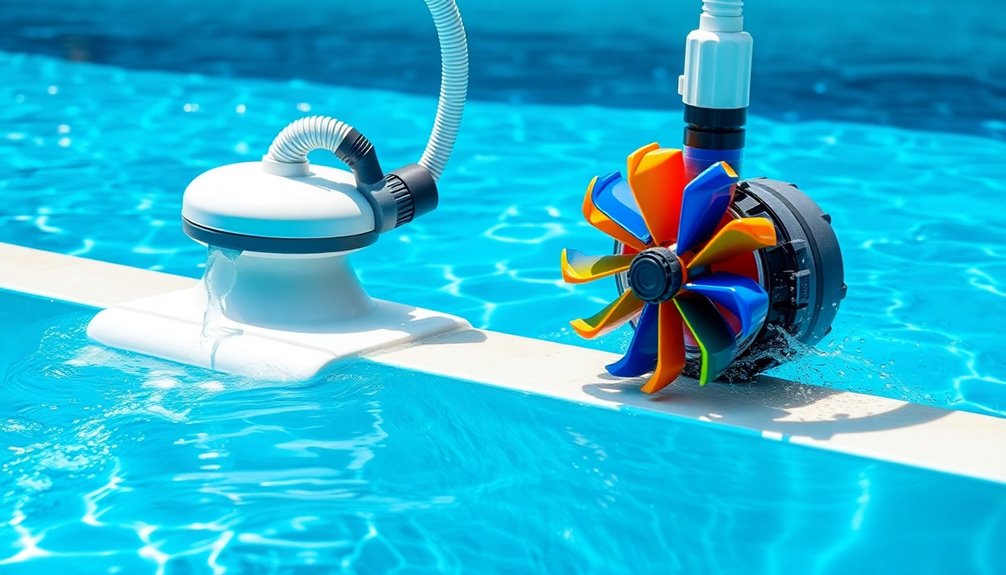
Suction pool cleaners work by attaching to the pool’s filtration system and using the suction created by the pump to pull debris from the pool floor and walls. This process relies on the pump’s power, influencing both filtration efficiency and energy consumption. A well-functioning suction cleaner maximizes debris pickup, ensuring cleaner water and less strain on the filter. Because they depend on the existing pump, they tend to consume less energy compared to other types, making them cost-effective over time. Their design allows for continuous operation without additional power sources, which conserves energy. Additionally, filter condition impacts the overall image quality of projectors, and maintaining optimal settings can enhance visual performance. Proper maintenance of the filter and pump system is essential for optimal suction performance. However, their filtration efficiency can vary based on the pump’s strength and filter condition. Overall, suction cleaners offer a straightforward mechanism that balances filtration performance with lower energy use.
Comparing the Pros and Cons of Suction and Pressure Cleaners
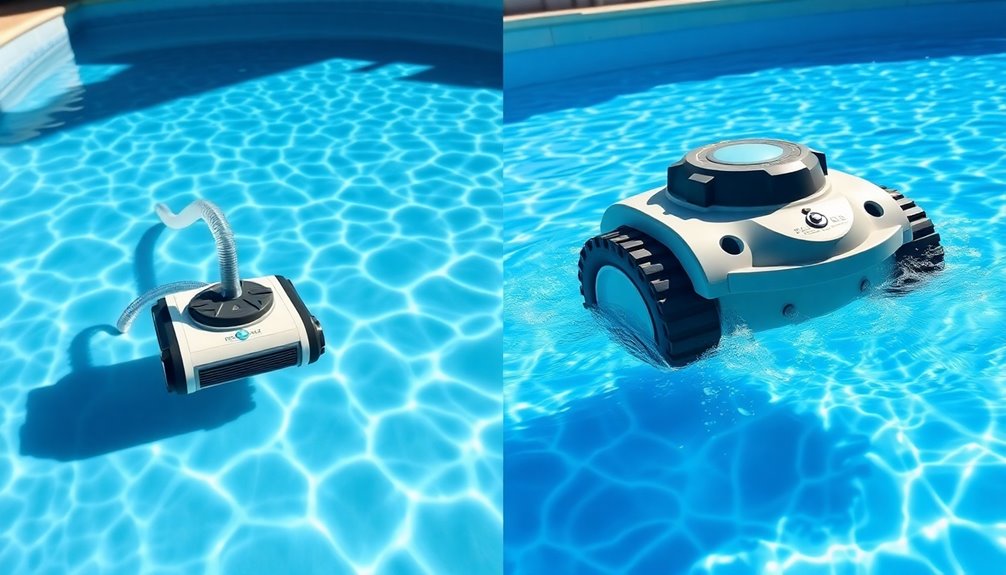
While both suction and pressure pool cleaners effectively remove debris, they each have distinct advantages and drawbacks that can influence your choice.
Both suction and pressure pool cleaners have unique pros and cons that impact your choice.
Suction cleaners usually have better filter efficiency, trapping smaller particles but may clog more often, increasing maintenance requirements. Additionally, modern filter technology enhances their ability to handle fine debris, making them suitable for pools with delicate surfaces or lots of small particles. Their energy efficiency also means they typically consume less power during operation, which can lead to cost savings over time.
Pressure cleaners cover larger areas quickly and are easier to maintain, but they often struggle with fine debris, reducing filter efficiency. They tend to operate at higher flow rates, which can be advantageous for larger pools but may require more robust pumps to function optimally.
Suction models tend to be quieter and require less energy, but they might need more frequent filter cleaning, impacting overall maintenance. Furthermore, they are generally better suited for pools with intricate shapes or hard-to-reach spots due to their maneuverability.
Additionally, airless paint sprayers demonstrate how high-pressure application can streamline tasks—paralleling how pressure pool cleaners can more efficiently cover large surfaces, although with different considerations for debris size. Efficiency in debris removal depends on matching the cleaner type to your pool’s specific needs.
Frequently Asked Questions
Which Type Is More Energy-Efficient for Long-Term Use?
You’re wondering which pool cleaner uses less energy over time. Generally, suction pool cleaners are more energy-efficient because they rely on your pool’s filtration system, reducing energy consumption and improving cost efficiency. Pressure cleaners often need an additional booster pump, which increases energy use. So, if you’re focused on saving money and lowering energy costs long-term, a suction cleaner is usually the better choice.
Can Suction and Pressure Cleaners Be Combined for Better Cleaning?
You can definitely combine suction and pressure pool cleaners for better cleaning. This approach enhances combined efficiency, leveraging cleaning synergy to reach more debris and stubborn dirt. Using both types allows you to cover different areas more effectively and reduces the time needed for maintenance. While it might require extra setup, the improved cleaning results make it worth considering, especially for larger or heavily soiled pools.
How Does Pool Size Affect the Choice Between Suction and Pressure Cleaners?
When choosing a cleaner, pool size considerations matter because larger pools need a cleaner with higher capacity requirements. If your pool is small, a suction cleaner typically works well, as it’s simple and efficient. For bigger pools, pressure cleaners are often better since they cover more area quickly and handle debris more effectively. Assess your pool size to select a cleaner that matches its capacity demands, ensuring thorough and efficient cleaning.
Are There Specific Maintenance Challenges Unique to Each Cleaner Type?
Did you know that 60% of pool owners report filter clogging issues? You’ll find that suction cleaners often require more filter maintenance since debris can clog the filter quickly, affecting suction power. Pressure cleaners may strain motors if debris isn’t cleared regularly, leading to motor maintenance challenges. Both types demand consistent upkeep, but understanding these specific issues helps you keep your pool cleaner running smoothly and efficiently.
Do Different Pool Surfaces Impact the Effectiveness of Either Cleaner?
Different pool surfaces do impact cleaning effectiveness and surface compatibility. You’ll find that suction cleaners work well on smooth surfaces like plaster or vinyl, providing thorough cleaning without damage. However, on textured or pebble finishes, pressure cleaners might be more effective because they can better navigate uneven surfaces. Always consider your pool’s surface type to choose the cleaner that guarantees maximum cleaning effectiveness and prevents potential surface damage.
Conclusion
Think of suction and pressure pool cleaners as two different guardians of your pool’s beauty. Suction cleaners are like silent shadows, gently drawing in dirt with quiet precision. Pressure cleaners are like energetic champions, blasting away debris with force. Both protect your oasis, just in different ways. Choosing between them is like selecting a trusted friend—each has its own strength, ensuring your pool stays crystal clear and inviting, no matter which guardian you choose.