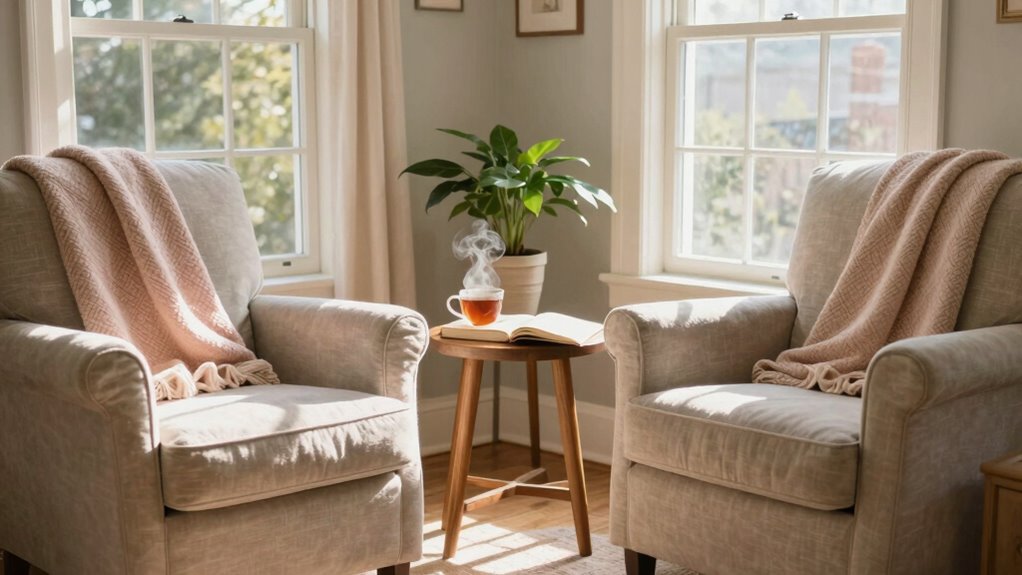

A comfort corner in a senior home gives you a dedicated space for relaxation and peace. It promotes your mental well-being by offering a quiet retreat to unwind, reflect, and engage your senses gently. With cozy furniture, familiar personal items, and calming decor, you’ll feel safe and secure. Regular use of this space can reduce stress and enhance your overall quality of life. If you keep exploring, you’ll discover more ways to make it truly special.

Get the little things that make your day delivered free — and shop member deals
- Fast, free delivery on millions of items
- Access to Prime Big Deal Days deals on October 6–7
- Prime Video, Amazon Music and more included
Key Takeaways
- Provides a dedicated space that promotes relaxation, reducing stress and enhancing mental well-being for seniors.
- Offers a safe, comfortable environment with sensory stimuli that soothe and calm the mind.
- Encourages daily routines of quiet reflection, fostering emotional security and a sense of belonging.
- Personalization makes the space meaningful, supporting emotional health and cherished memories.
- Improves overall quality of life by creating a peaceful retreat for rest and rejuvenation.
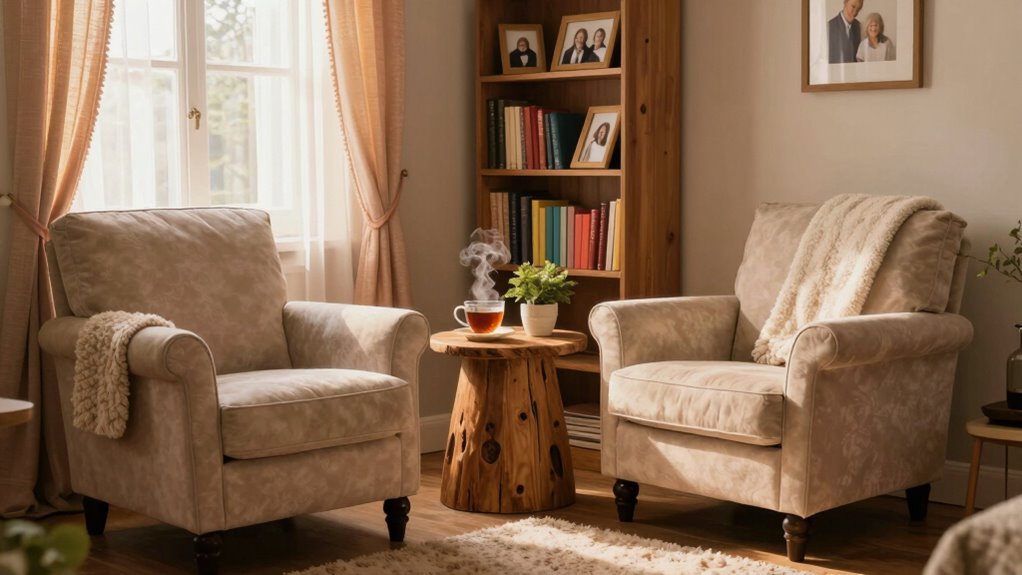
Creating a comfortable and safe environment for seniors is essential, especially as they spend more time at home. One of the best ways to promote relaxation and mental well-being is by establishing a dedicated comfort corner. This space offers a quiet retreat where seniors can unwind, reflect, and recharge without distractions. To make it truly effective, focus on incorporating sensory stimuli that engage the senses in gentle, soothing ways. Soft lighting, calming colors, and textured materials can create a peaceful atmosphere that helps reduce stress and anxiety. Think about adding items like plush blankets, soft rugs, or cushioned seating to encourage comfort and tactile engagement. The goal is to craft a space that appeals to the senses and invites relaxation.
Creating a cozy, sensory-rich space helps seniors relax, feel secure, and enjoy moments of calm at home.
Equally important is choosing cozy furniture that supports both comfort and safety. Opt for armchairs or recliners with supportive cushions and easy-to-reach armrests. These features enable seniors to sit comfortably for extended periods without strain. Guarantee the furniture is stable and free from sharp edges to prevent accidents. Positioning the furniture near natural light sources or gentle lamps can enhance the calming effect, making it easier to relax and enjoy quiet moments. The right furniture also encourages seniors to spend time in their comfort corner, whether for reading, listening to music, or simply resting. Incorporating inclusive design principles can further ensure the space accommodates diverse needs and abilities.
Personalization plays a key role in making the space inviting. Incorporate familiar objects, family photos, or favorite books to foster a sense of security and belonging. These touches help seniors feel more at ease and emotionally connected to their environment. Keep the area clutter-free to promote a sense of calm and ensure safety, especially if mobility is limited. Accessibility matters—place frequently used items within easy reach and avoid clutter that could cause tripping hazards. Incorporating environmentally friendly craft ideas such as sustainable materials or eco-conscious decor can add a meaningful touch that aligns with a caring and responsible lifestyle. Additionally, understanding senior safety considerations can help tailor the space to better meet their unique needs.
Lastly, remember that a comfort corner isn’t just about physical elements; it’s about creating an emotional sanctuary. Encourage your loved ones to use it regularly, whether for a few moments of quiet reflection or longer periods of relaxation. Over time, this dedicated space will become a treasured part of their daily routine, offering them a peaceful retreat whenever they need it most. In the end, a thoughtfully designed comfort corner can greatly enhance their quality of life, giving them a safe, cozy haven to enjoy moments of calm amid the busyness of everyday life.
senior recliner chair with support
As an affiliate, we earn on qualifying purchases.
As an affiliate, we earn on qualifying purchases.
Frequently Asked Questions
How Do You Choose the Best Items for a Comfort Corner?
Think of your comfort corner as a cozy sanctuary, and choosing the best items is like selecting the perfect puzzle pieces. Focus on decorative accents that bring warmth and personality, and include aromatherapy options like essential oils or candles to create a calming atmosphere. Prioritize comfort with soft cushions and gentle lighting, and select items that promote relaxation and peace, making the space inviting and tailored to your residents’ needs.
What Safety Features Should Be Included in a Comfort Corner?
You should include safety features like slip-resistant rugs, sturdy furniture, and secure electrical outlets in your comfort corner. Implement safety protocols such as clear pathways, proper lighting, and easy access to emergency exits. Having an emergency preparedness plan, including accessible call buttons and first aid supplies, guarantees quick response when needed. These features help create a safe, relaxing space where seniors feel secure and comfortable.
How Often Should Residents Use Their Comfort Corners?
You should encourage residents to use their comfort corners daily, as this boosts relaxation and emotional well-being. Picture a cozy nook filled with soft cushions and calming decor—it’s perfect for unwinding. Incorporate decorating ideas like gentle lighting or personal mementos, and remember to follow maintenance tips to keep the space inviting. Regular use helps residents feel at ease, making their comfort corners a essential part of daily life.
Can Comfort Corners Be Personalized for Individual Preferences?
Yes, comfort corners can be personalized for individual preferences. You can incorporate personalization options like favorite colors, photos, or meaningful objects to create a space that feels truly theirs. Sensory customization also plays a role—adding soft lighting, soothing sounds, or calming textures helps cater to each resident’s unique needs. By tailoring these elements, residents feel more comfortable, relaxed, and at home in their comfort corners.
Are There Specific Designs Recommended for Different Mobility Levels?
Yes, there are specific designs recommended for different mobility levels. You should include decorative cushions for comfort and support, especially for those with limited mobility. Incorporate ambient lighting to create a calming atmosphere without causing glare. Keep pathways clear and choose furniture that’s easy to access and transfer from a wheelchair or walker. This guarantees everyone can enjoy the comfort corner safely and comfortably, regardless of mobility level.
Conclusion
Creating a comfort corner in your senior home offers a peaceful refuge amid life’s chaos, a quiet sanctuary where relaxation reigns. It’s a space that invites calmness and reflection, contrasting with the busy routines they face daily. Just as a gentle breeze can soothe a restless mind, this cozy nook provides comfort and tranquility, making every moment of quiet time truly meaningful. Because in a world full of noise, serenity should always be within reach.
Fall Picks
fall essentials
As an affiliate, we earn on qualifying purchases.