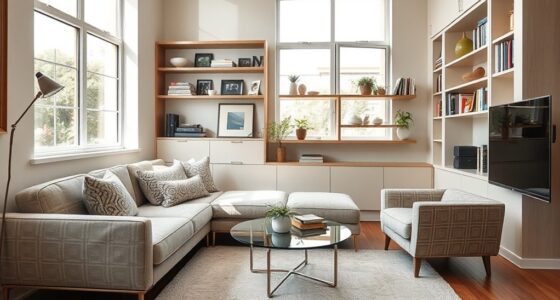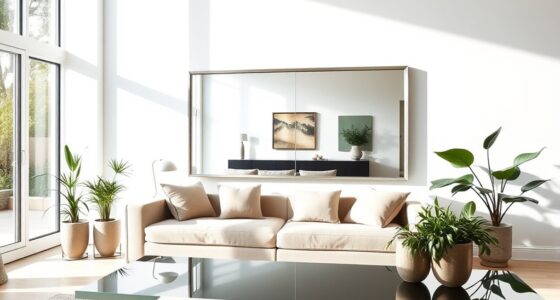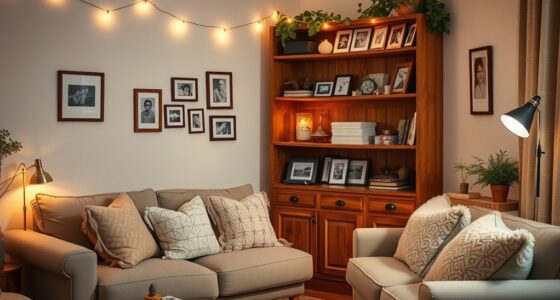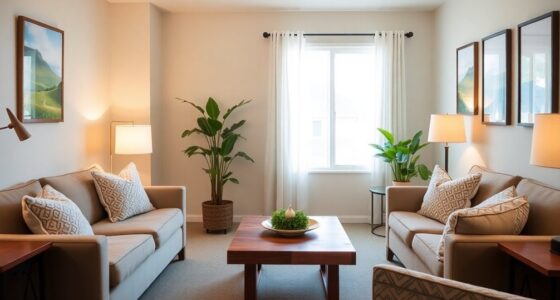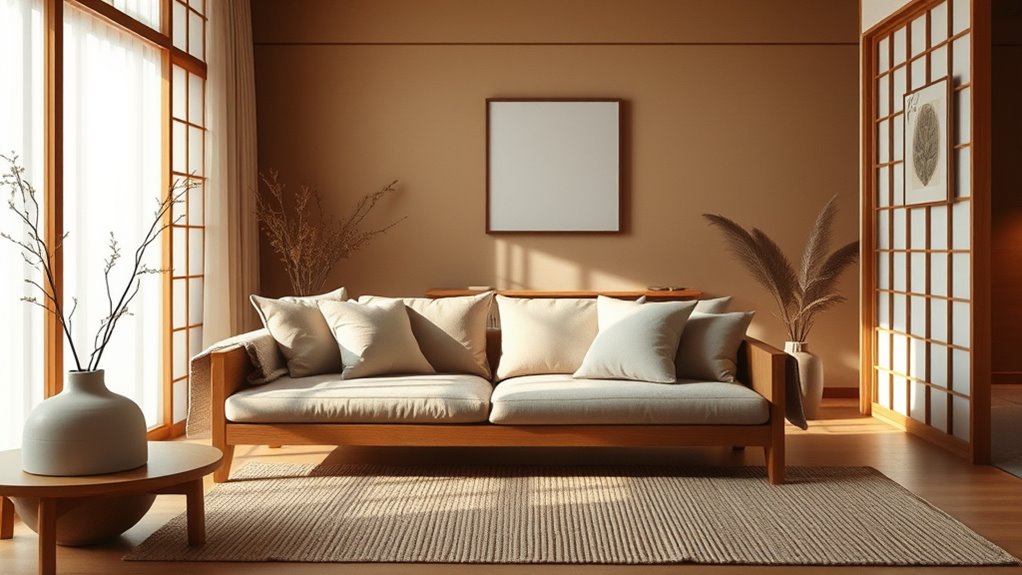

In 2025, Japandi design blends minimalism with cozy warmth, creating peaceful, inviting spaces. Expect clean lines and uncluttered layouts enhanced with natural textures like reclaimed wood and organic textiles. Soft, earthy colors such as muted greens and warm beiges add comfort without sacrificing simplicity. Multifunctional furniture supports flexible living, while sustainable materials reflect eco-conscious choices. If you want to learn how to achieve this perfect balance of calm and coziness, you’ll find plenty of inspiring ideas ahead.
Key Takeaways
- Japandi in 2025 blends minimalist design with warm, cozy textiles for inviting yet uncluttered spaces.
- Sustainable, eco-friendly materials like reclaimed wood and organic textiles are central to the aesthetic.
- Multifunctional furniture enhances practicality while maintaining clean lines and minimal clutter.
- Earthy color palettes and tactile textures add warmth without compromising minimalist simplicity.
- The overall atmosphere emphasizes tranquility, mindfulness, and a welcoming environment for relaxation.
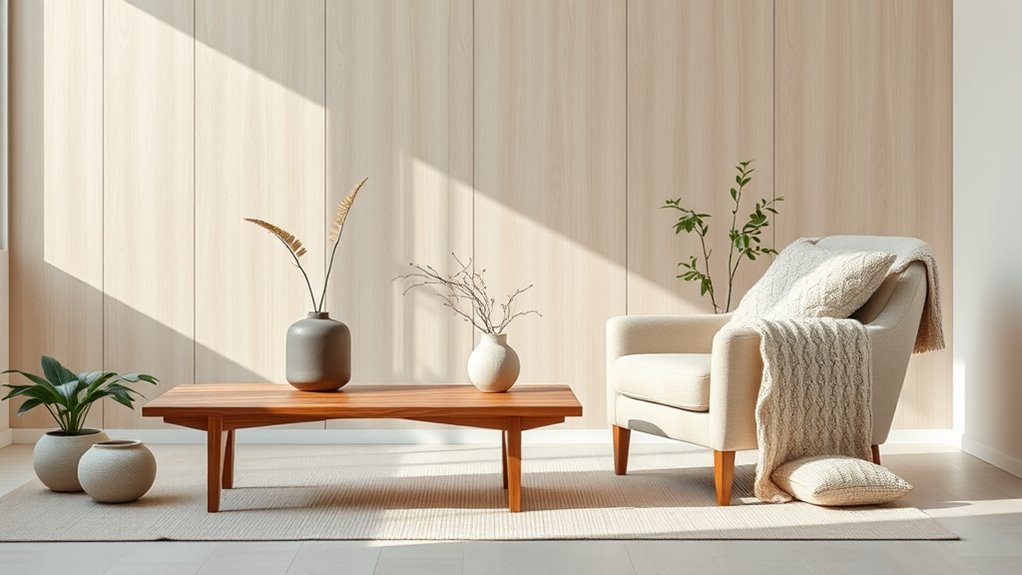
As we look ahead to 2025, Japandi continues to shape the way we approach interior design by blending minimalist Scandinavian simplicity with the warm, natural elements of Japanese aesthetics. This style emphasizes clean lines, uncluttered spaces, and a sense of tranquility, but it’s evolving to include cozy touches that make your home more inviting. One of the key trends you’ll notice is the increased use of sustainable materials. You’ll find that eco-friendly choices like reclaimed wood, organic textiles, and biodegradable finishes are now integral to Japandi interiors. These materials don’t just reduce your environmental footprint; they also add a textured depth and warmth that complement the minimalist framework. When selecting furniture or decor, you’ll prioritize items made from sustainably sourced wood or natural fibers, creating a space that feels both stylish and conscious.
In 2025, sustainable materials like reclaimed wood and organic textiles are essential to eco-friendly Japandi interiors.
Another significant trend is the rise of multifunctional furniture, which perfectly aligns with the Japandi ethos of simplicity and practicality. With more people working from home or seeking flexible living spaces, your furniture needs to serve multiple purposes without cluttering your environment. Think of a sleek console that transforms into a guest bed, or a coffee table with hidden storage compartments. These pieces help maximize your space while maintaining the clean, uncluttered look that defines Japandi. The focus is on quality over quantity; each piece should be functional, durable, and aesthetically pleasing. This approach not only keeps your home streamlined but also encourages mindful consumption—investing in fewer, better-designed items that last. Additionally, embracing natural materials like bamboo or cork can further enhance the warmth and texture of your space.
In 2025, you’ll find that the combination of sustainable materials and multifunctional furniture enhances the coziness of Japandi interiors without sacrificing its signature minimalism. Soft textiles like wool throws, linen cushions, and tatami mats introduce tactile comfort, balancing the sleekness of the furniture with inviting warmth. You’ll also notice that earthy color palettes—muted greens, warm beiges, and rich browns—continue to dominate, reinforcing the natural, calming vibe. With these elements, your space becomes more than just a visual retreat; it transforms into a sanctuary that nurtures both your well-being and your eco-conscious values.
Ultimately, Japandi in 2025 isn’t about creating stark, impersonal spaces. Instead, it’s about blending the clarity of minimalism with a cozy, lived-in feel. By choosing sustainable materials and multifunctional furniture, you craft a home that’s beautiful, functional, and kind to the planet—all while providing a warm, welcoming atmosphere that invites you to relax and unwind.
Frequently Asked Questions
How Can I Incorporate Sustainable Materials Into Japandi Decor?
You can incorporate sustainable materials into your Japandi decor by choosing biodegradable textiles for cushions and curtains, adding a natural, eco-friendly touch. Opt for reclaimed wood accents in furniture and decor pieces to reduce environmental impact while maintaining the minimalist aesthetic. These choices not only support sustainability but also add warmth and character to your space, creating a cozy, eco-conscious Japandi environment that aligns with 2025 trends.
What Color Palettes Are Trending for Japandi Interiors in 2025?
You’ll find that trending color schemes for Japandi in 2025 favor neutral tones like warm beiges, soft greys, and earthy browns, creating a calming backdrop. Accent hues such as muted greens, deep blues, and warm terracotta add depth and personality. Incorporate these colors through wall paints, textiles, or accessories to achieve a balanced, cozy aesthetic that blends minimalist simplicity with inviting warmth.
Are There Specific Furniture Pieces That Define the Japandi Style?
You’ll notice that clean-lined furniture, low-profile pieces, and natural wood frames define the Japandi style. Scandinavian influences shape the simple silhouettes, while handcrafted accents add warmth and personality. You should look for pieces like sleek coffee tables, minimalist sofas, and functional shelving that blend functionality with aesthetic appeal. These furniture choices emphasize balance, craftsmanship, and natural materials, creating a serene, cozy space that reflects the core of Japandi design.
How Can Small Spaces Be Optimized With Japandi Minimalism?
You can optimize small spaces with Japandi minimalism by choosing multifunctional furniture that serves multiple purposes, like a sofa bed or a coffee table with storage. Incorporate space-saving storage solutions such as built-in shelves or under-bed drawers to keep clutter at bay. Keep the design simple with neutral tones and natural materials, which make the space feel open and calming while maximizing functionality and comfort in limited areas.
What DIY Tips Can Enhance the Cozy Aspect of Japandi Design?
Did you know that 68% of homeowners find textiles and lighting boost coziness? To enhance the cozy aspect of Japandi design, try layering textiles like throws and cushions for added warmth. Incorporate candle arrangements for soft, inviting lighting, creating a tranquil atmosphere. These simple DIY tips make your space feel more intimate and comfortable, perfectly blending minimalism with a cozy vibe.
Conclusion
As you embrace Japandi’s cozy minimalism in 2025, remember that simplicity is like a quiet stream—calm, clear, and endlessly inviting. Just last year, a friend transformed her space with just a few carefully chosen pieces, creating a sanctuary that felt both modern and warm. This trend reminds us that less truly is more, and in stripping away excess, you’ll find a home that feels both peaceful and effortlessly stylish—your personal oasis amid the chaos.