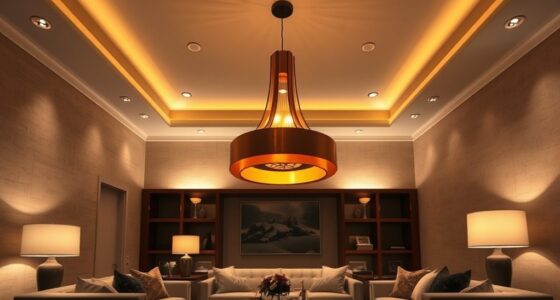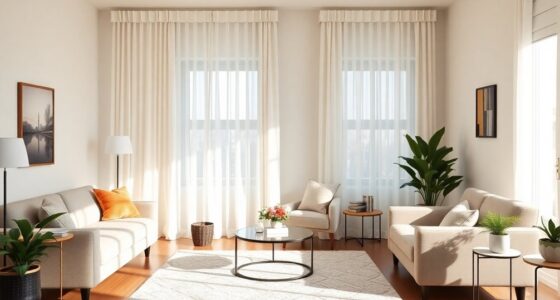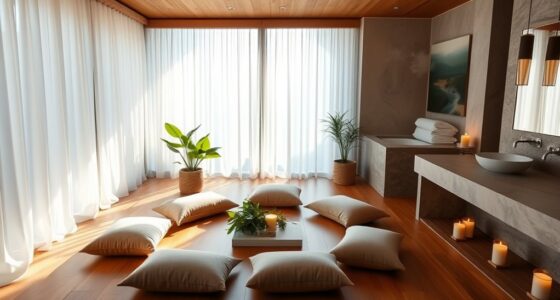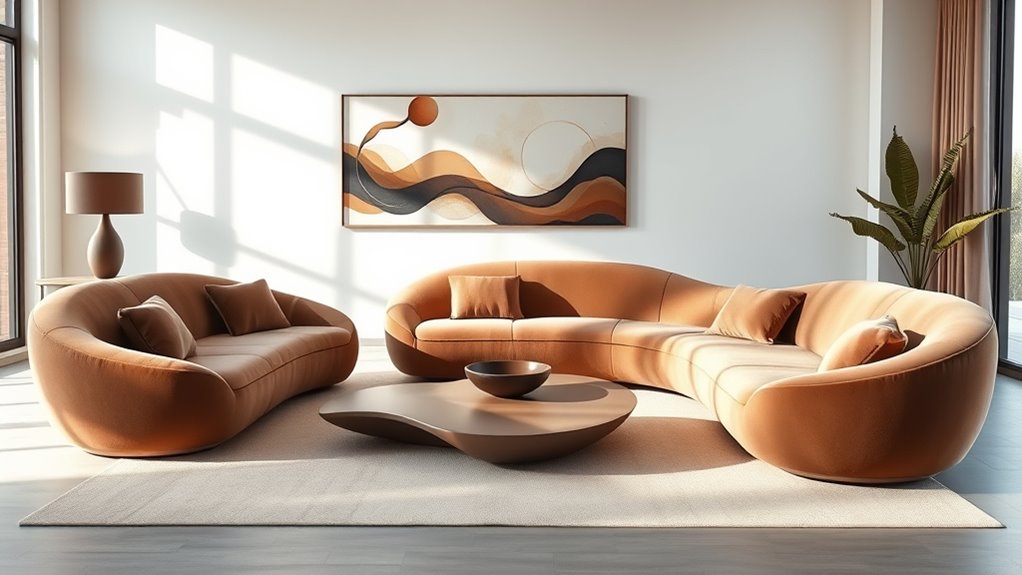
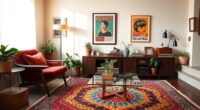
In 2025, furniture design revolves around flowing curves and organic shapes that boost comfort and aesthetics. You’ll notice softer, natural forms replacing sharp angles, creating inviting, harmonious spaces. Sustainability plays a key role, with eco-friendly materials and resilient designs. Smart features seamlessly blend into these shapes, offering convenience and multifunctionality. If you continue exploring, you’ll discover how these trends transform your living environment into a more stylish and sustainable sanctuary.
Key Takeaways
- Organic shapes dominate furniture design in 2025, emphasizing flowing lines that mimic natural forms for harmony and comfort.
- Curved furniture enhances sustainability by utilizing eco-friendly materials like bamboo and reclaimed wood.
- Smart furniture integrates organic shapes with technological features such as hidden charging stations and adaptive systems.
- Curvilinear designs support multifunctionality and space optimization, ideal for small living environments.
- The use of curves promotes ergonomic support, durability, and a visually soothing, eco-conscious aesthetic.

Have you wondered what the future of furniture holds? As designers and homeowners look ahead to 2025, one trend stands out: the shift toward using curves and organic shapes. This movement isn’t just about aesthetics; it’s about creating furniture that feels more natural and inviting. You’ll notice that soft, flowing lines replace sharp angles, giving your space a sense of harmony and comfort. These shapes mimic nature’s forms, making your furniture appear more approachable and less rigid. This trend also aligns with a growing emphasis on sustainability, as designers increasingly choose sustainable materials that support eco-friendly living. Think bamboo, reclaimed wood, or recycled plastics shaped into beautiful, fluid designs that blend form and function seamlessly. AI security technologies are also influencing smart furniture, enabling features like adaptive comfort settings and integrated security systems to protect your devices and data. Smart furniture plays a big role in this trend, too. As technology advances, furniture isn’t just about looks; it’s about enhancing your lifestyle. Curved designs are being integrated with smart features—like hidden charging stations, built-in speakers, or adjustable components that adapt to your needs. Imagine a sofa with rounded edges that also wirelessly charges your devices or a coffee table with a sleek, organic shape that hides smart controls for lighting or temperature. These innovative pieces aren’t just stylish; they’re designed to make your daily routines more effortless. The organic forms allow for more flexible and multifunctional furniture, enabling better use of space, especially in smaller homes or apartments.
Embrace 2025’s trend of organic shapes and sustainable materials for furniture that’s natural, inviting, and eco-friendly.
The use of sustainable materials in these curved designs reflects a deepening awareness of environmental impact. You’ll see more furniture crafted from renewable resources or recycled materials, emphasizing durability and eco-consciousness. The curvilinear shapes also make these pieces more resilient—they often require fewer joints and connections, reducing the risk of wear and tear over time. Plus, the natural curves tend to be more ergonomic, offering better support and comfort. This means you get furniture that’s not only beautiful but also healthier for your body and the planet.
In 2025, expect to see a lot of furniture that feels organic to the touch and visually soothing. The combination of sustainable materials, smart technology, and organic shapes creates a harmonious environment that enhances your well-being. These designs are about more than just aesthetics—they’re about creating spaces that feel alive, adaptable, and in tune with nature. As you choose furniture with flowing curves and eco-friendly materials, you’re not just decorating your home; you’re making a conscious choice to embrace the future of sustainable, innovative living.
Frequently Asked Questions
How Do Curves Impact Furniture Durability?
You’ll find that curves enhance furniture durability by distributing stress more evenly, which boosts structural integrity. This design also improves ergonomic comfort, making pieces more pleasant to use over time. When you choose furniture with smooth, organic shapes, you’re getting items that are both sturdy and comfortable, reducing the risk of wear and tear. So, curves not only elevate style but also guarantee your furniture remains durable and supportive.
Are Organic Shapes More Eco-Friendly?
Organic shapes are often more eco-friendly because they support sustainable manufacturing practices. Studies show that furniture with organic shapes can reduce material waste by up to 25%. These forms typically use fewer materials and promote eco friendly manufacturing, which helps lessen environmental impact. By choosing furniture with organic shapes, you’re supporting sustainability and minimizing your ecological footprint, making it a smart, eco-conscious decision for your space.
What Materials Are Best for Curved Furniture?
You should choose materials like bamboo, reclaimed wood, or recycled plastics for curved furniture, as they align with sustainability considerations. These options are not only eco-friendly but also flexible enough to form smooth, organic shapes. Additionally, look for FSC-certified or locally sourced materials to reduce environmental impact. By prioritizing these material choices, you create stylish, sustainable furniture that supports eco-conscious design trends in 2025.
How Do Curved Designs Influence Interior Lighting?
Curved designs are like a gentle invitation for your eyes, guiding ambient illumination smoothly across your space. They soften the way light reflects, creating a harmonious visual flow that feels natural and inviting. You’ll notice how lighting accentuates the organic shapes, making your room feel more dynamic and cozy. Embracing curves helps you craft an environment where light and design work together seamlessly, elevating your interior’s overall ambiance.
Can Curved Furniture Suit Small Spaces Effectively?
Yes, curved furniture can suit small spaces effectively. Its space optimization helps you maximize every corner, making your area feel more open. Plus, the organic shapes add aesthetic appeal without overwhelming the room. You’ll find that curved designs create visual flow, making small spaces appear larger and more inviting. Opt for multi-functional pieces with smooth, rounded edges to enhance both style and practicality in compact environments.
Conclusion
As you embrace these curves and organic forms, you’re not just choosing furniture—you’re inviting harmony and flow into your space. The gentle arcs symbolize a shift towards comfort and authenticity, guiding you through a seamless progression from rigidity to fluidity. Let these shapes become your sanctuary, a reflection of nature’s grace, reminding you that beauty lies in the curves of life. In 2025, your home becomes a living, breathing affirmation to effortless elegance.