To effectively layer lighting for function and atmosphere, you should combine ambient, task, and accent lighting to create a balanced environment. Use fixtures placed strategically to guarantee even illumination while highlighting key features or activity zones. Pay attention to color temperature to set the right mood—warm for cozy spaces or cool for clarity. Proper fixture placement, height, and angle are vital for ideal light distribution. Keep exploring to discover how these principles transform your space into both inviting and practical.
Key Takeaways
- Use multiple lighting layers (ambient, task, accent) to create a balanced, functional, and inviting space.
- Select appropriate color temperatures (Kelvin) to match room purpose and desired atmosphere.
- Position fixtures strategically to ensure even coverage, minimize shadows, and highlight key areas.
- Combine different fixture types and placements for versatility and to avoid glare or uneven lighting.
- Plan lighting to enhance mood, functionality, and visual appeal through thoughtful layering and fixture arrangement.
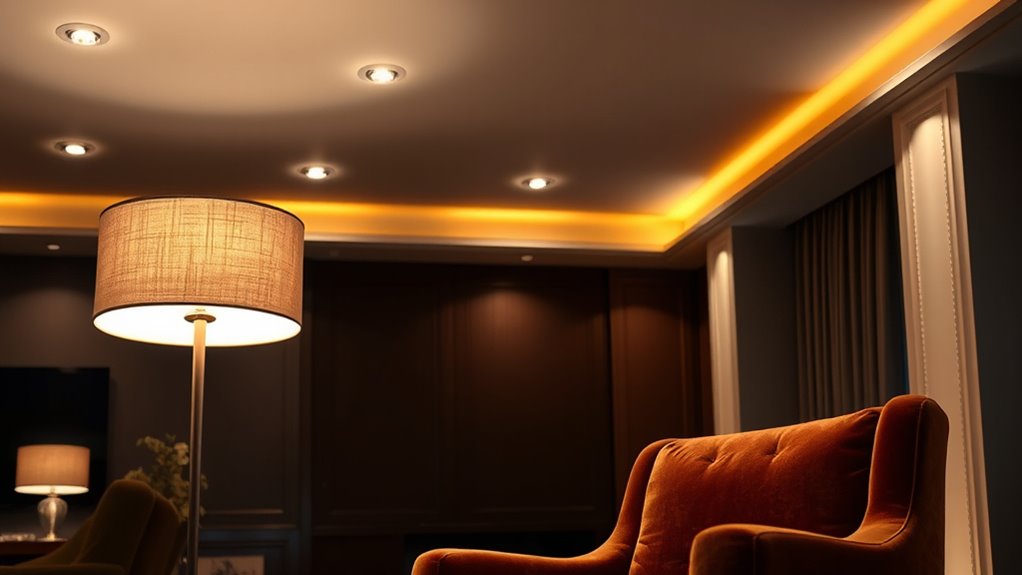
Have you ever wondered how the right lighting can transform a space? It’s not just about brightening a room but about creating layers of light that serve both function and atmosphere. To achieve this, understanding the interplay of elements like color temperature and fixture placement is essential. These factors influence how a space feels and how effectively it works for your needs. Color temperature, measured in Kelvin, determines whether the light feels warm, neutral, or cool. Warm lighting, with lower Kelvin numbers, creates cozy, inviting atmospheres—perfect for living rooms or bedrooms. Cooler tones, with higher Kelvin ratings, are better suited for task areas like kitchens or workspaces, where clarity and focus matter. When selecting fixtures, consider their placement carefully. Proper fixture placement ensures that light hits the right areas without creating glare or shadows. For example, ambient lighting fixtures should be evenly spaced across the ceiling to provide uniform illumination, while task lighting needs to be positioned directly where activities occur, such as above a kitchen island or reading nook. Accent lighting, on the other hand, can be used to highlight artwork or architectural features, adding depth and visual interest. Additionally, incorporating layered lighting strategies helps in creating a balanced environment that meets various needs.
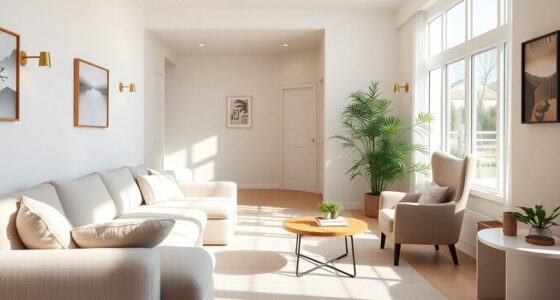
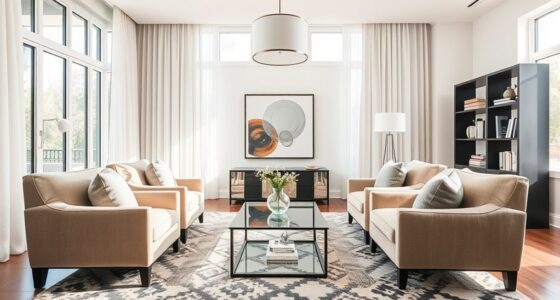
Thinking about fixture placement also involves considering the height and angle of your lights. Overhead fixtures should be hung at the right height to distribute light evenly across the room, avoiding overly bright spots or dark corners. Wall-mounted fixtures can be positioned to wash walls with light, enhancing the room’s depth. When combining different lighting layers, you create a balanced environment that meets various needs. For example, a living space might feature recessed ceiling lights for general illumination, table lamps for reading, and accent lights to showcase artwork. Each layer should complement the others, avoiding clashes in color temperature or uneven lighting. Adjusting fixture placement and choosing the appropriate color temperature for each layer helps you control the overall mood and functionality.
Ultimately, successful lighting design hinges on thoughtful fixture placement and an understanding of color temperature. These elements work together to craft a space that feels both welcoming and practical. When you pay attention to these details, you’ll see how a well-layered lighting plan can truly elevate your environment, making it more comfortable, versatile, and visually appealing.

ARMONYO Electric Hospital Bed for Home Use - German LIMOSS Motor, Ultra-Low 8.5" Height, 5 Functions, Solid Wood & Upholstered Design with Table & Foldable Rails
DOUBLE SOLID WOOD PANELS WITH REMOVABLE UPHOLSTERED COVERS: Designed for home settings, this medical hospital bed features solid...
As an affiliate, we earn on qualifying purchases.
Frequently Asked Questions
How Do I Balance Ambient and Task Lighting Effectively?
To balance ambient and task lighting effectively, you should use layering techniques, combining different fixture types for flexibility. Select fixtures with adjustable brightness and direction to suit your needs. Place ambient lights to create a comfortable overall glow, while task lights focus on specific areas. Adjust each layer to avoid glare and shadows, ensuring a harmonious flow between functional and atmospheric lighting. This approach enhances both usability and ambiance in your space.
What Are the Latest Trends in Sustainable Lighting Design?
You should focus on incorporating energy efficiency and eco-friendly fixtures into your lighting design. Latest trends emphasize using LED technology, smart controls, and renewable materials to reduce environmental impact. You can also explore solar-powered options and fixtures made from sustainable sources. By choosing these innovations, you’ll create a stylish, functional space that minimizes energy consumption and supports sustainability goals, aligning your design with current eco-conscious practices.
How Can Smart Lighting Improve Home Ambiance?
Imagine your home as a canvas, and smart lighting as your brushstrokes. You can tweak color temperature and set scenes with smart controls, transforming your space from bright and energizing to cozy and calming in an instant. This flexibility allows you to craft the perfect ambiance for any moment, whether relaxing or entertaining, making your home feel alive and tailored to your mood with just a tap or voice command.
What Are Common Mistakes in Layering Lighting?
You often make the mistake of overlighting a space, which can create harsh, uninviting environments. Additionally, uneven illumination occurs when you don’t balance different light layers properly, leading to dark spots or overly bright areas. To prevent these, plan your lighting layers carefully, use dimmers, and aim for a mix of task, ambient, and accent lights. This ensures a comfortable, well-lit space without glaring or uneven spots.
How Does Lighting Affect Mood and Productivity?
Lighting directly influences your mood and productivity by using color psychology and natural illumination. Bright, cool tones can boost alertness, while warm, softer lights create relaxation. Natural illumination enhances focus and well-being, making spaces feel inviting and energetic. When you layer lighting effectively, you can control your environment’s atmosphere, helping you stay motivated and balanced throughout your day. Proper lighting supports your mental state and work efficiency seamlessly.

HaiyoHBED 𝟐𝟎𝟐𝟔 𝐍𝐞𝐰 𝐔𝐩𝐠𝐫𝐚𝐝𝐞 3 Function Full Electric 600LBS Hospital Bed, Medical Equipment, Hospital Beds for Home or Hospital Use, Frame, Adjustable Medical Bed for Seniors
Adjustable Backrest, Leg Rest & Bed Height — Independently raise or lower the backrest, leg rest, or the...
As an affiliate, we earn on qualifying purchases.
Conclusion
By layering light effectively, you create a space that’s both functional and inviting. Remember, a well-lit room can boost mood and productivity—studies show that properly lit environments can increase alertness by up to 20%. So, don’t just rely on one type of lighting; combine ambient, task, and accent lights to craft the perfect atmosphere. With thoughtful layering, you’ll transform any space into a harmonious balance of beauty and practicality.

AbyssZen Adjustable Twin XL Bed Frame with One Side Rail, Electric Ergonomic Base for Comfort & Safety – Ideal for Seniors, Home Care & Hospital Use
Designed with Your Safety in Mind: Our adjustable bed base is equipped with one sturdy side rail that...
As an affiliate, we earn on qualifying purchases.

Vive Alternating Air Pressure Mattress Pad - The Original Bed Sore Prevention Solution - Hospital Topper for Bedridden Patients - Includes Waterproof, Breathable Ulcer Cushion & Whisper Quiet Pump
DOCTOR RECOMMENDED RELIEF FOR BED SORES & ULCERS: Providing relief from bed sores and ulcers that result from...
As an affiliate, we earn on qualifying purchases.