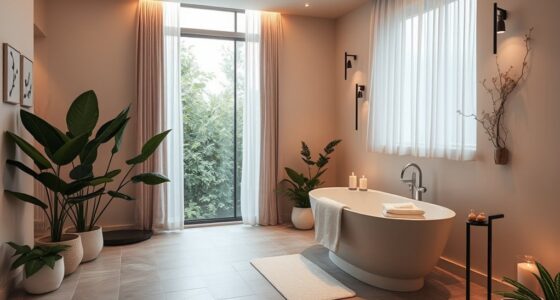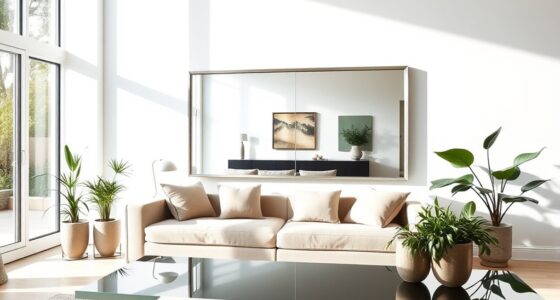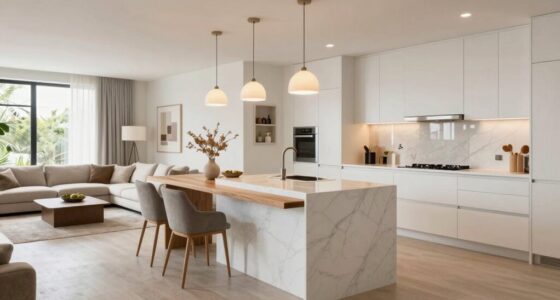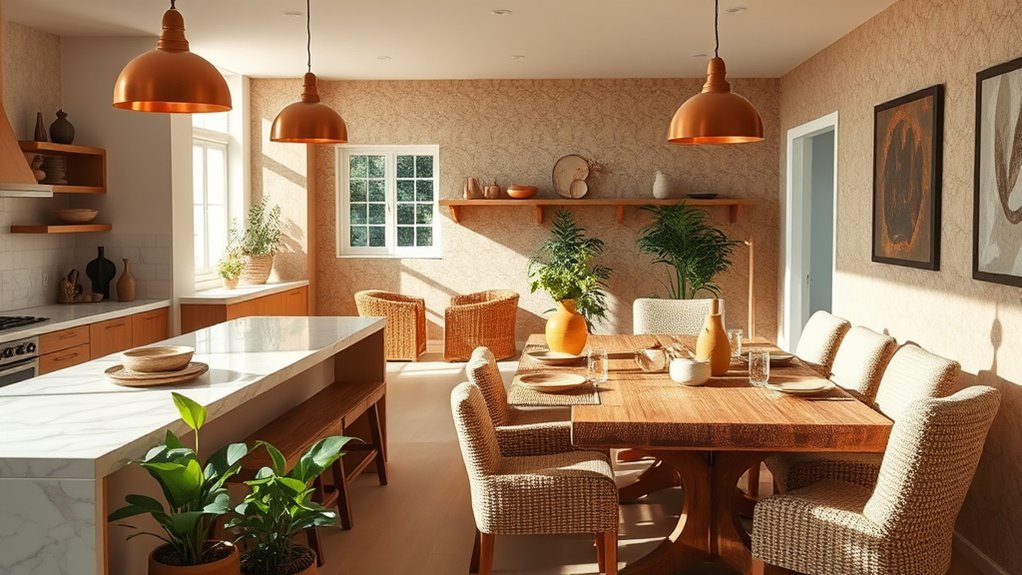

To create a memorable sensory dining space, focus on layered lighting that sets the mood and highlights textures like textured walls or dinnerware. Incorporate tactile elements with natural materials, soft fabrics, and varied surfaces to engage touch and sight. Use warm, adjustable lighting alongside textured decor to deepen the sensory experience and foster a cozy atmosphere. Paying attention to these details transforms your kitchen and dining room into an immersive environment—explore further to learn more tips.

Get the little things that make your day delivered free with Prime
- Fast, free delivery on millions of items
- Prime Video, Amazon Music and more included
- Member-only deals all year
Key Takeaways
- Incorporate layered, dimmable lighting to create a warm, inviting atmosphere that enhances sensory engagement.
- Use textured decor and dinnerware to stimulate tactile interest and add visual contrast.
- Highlight textured surfaces with strategic lighting to deepen sensory depth and curiosity.
- Balance ambient, task, and accent lighting for a cohesive environment that supports multisensory experiences.
- Integrate soundproofing and subtle background music to elevate ambiance and minimize distractions.
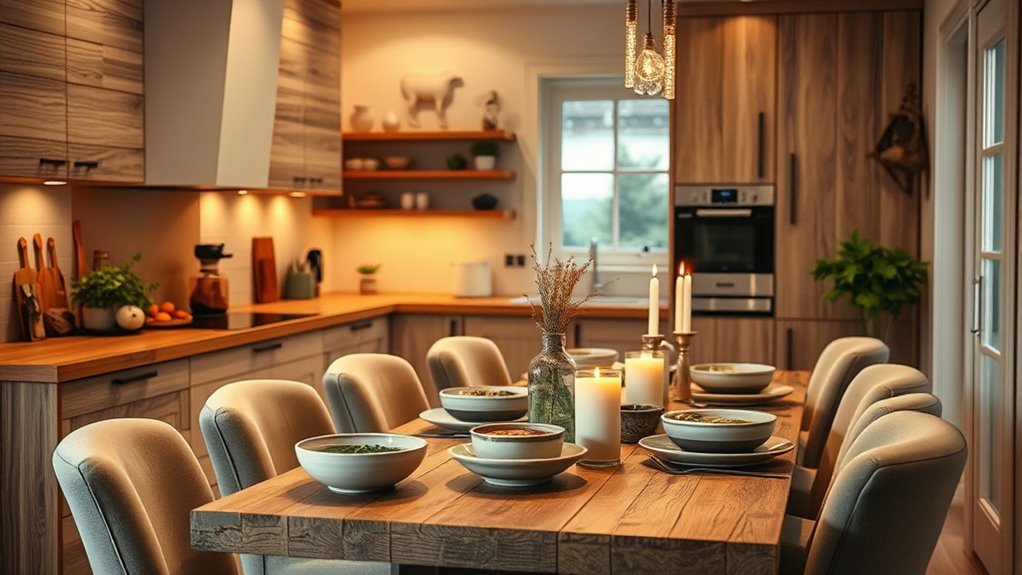
Sensory dining experiences are revolutionizing how we enjoy food by engaging all five senses to create immersive and memorable meals. When designing your kitchen or dining room, paying attention to lighting ambiance and material textures can markedly enhance these experiences. Lighting isn’t just about visibility; it sets the mood and influences perception. Soft, warm lighting creates an inviting atmosphere that encourages relaxation, making each bite feel more comforting. On the other hand, dynamic lighting options, like adjustable LEDs, allow you to tailor the ambiance for different occasions, from casual family dinners to special celebrations. Consider integrating dimmable fixtures or layered lighting, combining ambient, task, and accent lights to craft a multisensory environment that complements your dining experience.
Enhance your dining space with layered lighting and textured decor for a truly immersive sensory experience.
Material textures also play an essential role in sensory dining. The tactile quality of your surroundings can heighten the overall experience, making the meal more engaging. For example, smooth marble countertops or glossy ceramic plates provide a sleek, refined feel, while textured wood or woven placemats add warmth and a rustic charm. Incorporate a variety of textures in your tableware, furniture, and decor to stimulate touch and create contrast. When you run your fingers over a rough linen tablecloth or feel the coolness of a glass, it enhances your connection to the meal, making the experience more immersive. Additionally, mixing textures in your space can evoke different emotions—soft fabrics convey comfort, whereas rougher surfaces add energy and vibrancy. Creating a sensory-rich environment can further deepen this experience by engaging multiple senses simultaneously.
To maximize the sensory impact, coordinate lighting ambiance and material textures thoughtfully. Use lighting to highlight textures—illuminate a textured wall or patterned dinnerware to draw attention and evoke tactile curiosity. For example, a softly lit, textured stone wall can create a cozy, earthy environment that stimulates your sense of touch and sight simultaneously. Also, consider the acoustics of your space; subtle background music and soundproofing can further amplify the sensory experience by reducing distractions. Keep your furniture and finishes in harmony, choosing materials and lighting that complement each other and resonate with your desired mood.
Ultimately, designing with sensory elements like lighting ambiance and material textures allows you to craft a dining space that invites engagement on multiple levels. When you thoughtfully combine these components, every meal becomes an immersive experience that delights the senses, making dining not just about eating but about truly savoring every moment.
dimmable layered lighting for dining room
As an affiliate, we earn on qualifying purchases.
As an affiliate, we earn on qualifying purchases.
Frequently Asked Questions
How Can I Incorporate Tactile Elements Into My Dining Space?
To incorporate tactile elements into your dining space, start with textured wall finishes to add visual and physical interest. Use tactile tableware, like bowls with embossed patterns or varied surfaces, to enhance the sensory experience during meals. Mix different materials and textures for furniture and accessories, creating a layered, inviting atmosphere. These elements encourage guests to engage their sense of touch, making your dining area both stylish and immersive.
What Lighting Options Enhance Sensory Dining Experiences?
You should opt for warm ambient illumination and adjustable color temperature lighting to enhance your sensory dining experience. Use soft, dimmable lights to create a cozy atmosphere, while incorporating color-changing LEDs to stimulate your senses through subtle shifts in hue. Balance bright task lighting with ambient glows, allowing you to customize the mood and engage multiple senses, making each meal memorable and inviting.
How Do Scents Influence the Overall Dining Atmosphere?
Scents substantially influence your dining atmosphere by creating mood and enhancing flavors. You can use aroma layering to combine complementary aromas, making the environment more inviting. Scent zoning allows you to direct specific fragrances to different areas, guiding your guests’ experience. By thoughtfully managing these elements, you make your space more immersive, enticing diners to enjoy not just the food but the entire sensory journey you craft through carefully curated aromas.
What Materials Are Best for Soundproofing in Dining Areas?
You should prioritize acoustic wall panels and soundproof flooring to effectively reduce noise in your dining area. Acoustic wall panels absorb sound and prevent echo, creating a calmer atmosphere. Soundproof flooring, like cork or thick carpets, also minimizes noise transmission between floors. Combining these materials helps you craft a serene dining environment, enhancing the sensory experience and ensuring conversations stay intimate without disruptive sounds.
How Can Colors Affect Taste Perception During Meals?
Ever wonder how colors can change your taste? You see, color psychology plays a big role in perception. Bright, warm hues like reds and oranges can make food seem more flavorful and inviting, enhancing visual presentation. Cooler shades like blues might suppress appetite or dull taste, creating a calmer dining experience. So, choose your colors wisely—they don’t just set the mood but can heighten or diminish your enjoyment of flavors.
Conclusion
By blending thoughtful design with your senses, you create a symphony of flavors and feelings that turn dining into a dance. Let your space sing with inviting textures, warm lighting, and tantalizing aromas, making every meal an unforgettable journey. When your kitchen and dining room become a sensory playground, eating transforms from routine to ritual. Embrace these tips, and watch your space bloom into a haven where every bite sparks joy and every moment feels like a feast for the soul.
Halloween Picks
halloween
As an affiliate, we earn on qualifying purchases.