
TL;DR

Get the little things that make your day delivered free with Prime
- Fast, free delivery on millions of items
- Prime Video, Amazon Music and more included
- Member-only deals all year
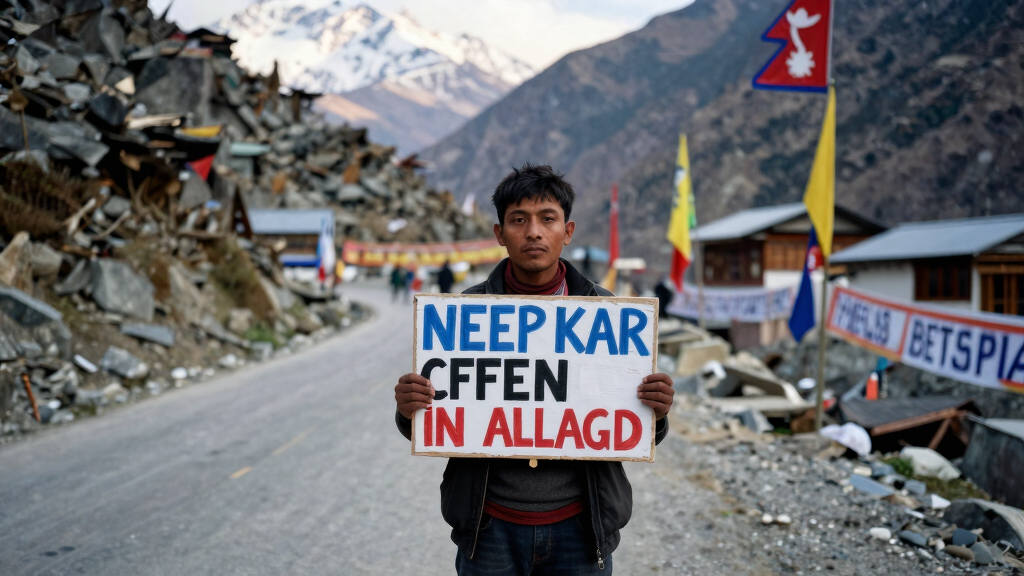
Nepal has officially protested India’s plan to reopen a Himalayan mountain pass connecting to Tibet, citing territorial concerns. The move has reignited border tensions amid ongoing disputes.
Nepal has officially protested India’s decision to reopen a Himalayan mountain pass leading to Tibet, marking a significant escalation in ongoing border tensions between the two nations.
According to Nepal’s Ministry of Foreign Affairs, the government lodged a formal protest against India’s move to reopen the Lipulekh pass, a route that connects Nepal, India, and Tibet. Nepal claims the pass lies within its territorial boundaries, and the protest emphasizes its opposition to India’s unilateral action. The Indian government announced the reopening of the pass on May 13, 2026, citing increased trade and pilgrimage activities. The move is viewed as part of India’s broader efforts to improve connectivity with Tibet, a region governed by China. Nepal’s protest highlights the ongoing dispute over border delineation in the region, which has been a source of tension since the 1960s. While India maintains that the pass is a vital trade route and part of its infrastructure development, Nepal asserts that the route’s reopening infringes on its sovereignty, as per its territorial claims.
Why It Matters
This development matters because it underscores the fragile border relations between Nepal and India, two neighbors with a complex history of territorial disputes. The reopening of the pass could impact regional stability, influence diplomatic relations, and affect the security dynamics in the Himalayan region. It also highlights the broader geopolitical contest involving China, India, and Nepal over influence and territorial sovereignty.
Himalayan mountain pass travel gear
As an affiliate, we earn on qualifying purchases.
As an affiliate, we earn on qualifying purchases.
Background
The dispute over the Lipulekh pass has been ongoing for decades, with Nepal asserting that the area falls within its territory, while India claims it as part of its border. In 2019, India officially published a new political map including the territory, which Nepal rejected, leading to diplomatic protests. The pass is a critical route for pilgrims traveling to Mount Kailash and Lake Manasarovar in Tibet, making its reopening a sensitive issue for religious and nationalistic reasons. The recent decision by India to reopen the pass follows a series of infrastructure projects aimed at improving connectivity in the region, but it has been met with resistance from Nepal, which views it as a breach of sovereignty.
“Nepal has lodged a formal protest against India’s unilateral move to reopen the Lipulekh pass, asserting that it encroaches on Nepalese territory.”
— Nepal’s Foreign Ministry spokesperson
“India considers the Lipulekh pass a vital trade and pilgrimage route, and its reopening is part of broader infrastructure development for regional connectivity.”
— Indian government spokesperson
What Remains Unclear
It is not yet clear how India and Nepal will resolve the dispute or whether diplomatic negotiations will follow. The precise territorial boundaries and India’s legal justification for the reopening remain points of contention. The potential for escalation or resolution is still uncertain.
What’s Next
Next steps include diplomatic engagements between Nepal and India, possibly involving regional mediators. Monitoring whether India proceeds with the reopening without further dispute or if Nepal escalates diplomatic or legal actions is critical. The situation could influence future border negotiations and regional stability.
Key Questions
Why is the Lipulekh pass important?
The Lipulekh pass is a key route for religious pilgrimage to Mount Kailash and Lake Manasarovar, and also holds strategic and trade significance in the region.
What are Nepal’s main concerns about India’s move?
Nepal claims the pass lies within its territory and views the reopening as a violation of its sovereignty and territorial integrity.
Could this lead to military conflict?
There are no indications of immediate military escalation, but the dispute increases regional tensions and could impact diplomatic relations if unresolved.
Has India responded to Nepal’s protest?
India has maintained that the pass is a vital route for trade and pilgrimage, emphasizing infrastructural development, but has not issued a detailed response to Nepal’s protest.
Halloween Picks
halloween
As an affiliate, we earn on qualifying purchases.