

To organize seasonal clothing for easy access year-round, start by decluttering to remove unused items. Use space-saving solutions like labeled bins or vacuum-sealed bags for out-of-season pieces. Arrange your clothes by color or style for quick identification, and rotate seasonal items regularly to keep the wardrobe fresh. Maximize space with vertical storage and dividers. Maintaining regular cleaning and organization routines will keep your wardrobe functional and inviting—if you keep exploring, you’ll discover even more tips to stay on top of it.

Get the little things that make your day delivered free with Prime
- Fast, free delivery on millions of items
- Prime Video, Amazon Music and more included
- Member-only deals all year
Key Takeaways
- Declutter and remove unused or out-of-season clothing regularly to maximize space and efficiency.
- Use labeled bins or vacuum-sealed bags for storing off-season items to keep them organized and accessible.
- Rotate seasonal clothing to the front of the closet for easy access during relevant months.
- Implement space-saving solutions like vertical storage, dividers, and stackable bins to optimize closet space.
- Maintain cleanliness and organization through regular cleaning and inspection to ensure quick, hassle-free access.
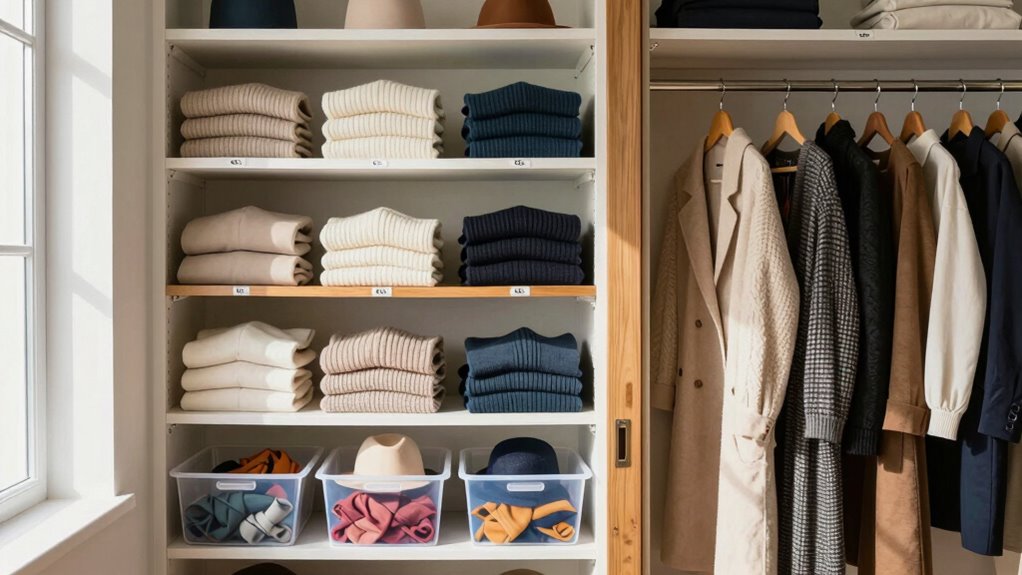
Have you ever struggled to find your favorite sweater or swimsuit because your closet is cluttered with out-of-season clothes? If so, you’re not alone. The key to making seasonal clothing easier to access is organization — and that starts with effective strategies like color coding and space optimization. When you implement these methods, your wardrobe becomes a well-oiled system that saves you time and reduces frustration.
Color coding is a game-changer. By arranging your clothes based on color, you create a visual flow that makes it simple to locate specific items. For instance, organize your tops from light to dark shades or group similar hues together. This way, when you’re looking for a particular shade, you can scan your closet quickly instead of rummaging through piles. Color coding isn’t just about aesthetics; it also helps you see at a glance what’s available, guaranteeing you don’t buy duplicates of the same color or overlook a favorite piece. Plus, it adds a pleasing visual order that makes your closet look tidy and inviting.
Color coding creates visual flow, making clothes easier to find and your closet more inviting.
Space optimization is equally essential. Start by decluttering your closet — remove anything that no longer fits, is out of style, or you haven’t worn in the past year. Once you’ve pared down, think vertically. Use stackable bins, shelf dividers, or hanging organizers to maximize every inch of space. Store out-of-season clothing in labeled bins or vacuum-sealed bags, and keep them on higher shelves or under the bed to free up prime space for current seasonal items. Rotating your wardrobe based on the season guarantees that only relevant clothing takes up your most accessible space. When you switch from winter to summer, for example, move your warm layers out of sight and bring forward your lighter, warmer-weather pieces. Utilizing space-saving storage solutions can further enhance your organization efforts and maintain a clutter-free environment. Additionally, incorporating clothing rotation techniques can help keep your wardrobe fresh and adaptable to changing seasons. This reduces clutter and makes your daily dressing routine quicker.
Another helpful tip is to regularly clean your closet, which not only keeps it looking fresh but also helps you identify items that no longer belong or are in need of repair. Incorporating pressure washers for cleaning your closet or storage areas can also help maintain a fresh environment, especially if you store seasonal clothing in bins or under beds.
In the end, the goal is to create a wardrobe that’s both functional and visually appealing. Color coding and space optimization aren’t just about neatness; they’re about crafting a system that simplifies your life. When your seasonal clothing is well-organized, you’ll spend less time searching and more time enjoying your wardrobe, no matter the season.
vacuum-sealed storage bags for clothing
As an affiliate, we earn on qualifying purchases.
As an affiliate, we earn on qualifying purchases.
Frequently Asked Questions
How Often Should I Reassess My Seasonal Wardrobe?
You should reassess your seasonal wardrobe every three to six months. This allows you to update your wardrobe rotation and identify items for seasonal decluttering. By regularly reviewing what you wear and need, you keep your closet organized and prevent clutter buildup. Frequent reassessment guarantees you’re wearing everything efficiently, and you can donate or store items that no longer serve your current style or climate needs.
What’s the Best Way to Store Fragile Seasonal Items?
Imagine storing delicate winter scarves in clear, padded storage containers with cushioning to prevent damage. To keep fragile seasonal items safe, use storage containers specifically designed for delicate items, and apply clear labeling techniques for easy identification. Guarantee containers are sturdy and airtight. By doing so, you protect your items from dust, moisture, and crushing, making it simple to find and safely store your seasonal treasures year-round.
How Can I Prevent Clothing From Fading or Damage?
To prevent clothing from fading or damage, prioritize fabric protection and color preservation. Use gentle detergents and wash items in cold water to maintain fabric integrity. Store clothes in breathable garment bags or containers to shield them from sunlight and dust, which can cause fading. Avoid hanging delicate fabrics for long periods, and rotate your wardrobe regularly to keep colors vibrant and fabrics in good condition.
What Are Eco-Friendly Storage Options for Seasonal Clothes?
Forget plastic, and embrace eco-friendly bins made from sustainable fabrics—they’re stylish and kind to the planet. These bins prevent your seasonal clothes from harm while reducing plastic waste. You can also choose storage options crafted from natural, biodegradable materials that breathe and protect your wardrobe. Not only do you get easy access, but you also support eco-conscious choices. Your closet will thank you for going green—without sacrificing style or function.
How Do I Handle Clothing With Sentimental Value?
To handle clothing with sentimental value, you should prioritize your emotional attachment by carefully selecting items that truly hold meaning. Store sentimental items in a dedicated box or container, keeping them safe yet accessible. Consider taking photos of items you no longer wear but want to remember. This way, you preserve the memory without cluttering your space. Regularly reassess your collection to guarantee only meaningful pieces are kept.
Conclusion
Now that you’ve learned how to organize your seasonal clothing, you’re all set to enjoy a clutter-free wardrobe year-round. Remember, keeping things accessible and well-sorted makes picking outfits quicker and stress-free. So, why not take a few minutes today to implement these tips? After all, a tidy closet can brighten your day just as much as your favorite outfit. Are you ready to make wardrobe organization a breeze?
Halloween Picks
halloween
As an affiliate, we earn on qualifying purchases.