
To combat loneliness, explore virtual companionship programs that connect you with trained volunteers, chatbots, or loved ones via video calls and messaging. Joining local or online community activities, like hobby groups or volunteering, can also foster genuine connections. Combining online interactions with in-person involvement helps build lasting relationships and creates a sense of belonging. Keep exploring options, and you’ll find more ways to strengthen your social ties and reduce feelings of isolation.
Key Takeaways
- Virtual companionship platforms connect users with trained volunteers or chatbots for meaningful conversations and emotional support.
- Participating in local or online community groups fosters social bonds, sense of purpose, and reduces feelings of isolation.
- Technology-enabled video calls and messaging apps facilitate regular social interactions regardless of physical distance.
- Combining virtual interactions with in-person activities enhances social resilience and builds lasting friendships.
- Small, consistent engagement through online or community programs effectively promotes sustained social connection.
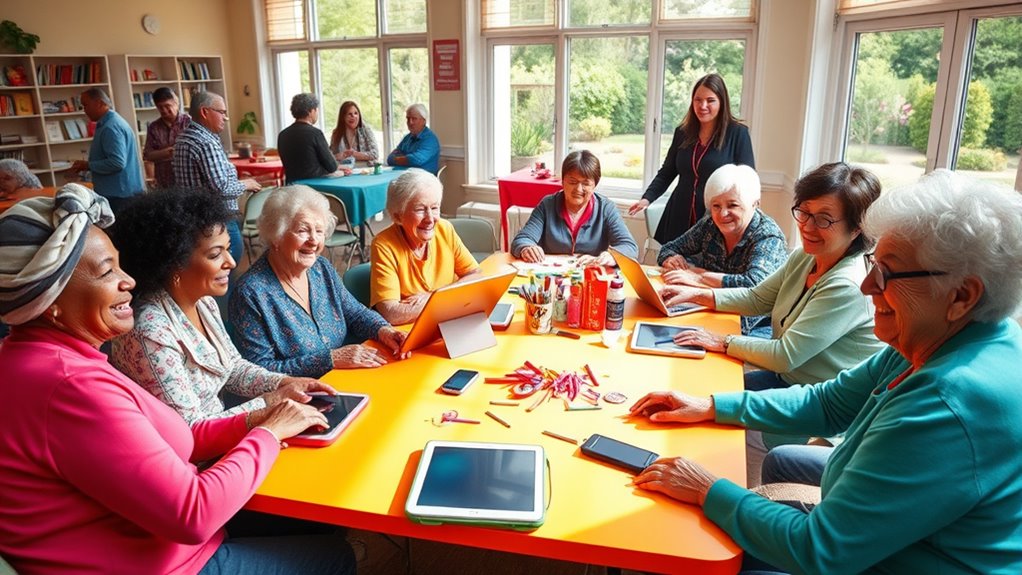
Loneliness can affect anyone, but the good news is that you can take simple steps to reduce it. One effective approach is to explore virtual companionship options. Technology has made it easier than ever to connect with others, even when you’re physically alone. Virtual companionship platforms allow you to engage with trained volunteers, chatbots, or even friends and family through video calls or messaging apps. These tools provide a sense of presence and understanding, helping you feel less isolated. Whether it’s a daily check-in or a longer conversation, virtual companionship can fill the emotional gap that loneliness leaves behind. It’s a convenient way to maintain social contact without the logistical challenges of face-to-face meetings. Many platforms also offer tailored services, so you can find a match that suits your personality and preferences, making interactions more meaningful.
In addition to virtual companionship, community engagement plays an essential role in reducing feelings of loneliness. Getting involved in local groups or activities not only provides social interaction but also helps you build a sense of belonging. You might join a hobby club, attend local events, or volunteer for community projects. These activities create opportunities to meet new people who share your interests, fostering genuine connections. Community engagement encourages a sense of purpose, which is crucial for emotional well-being. When you participate actively, you’re less likely to dwell on feelings of isolation because you’re contributing to something larger than yourself. Plus, many communities now offer online groups that facilitate participation from home, making it easier for you to get involved without stepping outside your comfort zone.
Combining virtual companionship with community engagement offers an all-encompassing approach to fighting loneliness. You can connect with others online to bridge the gap until you feel comfortable participating in in-person activities. Over time, these connections can grow into friendships, providing ongoing support and interaction. Engaging in both digital and physical community activities also helps diversify your social network, which enhances resilience against loneliness. Remember, taking small steps like joining an online discussion group or volunteering locally can make a significant difference. The key is consistency—regular contact, whether virtual or in person, reinforces your social ties and gradually reduces feelings of isolation. Ultimately, embracing these tools and programs empowers you to reclaim a sense of community, connection, and belonging, making loneliness a less overwhelming experience.
virtual companionship platform
As an affiliate, we earn on qualifying purchases.
As an affiliate, we earn on qualifying purchases.
Frequently Asked Questions
How Can Technology Effectively Foster Genuine Human Connections?
Technology can effectively foster genuine human connections by using tools like virtual reality, which immerses you in realistic shared experiences, and online dating platforms that help you meet people with similar interests. These technologies break down geographical barriers, allowing you to build meaningful relationships. By focusing on authentic interactions and emotional engagement, you can deepen connections and combat loneliness more effectively in today’s digital age.
What Role Do Community Centers Play in Reducing Loneliness?
Community centers play a essential role in reducing loneliness by organizing volunteer programs and peer support groups. You can participate in these activities to connect with others and build meaningful relationships. They provide a welcoming space for social interaction, fostering a sense of belonging. By engaging in community events, you’ll find opportunities to support and be supported, helping you feel less isolated and more connected to those around you.
Are There Specific Programs Tailored for Elderly Isolation?
Yes, there are specific programs designed for elderly isolation. You can participate in virtual buddy programs that connect seniors with volunteers for regular chats and companionship. Intergenerational initiatives also foster social bonds by bringing together different age groups through activities and shared projects. These programs help you stay connected, reduce loneliness, and build a supportive community, making a meaningful difference in your daily life.
How Can Workplaces Support Employees Experiencing Loneliness?
You might think workplaces can’t solve loneliness, but they absolutely can. You can support employees experiencing loneliness by fostering a culture of mental health awareness and encouraging peer support networks. Regular check-ins, mental health resources, and social events help create connections. When you prioritize mental health, you empower your team to combat isolation and build a supportive environment that boosts overall well-being and productivity.
What Are Emerging Trends in Combating Social Isolation?
You’re seeing emerging trends like virtual meetups and mental health apps gaining traction. These tools help you connect with others remotely, fostering social bonds despite physical distance. Virtual meetups create opportunities for informal interactions, while mental health apps offer support and resources to manage loneliness. By embracing these innovations, you can stay socially engaged and prioritize your mental well-being, even during challenging times.
video call chatbots for seniors
As an affiliate, we earn on qualifying purchases.
As an affiliate, we earn on qualifying purchases.
Conclusion
You might be surprised to learn that nearly 1 in 4 adults reports feeling lonely regularly. By engaging in community programs or using innovative tools, you can break that cycle and build meaningful connections. Taking small steps, like joining a local group or trying new apps, can make a big difference. Remember, you’re not alone in feeling lonely, and with effort, you can find support and companionship to improve your well-being.

The Basement Quilt: Colebridge Community Series Book 1 of 7
As an affiliate, we earn on qualifying purchases.
As an affiliate, we earn on qualifying purchases.
volunteering apps for social connection
As an affiliate, we earn on qualifying purchases.
As an affiliate, we earn on qualifying purchases.