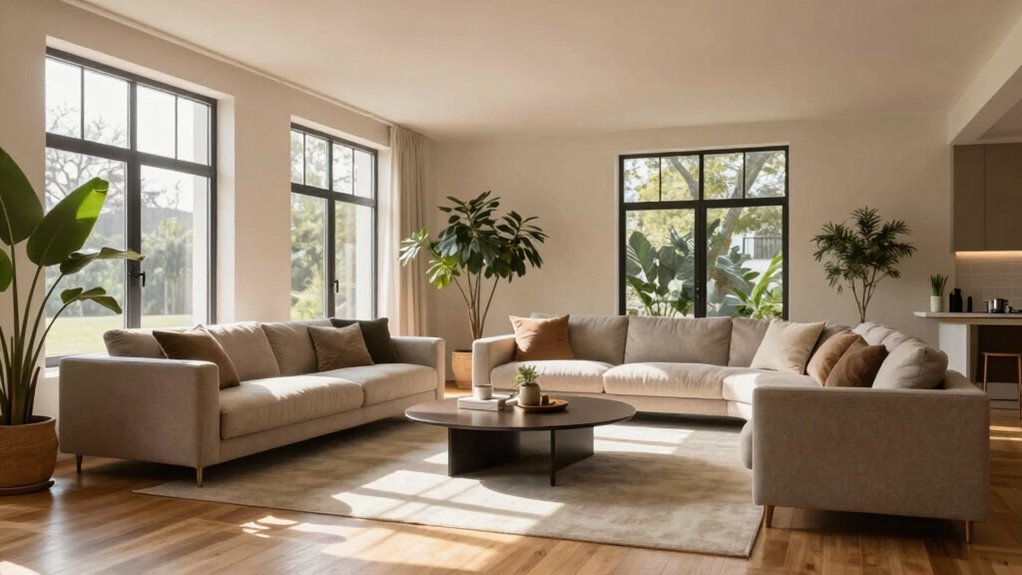

Better furniture spacing helps you walk confidently indoors by creating clear, unobstructed pathways that make movement smooth and natural. When furniture is thoughtfully arranged, you won’t feel cramped or hesitant, reducing the risk of bumps or accidents. Good spacing also balances accessibility with a neat appearance, making spaces easier to navigate. If you want to discover how ideal layout boosts your confidence even further, keep exploring these smart design principles.

Get the little things that make your day delivered free with Prime
- Fast, free delivery on millions of items
- Prime Video, Amazon Music and more included
- Member-only deals all year
Key Takeaways
- Proper furniture spacing creates clear pathways, reducing hesitation and promoting confident movement indoors.
- Well-arranged furniture enhances room flow, making navigation intuitive and effortless.
- Adequate spacing prevents clutter, minimizing obstacles that could cause accidents or uncertainty.
- Thoughtful decor placement defines zones, fostering a sense of order and control in the space.
- Optimized layout boosts overall comfort and safety, encouraging confident indoor walking.
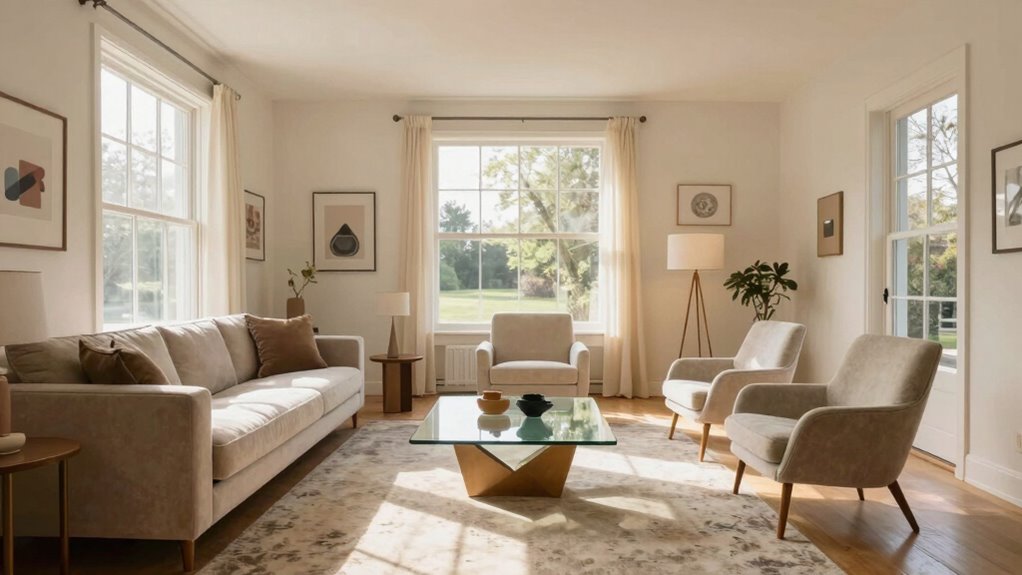
Creating the right furniture spacing can dramatically boost your confidence indoors, making your space feel more inviting and functional. When you pay attention to decor placement, you shape how you move through your room, influencing both comfort and confidence. Properly spaced furniture helps you navigate your space smoothly, reducing the risk of bumping into things or feeling cramped. It’s about finding that perfect balance where everything feels accessible without creating clutter or obstacles.
Thoughtful furniture spacing enhances comfort, flow, and confidence in your space.
If your furniture is too tightly packed, you might feel restricted, almost like the room is closing in on you. This can lead to hesitation when walking through your space, making you unsure of your footing or causing unnecessary stress. Conversely, if your furniture is too spread out, your room might feel empty or disjointed, which can also undermine your confidence. You want each piece to serve a purpose and be positioned to encourage natural movement, creating a clear room flow that guides you effortlessly from one area to another.
Decor placement plays a vital role because it influences the overall aesthetic and function of your space. When you place furniture thoughtfully, you create designated zones that serve specific purposes. For instance, positioning your sofa and chairs to face each other fosters conversation and interaction, while keeping pathways clear ensures you can move freely without hesitation. Good decor placement isn’t just about style; it’s about making your space work for you, promoting confidence in your ability to enjoy your environment.
Room flow is the backbone of furniture spacing. It’s about designing a layout where your movement feels intuitive and unrestrained. When you walk into a room with good flow, you naturally know where to go and how to get there. You won’t have to navigate around obstacles or second-guess your steps. Instead, your furniture placement encourages a seamless transition from one area to another, boosting your confidence in your ability to manage your space comfortably. This sense of ease extends beyond just functional movement; it influences how you feel in your home overall, fostering a sense of control and tranquility. Additionally, understanding furniture arrangement can help optimize space and improve overall room functionality. Incorporating space planning principles can further enhance the room’s usability and aesthetic appeal.
Ultimately, better furniture spacing isn’t just about aesthetics; it’s about creating an environment that nurtures your confidence. When your decor placement aligns with ideal room flow, you’ll find yourself moving with more assurance and feeling more at ease inside. Good furniture spacing can also help prevent accidents, creating an inviting environment that supports your everyday life without hesitation or doubt.
Frequently Asked Questions
How Does Furniture Spacing Affect Overall Indoor Safety?
Furniture spacing directly impacts your indoor safety by preventing obstacles that could cause trips or falls. When you arrange decorative items with proper spacing, it creates an aesthetic balance that also guarantees clear pathways. You’ll feel more confident walking around, knowing there’s enough room to move freely without bumping into furniture. Good spacing promotes a safe environment, making your indoor space both stylish and secure.
What Materials Influence Furniture Placement and Spacing Choices?
You consider materials like hardwood, metal, and sturdy composites, as they influence furniture placement and spacing choices through their durability. Robust materials guarantee your furniture stays stable and safe, even with frequent movement. Additionally, choosing materials that match your aesthetic harmony helps you create a balanced space, making navigation easier and boosting your confidence when walking indoors. Prioritizing durability and aesthetic harmony guides your furniture arrangement for better safety and style.
Can Furniture Layout Impact Indoor Air Quality?
Imagine your space as a revitalizing gust; furniture layout can considerably impact indoor air quality. When you space furniture thoughtfully, you promote better air circulation, reducing pollutants and odors. Additionally, strategic placement helps dampen noise, creating a calmer environment. Properly arranged furniture allows for efficient airflow and sound absorption, making your indoor space healthier and more comfortable, boosting your confidence as you move around freely and peacefully.
How Does Furniture Spacing Relate to Accessibility for Disabled Individuals?
You’ll find that proper furniture spacing directly improves accessibility for disabled individuals by creating clear, accessible pathways. It guarantees there’s enough room for mobility aids like wheelchairs or walkers to move smoothly without obstacles. When furniture is well-spaced, it reduces the risk of accidents and makes maneuvering indoor spaces more comfortable and confident. This thoughtful layout promotes independence and inclusivity, making your home safer and more accommodating for everyone.
What Are Common Mistakes in Furniture Placement That Reduce Confidence?
Common mistakes in furniture placement that reduce confidence include cluttered arrangements and poor visual balance, which can make navigation feel overwhelming. When furniture lacks aesthetic harmony, you might feel unsure about your movement paths. To boost confidence, guarantee ample space between pieces, create a clear visual flow, and maintain balance. Proper spacing enhances comfort, minimizes obstacles, and helps you walk indoors with more ease and assurance.
Conclusion
When you give furniture enough space, you’ll find it easier to move confidently indoors. Clear pathways reduce the risk of tripping and make your space feel more open and welcoming. Remember, a well-organized home isn’t just about aesthetics—it’s about your comfort and safety. As the saying goes, “A place for everything, and everything in its place.” By optimizing furniture spacing, you create an environment where confidence and ease walk hand in hand.
NFL season / tailgating Picks
team gear
As an affiliate, we earn on qualifying purchases.