To choose the right emergency response device, consider your daily routines, activity level, and preferred way to carry it—whether on your wrist, clipped, or in your pocket. Look for features like GPS tracking, automatic alerts, and easy activation to guarantee help is just a quick push away. Seamless integration with smartphones or home systems can boost safety, so finding the perfect fit depends on your lifestyle. Keep exploring to discover more ways to stay protected.
Key Takeaways
- Assess your daily routine and environment to select a device that fits your lifestyle and carrying preferences.
- Prioritize features like GPS tracking, automatic alerts, and one-touch activation for quick, reliable emergency response.
- Ensure compatibility with your smartphone or home automation systems for seamless integration and monitoring.
- Consider advanced functionalities such as fall detection or voice activation to enhance safety in various situations.
- Choose a device with user-friendly operation and durability to ensure consistent use during emergencies.
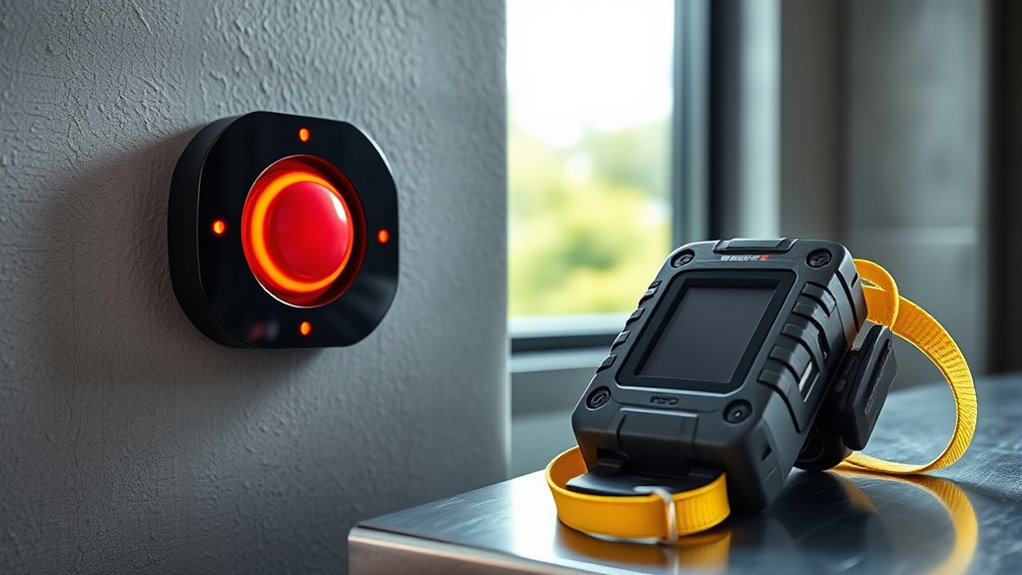
Emergency response devices are essential tools that can quickly alert and summon help during critical situations. When it comes to personal safety, having a reliable alert system ensures you’re never alone in an emergency. Whether you’re walking home at night, hiking in remote areas, or simply want peace of mind in daily life, the right device can make a significant difference. As technology advances, these devices have become more sophisticated, seamlessly integrating with your daily routines and digital tools. This integration enhances their effectiveness and provides a sense of security that adapts to your lifestyle.
First, consider how personal safety is your top priority. The ideal emergency response device should be easy to carry, quick to activate, and capable of reaching help promptly. Features like one-touch emergency buttons, GPS tracking, and automatic alerts are crucial. GPS integration allows responders to locate you precisely, reducing response time and increasing the chances of timely assistance. These features are particularly valuable if you often find yourself in unfamiliar or isolated areas. Additionally, some devices can send automated messages or alerts to pre-selected contacts, so help is notified even if you’re unable to make a call. When selecting a device, think about how it aligns with your daily routines—whether it’s worn on your wrist, clipped to your belt, or carried in your pocket. The goal is to ensure that help can be summoned instantly, at the push of a button, without fumbling or delay.
Technology integration plays a vital role in modern emergency response devices. Many systems now connect with smartphones or home automation networks, providing a seamless safety net. For instance, some devices sync with your mobile app, enabling you to customize contact lists, view location history, or activate emergency protocols remotely. This connectivity allows for more comprehensive safety management, giving you control at your fingertips. Furthermore, advancements like fall detection, voice activation, and real-time monitoring have turned these devices into proactive safety tools. They don’t just react when an emergency occurs—they can also predict risks and notify you accordingly. This integration makes it easier to stay safe, whether you’re alone at home, traveling abroad, or exercising outdoors.
Frequently Asked Questions
Can Emergency Devices Be Integrated With Smart Home Systems?
Yes, emergency devices can be integrated with smart home systems. You just need to verify device compatibility and look for options that support smart home integration features. Many alert systems now connect seamlessly with platforms like Alexa, Google Home, or other smart hubs. This allows you to control and receive emergency alerts conveniently through your existing smart home setup, making safety measures more accessible and responsive.
What Is the Average Lifespan of an Emergency Alert Device?
You can expect an emergency alert device to last about 3 to 5 years, depending on its device durability and battery longevity. Regularly checking and replacing batteries extends its lifespan, ensuring it’s always ready when needed. High-quality devices with durable materials tend to last longer, while some models feature rechargeable batteries, reducing replacement frequency. Proper maintenance and choosing reliable brands help maximize your device’s longevity and performance.
Are There Devices Suitable for Outdoor Use and Extreme Weather?
Yes, there are emergency response devices designed for outdoor use and extreme weather. You should look for options with weather resistance and outdoor durability, guaranteeing they can withstand rain, snow, and harsh conditions. These devices often feature rugged casings, waterproof seals, and temperature resistance, making them reliable in emergencies regardless of weather. By choosing such robust devices, you ensure your safety and quick alerting in any extreme outdoor environment.
How Secure Is the Data Transmitted by These Alert Systems?
You might worry about privacy concerns, but rest assured, these alert systems prioritize your data security. They use advanced data encryption to protect your information during transmission, making it highly secure. Manufacturers regularly update their security protocols to stay ahead of potential threats. So, you can trust that your data remains confidential, ensuring your safety without compromising your privacy.
Do Emergency Response Devices Require Professional Installation or Setup?
Most emergency response devices don’t require professional installation; you can usually handle user setup yourself. However, some advanced systems or those integrated into your home security might need professional installation to guarantee everything functions correctly. If you’re unsure, check the device’s instructions or consult with the provider. While user setup is often straightforward, professional installation can provide added security and peace of mind, especially for complex systems.
Conclusion
Choosing the right emergency response device is like planting a safety net beneath your daily life. It catches you when unexpected falls happen, providing peace of mind and quick help in critical moments. By understanding your needs and options, you guarantee your safety is always within reach, no matter where you are. Remember, the right alert system is your lifeline—ready to spring into action and support you when it matters most.