
To prevent nighttime falls, you can use smart lighting solutions like motion sensors and LED nightlights. These automatically turn on when you enter a room or pass by, offering instant illumination in key areas like hallways and bathrooms. This helps you see clearly and avoid bumps or trips. Installing these devices is simple and keeps your home safe without needing manual switches—continue to explore how these upgrades can make your nights safer.
Key Takeaways
- Installing motion-activated lights in high-risk areas ensures immediate illumination during nighttime movement.
- LED nightlights provide continuous, adjustable lighting that reduces the risk of trips and bumps in dark spaces.
- Combining sensors with nightlights creates a responsive system that enhances home safety proactively.
- Easy-to-install smart lighting upgrades require minimal effort and significantly lower fall hazards.
- Proper lighting in bathrooms, stairwells, and hallways is essential to prevent falls and promote safe navigation at night.
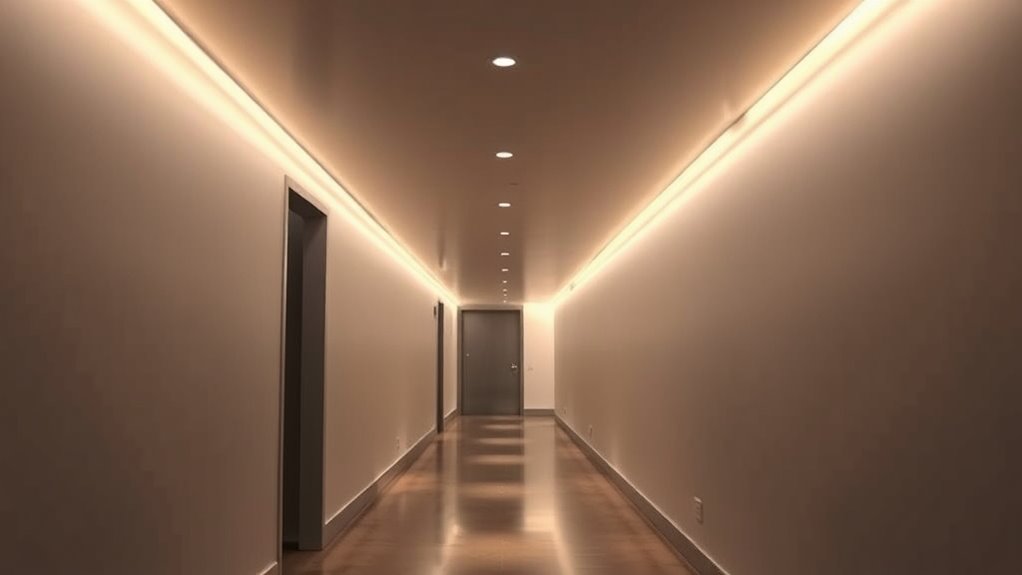
Have you ever wondered how simple safety modifications can prevent accidents and protect you? One effective way to do this is by improving lighting in your home, especially during nighttime hours. Nighttime falls are common and often lead to injuries, but with smart lighting solutions, you can substantially reduce that risk. Motion sensors and LED nightlights are two practical tools that make your home safer without requiring much effort. These devices work together to guarantee you’re never left wandering in darkness, helping you move safely from room to room.
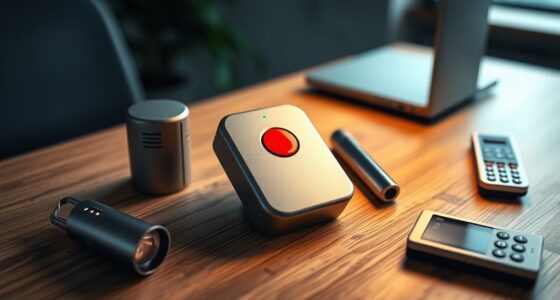
Motion sensors are incredibly convenient because they automatically turn on lights when you enter a room or pass through a hallway. As soon as they detect movement, they activate, providing immediate illumination. This eliminates the need to fumble for switches in the dark, which can lead to trips or bumps. Motion sensors are especially useful in areas like bathrooms, stairwells, and hallways, where lighting is vital for safe navigation. When you’re in a hurry or groggy in the middle of the night, these sensors act quickly, giving you just enough light to see where you’re going without disturbing your sleep with bright overhead lights.
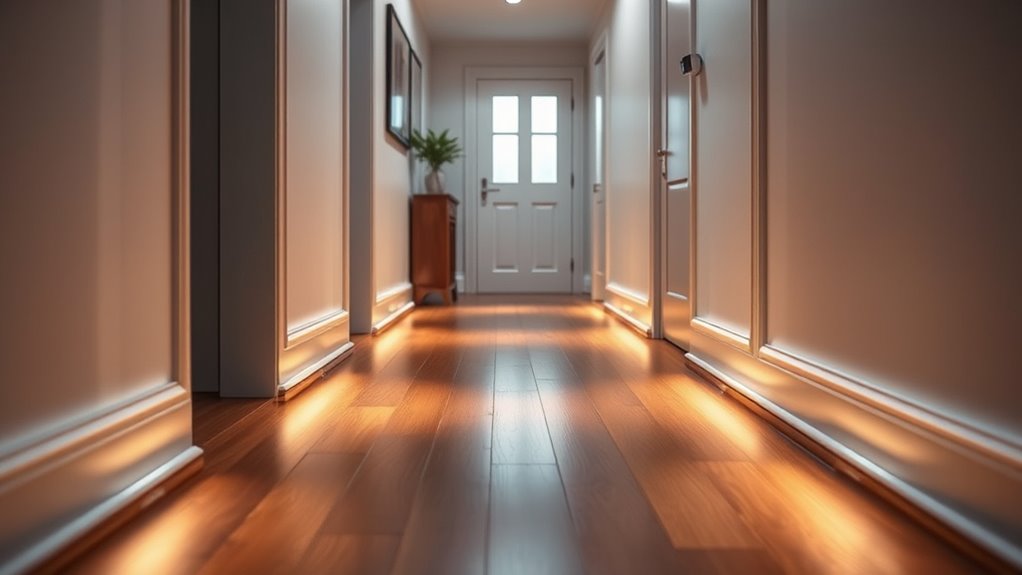
Complementing motion sensors are LED nightlights, which are energy-efficient and long-lasting. These small fixtures can be plugged into outlets across your home, providing consistent, gentle illumination in key areas. Unlike traditional nightlights, LED versions consume less power, last longer, and often come with adjustable brightness settings. You can place them near beds, in bathrooms, or along dark corridors, guaranteeing there’s always enough light for safe movement. Because LED nightlights emit a soft glow, they help you see obstacles clearly without blinding you or disturbing your sleep. Their low energy consumption means you won’t have to worry about high electricity bills, making them a practical long-term solution.
Together, motion sensors and LED nightlights create a smart lighting system that responds to your needs automatically. They give you peace of mind, knowing you won’t stumble in the dark or accidentally step on something harmful. Installing these safety modifications is straightforward—most devices are plug-and-play or easy to wire into your existing lighting system. Their presence alone can deter falls, especially for older adults or anyone with mobility challenges. By investing in these simple upgrades, you’re taking proactive steps toward a safer home environment. The combination of motion sensors and LED nightlights doesn’t just light the way; it actively protects you, allowing you to move confidently through your home at any hour.

AUVON Plug-in LED Backlit Night Light with Motion Sensor & Dusk to Dawn Sensor, Dimmable Warm White Nightlight with 1-50 lm Adjustable Brightness for Bedroom, Bathroom, Stairs, Hallway (4 Pack)
Diffuse Backlit Design: AUVON backlit night light features 16 LED bulbs with uniform luminescence and produces diffuse backlight…
As an affiliate, we earn on qualifying purchases.
As an affiliate, we earn on qualifying purchases.
Frequently Asked Questions
How Do Smart Lights Detect Motion Accurately at Night?
Smart lights detect motion accurately at night through advanced motion sensors that pick up movement within their range. These sensors use infrared or ultrasonic technology to sense changes in heat or motion, triggering the lights instantly. They also adjust to ambient lighting levels, ensuring the lights turn on only when needed. This combination helps prevent false triggers, providing reliable illumination that enhances safety during nighttime activities.
Can Smart Lighting Systems Be Integrated With Existing Home Automation?
You can definitely integrate smart lighting systems with your existing home automation. Many smart lights support voice control, making it easy to manage your lighting hands-free. Plus, you can set customizable schedules to guarantee lights turn on or off at specific times, enhancing convenience and safety. This seamless integration helps create a cohesive smart home experience, allowing you to control lighting effortlessly while optimizing your nighttime safety routines.
What Are the Energy Costs Associated With Smart Lighting for Safety?
You might think smart lighting costs skyrocket energy bills, but research shows they’re quite efficient. Their energy consumption is typically low, especially with features like motion sensors and dimming. While there are initial setup costs, ongoing power use remains minimal, reducing overall cost implications. This means you get enhanced safety without substantially increasing your energy expenses, making smart lighting a cost-effective safety upgrade for your home.
Are There Age-Specific Lighting Options for Different Users?
You can find age-specific lighting options designed for different users, enhancing safety and comfort. These lights offer user customization, allowing you to adjust brightness, color, and timing based on age-related needs. For children, softer, gentle lighting helps with navigation, while seniors benefit from brighter, easy-to-see options. By tailoring lighting to each user’s preferences, you improve safety and create a more comfortable environment for everyone in your home.
How Do Smart Lights Handle Power Outages or System Failures?
Smart lights often include backup power options like batteries or uninterruptible power supplies to handle outages. When a power failure occurs, these backups keep your lights functioning, helping you avoid accidents. Additionally, many smart lighting systems have automatic system recovery features, which restore normal operation once power is restored. This ensures continuous safety and convenience, even during unexpected system failures or outages.
LED nightlights with adjustable brightness
As an affiliate, we earn on qualifying purchases.
As an affiliate, we earn on qualifying purchases.
Conclusion
By upgrading your home with smart lighting, you substantially reduce the risk of nighttime falls—an issue that causes over 800,000 injuries annually in the U.S. alone. Imagine walking safely through your house, with lights automatically guiding your steps. These safety modifications aren’t just convenient; they protect your loved ones and give you peace of mind. So, light the way and make your home a safer, smarter space today.
smart motion-activated lighting system
As an affiliate, we earn on qualifying purchases.
As an affiliate, we earn on qualifying purchases.
plug-in LED nightlights for hallway
As an affiliate, we earn on qualifying purchases.
As an affiliate, we earn on qualifying purchases.