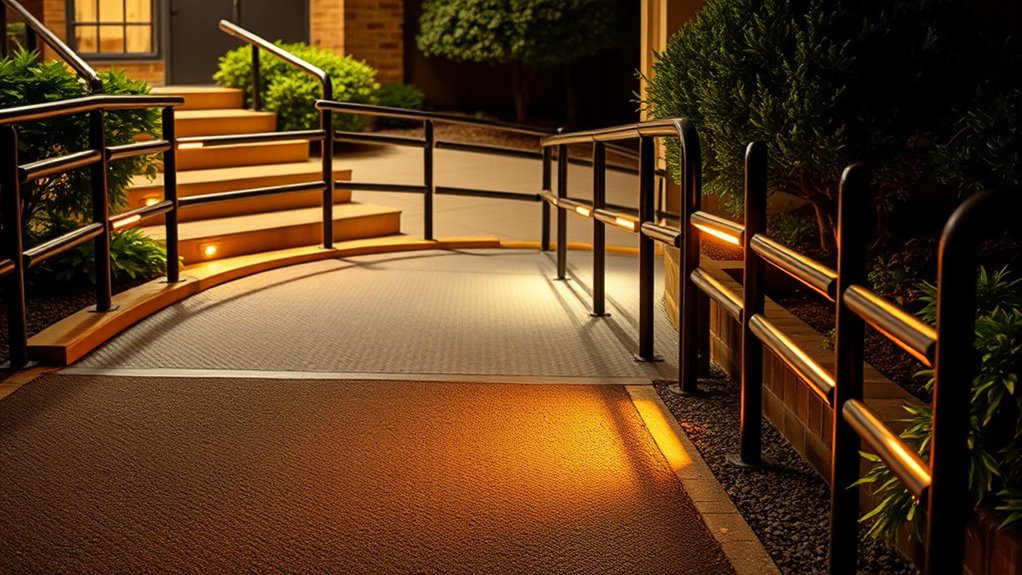

To improve outdoor safety at your entryway, guarantee you install sturdy ramps and railings that provide secure support and easy access for everyone, including those with mobility challenges. Add bright, motion-sensor lighting to enhance visibility during evening hours and reduce trip hazards. Regularly check that fixtures and railings are secure and in good condition. By combining proper lighting, reliable railings, and accessible ramps, you create a safer, more inviting entrance—discover how to perfect these upgrades next.
Key Takeaways
- Install well-lit outdoor fixtures at entryways, steps, and pathways to improve visibility and reduce fall risks.
- Use sturdy, properly mounted railings with continuous handrails and safety balusters to support and prevent falls.
- Incorporate ramps with gentle slopes and secure surfaces to ensure safe, accessible entry for all users.
- Regularly inspect and maintain lighting and railing systems for stability, functionality, and damage prevention.
- Strategically position lighting and safety features to enhance both security and visual guidance around entry points.
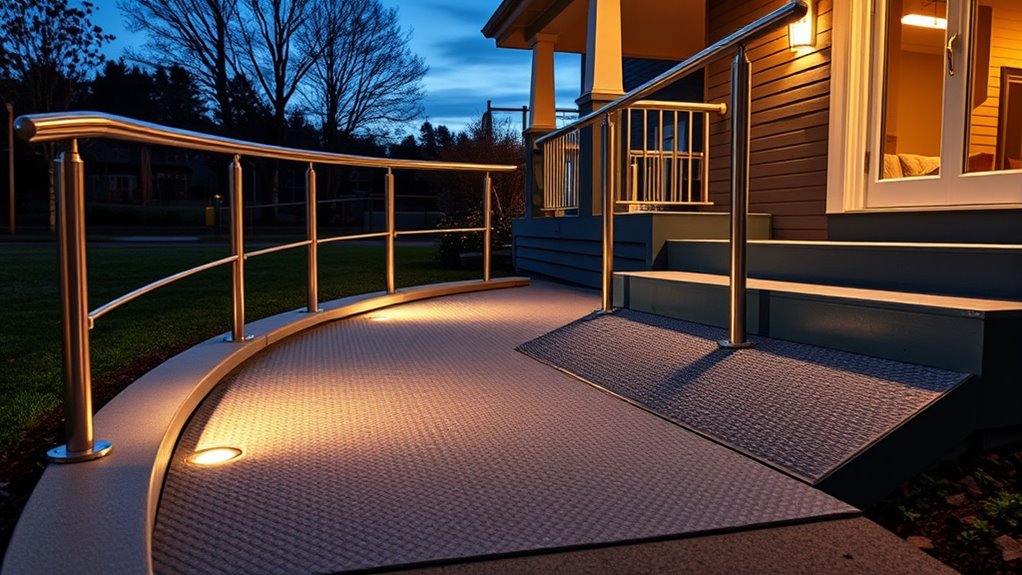
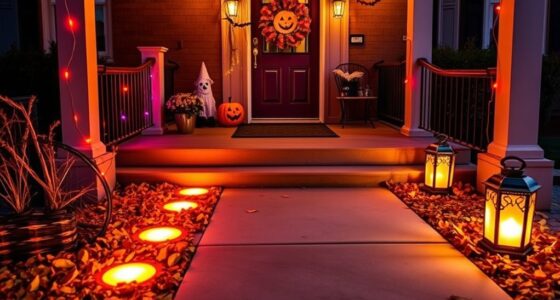
Are you prepared to stay safe while enjoying outdoor activities? Ensuring your entryways are secure and accessible is a crucial step toward that goal. One of the most effective ways to do this is by focusing on lighting enhancements and railing designs. Proper lighting makes a significant difference in visibility, especially during evenings or cloudy days. Installing bright, energy-efficient outdoor lights along pathways, stairs, and entry points helps you see potential hazards clearly and reduces the risk of trips and falls. Motion-sensor lights are particularly useful because they activate only when needed, conserving energy and adding an extra layer of security. When upgrading your lighting, consider placing lights at strategic points—such as near steps, doorways, and along walkways—to create a well-lit environment that guides visitors safely to your door.
In addition to lighting, railing designs play a vital role in outdoor safety. Well-designed railings act as sturdy support, preventing accidental falls and providing confidence for everyone, especially children, seniors, or anyone with mobility challenges. Choose railing styles that are both functional and visually appealing, keeping in mind the materials’ durability against weather conditions. For example, metal or treated wood railings tend to withstand the elements better and require less maintenance. Proper height and secure mounting are essential for maximum safety—your railings should be easy to grip without being cumbersome, offering support without obstructing visibility. Think about adding features like intermediate balusters or panels to prevent small children from slipping through. When designing or updating railing systems, focus on continuous, smooth handrails and ensure all components are securely anchored to withstand pressure and accidental impacts. Incorporating the right materials can significantly enhance durability and safety over time.
Combining effective lighting enhancements with thoughtful railing designs creates a safer outdoor environment that encourages you and your family to enjoy your outdoor space with confidence. Well-lit pathways reduce hazards, and sturdy, properly installed railings offer essential support, especially in areas with stairs or uneven surfaces. Both elements serve as visual cues that guide visitors safely and prevent accidents. Regularly check your lighting fixtures for functionality and replace bulbs as needed to maintain brightness. Similarly, inspect your railings periodically for stability and integrity, tightening any loose fittings or replacing damaged sections. This ongoing maintenance ensures your outdoor entryways remain safe, functional, and inviting.
Taking these steps might seem simple, but they have a profound impact on your safety and peace of mind. When you prioritize lighting enhancements and railing designs, you’re not just enhancing the aesthetic appeal of your outdoor space—you’re actively creating a safer environment. So, invest in quality lighting and sturdy railings today. It’s a small effort that yields long-lasting benefits, making every outdoor activity more enjoyable and secure.

LUTEC 72W 7500LM LED Security Lights Motion Sensor Light Outdoor, 5000K Daylight, IP65 Waterproof, Dusk to Dawn, 3-Head Motion Detected Flood Light for Garage, Yard, Porch(Black)
ENERGY SAVING: LED units output 72W, 7500 Lumens, 5000K brightness(daylight white), equivalent to 720W incandescent bulb. Also save…
As an affiliate, we earn on qualifying purchases.
As an affiliate, we earn on qualifying purchases.
Frequently Asked Questions
How Do I Choose the Right Ramp Slope for Safety?
You should choose a ramp slope that follows the ramp slope guidelines of 1:12, meaning 1 inch of rise for every 12 inches of run, to guarantee safety compliance standards. This gentle incline minimizes the risk of falls and makes access easier for everyone. Always verify local building codes and safety standards, and consider consulting a professional to ensure your ramp meets all safety requirements for your specific entryway.
What Materials Are Best for Outdoor Railings?
You should choose outdoor railings made of durable materials like stainless steel, aluminum, or treated wood, as they withstand weather and corrosion. Consider aesthetic options that match your home’s style, such as sleek metal or classic wood finishes. These materials not only guarantee longevity and safety but also enhance your curb appeal. Opt for rust-resistant coatings or finishes to keep your railings looking great over time and maintain their strength.
How Often Should Outdoor Lighting Be Maintained?
Did you know poorly maintained outdoor illumination can increase accidents by up to 70%? You should check your outdoor lighting at least every three to six months. Regular lighting maintenance guarantees your entryway stays safe and well-lit, especially during darker months. Keep bulbs clean and replace any flickering or dim fixtures promptly. Proper upkeep not only improves safety but also enhances your home’s curb appeal and security.
Are There Specific Regulations for Outdoor Safety Features?
Yes, there are specific regulations for outdoor safety features. You need to follow accessibility standards, which guarantee entryways are safe for everyone, including those with mobility challenges. Additionally, local building codes set requirements for lighting, ramps, and railings to prevent accidents. Make sure to verify both standards when installing or upgrading outdoor safety features, so your entryway remains compliant and safe for all visitors.
Can DIY Installation Ensure Compliance With Safety Standards?
Like a modern Daedalus crafting wings, you can attempt DIY safety projects, but making certain compliance standards is challenging. While you can install ramps, railings, and lighting yourself, it’s vital to follow local codes and safety guidelines. Proper knowledge and tools help, but a professional inspection guarantees your outdoor safety features meet all regulations. Rushing DIY efforts might jeopardize safety, so when in doubt, consult experts to make sure your entryway’s safety and compliance.

Aduanbang Hand Rails for Outdoor Steps & Elderly,U-Shape Wall Mount Stair Railing, Porch, Deck, Garage & Garden Grab Bar, 1 Pack Safety Handle
Heavy-duty and Safe Design: Our handrails for outdoor steps are built to support up to 550 lbs, providing…
As an affiliate, we earn on qualifying purchases.
As an affiliate, we earn on qualifying purchases.
Conclusion
By installing proper ramps, sturdy railings, and adequate lighting, you substantially enhance your entryway’s safety. These simple improvements can prevent accidents and give you peace of mind. Aren’t your loved ones worth the extra effort? Taking these proactive steps makes your home safer and more welcoming. Don’t wait for an incident to happen—invest in safety today and enjoy the confidence that comes with a well-protected entrance.

FACHNUO 2 Feet Portable Wheelchair Ramp, Non-Skid Aluminum Handicap Ramps with Handle, Folding Threshold Wheel Chair Ramp for Home Steps, Stairs, Entry, Threshold, Doorways, Scooter, 800LBS Capacity
⚠【2FT WHEELCHAIR RAMP】 (Unfolded Size: 24" x 29.2" x 2", Folded Size: 24" x 13.2" x 3.2", Weighs…
As an affiliate, we earn on qualifying purchases.
As an affiliate, we earn on qualifying purchases.
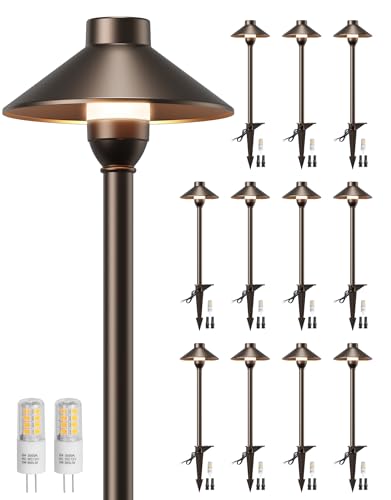
PARTPHONER Low Voltage Landscape Lighting 12-Pack, Aluminum 12V Pathway Lights with G4 Bulbs, Waterproof Oil Rubbed Bronze Color Wired Path Lights with Connectors for Walkway Yard Garden
Replaceable light bulb: This low voltage landscape lighting comes with 14 LED bulbs(G4,3W,3000K). It's not the integrated LED…
As an affiliate, we earn on qualifying purchases.
As an affiliate, we earn on qualifying purchases.