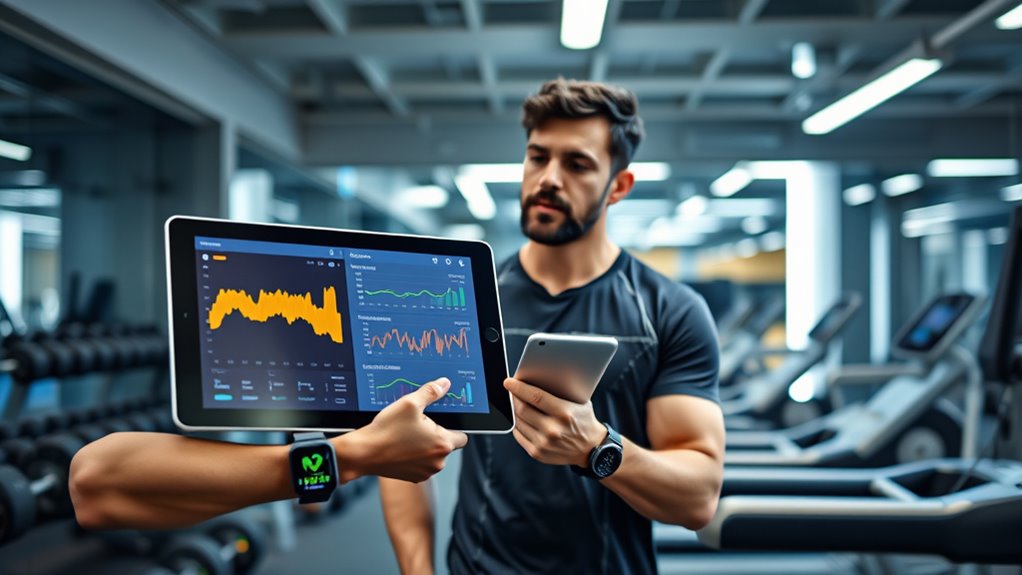

Tracking your progress with data-driven training helps you fine-tune your workouts for better results. Using metrics like reps, weights, heart rate, and recovery times, you can identify what works and what doesn’t. Apps and devices make tracking easy and offer insights to boost your performance. This approach keeps you motivated, prevents stagnation, and allows strategic goal-setting. Keep going, and you’ll discover how to optimize every session for maximum gains.
Key Takeaways
- Utilize fitness trackers and apps to automate workout logging and generate detailed progress reports.
- Analyze key metrics like reps, weights, heart rate, and recovery times to identify performance trends.
- Adjust training variables such as volume, rest, and exercise focus based on data insights for optimal gains.
- Monitor strength levels and plateaus to refine routines and prevent stagnation or overtraining.
- Set realistic benchmarks and goals using data-driven insights to ensure continuous improvement and motivation.
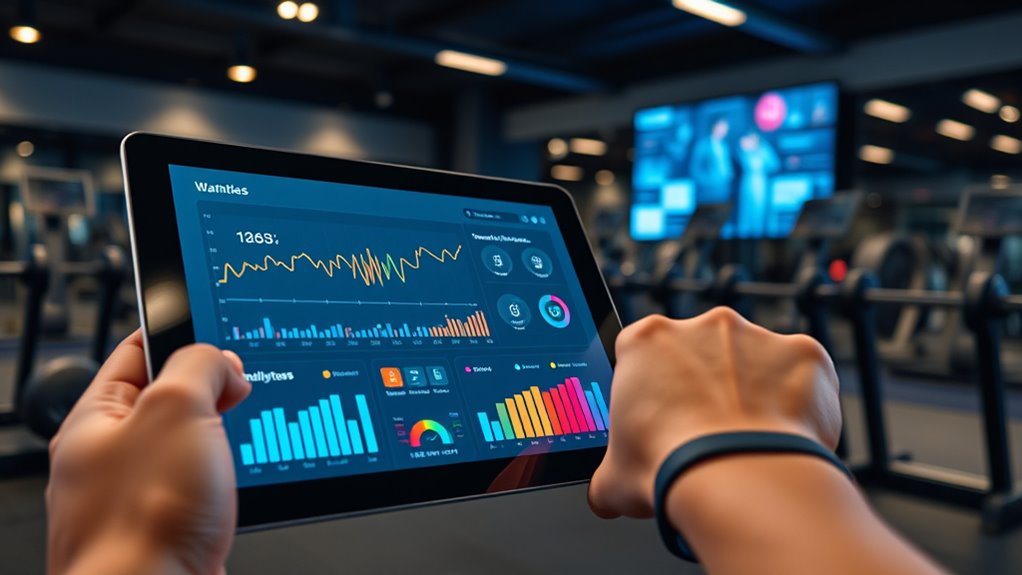
Ever wondered how to optimize your workouts for better results? The secret lies in leveraging data-driven training techniques that focus on tracking your progress meticulously. By embracing progress analytics, you can gain a clear picture of what’s working and what’s not, enabling you to fine-tune your routines for maximum efficiency. This approach turns guesswork into precision, ensuring every session pushes you closer to your goals. When you incorporate personalized fitness into your routine, you’re not just following generic workout plans; instead, you’re adjusting your efforts based on real-time data tailored specifically to your body and performance.
Using progress analytics means consistently recording key metrics such as reps, weights, heart rate, and recovery times. Over time, these data points create a detailed profile of your fitness journey. For example, if you notice your strength plateauing in certain lifts, you can modify your approach—adding more volume, changing your rest periods, or focusing on weaker muscle groups. Conversely, if you observe steady improvements, you might decide to push further or incorporate more advanced exercises. This constant feedback loop helps you identify patterns and adjust your training to optimize gains, minimizing stagnation and preventing overtraining.
Consistently tracking key metrics refines your fitness journey and prevents plateaus.
Personalized fitness becomes powerful when you use technology to analyze your data. Apps and fitness trackers can automatically log your workouts, generate progress analytics, and even suggest adjustments based on your performance trends. This eliminates the need for manual tracking and guesswork, giving you actionable insights at your fingertips. With precise data, you can set realistic benchmarks and track your evolution over weeks and months. For instance, if your goal is increasing endurance, you can monitor your heart rate zones and adjust your cardio sessions accordingly. If building muscle is your focus, tracking volume and intensity helps you avoid plateaus and identify when to increase weights or change exercises.
Another advantage of data-driven progress tracking is that it keeps you motivated. Seeing tangible evidence of your improvements—whether it’s lifting more weight, running faster, or recovering quicker—reinforces your commitment. It’s easier to stay consistent when you can visualize your growth rather than rely solely on subjective feelings. Plus, this approach allows you to set specific, measurable goals, making your fitness journey more strategic and rewarding. Utilizing tools that incorporate Kia Tuning concepts, such as performance upgrades and data analysis, can further enhance your understanding of progress and help you tailor your routines more effectively.
Frequently Asked Questions
How Accurate Are Fitness Trackers in Measuring Workout Intensity?
Fitness trackers are generally quite accurate in measuring workout intensity, but calibration challenges and device variability can affect precision. You might notice some differences between devices or over time if the tracker isn’t properly calibrated. While they give a good estimate of your effort, don’t rely solely on them. Use the data as a helpful guide, but listen to your body for the most accurate assessment of your workout intensity.
Can Data-Driven Training Adapt for Injury Prevention?
Did you know that 30% of athletic injuries could be prevented with better data? Data-driven training can adapt your workouts to lower injury risk by monitoring fatigue and biomechanical patterns. You can implement prevention strategies like adjusting intensity or rest periods based on real-time data, reducing overuse and strain. This proactive approach helps keep you safe, improve performance, and avoid setbacks caused by injury.
What Privacy Concerns Exist With Workout Data Collection?
You should be aware that collecting workout data raises privacy concerns about data ownership and third-party sharing. Your personal fitness information could be accessed or shared without your explicit consent, risking misuse or privacy breaches. It’s essential to review privacy policies, understand who owns your data, and limit third-party sharing. Always choose platforms that prioritize your privacy, ensuring your workout data remains secure and under your control.
How Often Should I Review My Workout Data?
You should review your workout data at least weekly—yes, even when you’d rather binge-watch. Ironically, checking in too often can cause obsession, but neglecting it hampers progress. Consistent reviews boost exercise consistency and help you adjust for better results. Use your data to refine your goal setting, ensuring you stay on track. Regular check-ins keep motivation high and make your fitness journey smarter and more effective.
Are Data-Driven Methods Suitable for All Fitness Levels?
Data‑driven methods are suitable for all fitness levels because they can be tailored to your needs. With personalized coaching and beginner‑friendly tools, these methods help you progress safely and effectively. Whether you’re just starting or more advanced, tracking your data allows you to adapt workouts and stay motivated. Embracing this approach makes fitness more accessible and ensures you’re always working toward your goals.
Conclusion
By using data-driven training, you can personalize your workouts and see real progress. Did you know that athletes who track their data improve their performance by up to 30% faster? Embracing this approach helps you stay motivated, identify areas for improvement, and reach your goals more efficiently. So, keep analyzing your progress, adjust your routines, and watch yourself get stronger every day. Data isn’t just numbers — it’s your key to smarter, more effective workouts.