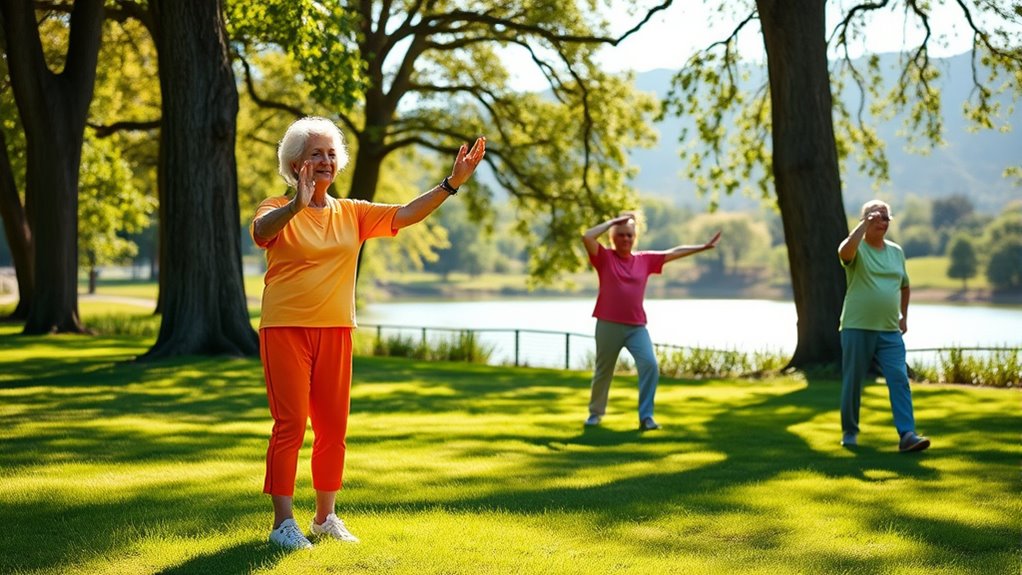

To lose weight healthily as an older adult, focus on regular, moderate activities like walking, swimming, or cycling that are gentle on your joints. Combine these with strength training twice weekly to preserve muscle mass. Incorporate stress management techniques like meditation or yoga to curb emotional eating and support recovery. Stay hydrated, get enough sleep, and consider supplements like calcium or protein after consulting your healthcare provider. Continuing will reveal more tips to make your fitness journey effective and sustainable.
Key Takeaways
- Engage in moderate, low-impact exercises like walking, swimming, or cycling to protect joints and promote sustainability.
- Incorporate strength training twice weekly to preserve muscle mass and boost metabolism.
- Support workouts with nutritional supplements such as calcium, vitamin D, and protein, after consulting healthcare providers.
- Practice stress management techniques like meditation or deep breathing to reduce emotional eating and enhance exercise consistency.
- Maintain proper hydration, sleep, and balanced nutrition to optimize weight loss and overall health in older adults.

Exercise is one of the most effective ways to support weight loss, especially when combined with a healthy diet. As an older adult, staying active not only helps shed unwanted pounds but also boosts your overall health and well-being. To maximize your efforts, consider integrating nutritional supplements that can fill nutritional gaps and support your exercise routine. For example, calcium and vitamin D can strengthen bones, reducing injury risk, while protein supplements help preserve muscle mass as you lose weight. These supplements can make your workouts more effective and help you recover faster.
Stress management plays a crucial role in your weight loss journey. High stress levels can lead to emotional eating or cravings for comfort foods high in sugar and fat, sabotaging your progress. Incorporate stress-reducing activities like meditation, deep breathing, or gentle yoga into your daily routine. Not only do these practices help calm your mind, but they also lower cortisol levels—hormones linked to fat accumulation around the abdomen. When your stress levels are controlled, you’re more likely to stay consistent with your exercise plan and make healthier food choices.
Managing stress reduces emotional eating and supports your weight loss journey.
Start with moderate activities that suit your fitness level, such as walking, swimming, or cycling. These low-impact exercises are gentle on your joints and can be sustained over longer periods, helping you burn calories effectively. As you become more comfortable, gradually increase the intensity or duration to keep challenging your body. Remember, consistency is key, and even short, daily sessions add up over time. Incorporate strength training twice a week to preserve muscle mass, which naturally declines with age and is essential for maintaining a healthy metabolism.
Pay attention to your body’s signals and avoid pushing too hard too fast. Proper hydration, adequate sleep, and balanced nutrition are essential components of a successful weight loss plan. Use nutritional supplements wisely, but always consult your healthcare provider before adding new ones to your routine. Managing stress effectively will help prevent emotional eating and keep you motivated. Combining regular exercise with stress management techniques creates a positive feedback loop, making your weight loss efforts more sustainable. Additionally, understanding the importance of exercise for weight loss can motivate you to stick with a routine that benefits your overall health and longevity.

Barefoot Shoes for Women & Men, Grounded Walking Hiking Barefoot Shoes, Wide Toe Box Non-Slip Water Athletic Footwear, Comfortable Vitality Barefoot Footwear, Trail Running Sneakers Unisex.
【Wide toe box】This Hiking barefoot shoes womens footwear mens barefoot shoes for walking provides your toes the space…
As an affiliate, we earn on qualifying purchases.
As an affiliate, we earn on qualifying purchases.
Frequently Asked Questions
How Do I Stay Motivated to Exercise Regularly?
To stay motivated, you should focus on mindset strategies like celebrating small victories and reminding yourself of your progress. Set realistic, achievable goals to keep yourself inspired and avoid feeling overwhelmed. Keep a routine, track your improvements, and find activities you enjoy. When you see positive results and stay committed to your goals, your motivation naturally increases, making it easier to stick with your exercise routine consistently.
Are There Specific Exercises for Joint Pain Relief?
Did you know that low-impact exercises can reduce joint pain by up to 50%? You should focus on joint-friendly workouts like swimming, walking, or cycling, which are gentle on your joints. These low-impact exercises increase flexibility and strengthen muscles around your joints, helping to relieve pain. Incorporate these into your routine regularly, and you’ll likely notice less discomfort and improved mobility over time.
Can I Start Exercising if I Have Pre-Existing Health Conditions?
Yes, you can start exercising even with pre-existing health conditions. Focus on chronic illness management by consulting your healthcare provider first. They can help create personalized fitness plans tailored to your needs, ensuring safe and effective exercise. Start slowly with low-impact activities like walking or gentle stretching, and gradually increase intensity. Consistency helps improve overall health, boost mood, and support your wellness goals safely.
How Do I Balance Exercise With Medication Schedules?
You should coordinate your medication timing with your exercise schedule to stay safe and effective. Check with your healthcare provider to determine if you need exercise adjustments, such as avoiding certain activities during peak medication times. Plan your workouts around your medication, perhaps exercising earlier or later in the day. Listening to your body and maintaining open communication with your doctor guarantees you balance exercise and medication effectively.
What Are Signs of Overexertion or Injury?
Think of your body as a finely tuned machine, and overexertion as pushing it too far. You might notice signs of fatigue, muscle soreness, or joint pain that linger longer than usual. Dizziness, chest pain, or shortness of breath are serious warning signs. If you experience these, slow down, rest, and consult a healthcare professional. Listening to your body helps prevent injury and keeps your exercise safe and effective.

Under Desk Elliptical Machine, Electric Elliptical Leg Exerciser for Seniors with 12 Adjustable, Portable Quiet Elliptical Exercise Machine, Seated Pedal Exerciser with Remote Control (Orange)
【2 IN 1 & AUTO OR MANUAL MODES】PUTNEN under desk elliptical has Manual (12-level speed) & Auto mode…
As an affiliate, we earn on qualifying purchases.
As an affiliate, we earn on qualifying purchases.
Conclusion
Incorporating regular exercise can make a real difference in your weight loss journey, especially as you age. Did you know that adults over 60 who stay active are 30% more likely to maintain a healthy weight? Staying consistent not only boosts your metabolism but also improves your overall well-being. So, find activities you enjoy, stay motivated, and remember that every small effort adds up to a healthier, happier you.

Lianjindun 5 Pcs Professional Resistance Bands. Latex-Free, Pilates Band, Work Out Bands, Stretch Bands for Working Out Women or Men, Exercise Bands Set for Pilates, Physical Therapy, Yoga
5 Level Resistance(3-20pounds): You will get a set of resistance bands including five colors, different colors represent different…
As an affiliate, we earn on qualifying purchases.
As an affiliate, we earn on qualifying purchases.

Yoga Meditation for Stress & Anxiety Relief
As an affiliate, we earn on qualifying purchases.
As an affiliate, we earn on qualifying purchases.