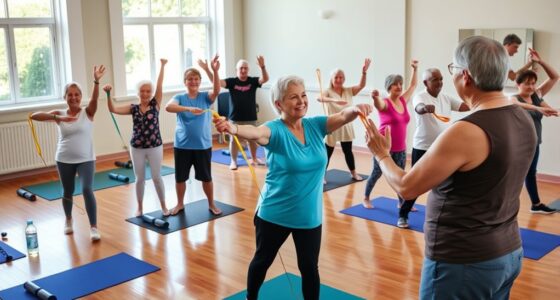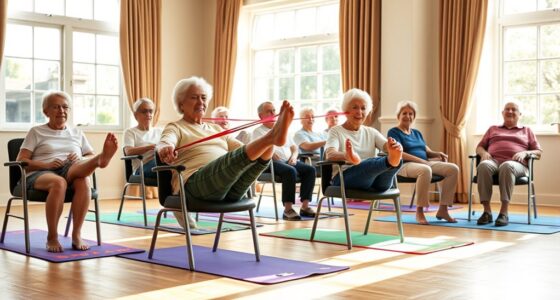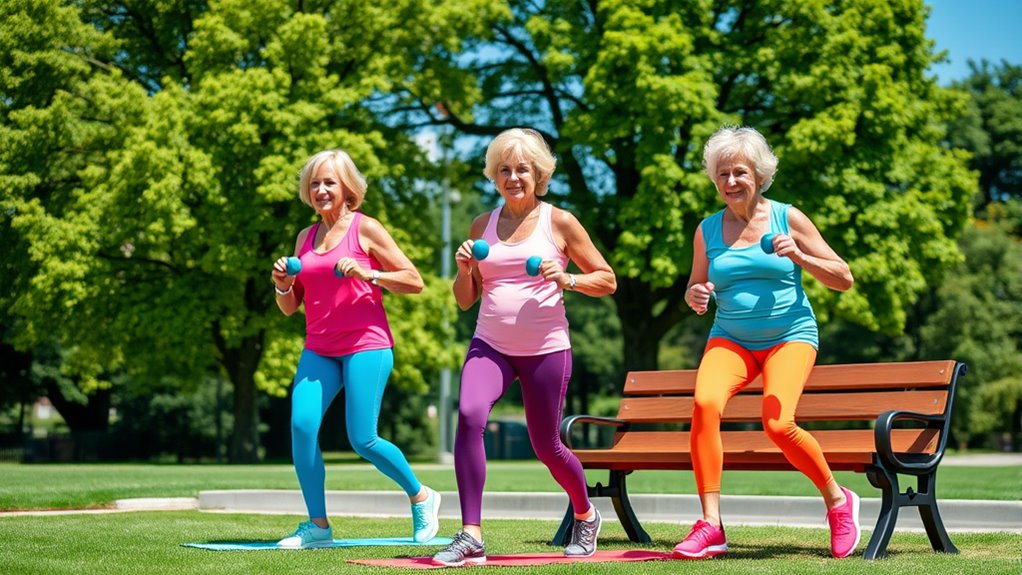

You can safely try HIIT if you adapt it to your needs by starting slow and listening to your body. Use shorter effort periods, like 20-30 seconds, with longer rest breaks, and focus on proper form. Incorporate supportive equipment such as sturdy chairs or resistance bands, and always warm up and cool down. With the right modifications and precautions, HIIT can boost your fitness and independence—discover more tips to do it safely.
Key Takeaways
- Start with low-intensity intervals (20-30 seconds) and gradually increase duration and effort as tolerated.
- Use modifications like seated exercises or support from chairs to reduce strain and improve stability.
- Prioritize proper form and technique to prevent injury, and consult healthcare providers before beginning HIIT.
- Incorporate warm-up and cool-down routines to prepare the body and aid recovery safely.
- Ensure a hazard-free environment and use appropriate equipment like lightweight weights and resistance bands.

Have you ever considered that high-intensity interval training (HIIT) can be a safe and effective way for seniors to improve their fitness? Many believe that intense workouts are only suitable for younger individuals, but with proper modifications, HIIT can benefit seniors by boosting cardiovascular health, strength, and overall vitality. To get started safely, it’s crucial to focus on nutrition tips that support your activity level. Eating a balanced diet rich in lean proteins, whole grains, healthy fats, and plenty of fruits and vegetables helps fuel your workouts and aids recovery. Staying well-hydrated is equally important, especially during and after exercise. Remember, good nutrition not only enhances performance but also reduces the risk of injury and supports immune function.
Equipping yourself with the right tools makes a significant difference. Equipment essentials for senior-friendly HIIT include lightweight dumbbells, resistance bands, a sturdy chair, and comfortable athletic shoes. These items enable you to perform exercises safely and effectively, while also providing versatility to modify workouts to your ability. For instance, resistance bands are excellent for low-impact strength training, and a chair offers stability during seated or supported movements. Proper footwear with good grip and cushioning helps prevent slips and reduces joint stress. Always ensure your space is clear of hazards, and consider using a mat for added comfort during floor exercises. Additionally, understanding water quality and flow rate can be beneficial if you’re engaging in outdoor workouts near water sources, ensuring safety and hydration.
When it comes to adaptations, start slow and listen to your body. High-intensity intervals don’t mean pushing to the point of pain or extreme fatigue. Instead, aim for short bursts of effort—say 20 to 30 seconds—followed by equal or slightly longer rest periods. As your fitness improves, you can gradually increase the intensity or duration of the work intervals. Incorporate warm-up and cool-down routines to prepare your muscles and prevent stiffness or injury. It’s also wise to consult with your healthcare provider before beginning any new exercise regimen, especially if you have chronic conditions or concerns about your health.
Safety is paramount, so ensure you perform movements with proper form, and don’t hesitate to modify exercises to match your comfort level. If unsure, consider working with a trainer experienced in senior fitness who can provide personalized guidance. Remember, consistency and patience are key. With the right approach, nutrition, and equipment, HIIT can be a safe and invigorating way to enhance your health and maintain independence well into your later years.
senior-friendly resistance bands
As an affiliate, we earn on qualifying purchases.
As an affiliate, we earn on qualifying purchases.
Frequently Asked Questions
Can Seniors Do HIIT if They Have Joint Problems?
Yes, seniors with joint problems can do HIIT by focusing on joint protection and making exercise modifications. You should choose low-impact movements, avoid high-impact jumps, and listen to your body. Consulting with a healthcare professional or physical therapist can help tailor the routine safely. Remember, gentle warm-ups and proper form are essential to prevent further joint issues and enjoy the benefits of HIIT safely.
How Often Should Seniors Do HIIT Sessions Weekly?
You should aim for 2 to 3 HIIT sessions weekly, balancing exercise frequency with your body’s response. Consistency is key, so stick to your schedule without overdoing it, especially if you have joint issues. Listen to your body, incorporate adequate rest, and gradually increase intensity to avoid injury. Regular training helps improve fitness safely while giving your joints time to recover between sessions.
Are There Specific Signs Indicating HIIT Is Too Intense?
You’ll know HIIT is too intense if you experience signs of overexertion, like chest pain, dizziness, or severe shortness of breath. Unusual fatigue that persists after your workout is also a warning. If you notice these symptoms, stop exercising immediately and rest. It’s important to heed your body, adjust the intensity, and consult your healthcare provider to ensure your safety during HIIT sessions.
What Are Beginner-Friendly HIIT Exercises for Seniors?
You can start with beginner modifications like walking briskly for 30 seconds, then resting for 60 seconds. Incorporate chair exercises, such as seated leg lifts or arm circles, to guarantee safety. Remember to warm up before and cool down after each session. Always listen to your body, and if you feel dizzy or short of breath, stop immediately. These safety tips help you enjoy HIIT safely and build confidence gradually.
How Does HIIT Impact Medication Effects in Seniors?
Imagine your medication effects dancing in harmony with your workout—HIIT can influence this delicate balance. It may enhance blood pressure effects, making it crucial to monitor interactions closely. While HIIT can improve cardiovascular health, it might alter how medications are absorbed or processed, so you should consult your doctor. Staying aware of medication interactions ensures your fitness journey boosts your health safely, like a well-rehearsed symphony.
Conclusion
Remember, Rome wasn’t built in a day, and neither is your fitness journey. HIIT can be a safe, effective way to boost your health, but listen to your body and start slow. With proper adaptations and guidance, you can enjoy the benefits of increased strength, endurance, and life force. Stay patient, stay consistent, and trust that small steps lead to big changes. Your best health is still ahead—one workout at a time.