
To create a home that supports good posture naturally, focus on ergonomic furniture like adjustable chairs and sit-stand desks that encourage proper alignment. Maximize natural light by placing work areas near windows, and supplement with bright, full-spectrum lighting to reduce eye strain. Keep frequently used items within easy reach and design clear pathways to promote movement and stretch breaks. Small adjustments in furniture placement and layout can make a big difference—exploring these tips further can help you optimize your space effortlessly.

Get the little things that make your day delivered free with Prime
- Fast, free delivery on millions of items
- Prime Video, Amazon Music and more included
- Member-only deals all year
Key Takeaways
- Incorporate ergonomic furniture with adjustable features and proper support to maintain natural alignment.
- Maximize natural light by placing workspaces near windows to promote alertness and good posture.
- Design an open layout with clear pathways and reachable items to encourage movement and reduce static positions.
- Use versatile furniture like sit-stand desks to allow easy posture variation throughout the day.
- Integrate movement-friendly elements that motivate regular stretching and dynamic activity within your space.
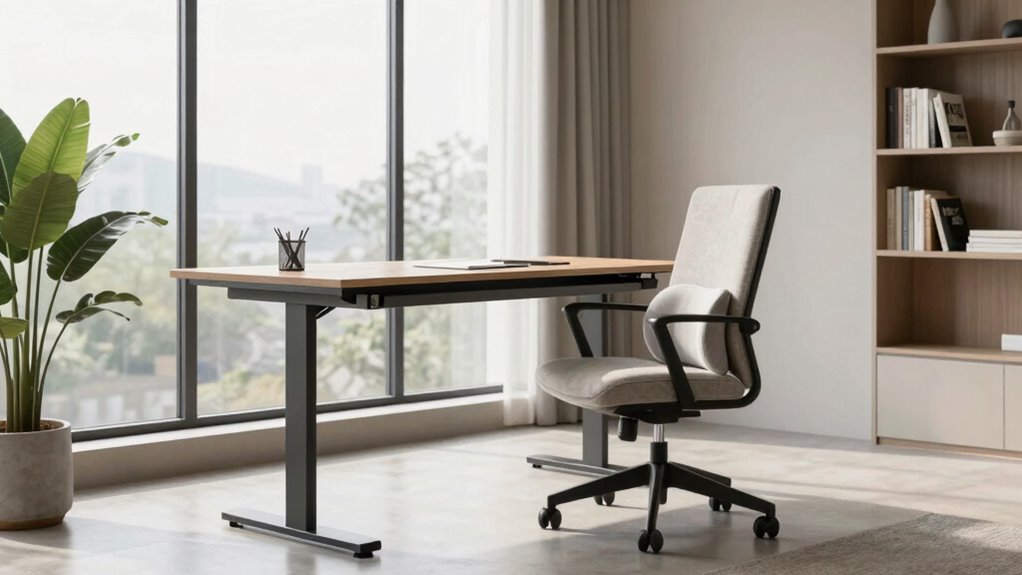
Have you ever considered how your home design impacts your posture? The way your space is arranged can make a significant difference in how you sit, stand, and move throughout the day. To support good posture naturally, start by prioritizing ergonomic furniture. This doesn’t mean your home has to look clinical or uncomfortable; it means choosing pieces that promote proper alignment and reduce strain. An ergonomic chair, for example, should have adjustable height, lumbar support, and a seat that encourages your hips to stay in a neutral position. When you work at a desk, ensure your computer monitor is eye level to avoid craning your neck. A properly set-up workspace helps you maintain a healthy spine and prevents common issues like back pain and shoulder tension.
Prioritize ergonomic furniture and proper workspace setup to support natural posture and prevent discomfort.
Beyond furniture, think about how natural lighting influences your posture. Well-lit spaces encourage you to stay active and alert, reducing the tendency to slump or slouch. Sunlight boosts your mood, motivates movement, and helps regulate your circadian rhythm, all of which contribute to better posture habits. Position your workspace near windows so you can benefit from plenty of daylight during the day. If natural light isn’t enough, supplement with bright, full-spectrum lighting that mimics daylight. Proper lighting reduces eye strain and prevents you from leaning forward or hunching over to see better, which can lead to poor posture over time. Incorporating ergonomic principles into your overall design can further enhance your comfort and support healthy habits.
Your home’s layout also plays a role in encouraging healthy movement. Keep frequently used items within easy reach to avoid awkward stretching or twisting. Create clear pathways that promote movement and stretch breaks, so you’re not staying in the same static position for too long. When planning your space, consider the height and placement of furniture to support natural body mechanics. For instance, a standing desk or a sit-stand converter can help you alternate postures throughout the day, reducing the risk of stiffness and muscular imbalance. Additionally, incorporating natural lighting elements can influence your activity levels and overall posture habits. Understanding ergonomic principles can guide you in designing a space that fosters good habits and minimizes strain. Incorporating movement-friendly design elements can further enhance your ability to maintain proper posture throughout the day. Small adjustments—like positioning your workstation near a window and investing in ergonomic furniture—can lead to big improvements in how you hold yourself throughout the day. Creating a home environment that supports good posture naturally, by integrating proper home design principles, can make a lasting difference in your overall well-being. When your home supports good posture naturally, you’ll find it easier to maintain healthy habits, feel more energized, and avoid discomfort in the long run.
ergonomic adjustable office chair
As an affiliate, we earn on qualifying purchases.
As an affiliate, we earn on qualifying purchases.
Frequently Asked Questions
How Can I Adjust My Existing Furniture for Better Posture?
You can adjust your existing furniture for better posture by adding ergonomic accessories like lumbar supports or footrests. Swap out or cover your chairs with posture-friendly materials, such as breathable fabric, to promote comfort and support. Raise or lower your desk and monitor to eye level, ensuring you’re not straining your neck or back. These small changes make a big difference in maintaining good posture naturally, without needing entirely new furniture.
Are There Specific Colors That Promote Good Posture Habits?
Bright blues and calming greens, known as posture colors, promote relaxation and focus, much like a peaceful lake calms restless waves. According to color psychology, these hues reduce stress and encourage better posture habits. You might notice that incorporating these colors into your workspace or home fosters a more mindful, upright attitude. So, choosing soothing, cool tones can subtly support your efforts to maintain good posture naturally.
How Often Should I Change My Home Layout to Support Posture?
You should reassess your home layout every few months to maintain ideal posture support. Incorporate ergonomic accessories like adjustable chairs and desks, and add posture-friendly decor such as lumbar supports or footrests. Regularly updating your setup encourages good habits and prevents discomfort. Stay attentive to how your body feels, and don’t hesitate to make small adjustments to your workspace and living areas for continuous support.
Can Lighting Influence My Posture Awareness?
Ever wonder if lighting influences your posture awareness? It definitely does. Proper lighting ambiance can highlight your workspace and provide subtle posture cues, guiding you to sit or stand correctly. Bright, adjustable lighting helps you stay conscious of your alignment, preventing slouching or strain. By creating a well-lit environment, you make it easier to maintain good posture naturally, making lighting an essential part of a healthy home setup.
What Are Some Affordable Home Modifications for Posture Support?
You can make affordable home modifications by adding ergonomic accessories like adjustable chairs, footrests, and lumbar supports to your workspace. Incorporate posture-friendly décor such as wall-mounted desks or standing desk converters to encourage better alignment. Rearranging furniture to promote proper posture and using supportive cushions also help. These simple changes support your spine’s health without breaking the bank, making your home a posture-friendly environment effortlessly.
Conclusion
Remember, a well-designed home isn’t just about looks—it’s about nurturing your health from the inside out. By choosing ergonomic furniture, maintaining good lighting, and creating spaces that encourage movement, you set yourself up for better posture naturally. As the saying goes, “A stitch in time saves nine.” Taking small, mindful steps now can prevent bigger issues later, helping you stay comfortable and aligned every day. Your home should support your best self, naturally.
Halloween Picks
halloween
As an affiliate, we earn on qualifying purchases.