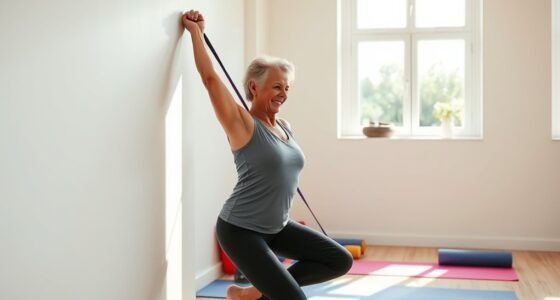

Traditional strength training helps seniors boost muscle mass, improve balance, and increase mobility, reducing fall risks. Before starting, focus on balance exercises and gentle stretching to prepare your body and prevent injuries. Use light weights or resistance bands, and perform exercises with proper form. Gradually increase intensity as you gain confidence. Ensuring safety is key, so consider consulting a professional. Keep exploring to discover more tips for safe and effective strength training tailored for your needs.
Key Takeaways
- Strength training improves muscle mass, bone density, and overall functional ability in seniors.
- Incorporating balance and flexibility exercises beforehand reduces fall risk and injury during strength routines.
- Starting with light resistance and proper form ensures safety and gradual progression for older adults.
- Warm-up routines enhance blood flow, loosen muscles, and prepare the body for effective resistance exercises.
- Consulting healthcare professionals helps tailor strength programs to individual health needs and limitations.

Have you ever wondered how seniors can maintain their independence and improve their quality of life? One effective way is through traditional strength training, which not only boosts muscle mass but also enhances overall well-being. Before diving into strength routines, it’s essential to focus on balance exercises and flexibility routines. These foundational practices prepare your body, reduce the risk of falls, and make strength training safer and more effective.
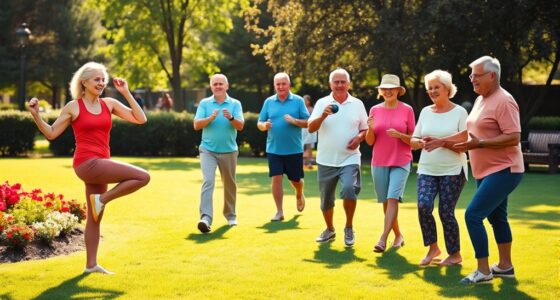
Balance exercises are vital for seniors because they target the stability needed for daily activities. Simple movements like standing on one foot or heel-to-toe walks can markedly improve your ability to stay steady. Incorporating these into your routine helps your nervous system adapt, strengthening the muscles that support your joints and improving coordination. When combined with flexibility routines—such as gentle stretching of your hamstrings, calves, shoulders, and back—you’ll notice increased ease in moving through your day. Flexibility routines help prevent stiffness, improve range of motion, and reduce discomfort, making your body more responsive to strength exercises.
Balance and flexibility exercises enhance stability, prevent stiffness, and make strength training safer for seniors.
Starting with balance and flexibility routines also minimizes the risk of injury. These exercises prepare your muscles and joints, making them more resilient. For example, before lifting weights or doing resistance exercises, perform a few minutes of balance drills and stretches. This warm-up boosts blood flow and loosens tight muscles, which is especially important as aging naturally brings about stiffness and reduced joint mobility. You’ll find that these routines make strength training less intimidating and more manageable.
When you feel confident with your balance and flexibility, you can gradually introduce light resistance exercises using body weight, resistance bands, or light weights. Focus on proper form and controlled movements to avoid strain. Always listen to your body—if something doesn’t feel right, pause and adjust. It’s wise to consult with a healthcare professional or a trained fitness instructor who specializes in senior fitness, especially if you have existing health conditions. They can help you tailor a program suited to your needs and guarantee safety.

Fit Simplify Resistance Loop Exercise Bands with Instruction Guide and Carry Bag, Set of 5
High End Exercise Bands. Our 12"³ By 2"³ Heavy Duty Loop Resistance Bands Come In 5 Varying Resistance…
As an affiliate, we earn on qualifying purchases.
As an affiliate, we earn on qualifying purchases.
Frequently Asked Questions
Can Seniors Start Strength Training Without Prior Medical Clearance?
It’s best to obtain medical clearance before starting strength training, as it helps assess your exercise readiness and guarantees safety. You shouldn’t begin without consulting your healthcare provider, especially if you have chronic conditions or health concerns. Medical clearance protects you from potential risks and allows you to tailor a strength program suited to your needs. Always prioritize safety and professional guidance to enjoy the benefits of strength training safely.
How Often Should Seniors Perform Strength Training Exercises Weekly?
Think of strength training as planting a garden—you need regular care to see growth. You should aim for 2 to 3 sessions per week, allowing your muscles time to recover. Consistent exercise frequency builds momentum and strength over time, so stick to a routine that fits your schedule. Remember, steady training is key to safe, effective progress, helping you stay strong and vibrant at any age.
Are There Specific Equipment Recommendations for Senior Strength Training?
You should choose equipment like light to moderate appropriate weights and resistance bands for your strength training. Resistance bands are great because they offer adjustable resistance and are gentle on your joints. Start with lighter weights and gradually increase as your strength improves. Always make sure equipment is in good condition, and consult with a fitness professional if you’re unsure which options suit your needs best.
What Are Common Mistakes to Avoid During Senior Strength Workouts?
You might think you’re safe to push harder, but avoiding common mistakes like neglecting proper form and rushing gradual progression keeps you safe. Always focus on correct technique to prevent injuries, and increase weights or reps slowly over time. Ignoring these tips can lead to strain or falls. Staying mindful of proper form and pacing guarantees your strength training remains effective and safe, helping you enjoy long-term benefits.
How Can Seniors Modify Exercises for Limited Mobility?
To modify exercises for limited mobility, you should incorporate adaptive exercises and chair-based modifications. Use a sturdy chair to support your movements, reducing strain and improving balance. Focus on gentle stretches and seated strength exercises that target major muscle groups. Adjust the range of motion as needed, and listen to your body. Consulting a fitness professional or physical therapist can help you develop a customized routine that’s safe and effective.

Seniors / Elderly Sitting Lightweight / Dumbbells Exercises for Strength, Rehab & Physical Therapy. This Seniors Light weights dumbbells fitness DVD is Good also for Easy Osteoporosis Exercises, Diabetes Exercises, Arthritis Exercises, Alzheimer's Exercises DVD. Sunshine is a Certified AARP Trainer by ACE, The American Council on Exercise.
Factory sealed DVD
As an affiliate, we earn on qualifying purchases.
As an affiliate, we earn on qualifying purchases.
Conclusion
Many believe strength training is only for young athletes, but evidence shows it’s crucial for seniors too. It boosts your independence, improves bone health, and reduces fall risk. Don’t let myths hold you back—research confirms that with proper guidance, seniors can safely enjoy these benefits. So, why not challenge the idea that aging means decline? Embrace strength training today, and open a healthier, more active you at any age.

Balance Board Professional Wobble Board for Adults Anti-Slip 350LBS Balance Boards for Physical Therapy Standing Desk Core Strength Wooden Balance Board Rocker Board
Enhanced Workout Challenge: This balance board is a good choice for beginners, the elderly, people with balance issues,it…
As an affiliate, we earn on qualifying purchases.
As an affiliate, we earn on qualifying purchases.

Meishen Nitpicker Stretching Straps Hamstring Stretcher Device Elastic Exercise Band Yoga mat Carrying Straps Leg Exercise Equipment Stretching Strap with Loops for Flexibility Stretch Strap 11 Loops
◆【Your Real Perfect Strap】–Perfect for Yoga, Pilates, Ballet, CrossFit and Physical Therapy.Warming up with a stretch strap helps…
As an affiliate, we earn on qualifying purchases.
As an affiliate, we earn on qualifying purchases.