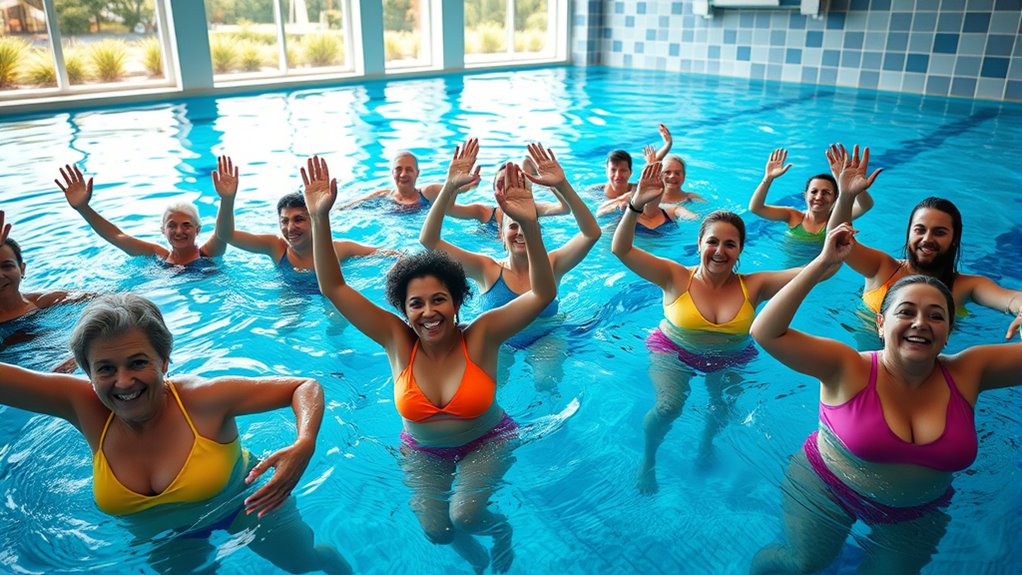
Water aerobics and swimming are excellent low-impact options that protect your joints while helping you build strength and improve flexibility. The buoyancy of water reduces stress on your bones, making exercise more comfortable and safer for all fitness levels. These activities also support recovery from injury and help manage chronic conditions. By incorporating water-based exercises into your routine, you can enjoy effective, gentle workouts. Keep exploring to discover how these options can fit your fitness goals perfectly.
Key Takeaways
- Water aerobics and swimming offer low-impact, joint-friendly workouts suitable for all ages and fitness levels.
- These activities utilize water’s buoyancy and resistance to enhance muscle strength, flexibility, and cardiovascular health.
- Proper safety measures, such as supervision and appropriate gear, ensure a secure and effective exercise experience.
- Aquatic exercises can aid recovery from injuries and manage chronic conditions through gentle, therapeutic movements.
- Combining structured classes or free swimming ensures engaging, enjoyable low-impact fitness options tailored to individual needs.
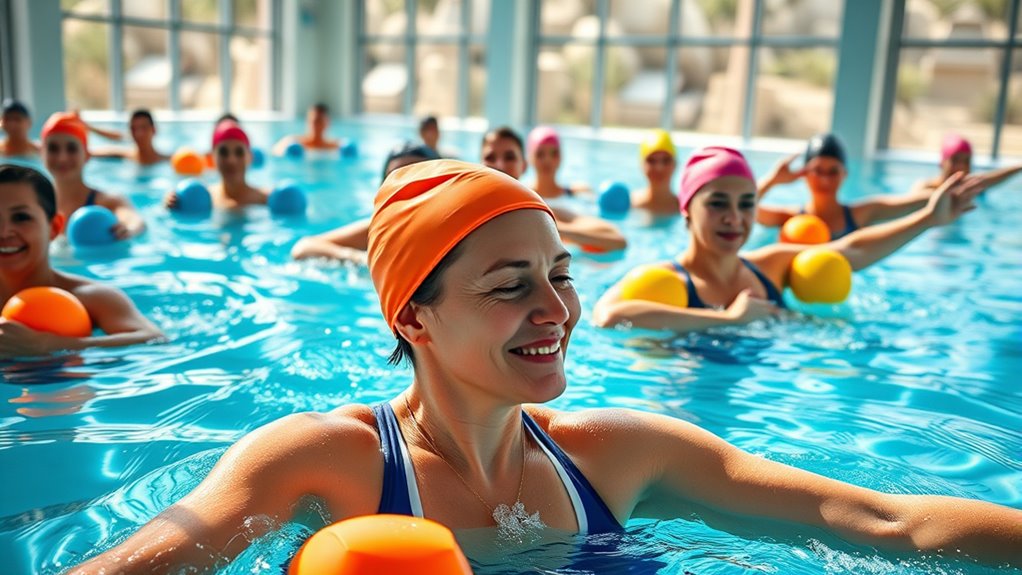
Water aerobics and swimming are two popular ways to stay fit and enjoy the benefits of aquatic exercise. Whether you’re looking to improve cardiovascular health, build strength, or just have fun, these activities provide effective low-impact options that are gentle on your joints. They’re especially beneficial if you’re recovering from an injury or managing chronic conditions. Aquatic therapy, in particular, emphasizes the therapeutic benefits of water, helping you increase mobility and reduce pain while enjoying a safe environment. But, to make the most of these activities, pool safety should always be a priority to prevent accidents and guarantee a positive experience.
Water aerobics and swimming offer low-impact, joint-friendly exercise benefits for all ages and fitness levels.
When you participate in water aerobics or swim, you engage multiple muscle groups without putting undue stress on your body. The buoyancy of water supports your weight, reducing the strain on joints and bones. This makes it an excellent choice for seniors, those with arthritis, or anyone seeking a gentler way to exercise. Aquatic therapy sessions often incorporate specific movements designed to improve flexibility and strength, tailored to your unique needs. As you move through water, the resistance helps tone muscles, and the soothing environment can help relax tense muscles, making your workout both effective and enjoyable. Incorporating high-quality equipment can further enhance your experience and safety in the water.
Pool safety is vital, especially if you’re new to water activities or exercising alone. Always make sure the pool area is well-maintained, with clear signage and safety equipment readily accessible. Before starting, check the water temperature—ideally around 78-82°F for comfort and to prevent overheating. Keep an eye on depth markers to avoid accidents, and never leave children or inexperienced swimmers unattended. Using appropriate gear, such as life vests or flotation devices, can add an extra layer of security. If you’re participating in aquatic therapy or water aerobics classes, verify that the instructor emphasizes safety protocols and proper technique to prevent injuries.
While water offers many safety advantages, it’s still essential to listen to your body. If you experience dizziness, chest pain, or shortness of breath, stop and seek assistance. Staying hydrated and wearing sunscreen or protective gear when outdoors can further enhance your safety and comfort. Remember, the goal is to enjoy your workout while minimizing risks. Combining the benefits of aquatic therapy with vigilant pool safety practices ensures your water exercise routine remains a safe, effective, and enjoyable part of your fitness journey. Whether you’re splashing around for fun or participating in structured classes, respecting pool safety rules and understanding aquatic therapy’s benefits will help you make the most of your time in the water.
Frequently Asked Questions
Can Water Aerobics Help With Arthritis Pain Relief?
Yes, water aerobics can help relieve arthritis pain by improving joint flexibility and strengthening muscles around affected areas. The buoyancy of water reduces joint stress, allowing you to move more freely without pain. Regular participation can decrease stiffness, increase range of motion, and support overall joint health. So, if you’re looking for a gentle, effective way to manage arthritis symptoms, water aerobics offers a low-impact option that promotes both flexibility and strength.
What Is the Best Water Temperature for Aquatic Exercises?
For aquatic exercises, the best water temperature is typically between 83-88°F (28-31°C). This range helps you stay comfortable during your workout, preventing overheating or chills. If you aim for ideal exercise comfort, maintaining this temperature allows you to move freely without feeling too cold or overheated. Adjust the water temperature based on your activity level and personal comfort to maximize your workout benefits.
How Often Should Beginners Attend Water Aerobics Classes?
You should attend water aerobics classes about 2 to 3 times a week to build consistency without overexerting yourself. Aim for sessions lasting around 45 to 60 minutes, including warm-up and cool-down. This frequency and duration help you gradually improve your fitness level, stay motivated, and allow your body to recover between classes. Adjust the schedule based on how your body responds and your personal fitness goals.
Are There Any Safety Concerns for Seniors in Water Workouts?
Think of water workouts as a gentle dance, but safety’s your guiding partner. As a senior, you should watch out for slip hazards and stay hydrated to keep your energy flowing smoothly. Always use slip-resistant mats and listen to your body’s signals. Prioritize hydration safety and slip prevention, so you can glide through your exercises confidently, enjoying the water’s embrace without worries.
Can Swimming Improve Bone Density Without High-Impact Activity?
Swimming can help improve your bone density and support osteoporosis prevention, but it’s not as effective as high-impact activities for building bone health. The gentle resistance of water provides some stimulus, which benefits your bones. To maximize bone density, combine swimming with weight-bearing exercises. This balanced approach enhances your overall osteoporosis prevention efforts, helping you stay strong and healthy without the strain of high-impact workouts.
Conclusion
Don’t let concerns about difficulty hold you back—water aerobics and swimming are gentle, accessible ways to stay active. With no harsh impact on your joints, you can enjoy these exercises regardless of your fitness level or age. Immerse yourself and embrace the invigorating benefits of water workouts. They’re enjoyable, low-impact, and perfect for improving strength and flexibility. So, give it a try—you might find it’s exactly what you needed to stay motivated and healthy!