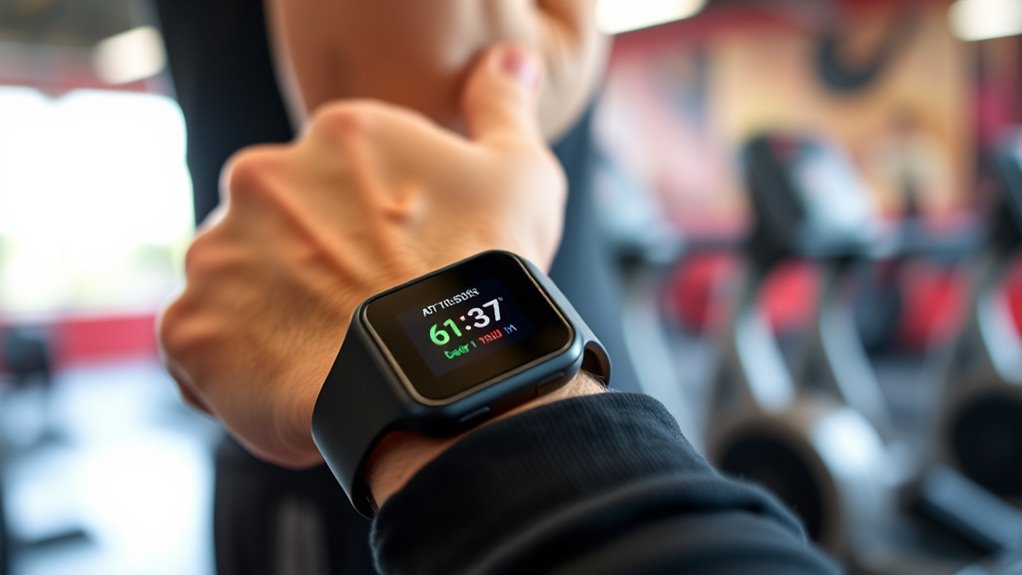

Wearable fitness trackers are great tools to monitor your health in real-time, helping you stay on top of activity levels, heart rate, sleep, and stress. They seamlessly connect with your smartphone and other smart devices, allowing you to set personalized goals and receive motivational alerts. By regularly updating your device and adjusting privacy settings, you guarantee your data stays secure. Keep exploring to discover how these devices can create an all-encompassing approach to your wellness journey.
Key Takeaways
- Fitness trackers provide real-time data on activity, heart rate, sleep, and stress to support health monitoring.
- Ensure device compatibility with your smartphone and health apps for seamless data synchronization.
- Protect personal health data by adjusting privacy settings and keeping software updated regularly.
- Customize alerts and goals to motivate healthy habits and track progress effectively.
- Use insights from wearable data to enhance overall wellness and make informed health decisions.

Have you ever wondered how wearable technology is transforming your daily life? It’s become more than just a trend; it’s a powerful tool that helps you stay on top of your health and wellness goals. Fitness trackers, in particular, have gained popularity because they provide real-time data on your activity levels, heart rate, sleep patterns, and even stress levels. But as you rely more on these devices, it’s essential to understand the importance of data privacy and device compatibility. Your personal health data is sensitive, and safeguarding it should be a priority. Reputable manufacturers implement encryption and strict privacy policies to protect your information from unauthorized access. Always review the privacy settings and terms of use before syncing your device with apps or cloud services. Making sure your data remains private is vital, especially when sharing insights with healthcare professionals or fitness communities. Additionally, device compatibility plays a significant role in maximizing the benefits of your wearable technology. Not all trackers work seamlessly with every smartphone or operating system. Before purchasing a fitness tracker, check if it’s compatible with your smartphone’s OS, whether iOS or Android, and if it can sync with other health apps you already use. This compatibility ensures you can easily access and analyze your health data without hassle. It also allows you to integrate your fitness tracker with other smart devices, like smartwatches or health monitors, creating a thorough health ecosystem. This seamless integration enhances your ability to monitor your wellness continuously and accurately. As you explore different options, look for devices that support open data standards or have open APIs, which facilitate easier data sharing across platforms. This flexibility can make a real difference in how effectively you track and interpret your health metrics. Furthermore, many devices now offer customizable alerts and goals, encouraging you to stay active and maintain healthy habits. By connecting your fitness tracker to compatible apps, you can set personalized targets, receive motivational notifications, and even share progress with friends or healthcare providers. Just keep in mind that the more devices and apps you connect, the more you should stay vigilant about your data privacy. Regularly update your device’s firmware and app software to patch security vulnerabilities. Incorporating well-being tips such as setting achievable goals and practicing mindfulness can further support your health journey. In the end, wearable fitness trackers are powerful allies in managing your health, but their effectiveness hinges on your awareness of data privacy measures and device compatibility. When you choose the right device and set proper privacy controls, you can enjoy the benefits of personalized health insights while keeping your information secure. This way, wearable technology becomes not only a tool for monitoring your health but also a safe, integrated part of your wellness journey.

Smart Watch Fitness Tracker with 24/7 Heart Rate, Blood Oxygen Blood Pressure Monitor Sleep Tracker 120 Sports Modes Activity Trackers Step Calorie Counter IP68 Waterproof for Andriod iPhone Women Men
【Superb Visual Experience & Effortless Operation】Diving into the latest 1.58'' ultra high resolution display technology, every interaction on…
As an affiliate, we earn on qualifying purchases.
As an affiliate, we earn on qualifying purchases.
Frequently Asked Questions
How Accurate Are Fitness Trackers in Measuring Sleep Quality?
Fitness trackers are fairly accurate in sleep tracking, especially for monitoring sleep cycles. They use movement and heart rate data to estimate when you’re in light, deep, or REM sleep. However, they may not always perfectly capture every detail or distinguish between sleep stages. You can rely on them for a general overview, but for precise sleep quality, consulting a sleep specialist or using medical-grade devices is recommended.
Can Fitness Trackers Detect Early Signs of Health Issues?
Yes, fitness trackers can detect early signs of health issues through features like heart rate monitoring and step count accuracy. You might notice irregular heart rates or unusual activity patterns that signal potential problems. By consistently tracking these metrics, you can catch warning signs early and consult a healthcare professional for further evaluation. Keep in mind, though, that while helpful, trackers aren’t a substitute for medical advice.
Are Wearable Devices Suitable for Children and Seniors?
Think of wearable devices as guardians, guiding children on a safe path and helping seniors maintain their mobility. These gadgets are generally suitable, but you should prioritize child safety features and ease of use. For seniors, look for devices that support senior mobility, offering fall detection and easy access. Always select age-appropriate models to guarantee comfort, safety, and effective health monitoring for both children and seniors.
How Do Fitness Trackers Handle Data Privacy Concerns?
Fitness trackers handle data privacy concerns by using data encryption to protect your information and ensuring they obtain your user consent before collecting any data. You should check the device’s privacy policies and settings to control what data is shared and with whom. Always stay informed about how your health data is stored and used, and adjust your privacy preferences to keep your information secure.
What Features Should I Look for in a Fitness Tracker?
When choosing a fitness tracker, look for long battery life so it doesn’t die mid-day and check device compatibility with your smartphone or other gadgets. You want a tracker that offers key features like heart rate monitoring, step counting, and sleep tracking. Make sure it’s easy to use, and consider if it syncs seamlessly with your preferred health apps for a smooth experience.

CCHEEN Smart Bracelet, Subscription-Free 24/7 Health Tracking, Heart Rate, SpO2, HRV & Sleep Tracker with IPX8 Waterproof, Wearable Activity & Fitness Tracker, 7-Day Battery, 2 Bands (Black)
Precision Health Tracking, No Monthly Fees: Get accurate, continuous monitoring of your heart rate, HRV, SpO2, and stress…
As an affiliate, we earn on qualifying purchases.
As an affiliate, we earn on qualifying purchases.
Conclusion
As you strap on your fitness tracker, you’re opening the door to a world where your health is constantly in sight. Think of it as having a personal health compass guiding you through each step, heartbeat, and calorie. Wearable technology isn’t just a gadget; it’s your loyal teammate in the journey toward better well-being. Embrace it, and watch how it transforms your habits—turning everyday movements into milestones on your path to a healthier you.

prxxhri Smart Health Ring, Featuring Stress and Sleep Monitoring Functions, Compatible with iOS and Android,Waterproof Fitness Tracker for Women & Men, No Subscription Fee. (Rose Gold, 8)
【Check the Size Before Purchase】 Before buying the prxxhri Smart Ring, we strongly suggest that you refer to…
As an affiliate, we earn on qualifying purchases.
As an affiliate, we earn on qualifying purchases.

YOORX Waterproof Fitness and Sleep Tracker with Maximum Privacy Designed to Never Save, Store, Share or Sell Personal Activity Data Ever. The YOORX is The Tracker That Leaves No Tracks.
Designed for privacy: Your activity data is only stored on your device and phone. Bluetooth Smart wireless technology…
As an affiliate, we earn on qualifying purchases.
As an affiliate, we earn on qualifying purchases.