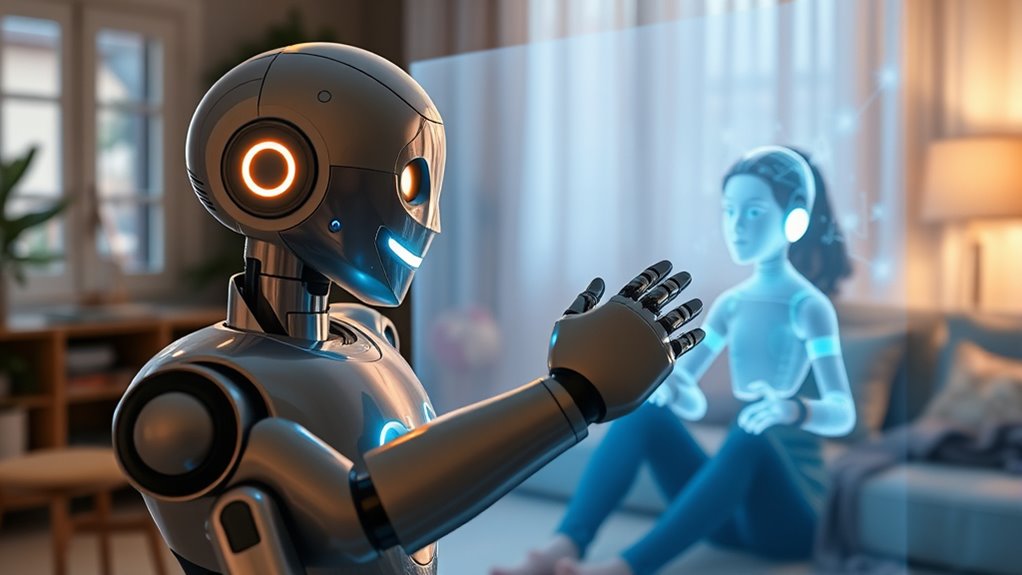

Telepresence robots and AI companions help you fight loneliness by making remote interactions more immersive and personal. They allow you to participate in social events, meetings, and family gatherings as if you’re physically there. These technologies support ongoing companionship, reducing feelings of isolation and increasing social connection. By combining face-to-face engagement with digital support, they create richer social experiences. To discover how these innovations can transform your social life, explore the full benefits further.
Key Takeaways
- Telepresence robots enable remote users to participate in social settings, fostering real-time face-to-face interactions.
- AI companions provide ongoing social support and conversation, reducing feelings of loneliness outside work hours.
- Combining robots and AI creates an ecosystem that enhances social connection and emotional well-being.
- These technologies improve accessibility for individuals with mobility or health challenges, maintaining personal relationships.
- Integration of innovative communication tools supports immersive social environments, strengthening connections and reducing isolation.
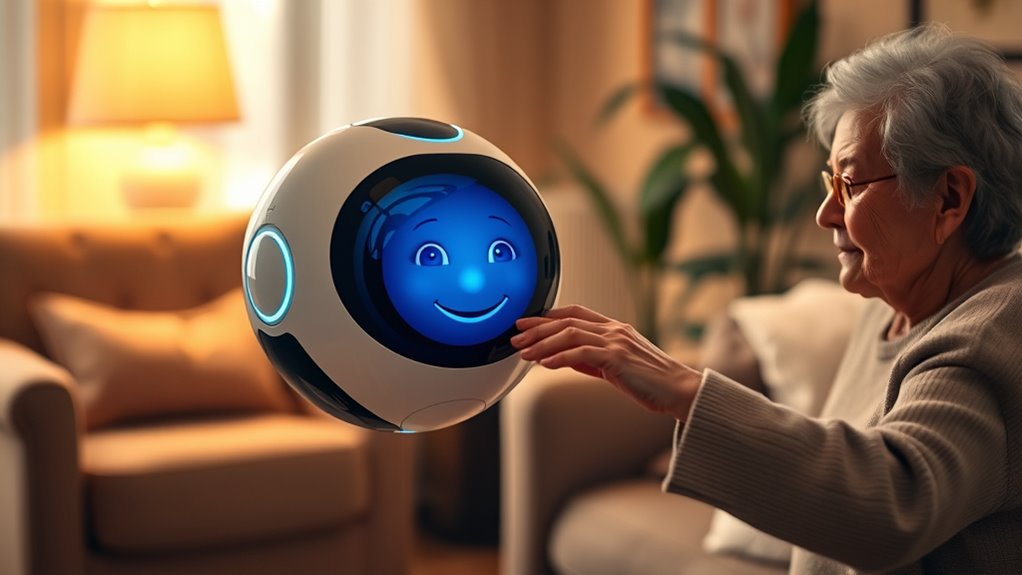
Telepresence robots and AI companions are transforming how we connect and interact, making remote presence more immersive and personal than ever before. If you work remotely, you might have noticed that staying connected with colleagues and friends can sometimes feel isolating. These advanced technologies bridge that gap, offering a way to be physically present without actually being there. With telepresence robots, you can navigate a physical space, attend meetings, or socialize in real time, just as if you were there in person. This not only enhances your ability to participate actively in work discussions but also makes social integration smoother, reducing feelings of loneliness that often accompany remote work setups.
Telepresence robots and AI companions make remote connection more immersive, reducing loneliness and enhancing social and work interactions.
Imagine rolling a robot into your office or social gathering, and it becomes your eyes and ears in the environment. You control the robot from your home or anywhere else, giving others the impression that you’re truly there. This technology helps you maintain a sense of normalcy by allowing face-to-face interactions, which are indispensable for building trust and camaraderie. It’s especially valuable in workplaces where collaboration and team cohesion matter. Instead of just video calls, you get a more dynamic presence that enables spontaneous conversations and engagement, making remote work feel less detached and more connected.
AI companions complement this experience by providing ongoing social support, conversation, and companionship outside of work hours. These digital friends or assistants can chat with you, remind you of social events, or even help you manage daily routines. When combined with telepresence robots, they create an ecosystem that combats loneliness on multiple fronts. You’re not only staying connected to your work community but also engaging with supportive AI that understands your preferences and needs. This dual approach fosters a sense of belonging, encouraging you to participate more actively in social activities, even from afar.
The integration of telepresence robots and AI companions is especially beneficial for those who face mobility challenges, health issues, or geographical barriers that limit physical interaction. Instead of feeling cut off, you can participate in family gatherings, community events, or workplace meetings with ease. This technology empowers you to be present in spaces that might otherwise be inaccessible, fostering a richer social life and strengthening relationships. As remote work continues to grow, these innovations will become even more essential in helping you maintain social ties, combat loneliness, and feel genuinely connected, no matter where you are. Additionally, innovative communication methods are shaping the future of social interaction and emotional well-being.

KingsDragon RC Robot Toys for Kids, Gesture & Sensing Programmable Remote Control Smart Robot for Age 3 4 5 6 7 8 Year Old Boys Girls Birthday Gift Present,Red
Remote Control and Hand Gesture Control : This gesture sensing robot not only can be controlled by infrared…
As an affiliate, we earn on qualifying purchases.
As an affiliate, we earn on qualifying purchases.
Frequently Asked Questions
How Affordable Are Telepresence Robots and AI Companions?
Telepresence robots and AI companions vary in affordability, but generally, they’re becoming more accessible. The cost comparison shows prices range from a few hundred to several thousand dollars, depending on features and capabilities. Affordability factors include the robot’s functionality, brand, and ongoing maintenance costs. You can find budget-friendly options if you prioritize basic features, but investing in advanced models offers more seamless interaction and long-term benefits.
What Are the Privacy Concerns With Using These Devices?
You should be aware that privacy concerns with these devices include data security risks and consent issues. When you use telepresence robots or AI companions, sensitive information like conversations and location data might be stored or shared without your full understanding. Always read privacy policies, make sure proper security measures, and give clear consent to protect your personal information from potential breaches or misuse.
Can AI Companions Truly Understand Human Emotions?
AI companions can’t truly understand human emotions because they lack genuine emotional intelligence and empathy development. While they can recognize patterns and respond appropriately, they don’t experience feelings or context like humans do. You might feel understood, but their responses are programmed, not heartfelt. So, although they simulate empathy well, they don’t genuinely comprehend emotions, which limits their ability to fully connect on a human emotional level.
How Long Is the Typical Battery Life of Telepresence Robots?
The typical battery life of telepresence robots ranges from 1 to 8 hours, depending on the model and usage. You’ll want to take into account battery longevity when planning your interactions, as some robots require longer recharge times, often between 1 to 4 hours. To ensure continuous operation, keep spare batteries handy, and regularly monitor the power levels to avoid unexpected downtime during your virtual presence.
Are There Any Health Risks Associated With Prolonged Use?
Like a double-edged sword, prolonged use of telepresence robots can pose health risks. You might experience eye strain, headaches, or neck pain from extended screen time and awkward postures. These risks aren’t common but can become more significant with consistent use. To stay safe, take regular breaks, maintain good posture, and limit your usage. Stay mindful, and you’ll enjoy the benefits without the drawbacks.

Build Your AI Companion: Custom Bots for Loneliness and Productivity: The Underground Guide to Creating Personal AI Friends That Actually Understand You
As an affiliate, we earn on qualifying purchases.
As an affiliate, we earn on qualifying purchases.
Conclusion
Imagine a lonely grandparent, once isolated by distance, now connected through a telepresence robot that feels like a bridge across miles. Studies show that AI companions and robots can reduce feelings of loneliness by up to 30%. Just as a lighthouse guides ships safely home, these technologies offer a comforting presence, transforming solitude into connection. Embracing them can turn loneliness into a shared experience, making the world feel a little smaller and a lot warmer.

KingsDragon RC Robot Toys for Kids, Gesture & Sensing Programmable Remote Control Smart Robot for Age 3 4 5 6 7 8 Year Old Boys Girls Birthday Gift Present
Remote Control and Hand Gesture Control:This gesture sensing robot not only can be controlled by infrared controller, but…
As an affiliate, we earn on qualifying purchases.
As an affiliate, we earn on qualifying purchases.

Friendship, Robots, and Social Media: False Friends and Second Selves (Routledge Research in Applied Ethics)
As an affiliate, we earn on qualifying purchases.
As an affiliate, we earn on qualifying purchases.