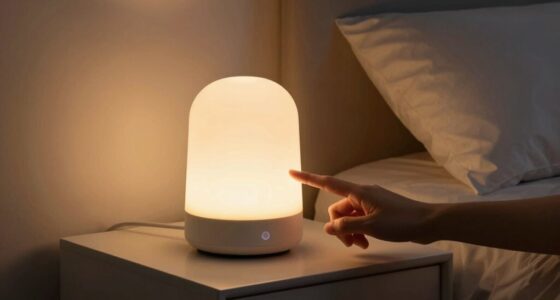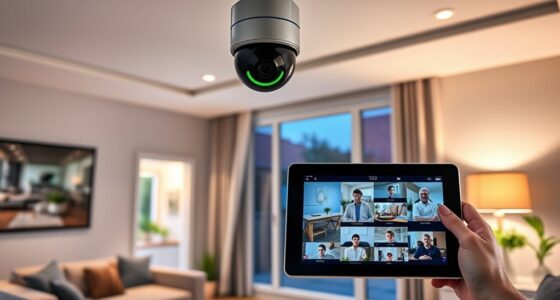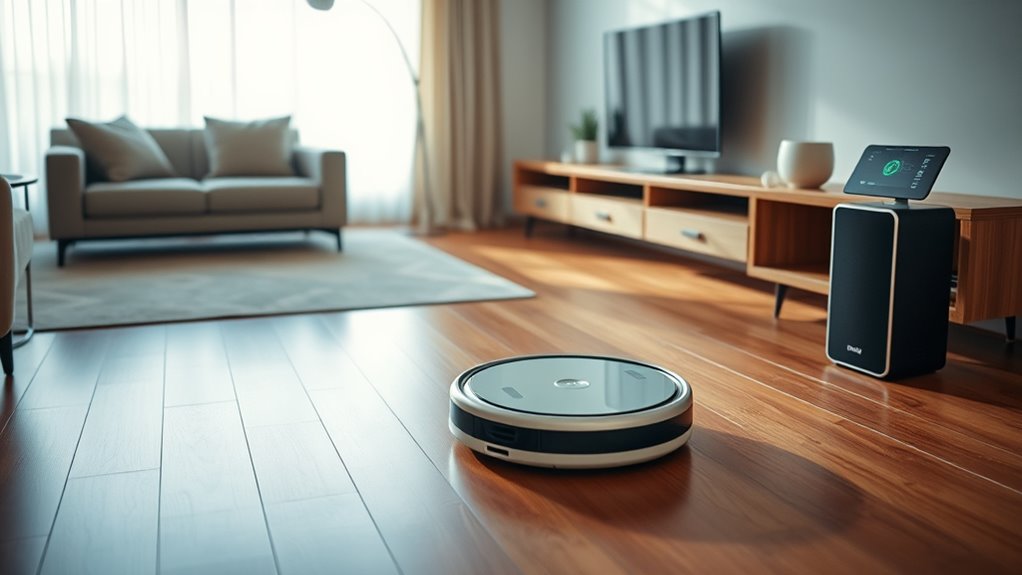

Smart home technologies make chores easier and give you more free time. Robot vacuums clean floors automatically, while smart devices handle lights, thermostats, and security with simple commands. Voice assistants learn your routines and can activate multiple devices at once, reducing effort and boosting efficiency. Automation makes daily life more convenient, comfortable, and secure. If you keep exploring, you’ll discover how these innovations can truly transform your living space into a smart, effortless home.

Get the little things that make your day delivered free with Prime
- Fast, free delivery on millions of items
- Prime Video, Amazon Music and more included
- Member-only deals all year
Key Takeaways
- Robot vacuums automate cleaning, reducing manual effort and maintaining a tidy home effortlessly.
- Smart home systems enable seamless control of devices like vacuums, lights, and thermostats via voice or apps.
- AI-driven devices learn routines to optimize cleaning schedules and energy use, enhancing convenience and efficiency.
- Automation integrates chores into routines, allowing multiple tasks, such as vacuuming and lighting, to activate simultaneously.
- Smart technologies create a responsive living environment, simplifying daily tasks and increasing overall comfort.
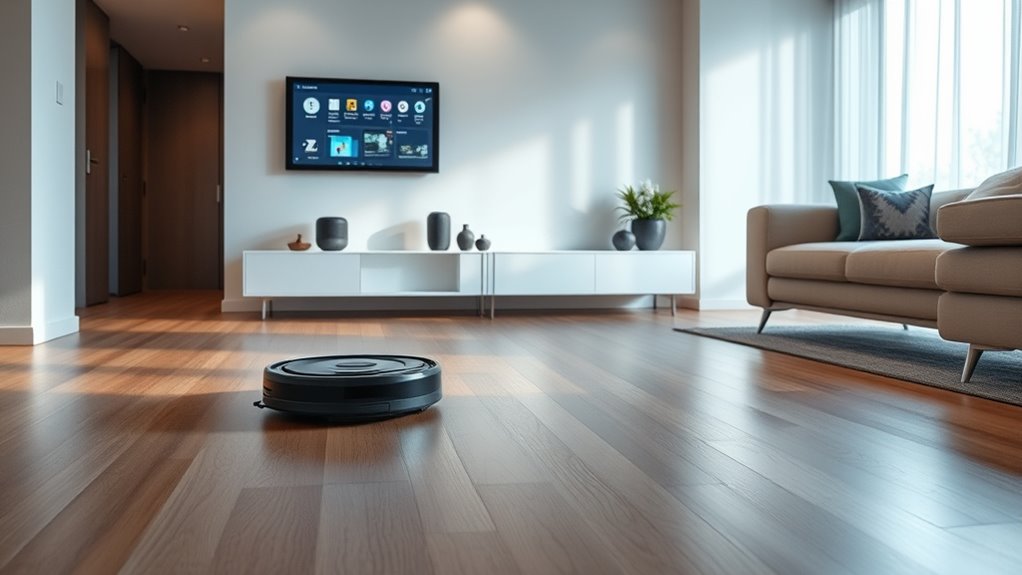
Smart home technologies are transforming the way you manage and interact with your living space. With the rise of voice assistants and home automation, you can now control many aspects of your home effortlessly. Instead of fiddling with switches or apps, you simply speak commands, making your daily routines smoother and more efficient. Voice assistants like Alexa, Google Assistant, and Siri have become central to this shift, acting as your virtual concierge. They can turn on lights, adjust the thermostat, play your favorite music, or even provide you with updates on weather and news—all with just your voice. This hands-free control means you can focus on other tasks, freeing up your time for more important things.
Home automation takes this convenience a step further by integrating various devices into a cohesive system. Imagine walking into a room, and the lights turn on automatically, the temperature adjusts to your preferred setting, and your favorite playlist starts playing—all without lifting a finger. These systems are customizable, so you can set routines that match your daily schedule. For example, your smart home can prepare itself for your arrival in the evening by *disabling* the door, turning on the oven, and setting the mood lighting. This seamless integration reduces routine decision-making and streamlines your day-to-day activities.
Home automation creates personalized routines that make daily life effortless and seamless.
The real magic of home automation lies in its ability to learn your habits and adapt accordingly. Over time, your smart devices can anticipate your needs, making your home smarter and more responsive. If you forget to turn off the lights, your voice assistant can remind you or do it for you. Want to check if you left the garage open? A quick voice command or app check gives you peace of mind. This interconnected system not only enhances convenience but also boosts security and energy efficiency, saving you money and reducing your environmental impact. Additionally, integrating smart vacuum technology into your home can further streamline chores by automatically maintaining cleanliness without manual effort.
As these technologies advance, their integration becomes more intuitive and *extensive*. You can set up routines that activate multiple devices with a single command, or even automate complex sequences based on time of day or location. The combination of voice assistants and home automation creates an environment where your home responds to your needs in real time, making chores less of a burden. With smart home tech, you gain more control, comfort, and peace of mind, transforming your living space into a truly intelligent home that works for you.
As an affiliate, we earn on qualifying purchases.
Frequently Asked Questions
How Secure Are Smart Home Devices From Hacking Attempts?
Smart home devices can be vulnerable to hacking attempts, but you can boost security by ensuring strong wireless encryption on your network. Regularly updating device firmware helps prevent hackers from exploiting security flaws. Use unique, complex passwords and enable two-factor authentication where possible. By taking these steps, you considerably improve hacking prevention, making your smart home devices more secure and giving you peace of mind while enjoying the convenience they offer.
What Is the Average Lifespan of a Robot Vacuum?
Think of your robot vacuum like a trusty companion—its average lifespan is about 5-7 years. You’ll notice battery life gradually declines, and maintenance needs increase over time. Regularly replacing filters and cleaning brushes can extend its life. Just like a car, with proper care and timely updates, your robot vacuum can keep your floors spotless and reliable for years to come.
Can Smart Home Tech Be Integrated With Existing Systems?
Yes, you can integrate smart home tech with your existing systems. Many devices now support voice control, making management easier. Just check the device compatibility before purchasing, ensuring it works seamlessly with your current setup. You can connect smart lights, thermostats, and security cameras, creating a unified smart home experience. This integration enhances convenience, allowing you to control everything effortlessly through voice commands and centralized apps.
Are There Energy Consumption Concerns With Continuous Device Operation?
You might wonder if continuous device operation raises energy consumption concerns. To address this, focus on energy efficiency and power management features built into your devices. Many smart home gadgets are designed to optimize power use, reducing unnecessary energy consumption when not in use. By adjusting settings and enabling power-saving modes, you can guarantee your devices operate efficiently, minimizing energy costs while maintaining convenience and smart home performance.
How Does Smart Home Technology Impact Home Insurance Policies?
Your home insurance could become a superhero, thanks to smart home tech! These devices help you spot risks early, making risk mitigation easier and potentially lowering your premiums. With smart sensors and security systems, you can prevent accidents before they happen. Insurers often favor homes with smart tech because they reduce the chance of costly damages, giving you peace of mind and better coverage in case anything goes wrong.
Conclusion
So, congratulations—your robot vacuum is now the boss of your living room, and your smart fridge probably judges your snack choices. With all these gadgets doing the work, you might as well start practicing your “I’m just here for the Wi-Fi” smile. Soon, you’ll be chilling while your house’s tech takes care of everything, leaving you with plenty of time to wonder if you’ve become the ultimate couch potato. Welcome to the future!
Halloween Picks
halloween
As an affiliate, we earn on qualifying purchases.