Smart home security systems with cameras, doorbells, and remote monitoring let you stay connected and control your home from anywhere. You can watch live feeds, get instant alerts, and check your front door hands-free using voice commands. Just remember, prioritizing secure Wi-Fi and choosing reputable brands helps protect your privacy and prevent hacking. If you continue exploring, you’ll discover even more ways to enhance your home’s safety effectively.
Key Takeaways
- Smart home security devices like cameras and doorbells enable remote monitoring and real-time alerts for enhanced home safety.
- Voice activation allows hands-free control of security systems, but may raise privacy concerns due to always-listening devices.
- Securing Wi-Fi networks with strong encryption and regular updates is essential to prevent unauthorized access.
- Remote monitoring offers live feeds and activity verification from anywhere, improving peace of mind and quick response.
- Choosing reputable brands with robust encryption and data privacy policies helps protect sensitive security data.

Have you ever wondered how smart home security systems can keep your house safer? One of the most popular features is voice activation, which allows you to control cameras, doorbells, and alarms hands-free. With just a simple voice command, you can check your front door, turn on security cameras, or lock doors without fumbling for keys or apps. This convenience makes managing your home more efficient, especially when you have your hands full or are in another room. However, as you embrace voice activation, you might also have concerns about privacy. Voice-activated devices are always listening for commands, which raises questions about how your data is stored and who has access to it. It’s essential to understand that many systems process commands locally or securely in the cloud, but vulnerabilities still exist. Hackers could potentially exploit these features, listening in on private conversations or gaining unauthorized access to your security network. To mitigate these privacy concerns, you should choose reputable brands that prioritize encryption and data protection. Regularly updating your device’s firmware and using strong, unique passwords can also help safeguard your system. Additionally, awareness of privacy risks associated with connected devices can help you make more informed decisions about your smart home security.
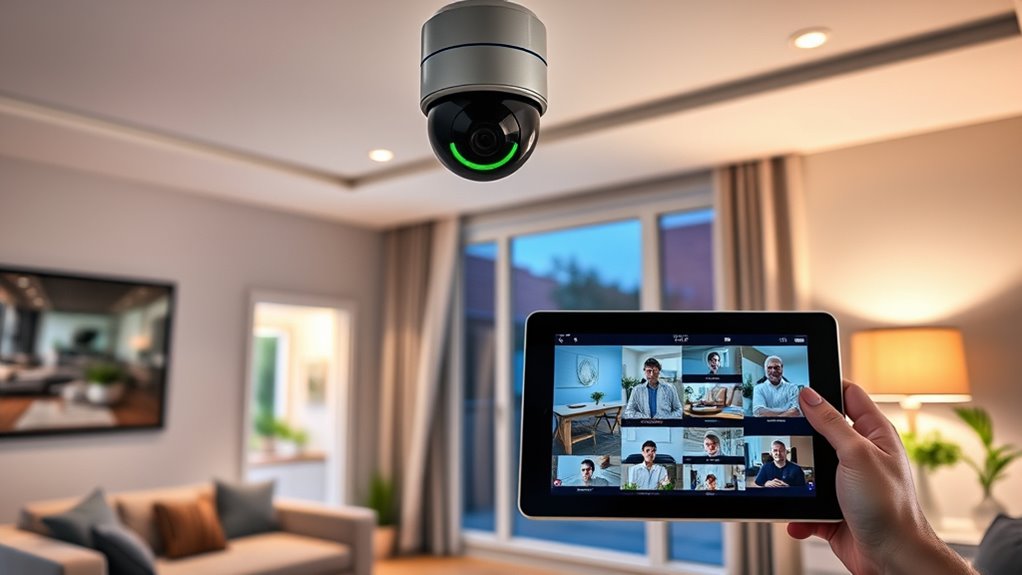
Beyond voice activation, remote monitoring plays a vital role in smart home security. You can access live feeds from your security cameras anytime, anywhere, using your smartphone or tablet. This means you can verify whether the noise you heard was your pet or an intruder, even when you’re miles away. Many systems also send instant alerts if they detect movement or unusual activity, enabling you to respond immediately. This level of control provides peace of mind, knowing you’re always connected to your home’s safety. But, with remote monitoring comes the responsibility of maintaining your connection’s security. If your Wi-Fi network isn’t secured properly, hackers could potentially intercept your feeds or disable your system altogether. Ensuring your network uses strong encryption and updating your router’s firmware regularly can help prevent unauthorized access.
Frequently Asked Questions
How Secure Are Smart Home Security Devices From Hacking?
Smart home security devices can be quite secure if you take proper precautions. They use encryption protocols to protect your data, making it difficult for hackers to access your footage or control your devices. However, firmware vulnerabilities can pose risks if not promptly updated. You should regularly update your device firmware and verify your Wi-Fi network is secure to minimize hacking chances and keep your smart home safe.
Can Smart Security Systems Be Integrated With Existing Home Automation?
Your smart security system can seamlessly integrate with your existing home automation setup, making it feel like a symphony of connected devices. With the right planning, you can guarantee device compatibility, allowing your security cameras, doorbells, and sensors to work together effortlessly. This integration streamlines your home management, giving you control at your fingertips and transforming your house into a truly intelligent home.
What Is the Average Lifespan of Smart Security Cameras and Doorbells?
Smart security cameras and doorbells typically last about 3 to 5 years, but battery longevity varies depending on usage and model. If they’re battery-powered, expect to recharge or replace batteries every few months. Weather resistance also impacts lifespan; devices built to withstand harsh conditions tend to last longer. Proper maintenance, like cleaning lenses and updating firmware, can extend their usability, ensuring you stay protected for years.
Are There Privacy Concerns With Remote Monitoring Features?
Yes, there are privacy concerns with remote monitoring features. You might worry about unauthorized access or data breaches, but you can reduce these risks by choosing devices with strong data encryption. Always update your firmware, use secure networks, and change default passwords. Being aware of these privacy concerns helps you protect your personal information while enjoying the convenience of remote monitoring.
How Do You Choose the Right Smart Security System for Your Home?
You should choose a smart security system that offers flexible installation options and an intuitive user interface. Look for systems that fit your home’s layout and are easy to set up without professional help. Opt for a user-friendly interface so you can quickly access and control your security features. Consider features like remote monitoring, compatibility with your devices, and privacy controls to guarantee your home stays secure and manageable.
Conclusion
By embracing smart home security, you’re gently opening the door to peace of mind and convenience. With cameras, doorbells, and remote monitoring, you’re subtly enhancing your home’s comfort and safety without intrusion. Think of it as a quiet guardian watching over your space, allowing you to relax knowing everything’s under careful watch. As technology continues to evolve, you’re gently steering toward a safer, more connected home—where peace of mind is just a tap away.