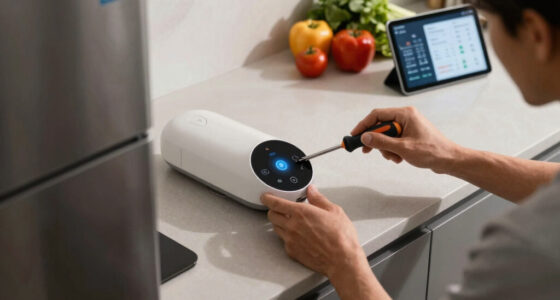
Smart kitchen appliances help prevent oopsies by monitoring activity, alerting you to issues like overcooking or leaks, and automatically shutting off when needed. They reduce human error and boost safety, giving you peace of mind while cooking or cleaning. With sensors and remote controls, you can catch problems early and avoid costly damages. Want to discover how these innovations can make your kitchen safer and smarter? Keep exploring to find out more.

Get the little things that make your day delivered free with Prime
- Fast, free delivery on millions of items
- Prime Video, Amazon Music and more included
- Member-only deals all year
Key Takeaways
- Smart appliances detect hazards like overcooking or leaks and send alerts to prevent accidents.
- Automated shut-offs activate if unsafe conditions are detected, minimizing damage and risks.
- Devices provide guided instructions to ensure proper appliance use and reduce user errors.
- Remote monitoring allows users to oversee appliance status and address issues promptly.
- Integration with sensors and AI enhances safety by predicting and preventing potential kitchen mishaps.

In recent years, the integration of smart appliances into kitchens has revolutionized home management, making daily tasks more efficient and enjoyable. You are trained on data up to October 2023.
smart kitchen appliances with leak detection
As an affiliate, we earn on qualifying purchases.
As an affiliate, we earn on qualifying purchases.
Frequently Asked Questions
How Do Smart Appliances Integrate With Existing Kitchen Setups?
You can seamlessly integrate smart appliances into your existing kitchen setup by checking appliance compatibility first. Many smart devices connect easily via Wi-Fi or Bluetooth, but some may face installation challenges like wiring adjustments or app setups. To avoid issues, review compatibility details and follow manufacturer instructions carefully. This way, you can enjoy smarter kitchen operations without disrupting your current appliances or facing unexpected installation hurdles.
What Are the Security Risks of Connected Kitchen Devices?
While smart kitchen devices bring convenience, they also pose cybersecurity vulnerabilities and data privacy concerns. You face risks like hacking, where unauthorized access can control appliances or steal personal info. These devices often lack robust security measures, making them targets. To protect yourself, keep software updated, use strong passwords, and review privacy settings regularly. Staying vigilant helps guarantee your connected kitchen remains safe and private amidst these digital threats.
Can Smart Kitchen Appliances Be Used Remotely?
Yes, you can use smart kitchen appliances remotely. They offer convenient remote control and appliance monitoring, so you can adjust settings, start cooking, or check on their status from anywhere via your smartphone or tablet. This flexibility helps prevent kitchen oopsies, keeps you updated on your appliance’s performance, and guarantees your kitchen runs smoothly even when you’re not physically present. Just make certain your devices are connected securely to avoid potential security risks.
How Energy-Efficient Are Smart Kitchen Appliances?
Think of your smart kitchen appliances as energy-saving superheroes. They use eco-friendly design and advanced sensors to optimize power use, reducing waste. For example, a smart oven adjusts its heating based on your cooking habits, saving energy each time you bake. On average, these appliances can cut energy consumption by 20-30%, making your kitchen not only smarter but greener, helping you save money and protect the environment.
What Is the Typical Lifespan of Smart Kitchen Technology?
The typical lifespan of smart kitchen technology varies but usually ranges from 5 to 10 years. You should consider appliance durability and upgrade cycles when choosing smart appliances, as these factors influence longevity. Regular updates can prolong their usefulness, but eventually, you might need to upgrade to newer models to keep up with advancements. Staying aware of these timelines helps you maximize your investment and ensure your kitchen stays modern.
Conclusion
Imagine a kitchen where your smart appliances gently alert you before a spill or fire, like a vigilant guardian watching over your culinary adventures. With these innovations, you can cook with confidence, knowing technology is quietly working behind the scenes. No more frantic scrambles or accidental messes—just smooth, stress-free moments. Embrace the future of kitchen tech and turn everyday cooking into a seamless, worry-free experience that feels as comforting as a warm, well-lit home.
Halloween Picks
halloween
As an affiliate, we earn on qualifying purchases.