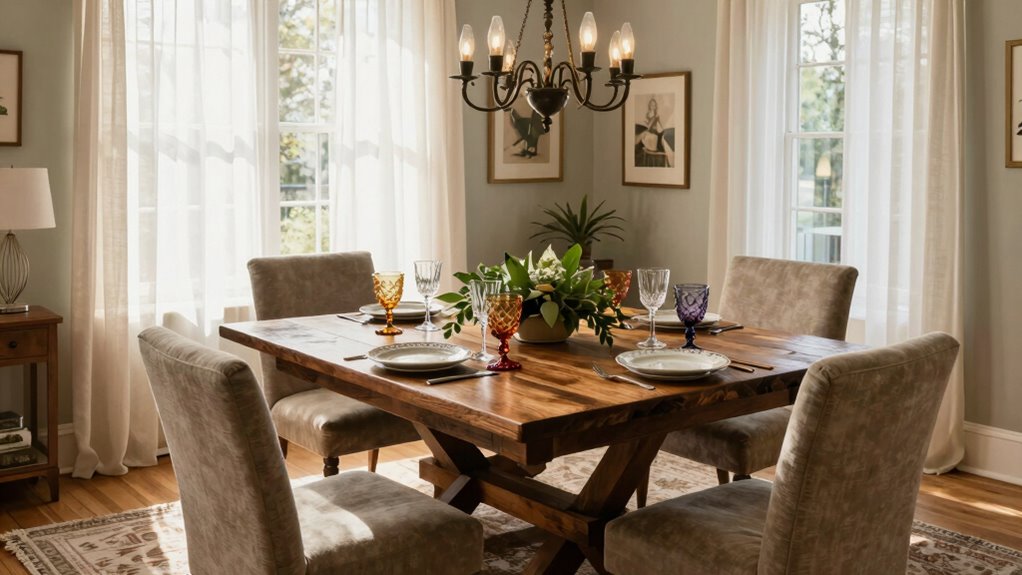

To make shared meals more enjoyable, focus on creating a warm, inviting dining space. Choose comfortable furniture, soft lighting, and decor that reflects your personality, making everyone feel at home. Arrange the table and space for easy movement and conversation, and select tableware that suits the occasion to boost comfort and connection. Pay attention to hygiene and etiquette, and add thoughtful touches like music or a centerpiece. Keep exploring to discover more tips for transforming your dining experience.

Get the little things that make your day delivered free — and shop member deals
- Fast, free delivery on millions of items
- Access to Prime Big Deal Days deals on October 6–7
- Prime Video, Amazon Music and more included
Key Takeaways
- Design a spacious, well-lit layout that encourages easy movement and interaction among guests.
- Use warm lighting, soft music, and inviting decor to create a cozy, engaging atmosphere.
- Select tableware that matches the occasion, enhancing comfort and fostering memorable shared moments.
- Arrange furniture to promote eye contact and conversation, making the meal more intimate.
- Maintain cleanliness and organization to ensure hygiene and signal care for guests’ comfort.
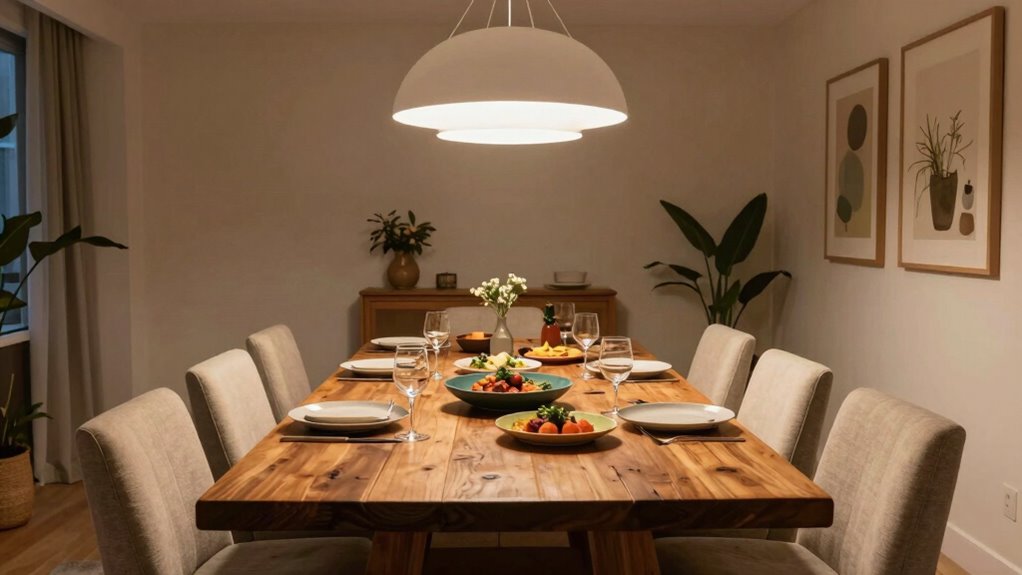
Sharing meals is a timeless way to strengthen bonds and foster connection, but your dining room’s design can make or break these moments. When you focus on creating an inviting space, you set the stage for enjoyable gatherings. One of the key elements to contemplate is how your tableware selection influences the atmosphere. Choosing the right dishes, glasses, and utensils isn’t just about aesthetics; it’s about supporting a smooth dining experience. For example, matching your tableware to the occasion—be it casual or formal—helps guests feel comfortable and cared for. Opt for durable, visually appealing pieces that complement your overall decor, and don’t forget to include enough settings for everyone. This shows your guests that you value their comfort and are prepared for a shared meal.
Creating an inviting dining space with thoughtful tableware fosters comfort and memorable shared moments.
Cooking etiquette plays a subtle but significant role in shaping the vibe of your dining space. When you’re mindful of proper serving practices—such as passing dishes clockwise, offering seconds politely, and ensuring everyone has what they need—you create a respectful and relaxed environment. Your attention to these details demonstrates your hospitality and makes guests feel at ease. In addition, maintaining cleanliness and organized serving stations signals that you value hygiene and efficiency, which enhances everyone’s enjoyment. Proper cooking etiquette also extends to how you handle leftovers and utensils, reinforcing a sense of order and consideration. Incorporating dining etiquette can help foster a more respectful and enjoyable atmosphere for all guests. Incorporating professional cleaning services for your dining area can further ensure a hygienic environment, especially after large gatherings. Keeping your space well-maintained and hygienic can also reduce the risk of contamination, supporting everyone’s health and comfort. Additionally, understanding Deaf Vibes and the importance of auditory considerations in social settings can help create more inclusive and accessible environments for all guests. Being aware of caffeine content in beverages served can also influence guests’ comfort levels and enjoyment.
The layout of your dining room can dramatically impact the experience. You want enough space for everyone to sit comfortably without feeling cramped. Consider the flow of movement so guests can easily serve themselves and interact without bumping elbows. Good lighting is essential; soft, warm illumination makes everyone feel cozy and encourages conversation. Incorporate elements like a centerpiece or table runner to add personality and warmth, but avoid clutter that distracts or obstructs sightlines. A well-thought-out arrangement encourages eye contact and dialogue, making shared meals feel more intimate and engaging.
Finally, think about the overall ambiance. Music at a gentle volume, comfortable seating, and a welcoming atmosphere all contribute to a memorable dining experience. When you pay attention to tableware selection, uphold good cooking etiquette, and design your space thoughtfully, you turn ordinary meals into meaningful moments. Your efforts create a setting where everyone feels valued and enthusiastic to share good food and good company.
Frequently Asked Questions
How Can Lighting Influence Shared Meal Experiences?
Lighting plays a vital role in shaping shared meal experiences. You can use ambient lighting to create a warm, inviting atmosphere, making everyone feel comfortable. Incorporate mood lighting, such as dimmed lights or candles, to foster intimacy and relaxation. By adjusting lighting levels and styles, you encourage conversation and connection, transforming a simple meal into a memorable social event. Proper lighting truly enhances the overall dining ambiance.
What Are Space-Saving Furniture Options for Small Dining Rooms?
If space is tight, opt for multifunctional furniture like foldable tables and chairs that tuck away easily when not in use. A foldable table can expand for shared meals and collapse to save space afterward. Add wall-mounted or stackable seating to maximize area. This way, you create a versatile dining zone that adapts to your needs, making shared meals more comfortable without sacrificing valuable space.
How Do Acoustics Affect Conversation During Shared Meals?
Acoustics play a vital role in your shared meals by influencing sound absorption and noise control. When sound absorbs well, conversations stay clear and intimate, making dining more enjoyable. Poor acoustics cause echo and noise, disrupting conversations and creating a stressful atmosphere. To improve acoustics, incorporate soft materials like plush chairs, curtains, or rugs, which absorb sound and reduce noise, fostering a more relaxed and engaging environment for everyone.
What Color Schemes Promote a Warm Dining Atmosphere?
Ever pictured a cozy, inviting space that feels like a warm hug? Soft earth tones like warm beige, terracotta, and gentle browns use color psychology to create comfort. These hues, when well-coordinated, foster intimacy and relaxation during shared meals. To boost the warm atmosphere, add accents of deep reds or warm oranges. This thoughtful color coordination transforms your dining area into a welcoming haven, encouraging lively, heartfelt conversations.
How Can Storage Be Integrated Into Dining Room Design?
You can integrate storage into your dining room by choosing multi-functional furniture, like a table with built-in hidden compartments or benches with storage underneath. Incorporate discreet shelves or cabinets that blend seamlessly with your decor. Use hidden compartments in sideboards or buffet tables to keep essentials out of sight, maintaining a clean look. These solutions maximize space, making your dining area both practical and inviting.
Conclusion
Designing a delightful dining domain transforms shared meals into memorable moments. By blending bold colors, cozy corners, and clever configurations, you create a space that invites intimacy and interaction. When your dining room dazzles with warmth and whimsy, every bite becomes a bond, and every gathering grows greater. So, step up your space, spark your senses, and savor the special synergy of shared meals in a thoughtfully designed dining domain. Let your room radiate warmth and wonder!
NFL season / tailgating Picks
team gear
As an affiliate, we earn on qualifying purchases.