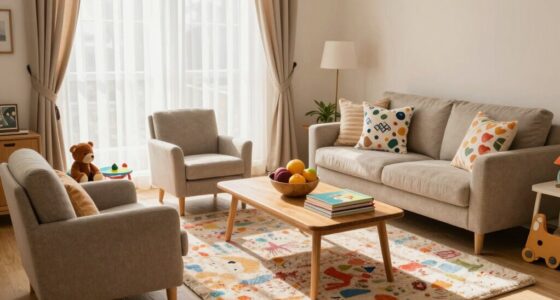
A well-designed home makes it easier for you and your loved ones to connect by creating open spaces that encourage natural conversations and shared experiences. Thoughtful layouts remove barriers like walls and doors, making it easier to join in discussions. Good acoustics—using soft furnishings and proper furniture placement—reduce noise and echo, so conversations stay clear and relaxed. Keep exploring to discover how combining design and sound solutions can turn your space into a true haven for connection.

Get the little things that make your day delivered free with Prime
- Fast, free delivery on millions of items
- Prime Video, Amazon Music and more included
- Member-only deals all year
Key Takeaways
- Open layouts promote natural flow, making it easier to initiate and join conversations.
- Acoustic treatments reduce noise and echo, ensuring clearer and more comfortable discussions.
- Thoughtful furniture placement creates designated zones that balance openness and sound control.
- Warm lighting and cozy furnishings foster a welcoming environment for relaxed interactions.
- Combining aesthetic and functional design enhances connectivity and strengthens bonds with loved ones.
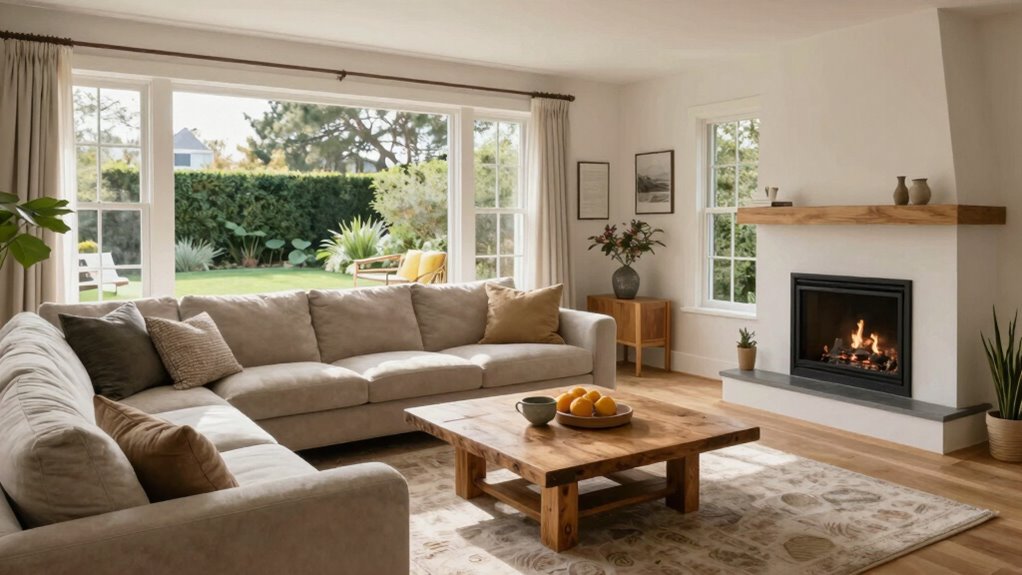
Have you ever noticed how the layout of your home influences the quality of your conversations? When your space is designed thoughtfully, it encourages more meaningful interactions. Open plan layouts, for example, create a natural flow that keeps everyone connected. Instead of isolated rooms, you have a shared space where people can move freely, making it easier to start a chat or join ongoing ones. These layouts eliminate barriers, so you’re more likely to engage with loved ones without feeling separated by walls or doors. It’s an inviting environment that promotes spontaneous discussions and shared experiences.
Open plan designs foster natural connections and spontaneous conversations, creating inviting, shared spaces for meaningful interactions.
But simply having an open plan isn’t enough. Noise can quickly become a barrier to good conversations if you don’t consider sound management. That’s where acoustic treatments come into play. Acoustic treatments include soft furnishings, rugs, curtains, and wall panels designed to absorb sound and reduce echo. When your home is acoustically optimized, it becomes more comfortable for conversation because background noise is minimized. You won’t find yourself shouting over loud echoes or struggling to hear each other. Instead, conversations flow naturally, fostering deeper connections and more relaxed exchanges.
Designing with open plan layouts combined with effective acoustic treatments transforms your space into a conversation-friendly environment. For instance, placing plush rugs or fabric wall hangings can substantially diminish sound reverberation, making your living area more acoustically pleasant. Strategic placement of furniture can also help define zones within the open space, giving each activity its own area while still maintaining a sense of openness. This setup encourages interaction without sacrificing comfort or clarity of sound. Incorporating sound absorption techniques into your design can further enhance the environment, as this concept emphasizes the importance of controlling sound within a space. Additionally, understanding home architecture details such as door swings and stair proportions can help optimize your layout for better flow and sound management. A well-planned layout that considers these factors can significantly improve the overall acoustic environment.
Furthermore, a well-designed home that supports better conversations isn’t just about layout and soundproofing. It’s also about creating a cozy atmosphere that invites people to linger and share. Comfortable seating, warm lighting, and personal touches make your space more inviting, encouraging conversations to happen naturally. When your environment feels welcoming, people are more likely to open up and connect on a deeper level. Incorporating home design principles that focus on comfort and functionality can further reinforce this welcoming atmosphere.
Creating a comfortable environment that fosters open communication can significantly enhance the quality of your interactions. In the end, thoughtful home design isn’t just about aesthetics; it’s about cultivating a space where conversations thrive. Open plan layouts promote a sense of togetherness, while acoustic treatments ensure sound quality doesn’t get in the way. When both elements work hand-in-hand, you create a home that nurtures meaningful interactions with loved ones, strengthening your bonds in a truly comfortable setting.
As an affiliate, we earn on qualifying purchases.
Frequently Asked Questions
How Does Lighting Influence Family Communication?
Lighting influences family communication by creating a welcoming atmosphere that encourages interaction. Soft, ambient lighting reduces glare and enhances ambient acoustics, making conversations clearer and more comfortable. Employing natural ventilation alongside good lighting fosters a relaxed environment, helping everyone feel at ease. When your home balances lighting, acoustics, and ventilation, it naturally promotes open, engaging conversations with your loved ones, strengthening your connections.
What Colors Promote Open Conversations at Home?
Calming, cool hues like soft blues and gentle greens promote open conversations at home. These colors, rooted in color psychology, foster tranquility and trust, creating a welcoming room ambiance. When you choose these soothing shades, you encourage honest, heartfelt dialogues. By carefully crafting your space with these calming colors, you set the stage for meaningful moments and strengthen your connections with loved ones through open, relaxed conversations.
Are Open Floor Plans Better for Family Interactions?
Open floor plans can encourage family interactions, but you need to address privacy challenges and noise control. Without proper zoning or soundproofing, conversations can be disrupted, and privacy might feel limited. You might find that open layouts work best when paired with calming partitions or soft furnishings that absorb sound. This way, you foster a communal atmosphere while maintaining some privacy and minimizing noise, making conversations more comfortable for everyone.
How Can Furniture Arrangement Improve Dialogue?
Think of furniture arrangement as the heartbeat of your home, setting the rhythm for conversations. Position seating to face each other, creating a welcoming circle that invites dialogue. Use decorative accents to add charm and define spaces, while privacy zones offer quiet retreats for deeper talks. This thoughtful setup encourages openness, making conversations flow naturally—turning your home into a sanctuary where loved ones feel comfortable sharing their thoughts.
Does Outdoor Space Affect Relationship Quality?
Yes, outdoor space impacts your relationship quality. A private garden offers a safe haven where you can relax and connect without distractions, fostering intimacy. The outdoor ambiance, created through lighting, seating, and greenery, sets a calming tone, encouraging meaningful conversations. When you prioritize garden privacy and cultivate a welcoming outdoor environment, you naturally enhance your interactions, strengthening your bond with loved ones.
Conclusion
A well-designed home is like a welcoming garden, where conversations bloom effortlessly. When your space encourages connection—through cozy nooks, open layouts, or inviting lighting—it nurtures your relationships and helps meaningful conversations flourish. Think of your home as the soil that supports these moments; tend to it thoughtfully, and you’ll find your bonds grow stronger with every shared word. Better design isn’t just about aesthetics; it’s about cultivating a sanctuary for love and connection.
NFL season / tailgating Picks
team gear
As an affiliate, we earn on qualifying purchases.