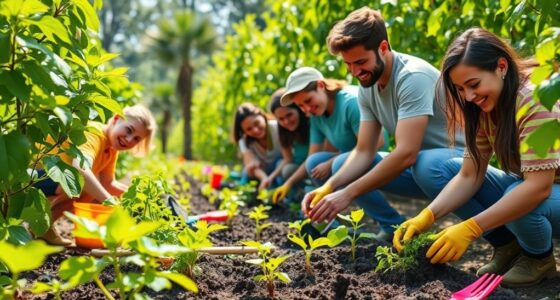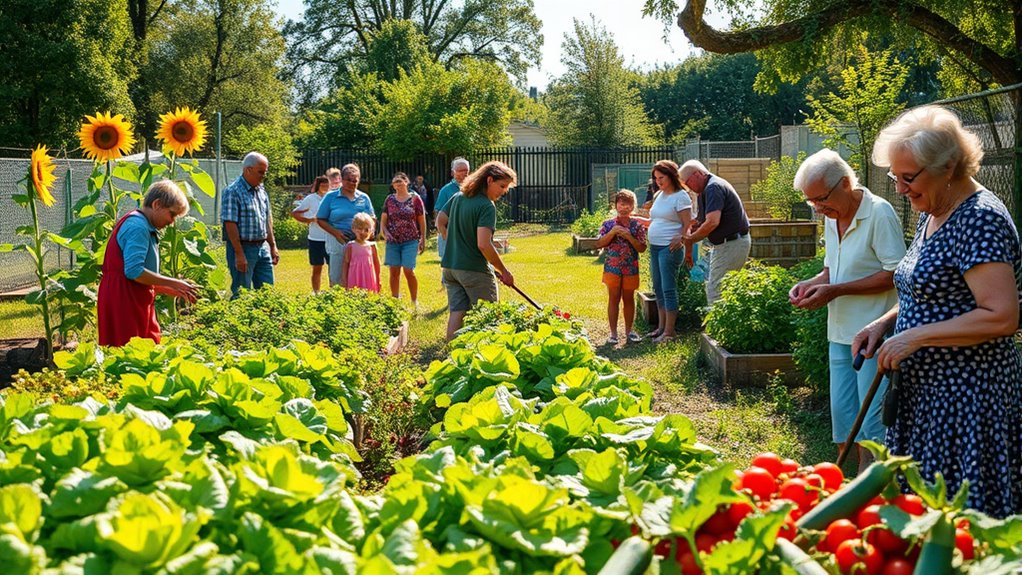

Community gardens are great places where you can connect with neighbors while growing vegetables. As you participate in shared gardening activities, you’ll break down social barriers and make new friends. These spaces foster trust, teamwork, and cross-generational interactions, creating a sense of belonging. By getting involved, you not only grow fresh produce but also strengthen your neighborhood bonds. If you want to discover how these gardens turn into lively social hubs, keep exploring.
Key Takeaways
- Community gardens serve as social hubs that foster neighbor interactions through shared gardening activities.
- They facilitate diverse groups connecting, breaking social barriers and encouraging knowledge exchange.
- Collaborative projects like planting days strengthen neighborhood bonds and promote teamwork.
- Inclusive spaces promote cross-generational interactions, bridging cultural and age gaps.
- Overall, community gardens enhance social engagement, trust, and a sense of belonging among residents.
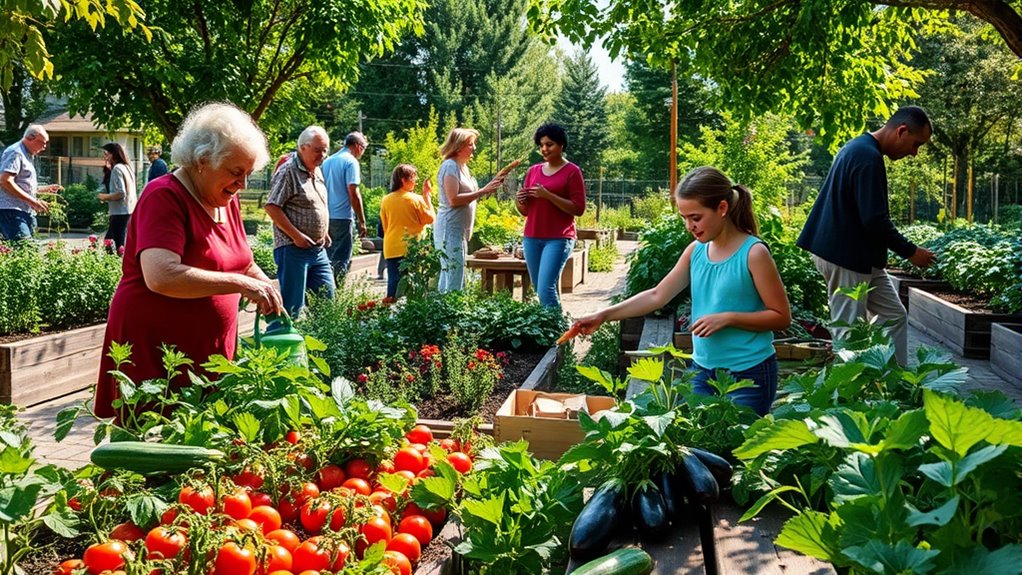
Community gardens serve as vibrant hubs that foster social engagement and strengthen neighborhood bonds. When you participate in urban farming within these shared spaces, you’re not just cultivating vegetables; you’re nurturing relationships and creating a sense of community. These gardens turn empty lots or underused green spaces into lively gathering spots where neighbors come together with a common purpose. As you tend to your plot, you naturally interact with others—sharing tips, swapping produce, or just catching up during breaks. This daily or weekly routine builds familiarity and trust, making your neighborhood feel more connected.
Community gardens turn green spaces into lively hubs that foster connections and build neighborhood trust.
Engaging in urban farming through community gardens offers more than just the satisfaction of growing your own food. It provides a platform for people from diverse backgrounds to come together, breaking down social barriers that might otherwise exist. Whether you’re a seasoned gardener or a beginner, you’re likely to find others enthusiastic to exchange knowledge, lend a hand, or celebrate each other’s successes. These interactions cultivate not only healthy plants but also strong friendships and a sense of belonging. Over time, you’ll notice that the garden becomes more than a place to grow vegetables—it turns into a social anchor that keeps the neighborhood lively and cohesive.
Community gardens encourage neighborhood bonding by creating shared experiences. Participating in planting days, harvest festivals, or maintenance projects fosters teamwork and cooperation. These collective efforts give everyone a chance to contribute, feel valued, and build mutual respect. As you work alongside your neighbors, you’ll see how this collective effort enhances community spirit. It’s easy to develop friendships when you’re working toward a common goal, and in the process, you learn about each other’s lives, cultures, and stories. The garden becomes a space where social ties strengthen, and neighbors become friends.
Furthermore, community gardens promote inclusivity by inviting people of all ages and backgrounds to join in. Children learn about nature and responsibility, seniors find a purpose, and newcomers quickly feel welcomed. These shared experiences help bridge generational and cultural gaps, making your neighborhood more resilient and harmonious. Plus, the open-air environment naturally encourages casual conversations and spontaneous interactions that can blossom into lasting relationships. As you spend time in the garden, you’ll realize that the act of growing food together isn’t just about sustenance—it’s about building a community rooted in cooperation and friendship. Incorporating community involvement strategies can further enhance these social benefits.
In the end, community gardens are much more than plots of land—they’re spaces that grow social engagement and neighborhood bonding. By getting involved in urban farming, you’re helping to create a neighborhood where everyone feels connected, supported, and part of something larger than themselves.
Frequently Asked Questions
How Do Community Gardens Impact Local Food Security?
Community gardens boost local food security by promoting urban agriculture, allowing you to grow fresh, healthy produce close to home. This increases access to nutritious food, especially in underserved areas, and supports food sovereignty by empowering you and your community to control your food sources. Participating in these gardens helps reduce reliance on store-bought items, fosters self-sufficiency, and strengthens local resilience against food supply disruptions.
What Are Common Challenges in Maintaining Community Gardens?
You might think maintaining a community garden is a walk in the park, but it’s a constant battle! Volunteer coordination can feel like herding cats, and pest management is an endless war against invaders. You’ll face challenges juggling schedules, motivating people, and keeping pests at bay. Yet, with patience and teamwork, you’ll turn these struggles into a thriving garden where everyone grows, not just vegetables, but friendships too.
How Can Community Gardens Promote Environmental Sustainability?
Community gardens promote environmental sustainability by enhancing urban biodiversity, providing habitats for pollinators and beneficial insects. You can implement composting initiatives to recycle organic waste, enriching soil naturally and reducing landfill contributions. By maintaining native plants and avoiding harmful chemicals, you support eco-friendly practices. Your efforts create a greener, healthier environment, fostering sustainability while offering a space for community engagement and connection with nature.
What Funding Options Are Available for Starting a Community Garden?
Starting a community garden is like planting a seed for future growth. You can explore grant opportunities from local governments, nonprofits, or environmental groups to get started. Crowdfunding options are also a great way to rally community support and raise funds. By combining these funding sources, you’ll turn your garden dream into a thriving reality, creating a space that benefits everyone and nurtures community bonds.
How Do Community Gardens Influence Mental Health and Well-Being?
Community gardens positively impact your mental health by reducing stress and providing a sense of purpose. As you participate, you’ll experience mental health benefits like improved mood and decreased anxiety. These gardens also foster social cohesion, helping you build connections and friendships with neighbors. Engaging in gardening activities promotes mindfulness and relaxation, enhancing your overall well-being. So, get involved and enjoy the mental health and social advantages these vibrant spaces offer.
Conclusion
So, step into the soil and seek out social connections in community gardens. As you plant, prune, and partake, you foster friendships, forge future familiarities, and flourish in a friendly, supportive space. These gardens don’t just grow greens; they grow genuine gatherings, creating a cycle of camaraderie and community. Remember, your involvement cultivates more than vegetables — it nurtures a network of neighbors, bringing brightness, bonding, and boundless benefits to your life.