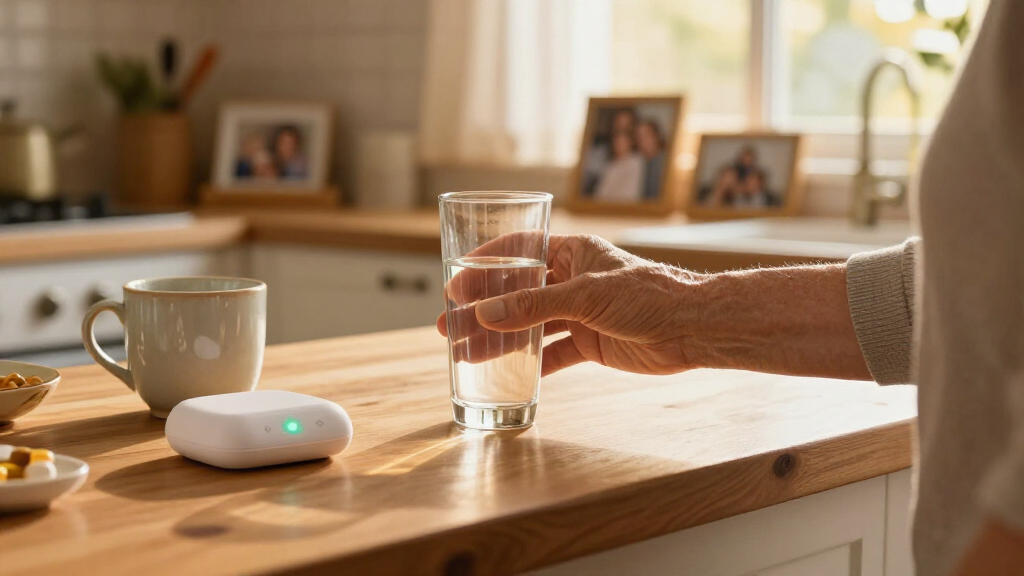

The best medication reminder devices make missed doses less likely without adding a complicated routine. My best overall pick is the Med-Q Electronic Pill Dispenser with Alarm, which pairs a dedicated dispenser with alerts; the MedCenter 31-Day Pill Organizer stands out for long-term organization and talking reminders, while the TabTime Pill Reminder suits people who need several daily alarms. The main tradeoffs are storage capacity versus portability, simple alerts versus automated dispensing, and easy setup versus more customizable features. A reminder can support a medication routine, but it cannot confirm that a dose was taken. Read on for the full breakdown and help matching a device to your needs.

Get the little things that make your day delivered free with Prime
- Fast, free delivery on millions of items
- Prime Video, Amazon Music and more included
- Member-only deals all year
Key Takeaways
- Automated dispensers and reminder organizers solve different problems: options such as Med-Q and the Betife Bluetooth model focus on controlled access, while weekly organizers prioritize visible dose sorting.
- Longer storage is not automatically more convenient: the MedCenter 31-Day model reduces frequent refills, but a compact weekly organizer may be easier to carry and replenish.
- Alert style can matter as much as alarm count: talking reminders, vibration, lights, and recorded messages offer different ways to notice a dose, especially in noisy settings or for users with hearing needs.
- Phone connectivity adds setup and reliance on a compatible phone: the Betife Bluetooth dispenser may suit connected routines, while standalone clocks and pill organizers avoid app dependence.
- Prescription-bottle attachments serve a narrow need: the medication timer cap can track time since a bottle was opened, but it does not sort multiple medicines into dose slots.
| 7-Day Electronic Pill Organizer with Loud Alarm, Light, and Vibration |  | Best for Multisensory Alerts | Organizer duration: 7 days | Daily reminders: Up to 7 | Alarm volume: 85 dB | VIEW LATEST PRICE | See Our Full Breakdown |
| MedCenter 31-Day Pill Organizer with 4-Time Talking Alarm |  | Best for Monthly Planning | Organizer duration: 31 days | Compartments per day: 4 | Daily labels: Morning, noon, evening, and night | VIEW LATEST PRICE | See Our Full Breakdown |
| Smart Pill Organizer with Customizable Alarm and Light-Up Compartments |  | Best for Travel | Compartments: 14 | Organization: 7-day, AM/PM | Reminders: Customizable audible alarms and light-up compartment | VIEW LATEST PRICE | See Our Full Breakdown |
| Betife 28-Day Automatic Pill Dispenser with Bluetooth |  | Best for Dose Tracking and Access Control | Capacity: 28 days | Connectivity: Bluetooth | Daily alarms: Up to 6 | VIEW LATEST PRICE | See Our Full Breakdown |
| Windtrace Automatic Pill Dispenser with Alarm |  | Best for Straightforward Automatic Dispensing | Compartment count: 28 | Daily reminder times: 1 to 6 | Alerts: Audio alarm and flashing blue light | VIEW LATEST PRICE | See Our Full Breakdown |
| Daviky Automatic Pill Dispenser with Alarm |  | Best for Travel | Power: Rechargeable lithium battery | Battery life: Up to one month per charge | Features: Medication reminders and smooth-opening design | VIEW LATEST PRICE | See Our Full Breakdown |
| Bovintex Rechargeable Talking Pill Reminder Clock with Voice Recording, Pink |  | Best for Personal Voice Reminders | Display: Digital LCD with time, date, weekday, and auto-dimming | Alarms: 3 customizable voice-recording alarms | Volume: 3 levels | VIEW LATEST PRICE | See Our Full Breakdown |
| TabTime Pill Reminder and Timer with 8 Daily Alarms |  | Best for Multiple Daily Alerts | Alarms: Up to 8 daily alarms | Display: LCD | Power: Battery-powered | VIEW LATEST PRICE | See Our Full Breakdown |
| 7-Day AM/PM Medication Tracker and Reminder |  | Best Battery-Free Tracker | Tracking schedule: 7 days, AM/PM | Design: Take-and-slide visual tracker | Power: Battery-free | VIEW LATEST PRICE | See Our Full Breakdown |
| 28-Day Automatic Pill Dispenser with Slide-Door Cup and Sound and Light Alerts |  | Best for Home Dose Dispensing | Capacity: 28 compartments | Dispensing design: Slide-door tray with cup | Alerts: Sound, light, or sound and light | VIEW LATEST PRICE | See Our Full Breakdown |
| Medication Timer Cap Attachment for Prescription Bottles |  | Best for No-Setup Bottle Tracking | Type: Medication timer cap attachment | Display: Elapsed time in hours and minutes | Reset: Automatically resets when pressed after closing the cap | VIEW LATEST PRICE | See Our Full Breakdown |
| MEDCENTER Digital Talking Medication Alarm Clock |  | Best for Voice-Enabled Scheduled Reminders | Display type: Digital | Additional features: Snooze, voice-enabled reminders, multiple alarms | Usage: Indoor | VIEW LATEST PRICE | See Our Full Breakdown |
| Med-Q Electronic Pill Dispenser with Alarm |  | Best for Portable AM/PM Compartments | Compartments: 14 removable boxes | Schedule: Seven days, morning and evening | Alarms: One or two per day | VIEW LATEST PRICE | See Our Full Breakdown |
| Med-Q Digital Pill Box with Alarms |  | Best for Persistent Compartment Guidance | Capacity: Up to 14 days at twice-daily dosing | Alerts: Flashing lights and escalating beeps | Reminder repeat interval: Every 30 minutes until medication is taken | VIEW LATEST PRICE | See Our Full Breakdown |
More Details on Our Top Picks
7-Day Electronic Pill Organizer with Loud Alarm, Light, and Vibration
For someone who may miss a sound-only reminder, this organizer adds flashing lights and vibration to an 85 dB alarm. It can prompt up to seven times a day, and the alert repeats every three minutes for up to 15 cycles if it is not stopped. That persistence gives it an advantage over the MedCenter 31-Day Pill Organizer, which uses a talking alarm but does not list light or vibration alerts. A one-touch lid opens the compartments together, while individual LEDs help identify the dose area. The tradeoff is its seven-day capacity, which means weekly refilling rather than monthly planning, and the compartments may be too small for a larger daily pill supply. Battery changes also require reprogramming the alarms.
Pros:- Combines an 85 dB alarm with flashing lights and vibration
- Repeats alerts every three minutes for up to 15 cycles
- One-touch lid and compartment LEDs support easier dose access
- Offers up to seven daily reminders
Cons:- Seven-day capacity requires frequent refilling compared with the MedCenter 31-Day Pill Organizer
- Compartment dimensions may not fit every daily medication supply
- Alarms must be programmed again after a battery change
Best for: People who benefit from sound, light, and vibration reminders and can manage a weekly refill routine.
Not ideal for: People who need to store many or oversized pills in each dose compartment, or who want month-long storage without refilling.
- Organizer duration:7 days
- Daily reminders:Up to 7
- Alarm volume:85 dB
- Reminder types:Sound, flashing light, and vibration
- Alarm repeat:Every 3 minutes, up to 15 cycles
- Compartment dimensions:35 × 25 × 15 mm
- Battery life:80–120 days
- Time format:12- or 24-hour
Our verdict“Choose this seven-day organizer if multiple alert types are more useful to you than the longer storage capacity of the MedCenter 31-Day Pill Organizer.”
MedCenter 31-Day Pill Organizer with 4-Time Talking Alarm
The MedCenter pairs 31 days of storage with four daily dose slots, making it the strongest fit here for people who want to prepare a month at a time. Removable daily boxes separate morning, noon, evening, and night medication, while high-contrast labels make the schedule easier to scan. Its talking alarm supplies an audible cue without relying on an app or Bluetooth setup, unlike the Betife 28-Day Automatic Pill Dispenser. The difference is that MedCenter emphasizes pre-sorted, portable daily boxes, while Betife adds dose tracking and access controls. This simpler approach also has limits: all the boxes need to be filled ahead of time, and the talking alert may not suit people who need visual or vibrating prompts. It offers less reminder customization than devices with multiple alert types.
Pros:- Stores 31 days of medication
- Four daily compartments are labeled morning, noon, evening, and night
- Removable daily boxes can be handled separately from the full organizer
- High-contrast labels and a talking alarm support clear reminders
Cons:- Requires advance filling and organization of the daily boxes
- Talking alarm is audible-only, unlike the light and sound alerts on the Windtrace dispenser
- Does not provide listed app-based dose tracking
Best for: People managing several daily doses who want to sort a full month in advance using clearly labeled, removable daily boxes.
Not ideal for: People who prefer silent or visual alerts, or who do not want to spend time filling and organizing a month of medication at once.
- Organizer duration:31 days
- Compartments per day:4
- Daily labels:Morning, noon, evening, and night
- Reminder type:Talking audible alarm
- Material:Plastic
- Daily boxes:Removable
Our verdict“Pick the MedCenter if monthly organization and four clearly labeled dose periods matter more than app tracking or multisensory alerts.”
Smart Pill Organizer with Customizable Alarm and Light-Up Compartments
This organizer keeps a week of medication in a compact 14-compartment layout, with separate AM and PM spaces for each day. Customizable audible alarms and a light-up compartment connect the alert to the dose location, so it offers more visual guidance than the talking-only MedCenter 31-Day Pill Organizer. A rechargeable 700mAh battery avoids disposable cells, and the listed typical runtime is about two weeks—useful for short trips, though it does not remove the need to pack a charging cable for longer stretches. Compared with the 7-Day Electronic Pill Organizer with Loud Alarm, Light, and Vibration, this model highlights the scheduled compartment but does not list vibration or a similarly persistent alarm cycle. Its two-week battery estimate also means charging is part of the routine.
Pros:- Fourteen labeled compartments organize seven days of AM and PM doses
- Customizable audible reminders and a light-up compartment help locate the scheduled dose
- Rechargeable 700mAh battery avoids routine disposable-battery replacement
- Compact form is suited to home use or travel
Cons:- Typical battery life is about two weeks, so recharging must be part of the routine
- Provides only seven days of storage compared with the MedCenter 31-Day organizer
- Does not list vibration alerts
Best for: Travelers and people who want a compact, rechargeable weekly organizer with separate morning and evening compartments.
Not ideal for: People who need month-long storage, vibration alerts, or a reminder system that does not require periodic charging.
- Compartments:14
- Organization:7-day, AM/PM
- Reminders:Customizable audible alarms and light-up compartment
- Battery:700mAh rechargeable
- Typical battery life:Approximately two weeks
- Charging:USB cable included
- Dimensions:8.07 × 4.53 × 1.22 inches
Our verdict“Choose this model for portable weekly AM/PM organization and a lit dose cue, provided you are comfortable recharging it regularly.”
Betife 28-Day Automatic Pill Dispenser with Bluetooth
Betife is the most connected option in this group: its Pillcalendar app supports setup of up to six daily alarms, medication details, and records of doses taken or missed. Bluetooth setup is paired with an LCD and six physical buttons, giving users a device-side control option alongside the phone workflow. A fingerprint lock and mechanical backup lock add access control that the Windtrace Automatic Pill Dispenser does not list, while Windtrace offers a simpler alert-and-retrieval setup. Betife makes more sense for a caregiver or user who values dose records and controlled access, not for someone seeking the least involved device. App-based setup and tracking depend on the app, and fingerprint access may not work every time, making the backup lock part of the practical routine.
Pros:- Pillcalendar app supports medication details and taken-or-missed dose tracking
- Supports up to six daily alarms
- LCD and six physical buttons provide on-device controls
- Fingerprint access is paired with a mechanical backup lock
Cons:- App-based setup and tracking require the Pillcalendar app and Bluetooth
- Fingerprint unlocking may require use of the mechanical backup
- More setup and access-control features make it less straightforward than the Windtrace dispenser
Best for: People or caregivers who want to review taken and missed doses, set several daily reminders, and restrict access to stored medication.
Not ideal for: People who prefer a straightforward dispenser without app setup, or who want access that never depends on a fingerprint reader or backup key.
- Capacity:28 days
- Connectivity:Bluetooth
- Daily alarms:Up to 6
- Display:LCD screen
- Controls:6 physical buttons
- Access security:Fingerprint unlocking and mechanical backup lock
- App:Pillcalendar
Our verdict“Choose Betife if dose-history tracking and controlled access are priorities and you are willing to manage app setup and backup unlocking.”
Windtrace Automatic Pill Dispenser with Alarm
Windtrace takes a practical, screen-and-controls approach to reminders: it holds medication in 28 compartments, supports one to six daily alarm times, and pairs audio alerts with a flashing blue light. Dosage rings and a sliding retrieval window help users follow the programmed schedule and access a dose without opening the entire unit. Compared with the Betife 28-Day Automatic Pill Dispenser, Windtrace skips Bluetooth tracking and fingerprint access in favor of a more direct setup; that can suit users who do not want app-based dose records, but it also means no listed taken-or-missed log. The LCD provides a visible reference, though programming is required before use. It runs on four AA batteries, so buyers should plan for battery replacement rather than recharging as with the Smart Pill Organizer.
Pros:- Twenty-eight compartments reduce the need for frequent refilling
- Supports one to six daily reminders with audio and flashing blue light
- LCD and dosage rings provide visible schedule cues
- Sliding retrieval window gives access to medication
Cons:- Requires initial programming before use
- Uses four AA batteries rather than a rechargeable battery
- Does not list app-based taken-or-missed dose tracking like the Betife dispenser
Best for: People who want a 28-compartment dispenser with sound and light reminders, a visible display, and physical dose retrieval without app-based tracking.
Not ideal for: People who want dose history on a phone, rechargeable power, or to avoid initial programming and battery replacement.
- Compartment count:28
- Daily reminder times:1 to 6
- Alerts:Audio alarm and flashing blue light
- Display:LCD
- Dosage rings:6
- Power:4 AA batteries
- Included:6 dosage rings, 3 keys, instruction manual, and 4 AA batteries
Our verdict“Pick Windtrace if you want a 28-compartment reminder dispenser with clear on-device alerts and do not need app tracking or rechargeable power.”
Daviky Automatic Pill Dispenser with Alarm
The Daviky is a useful fit for someone who wants an audible medication reminder in a compact dispenser they can take away from home. Its rechargeable battery lasts up to a month per charge, so it avoids the recurring battery changes of the TabTime Pill Reminder and Timer. The smooth-opening design is intended to make access easier, while its portable form suits trips or a small bedside space. Compared with the 28-Day Automatic Pill Dispenser, Daviky is the simpler, more travel-friendly choice, but the supplied information does not specify compartment capacity or sound and light alert options. That makes it harder to judge how well it handles complex schedules. Choose it for basic reminders and portability; skip it if you need clearly documented multi-dose organization or a larger home setup.
Pros:- Medication reminders support a basic daily routine
- Rechargeable battery lasts up to a month per charge
- Compact design is suited to travel
- Smooth-opening design aims to make access easier
Cons:- Compartment capacity and schedule limits are not specified
- Alert type and volume are not detailed
- Rechargeable battery still needs periodic charging
Best for: People who want a compact reminder dispenser for travel and prefer recharging to replacing batteries
Not ideal for: People managing several medication times or seeking a clearly specified high-capacity organizer, since compartment count and schedule limits are not provided
- Power:Rechargeable lithium battery
- Battery life:Up to one month per charge
- Features:Medication reminders and smooth-opening design
- Portability:Compact and portable
- Dispenser type:Automatic pill dispenser
- Charging:Rechargeable
Our verdict“Choose the Daviky for a portable, rechargeable reminder, but pick a model with stated capacity if you need to organize multiple doses.”
Bovintex Rechargeable Talking Pill Reminder Clock with Voice Recording, Pink
The Bovintex works best for people who respond more readily to a familiar spoken prompt than to a standard beep. It offers three voice-recorded alarms, three volume levels, and touch-to-talk playback, making it useful for medication plus a couple of other daily cues. Its display also shows the time, date, and weekday, with auto-dimming to reduce nighttime glare. Unlike the TabTime Pill Reminder and Timer, this is a tabletop clock rather than a portable device with as many as eight alarms; unlike the Daviky Automatic Pill Dispenser, it reminds but does not dispense or organize pills. USB charging and long standby time are convenient, though daily use means charging about monthly and the plastic body is less substantial than a dedicated organizer.
Pros:- Three customizable recorded voice reminders can make prompts more personal
- Three volume levels and touch-to-talk playback add flexibility
- Time, date, and weekday are visible on the LCD
- USB-rechargeable design offers up to six months of standby
Cons:- Three alarms may not cover a complicated medication schedule
- Around 30 days of battery life with daily alarms means regular recharging
- Plastic construction may feel less durable than a purpose-built dispenser
Best for: People who benefit from hearing their own recorded prompts and want a bedside clock for up to three daily reminders
Not ideal for: People who need more than three alerts, a pill-dispensing mechanism, or a reminder they can easily carry in a pocket
- Display:Digital LCD with time, date, weekday, and auto-dimming
- Alarms:3 customizable voice-recording alarms
- Volume:3 levels
- Power:Rechargeable via USB
- Charging time:About 3 hours
- Battery life:Up to 6 months standby; around 30 days with daily alarms
- Dimensions:5.51 in W × 2.75 in H
- Mounting:Tabletop
- Material and color:Plastic, pink
Our verdict“Pick the Bovintex if a personal spoken reminder matters more than pill storage or a high number of alarms.”
TabTime Pill Reminder and Timer with 8 Daily Alarms
When a schedule needs several prompts but not an automatic dispenser, the TabTime offers a clear advantage: up to eight daily alarms in a small, battery-powered unit. Its three-button setup and LCD keep the interface straightforward, while the countdown timer adds a separate timing function. Compared with the Bovintex clock, TabTime supports more alarm times but lacks voice-recorded prompts and a full time-and-date display. It also holds only one compartment, so it reminds you when to take medication rather than sorting or releasing doses. The compact 3.15-inch form is easy to carry, but the audible alarm and eventual battery replacement may not suit everyone. It makes most sense for someone who already stores pills elsewhere and needs frequent reminders.
Pros:- Supports up to eight independently set daily alarms
- Compact dimensions make it easy to carry
- Three-button setup keeps operation straightforward
- LCD, audible alarm, and countdown timer combine basic reminder functions
Cons:- One compartment does not organize multiple doses
- Battery needs replacement eventually
- Audible alarms may be less suitable for people who need visual or spoken prompts
Best for: People with several daily dose times who want a compact, simple alarm device and keep medication in a separate organizer
Not ideal for: People who need pills sorted by day or dose, want rechargeable power, or prefer recorded voice reminders
- Alarms:Up to 8 daily alarms
- Display:LCD
- Power:Battery-powered
- Compartments:1
- Dimensions:3.15 × 0.79 × 2.36 inches
- Material:Plastic
- Included functions:Acoustic alarm, countdown timer, and attachments
- Shape and color:Rectangular, white
Our verdict“Choose TabTime when alarm count and portability matter more than pill storage or voice prompts.”
7-Day AM/PM Medication Tracker and Reminder
This tracker takes a different approach from alarm devices: a take-and-slide indicator provides a visual record of whether an AM or PM dose was taken. With a seven-day layout and no batteries, it avoids charging and replacement schedules altogether. It can sit on a counter, hang on a wall, or attach to a refrigerator, and its labels can be customized for needs such as pet medication. Compared with the TabTime Pill Reminder and Timer, it offers a broader visual record of doses but no audible alert or electronic timer. The tradeoff is reliance on the user to slide the marker after taking medication; it cannot prompt someone who misses the scheduled time. This is a practical low-tech choice for people who notice a visible cue in their daily routine.
Pros:- Visual markers show at a glance whether a dose was recorded as taken
- Battery-free design needs no charging or battery replacement
- Can be placed on a counter, wall, or refrigerator
- Custom stickers support pet medication and other labels
Cons:- No audible or electronic alarm prompts a dose
- User must slide the tracker manually after taking medication
- Fixed seven-day AM/PM layout may not match more complex schedules
Best for: People who want a visible, battery-free AM/PM medication record at home, including households tracking pet treatments
Not ideal for: People who may forget a dose without an audible prompt or who want a device to dispense or electronically track medication
- Tracking schedule:7 days, AM/PM
- Design:Take-and-slide visual tracker
- Power:Battery-free
- Mounting options:Countertop, wall, or refrigerator
- Included accessories:3M Command strips and extra stickers
- Customization:Stickers for pet medication or custom labels
Our verdict“Choose this tracker if a visible, no-battery checkoff suits your routine better than an alarm or dispenser.”
28-Day Automatic Pill Dispenser with Slide-Door Cup and Sound and Light Alerts
For home use, this model stands out by combining 28 dose compartments with a slide-door tray that directs medication into a cup. That setup can make retrieval more controlled than a basic alarm clock, while sound, light, or combined alerts let users choose a reminder style. Its water-resistant lid, silicone seal, and dual desiccant slots add protection against moisture during storage. Compared with the Daviky Automatic Pill Dispenser, this option gives a stated 28-compartment capacity and more detailed moisture protection, but it is explicitly aimed at home rather than travel or institutional settings. It also has limits: gummy-style capsules may stick, and add-on trays are not supported. Choose it for organized home dispensing; skip it if your medication includes sticky gummies or your setting requires a facility-grade device.
Pros:- 28 compartments provide a longer organized supply
- Slide-door tray releases medication into a cup without tipping or shaking
- Sound, light, or combined alerts allow different reminder styles
- Water-resistant lid, silicone seal, and dual desiccant slots help limit moisture exposure
Cons:- Gummy-style capsules may stick and are not recommended
- Does not support add-on trays
- Intended for home use, not assisted living or nursing facilities
Best for: Home users who want a larger supply organized in one automatic dispenser with both sound and visual alert options
Not ideal for: People taking gummy-style capsules, those needing add-on trays, or users in assisted living and nursing-home settings
- Capacity:28 compartments
- Dispensing design:Slide-door tray with cup
- Alerts:Sound, light, or sound and light
- Moisture protection:Water-resistant lid, silicone seal, and dual desiccant slots
- Pill fit examples:Calcium tablets up to 0.79 in (16); vitamins up to 0.31 in (14); capsules up to 0.75 in (13)
- Intended use:Home/non-institutional use
- Add-on trays:Not supported
- Medication note:Gummy-style capsules may stick
Our verdict“Choose this dispenser for structured home dosing and multiple alert modes, provided your medication fits the tray and compartments.”
Medication Timer Cap Attachment for Prescription Bottles
This cap attachment is the simplest option here for checking how long it has been since a medicine bottle was last closed. Its elapsed-time display needs no schedule, alarm, or app, so it suits someone who wants a quick visual cue rather than another device to program. Compared with the MEDCENTER Digital Talking Medication Alarm Clock, it is more compact and stays with the bottle, but it cannot prompt someone at a scheduled dose time. The key limitation is that closing the cap resets the timer; it does not confirm that medication was taken. It works with pill and liquid bottles and has a replaceable battery with a stated life of more than 12 months. Choose it for a low-effort check-in, not as a complete reminder system.
Pros:- Shows elapsed hours and minutes since the bottle was last closed.
- Requires no programming, app, alarms, or buttons.
- Reusable design fits prescription and over-the-counter bottles, including those used for liquids.
- Includes a replaceable CR-1620 battery with a stated life of more than 12 months.
Cons:- Measures when the cap was closed, not whether a dose was taken.
- Does not provide scheduled or audible reminders.
- The battery will eventually need replacement.
Best for: People taking medication from a bottle who want a simple visual check of when it was last closed, without alarms or setup.
Not ideal for: People who need scheduled prompts, dose confirmation, or reminders when they are away from the bottle.
- Type:Medication timer cap attachment
- Display:Elapsed time in hours and minutes
- Reset:Automatically resets when pressed after closing the cap
- Compatibility:Prescription and over-the-counter medicine bottles; pills and liquids
- Battery:Replaceable CR-1620 included
- Battery life:12+ months
- Setup:No programming required
Our verdict“Choose this cap for a simple, no-setup bottle check; choose the MEDCENTER talking alarm clock if scheduled prompts matter more.”
MEDCENTER Digital Talking Medication Alarm Clock
When a person needs a prompt at specific times rather than a reminder attached to each bottle, this clock offers a more direct approach than the Medication Timer Cap Attachment. It supports multiple daily alarms and voice-enabled medication reminders, with a loud alarm, snooze, and a large display. That combination can help people who benefit from spoken cues or need reminders they can notice across a room. It is an indoor clock, though, not a dispenser or pill organizer: it does not show which compartment to open or confirm that a dose was taken. Its plastic construction is also less substantial than a dedicated dispensing device. The wall-mount option gives it a fixed place in a daily routine, while the included AA batteries reduce setup steps. Pick it for scheduled audio cues; skip it if medication storage and dose tracking are the priority.
Pros:- Voice-enabled reminders can provide more context than a standard beep.
- Supports multiple alarms throughout the day.
- Large display, loud alarm, and snooze offer several ways to notice or respond to a reminder.
- Can sit indoors or be wall-mounted and includes two AA batteries.
Cons:- Does not store or dispense medication or confirm that a dose was taken.
- Designed for indoor use rather than portable reminders.
- Plastic construction may feel less sturdy than a dedicated dispenser.
Best for: People who need several indoor medication prompts each day and benefit from spoken reminders, a loud alarm, or a large display.
Not ideal for: People who need a portable reminder, a pill organizer, or a device that identifies the correct dose compartment.
- Display type:Digital
- Additional features:Snooze, voice-enabled reminders, multiple alarms
- Usage:Indoor
- Mounting:Wall mount
- Batteries:Two AA batteries included
- Dimensions:5.25 × 2.25 × 3.75 in
- Weight:7.36 oz
- Material:Plastic; ABS frame
- Model:70942
Our verdict“Choose this clock for indoor, voice-enabled scheduled prompts; choose a Med-Q dispenser if compartment-by-compartment guidance is more useful.”
Med-Q Electronic Pill Dispenser with Alarm
The Med-Q pairs reminders with a practical seven-day morning-and-evening layout, making it a stronger fit for people who want their pills sorted as well as prompted. Its 14 removable compartments can be carried individually, which gives it an advantage over the MEDCENTER Digital Talking Medication Alarm Clock: users can take a prepared compartment along rather than relying on a reminder that stays at home. Alerts combine flashing lights and beeps, escalating for five minutes and repeating every 30 minutes until the unit is opened or Next Alert is pressed. That persistence may help when a single alert is easy to miss, but it can be disruptive. The dispenser is manual to set up and does not lock, so it is not a solution for medication security. It also needs two AA batteries, which are not included. Choose it for basic twice-daily organization and reminders, not complex schedules.
Pros:- Organizes seven days of morning and evening medication in 14 removable compartments.
- Flashing lights and escalating beeps provide both visual and audible reminders.
- Individual compartments can be carried separately.
- Large day labels and easy-open lids make the sections easier to identify and access.
Cons:- Does not lock, so it offers no barrier to unintended access.
- Requires manual setup, which may call for help from a family member.
- Two AA batteries are required but not included.
Best for: People who take medication morning and evening, want a weekly pill layout, and may need to carry individual prepared compartments.
Not ideal for: People with more than two medication times per day, those who need a locking dispenser, or anyone unable to manage manual setup.
- Compartments:14 removable boxes
- Schedule:Seven days, morning and evening
- Alarms:One or two per day
- Alarm behavior:Beeps and gets louder for five minutes; repeats every 30 minutes until opened or Next Alert is pressed
- Battery:Two AA batteries, not included
- Battery life:About 14 months
- Low-battery indicator:Appears about one month before batteries run out
- Dimensions:8.75 × 4.5 × 1 in
- Capacity and locking:About seven large pills per compartment; does not lock
Our verdict“Choose the Med-Q for portable, twice-daily weekly organization with persistent alerts, but skip it if you need a lock or a more complex schedule.”
Med-Q Digital Pill Box with Alarms
This Med-Q makes the reminder itself more actionable by lighting the scheduled day-and-time compartment. That guidance can reduce the guesswork of finding the right section, a useful difference from the MEDCENTER Digital Talking Medication Alarm Clock, which provides scheduled prompts but no pill storage or compartment cues. Flashing lights and escalating beeps repeat every 30 minutes until the medication is taken, while easy-open sections and oversized lettering support quick access. The layout holds up to 14 days of twice-daily doses, giving it more reach than the seven-day AM/PM Med-Q dispenser. The tradeoff is that repeated alerts may bother others nearby, and the stated capacity is still tied to a twice-daily schedule. This is a better fit for users who want a visible cue tied to a specific compartment than for anyone seeking a quiet or highly customizable reminder.
Pros:- Lights the scheduled day-and-time compartment to guide users to the intended dose.
- Flashing lights and escalating beeps repeat every 30 minutes until medication is taken.
- Holds up to 14 days of medication at twice-daily dosing.
- Easy-open compartments and oversized lettering support access and readability.
Cons:- The stated capacity is limited to 14 days at twice-daily dosing.
- Repeated loud beeps may disturb other people nearby.
- Its compartment-focused alert approach may not suit people who prefer voice reminders or quieter prompts.
Best for: People taking medication up to twice daily who want a visual cue directing them to the scheduled compartment and repeated alerts.
Not ideal for: People who need more than twice-daily organization, prefer quiet reminders, or want a device with a different reminder style such as spoken prompts.
- Capacity:Up to 14 days at twice-daily dosing
- Alerts:Flashing lights and escalating beeps
- Reminder repeat interval:Every 30 minutes until medication is taken
- Compartment guidance:Lights up the scheduled day-and-time compartment
- Design features:Easy-open compartments and oversized lettering
- Schedule format:Up to twice-daily doses
Our verdict“Choose this Med-Q if repeated alerts and a lighted compartment cue help you find the right dose; skip it if beeping or twice-daily capacity does not fit your routine.”

How We Picked
I compared these 14 devices by how directly they address missed or mistimed doses, then weighed capacity, alert visibility, dispensing control, setup demands, and everyday handling. A device earns a stronger position when its design makes the next action clear without requiring a complicated routine. I also looked at whether the reminder is audible, visual, tactile, or spoken, since a single alarm style will not work for every household.
The ranking gives priority to reliable routine support and practical usability, not the longest feature list. Dedicated dispensers and clearly organized systems rank ahead when they reduce ambiguity around scheduled doses; simpler weekly boxes and bottle timers rank lower because they cover narrower needs. Bluetooth, voice recording, and multiple alarms can be useful, but they do not outweigh fit, legibility, and ease of refilling. Product details can vary by model or listing, so buyers should verify capacity, power needs, alarm behavior, and compatibility before choosing.
Factors to Consider When Choosing Best Medication Reminder Devices
Choosing a reminder device starts with identifying what causes doses to be missed: forgetting the time, losing track of whether a dose was taken, managing many pills, or needing help from a caregiver. Match the device to the failure point rather than choosing by feature count. These factors can help narrow the field before comparing individual models.
Decide Whether You Need a Reminder or Controlled Dispensing
A timer or alarm tells you when a dose is due, while an organizer helps show which pills belong to a dose; an automatic dispenser may add access control. These functions are not interchangeable, and buyers sometimes assume an alarm confirms a dose was taken. If the main problem is forgetting, a talking clock or multi-alarm device may be enough. If uncertainty about a missed or repeated dose is the bigger concern, consider how the compartments or dispensing mechanism make dose status clear. Ask a pharmacist or clinician whether a particular dispenser suits the medication routine, especially when doses cannot be moved or combined. Choose the least complicated device that addresses the actual gap.
Size Capacity Around the Real Routine
Count both the number of medicines and the number of scheduled dose times, then check whether the device separates them clearly. A 31-day organizer can reduce refill frequency, but its larger footprint may be inconvenient for travel or small bedside tables. A weekly AM/PM tracker is easier to carry and inspect, though it may need frequent refilling and may not fit a complex schedule. Do not judge capacity only by the number of days: compartment size matters if pills are large or several go into one dose. Leave room for occasional schedule changes rather than filling a device far ahead without checking medication instructions. For travel, confirm that the organizer can be transported securely and discreetly.
Choose Alerts You Will Notice Without Creating New Problems
Sound, spoken prompts, lights, vibration, and recorded messages each suit different environments and sensory needs. A loud alarm may be useful in a busy home but disruptive at night or in shared housing. A flashing light can be easy to miss when the device is outside the user’s line of sight, while vibration may not help if the unit is left on a table. Check whether alert volume and timing can be adjusted, and whether an alarm repeats or stops after acknowledgment. If hearing, vision, or dexterity affects use, select an alert and interface that can be operated independently. A reminder that is ignored because it is annoying or hard to notice offers little practical support.
Account for Setup, Power, and Refill Work
More customization can improve fit, but each added setting creates another step to configure and maintain. Before buying, check how alarms are programmed, whether the device uses replaceable batteries or charging, and what happens after a power interruption. Bluetooth models may rely on an app or phone connection, so confirm that the intended user or caregiver can manage pairing and updates. Refilling is another recurring task: large-capacity systems reduce how often it happens, but they can take longer to sort and check. Consider who will set up and refill the device, not only who will hear the alarm. A simpler model may be the better choice when a caregiver needs to hand over a routine that is easy to explain.
Check Medication Fit and Safety Before Loading
Not every pill or prescription schedule belongs in a general-purpose organizer or automatic dispenser. Some medicines need original packaging, special storage, or strict handling instructions, so ask a pharmacist before transferring them. Check compartment dimensions against the actual pills and confirm whether the device supports the number of doses prescribed each day. Avoid assuming that a bottle timer or reminder cap can manage several medications; it generally tracks a single container rather than sorting a complete regimen. Make sure labels remain readable and that the device can be kept away from children or others who should not access the medicine. These checks help prevent a convenient reminder from creating a storage or handling issue.
Prioritize Independence, Caregiver Support, or Portability
The best device for a person living independently may differ from one a caregiver fills and monitors. Spoken alerts and clear compartment labels can help a user act without assistance, while a connected option may suit households that already manage routines through a phone. But remote features only help if someone will check them and respond when needed. For travel, compact weekly organizers and bottle attachments usually demand less space than month-long dispensers. For a fixed home routine, larger capacity may be worth the extra bulk. Decide who is responsible for setup, refills, and missed-dose follow-up before choosing a device based on convenience alone.
Frequently Asked Questions
Can a medication reminder device tell whether I actually took a dose?
Most reminder devices signal that a scheduled time has arrived, but an alarm sounding does not prove that a dose was taken. Some dispensers make access to the next dose more structured, yet buyers should check exactly what the device records or displays rather than infer dose tracking from the word “automatic.” A pill organizer can show whether a compartment appears empty, though that still may not explain why or when it was emptied. If confirming doses matters for a care plan, ask a pharmacist or clinician what tracking method is appropriate. Treat reminders as routine support, not a substitute for medication records or professional guidance.
Should I choose an automatic dispenser or a regular pill organizer?
Choose based on whether the main need is sorting medication or managing access to scheduled doses. A regular organizer is often simpler to fill, inspect, and carry, while an automatic dispenser may suit a home routine where controlled release is useful. Dispensers can take more setup and may be bulkier, so they are not automatically better for travel or a straightforward once-daily schedule. Check whether the device supports the user’s prescribed timing and pill sizes before making a decision. A pharmacist can help confirm that moving the medication from its original packaging is appropriate.
Are talking alarms better than lights or vibration?
No alert style works best for everyone. Spoken prompts can communicate more than a beep, while lights offer a visual cue and vibration may help when sound is unsuitable. Each has limits: speech may be disruptive in shared spaces, lights can be overlooked, and vibration may go unnoticed if the device is not being carried. Think about hearing, vision, sleep schedules, and where the device will sit during the day. If several household members have different needs, adjustable or multiple alert types may be more useful than a single loud alarm.
Is a Bluetooth-connected pill dispenser worth the extra setup?
Bluetooth can make sense when the user or caregiver already relies on a compatible phone and will maintain the connection. It may add customization or connected management, but those benefits depend on the app, pairing process, and ongoing phone access. A standalone alarm avoids those dependencies and may be easier for someone who prefers a device with physical controls. Before choosing a connected model, check compatibility, who will manage setup, and what still works if the phone is unavailable. Do not select connectivity just because it sounds advanced; choose it only if it supports a routine someone will actually maintain.
How much medication should I load into a reminder device at once?
There is no single safe amount for every medicine or person. Follow the medication’s storage instructions and ask a pharmacist before transferring pills, since some prescriptions may need original packaging or special handling. A larger organizer can reduce refill frequency, but loading more doses also means changes to the schedule may be harder to reflect quickly. Confirm the device’s compartment size and the user’s ability to identify each medication and dose. If a prescription changes, review and update the organizer promptly rather than relying on the previous fill.
Conclusion
For a single device that combines scheduled reminders with a dispenser format, I recommend the Med-Q Electronic Pill Dispenser with Alarm as the best overall starting point. The 7-Day AM/PM Medication Tracker is my best value-style pick for someone who wants straightforward weekly sorting, while the Betife 28-Day Automatic Pill Dispenser with Bluetooth is the premium-style choice for buyers who want connected features and accept added setup. Beginners may prefer the TabTime Pill Reminder and Timer for its multiple daily alarms without requiring an automatic dispenser. For longer-range organization and spoken prompts, choose the MedCenter 31-Day Pill Organizer; for a single prescription bottle, the timer cap is the more focused fit. Match the recommendation to the routine, then verify medication compatibility and alert behavior before relying on it.