
When outages strike, having a reliable portable power station can keep your essentials running. The best models combine high capacity, fast recharging, and versatility, but they also come with tradeoffs like size, weight, and cost. The Anker SOLIX C2000 Gen 2 stands out for its impressive power and rapid recharge, making it ideal for home backup. Meanwhile, the Jackery Explorer 300 offers a lightweight, budget-friendly option for outdoor use, though it has less capacity for longer outages. The real challenge is balancing power, portability, and price—continue reading for a full breakdown to find your perfect fit.

Get the little things that make your day delivered free with Prime
- Fast, free delivery on millions of items
- Prime Video, Amazon Music and more included
- Member-only deals all year
Key Takeaways
- High-capacity models like the Anker SOLIX C2000 excel for extended outages but are bulkier and more expensive.
- Portable options such as the Jackery Explorer 300 are better suited for short-term outages and outdoor use due to their lighter weight.
- Fast recharge times are a key feature for quick turnaround between outages, especially in areas prone to frequent power cuts.
- LiFePO4 batteries provide longer lifespan and safety, but may come at a higher upfront cost compared to traditional lithium-ion cells.
- Solar compatibility adds versatility but requires additional equipment and may not fully replace grid power during long outages.




More Details on Our Top Picks
Anker SOLIX C2000 Gen 2 Portable Power Station, 2,400W (Peak 4,000W), 2048Wh LiFePO4 Battery, Fast Recharge in 58 Min, Solar Generator for Home Backup and Camping
The Anker SOLIX C2000 Gen 2 stands out for its impressive 2048Wh capacity and rapid 58-minute recharge time, making it ideal for those who need reliable backup during outages or extended outdoor stays. Compared to the Jackery Explorer 300, it offers significantly higher capacity and power, capable of running multiple appliances simultaneously. Its lightweight, portable design enhances usability across various scenarios, from camping to home emergencies. However, its limited number of outlets could be restrictive if you need to power many devices at once. The expandable capacity up to 4kWh provides flexibility for longer outages, but the compact form factor means fewer outlets—something to consider if you rely on multiple high-power devices. This pick is perfect for users wanting a balance of high capacity, quick recharge, and portability without sacrificing power.
Pros:- Fast recharging in just 58 minutes via AC or solar
- High peak power of 4000W suitable for appliances
- Lightweight and compact for portability
- Expandable capacity up to 4kWh
Cons:- Limited number of output outlets, which may restrict multiple device connections
- Higher price point compared to smaller portable options
Best for: Homeowners seeking dependable backup with fast recharge and portability for outdoor adventures
Not ideal for: Users needing many simultaneous high-current outlets, as its number of outputs is limited
- Wattage:2400 watts
- Peak Power:4000 watts
- Battery Capacity:2048Wh
- Battery Type:LiFePO4
- Recharging Time:58 minutes
- Weight:41.7 lbs
- Dimensions:18.1 × 9.8 × 10.1 inches
Bottom line: Best suited for users who need a powerful, portable backup with rapid recharge and expandable capacity.
DJI Power 1000 Portable Power Station, 1024Wh LiFePO4 Battery, 2200W (Peak 2600W) AC/140W USB-C, Ultra-Silent Solar Generator
The DJI Power 1000 offers a solid 1024Wh capacity with a remarkably quiet operation at just 23 dB, making it an excellent choice for environments where noise must be minimized. While it doesn’t match the capacity of the Anker SOLIX C2000, its ultra-silent design is perfect for camping, outdoor events, or home backup in noise-sensitive contexts. Its fast recharging in 70 minutes is slightly slower than the Anker, but still efficient for a device this size. Limited details on total outlets and weight could influence portability and usability for some users. Dual USB-C outputs enhance device charging, but the lower capacity makes it less suitable for powering multiple high-demand appliances during long outages. This model is best for those prioritizing silent operation and moderate power needs.
Pros:- Ultra-quiet operation at 23 dB
- Good 1024Wh capacity with reliable LiFePO4 chemistry
- Dual USB-C outputs for fast device charging
- Fast recharging in 70 minutes
Cons:- Limited capacity compared to larger models like Anker SOLIX C2000
- Details on weight and total outlets are not specified, affecting portability assessment
Best for: Campers and outdoor enthusiasts needing quiet, reliable power for small devices
Not ideal for: Users with high-power appliances or extended outage needs, as capacity and outlets are limited
- Battery Capacity:1024Wh
- Peak Power:2600W
- Continuous Power:2200W
- USB-C Output:140W (dual)
- Recharging Time:70 minutes
- Noise Level:23 dB
Bottom line: Ideal for users who need quiet, portable power for small devices in calm environments.
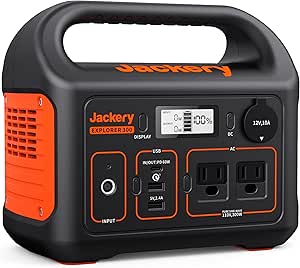
Jackery Explorer 300 Portable Power Station, 293Wh Lithium Battery, Solar Generator for Camping and Outdoor Use
The Jackery Explorer 300 excels in portability, packing 293Wh into a lightweight 7.1-pound package, making it a go-to for backpackers and casual campers. Its 300W output is suitable for small appliances, phone charging, and LED lighting, but falls short for larger or multiple high-power devices. Compared with the BLUETTI AC180, it offers less capacity, meaning shorter runtime and limited ability to run larger appliances. The fast recharging in 2 hours enhances usability, but the battery capacity restricts long-term outages or extensive device use. Solar compatibility adds eco-friendliness, yet the lack of a solar panel included makes setup more costly. This model is best for light, short-term power needs when portability is a priority.
Pros:- Extremely lightweight and portable
- Fast recharging in 2 hours
- Multiple device charging options
- Compatible with solar panels
Cons:- Solar panel not included, adding to total cost
- Limited to 300W output, unsuitable for high-demand appliances
- Battery capacity may be insufficient for extended use
Best for: Hikers, travelers, and emergency kit owners needing lightweight, quick-charging power for small devices
Not ideal for: Users requiring sustained power for multiple devices or longer outages, due to limited capacity
Bottom line: Best for lightweight, short-term power needs when portability and quick recharge matter most.
BLUETTI AC180 Portable Power Station 1152Wh LiFePO4 Battery Backup with 1800W (2700W peak) AC Outlets, Fast Charging, Solar Compatible
The BLUETTI AC180 offers a sizable 1152Wh capacity, with rapid 1-hour charging, making it a strong contender for backup power during outages. Its 1800W continuous output can handle most essential appliances, and the peak of 2700W adds flexibility for short surges. Compared to the smaller Jackery Explorer 300, it provides more power and capacity, suitable for longer outages or critical devices. Its 11 outlets increase versatility for multiple devices simultaneously. Yet, at 37.4 pounds, it’s heavier than some options, and the higher price reflects its premium features. The solar charging capability, while fast, requires compatible panels not included. This model is ideal for users who want reliable, fast-charging power for home backup and off-grid use.
Pros:- Fast charging in just 1 hour
- Supports high power output up to 2700W peak
- Multiple outlets for various devices
- Solar compatible for eco-friendly recharging
Cons:- Relatively heavy at 37.4 pounds
- Higher cost compared to smaller portable units
- Requires compatible solar panels, not included
Best for: Homeowners looking for a fast-charging, reliable backup with multiple device support
Not ideal for: Travelers needing ultra-lightweight gear or those on a tight budget, due to weight and cost
Bottom line: Best for users prioritizing fast-charging, high-capacity backup for home or critical appliances.
Anker SOLIX C1000 Gen 2 Portable Power Station, 2000W (Peak 3000W), 1024Wh LiFePO4 Battery, Solar Generator
The Anker SOLIX C1000 Gen 2 combines a 1024Wh battery with a robust 2000W continuous output and a rapid 49-minute recharge time, making it well-suited for critical backup and outdoor use. Its compact, lightweight design at just 24.9 pounds enhances portability, especially compared with bulkier models like the BLUETTI AC180. While its capacity is lower than larger units, the quick recharge means less downtime during outages. The 10 outlets and support for 600W solar input provide flexibility, but the higher price and lack of included solar panels could limit immediate deployment. This pick makes the most sense for those who need reliable, fast-recharging power in a portable package for shorter outages or supplemental backup.
Pros:- Fast recharging in just 49 minutes
- High power output of 2000W continuous
- Lightweight and compact
- Reliable UPS switch-over
Cons:- No included solar panel, increasing overall setup cost
- Limited capacity for extended outages
- Higher price point relative to smaller portable units
Best for: Emergency preparedness enthusiasts and mobile users needing quick recharge and portable power
Not ideal for: Users with long-term outage needs or high-power appliances, due to limited capacity and solar input
Bottom line: Best for users seeking rapid recharge, portability, and reliable backup for short-term outages.
BLUETTI Elite 100 V2 Portable Power Station, 1024Wh LFP Battery Backup with 4 1800W AC Ports (3600W Surge), Compact and Fast Charging for Camping, Home Backup, and Outages
The BLUETTI Elite 100 V2 stands out as a well-rounded choice for those seeking dependable backup power during outages, thanks to its large 1024Wh LiFePO4 battery and 1800W continuous output. Unlike the Jackery Solar Generator 1000 v2, which offers slightly less capacity but faster charging, the Elite V2 excels in providing silent, maintenance-free operation with over 4000 charge cycles. Its compact weight of 25 lbs makes it easier to move around in a home or campsite, yet its 1800W limit may restrict powering very high-wattage appliances compared to larger models like the Anker SOLIX C2000. The fast 70-minute recharge adds convenience, but the need for compatible solar panels can increase upfront costs. This pick is ideal for users who prioritize long-term reliability, multiple device support, and quiet operation during outages.
Pros:- Large 1024Wh LiFePO4 battery with over 4000 cycles ensures longevity
- Supports up to 11 devices with 4 AC outlets and multiple ports
- Compact and lightweight at 25 lbs for easy transport
- Fast recharge in 70 minutes via solar or AC
Cons:- Limited to 1800W continuous output, restricting high-wattage appliance use
- Price may be higher compared to less capable models, depending on solar panel costs
Best for: Homeowners or campers who need a reliable, portable power source that can run multiple devices silently during outages or trips.
Not ideal for: Users who need to power high-wattage appliances like large HVAC units or electric stoves, as the 1800W continuous limit may fall short.
- Wattage:1800 watts
- Battery Capacity:1024Wh
- Battery Type:LiFePO4
- Charge Time:70 minutes to 80%
- Weight:25 lbs
- Number of Outlets:4
Bottom line: This power station is best suited for those who need a reliable, portable backup with ample capacity for home or outdoor use, accepting some limitations on high-wattage devices.
Jackery Solar Generator 1000 v2 with 200W Solar Panel, 1070Wh Portable Power Station with LiFePO4 Battery, 1500W AC/100W USB-C, Fast 1-Hour Charging for Outdoor, Off-Grid, Emergency
The Jackery Solar Generator 1000 v2 makes a compelling case for outdoor and off-grid users, combining a 1070Wh LiFePO4 battery with a 1500W continuous output. Compared with the BLUETTI Elite 100 V2, which offers slightly more capacity, Jackery’s standout feature is its rapid 1-hour fast charging, making it highly practical for quick power top-ups during outdoor trips. Its lightweight design at 23.8 lbs with a foldable handle enhances portability, especially for camping or RV use. However, it requires the purchase of a separate solar panel, which can add to overall costs. While it supports multiple ports, some users may find the limited detailed specifications and the need for app setup a minor hassle. This model is best for outdoor lovers who want quick, reliable power on the go, but it may not be the best choice for those seeking a fully integrated solar setup.
Pros:- Fast 1-hour recharge with advanced charging technology
- Lightweight at 23.8 lbs with a foldable handle for easy transport
- Long-lasting LiFePO4 battery with over 10 years lifespan
- Versatile ports including USB-C, USB-A, and AC outlets
Cons:- Requires separate purchase of solar panel to maximize renewable energy use
- Limited detailed dimensions may affect portability planning
- Some features depend on app setup, which could be a barrier for less tech-savvy users
Best for: Campers, RV travelers, and off-grid dwellers who prioritize fast charging and portability with renewable energy options.
Not ideal for: Users needing high-capacity power for large appliances or extended home backup, as the 1070Wh may fall short during prolonged outages.
- Power Output:1500W continuous
- Capacity:1070Wh
- Battery Type:LiFePO4
- Charging Time:1 hour (fast charge)
- Weight:23.8 lbs
- Ports:2 USB-C, 1 USB-A, 1 DC, 3 AC
Bottom line: This portable power station fits outdoor adventurers who need quick, reliable power and portability, though it may require extra investment for solar panels and is less suited for high-wattage appliances.

How We Picked
These products were selected based on a combination of power capacity, recharge speed, build quality, safety features, and versatility. Priority was given to models with at least 1000Wh capacity, as anything lower may struggle to power essential devices during outages. We evaluated each station’s ability to recharge quickly, either via AC, solar, or both, recognizing that rapid recharging minimizes downtime. Portability was also considered—lighter, more compact units are easier to move but often have lower capacity. Lastly, user reviews and reliability ratings informed our final ranking, ensuring each product provides consistent performance under real-world conditions.
Factors to Consider When Choosing Best Portable Power Station For Outages
Choosing the best portable power station for outages requires balancing capacity, recharging options, portability, and safety. Understanding these factors helps prevent common mistakes, like overestimating a unit’s ability to handle prolonged outages or underestimating the importance of fast recharge features. Here are key considerations to keep in mind when selecting your backup power solution.Capacity and Power Output
The primary factor is how much energy the station can store, typically measured in watt-hours (Wh). Larger capacities support longer outages and more devices, but they tend to be heavier and more expensive. Pay attention to the station’s continuous power output—measured in watts—as this determines what devices it can run simultaneously. For emergency use, look for a unit with at least 1000Wh capacity and a sustained output of 1000W or more to cover essentials like refrigerators and medical devices.
Recharge Speed and Flexibility
Fast recharging minimizes downtime between outages, especially if outages are frequent. Many models offer quick AC recharge, some can be recharged via solar panels, and others support car charging. It’s important to choose a station with a recharge time compatible with your needs—58 minutes or less for rapid turnaround. Solar compatibility is a plus, but be aware that it depends on panel quality and sunlight conditions, making it a supplementary rather than primary source for most users.
Portability and Size
Outages can happen anywhere—at home, in the RV, or during camping trips—so portability matters. Compact units are easier to carry but may sacrifice capacity and power. Larger stations with wheels and handle options are better for home backup but less convenient for outdoor use. Consider your primary use case: if mobility is key, prioritize lighter models; for stationary backup, bigger units can provide more power without frequent moving.
Battery Chemistry and Longevity
LiFePO4 batteries are increasingly popular for their longer lifespan and enhanced safety compared to traditional lithium-ion types. They typically offer 2000+ charge cycles, making them cost-effective over time. However, they usually come at a higher initial price. If you expect frequent outages or plan to rely heavily on backup power, investing in a LiFePO4 model can save money and hassle in the long run.
Safety Features and Expandability
Look for integrated safety features such as overload protection, thermal cutoff, and short-circuit prevention. These protect both the device and your connected appliances. Additionally, check if the station can be expanded with solar panels or additional batteries—this flexibility can extend your power availability. Safety and expandability are particularly important if you plan to leave the station running for extended periods or use it in sensitive environments like medical emergencies.

Frequently Asked Questions
How long can a portable power station run my refrigerator during an outage?
The duration depends on the refrigerator’s power draw and the station’s capacity. Most standard refrigerators consume around 100-200W, so a 2000Wh station could theoretically run it for 10-20 hours, assuming ideal conditions. Keep in mind that startup surges can spike power needs, so choose a station with a surge capacity that exceeds your appliance’s requirements. For longer outages, consider stacking multiple stations or selecting one with higher capacity to ensure continuous operation.
Can I recharge my portable power station with solar panels during an outage?
Yes, many portable power stations support solar recharging, which can be highly useful during extended outages or in remote locations. However, efficiency depends on the solar panel’s wattage, sunlight conditions, and the station’s input capacity. Solar recharging is generally slower than AC, so it works best as a supplementary power source rather than the sole method. Planning for a dedicated solar setup can extend your power availability significantly, especially when grid power isn’t accessible.
Is it worth paying more for a LiFePO4 battery in a portable power station?
Investing in a LiFePO4 battery typically means higher upfront costs but offers notable long-term benefits. These batteries last approximately twice as many cycles as traditional lithium-ion cells, making them more durable and cost-effective over time. They also have enhanced safety features due to their chemical stability. If you anticipate frequent outages or want a reliable, long-lasting power source, choosing a LiFePO4 model can be a smart, value-driven decision.
What should I prioritize: capacity or portability?
This depends on your primary use case. For home backup during long outages, higher capacity units are preferable despite their weight and size. Conversely, if you need portability for outdoor or emergency use, lighter, smaller stations with lower capacity may be more practical. Carefully evaluate how much power you’ll need and how often you can carry or move the station. Balancing capacity and portability ensures you get a reliable yet manageable backup solution.
Are these portable power stations safe to use around children or pets?
Most modern stations include safety features like overload protection, thermal cutoffs, and child-proof outlets. However, it’s important to follow the manufacturer’s safety instructions and keep the device in a secure location, especially around children or pets. Avoid exposing stations to water or extreme temperatures, and never tamper with internal components. Proper handling and safety precautions make these stations safe for household use, even with vulnerable family members present.
Conclusion
For most users seeking reliable backup power, the Anker SOLIX C2000 Gen 2 offers the best combination of capacity, fast recharge, and safety features, making it the overall top pick. If budget is a concern, the Jackery Explorer 300 provides a lightweight, easy-to-use option for short outages or outdoor activities. For those prioritizing longevity and safety, a LiFePO4-based model like the BLUETTI AC180 stands out. Advanced users and homeowners with frequent outages should consider the Anker SOLIX C2000 or BLUETTI Elite 100 V2 for their durability and expandability. Newcomers and casual users will find the Jackery or DJI models straightforward and reliable, fitting a variety of emergency scenarios.
Fall Picks
fall essentials
As an affiliate, we earn on qualifying purchases.