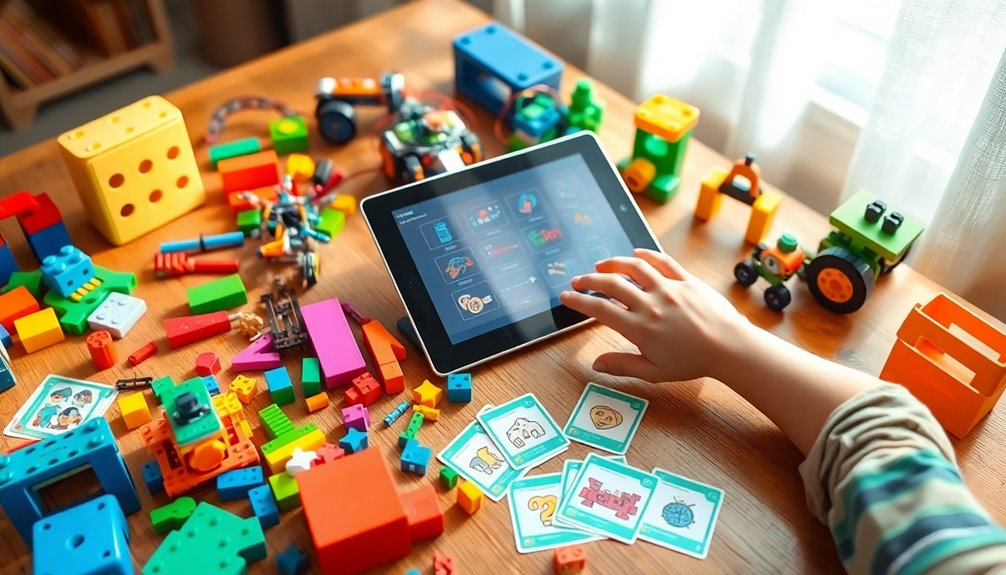

For parents seeking engaging ways to introduce children to coding, choosing the right toy can feel overwhelming. The Learning Resources Botley The Coding Robot Activity Set stands out as the best overall, thanks to its user-friendly design and comprehensive activities. The Sphero Mini Green Coding Robot Ball is ideal for tech-savvy kids interested in robotics, while the Makeblock mBot offers advanced features for more experienced young coders. Each option balances ease of use, learning depth, and durability, but tradeoffs include price and complexity. Continue reading for a detailed breakdown of these top picks and how to choose the best coding toy for your child’s needs.

Get the little things that make your day delivered free — and shop member deals
- Fast, free delivery on millions of items
- Access to Prime Big Deal Days deals on October 6–7
- Prime Video, Amazon Music and more included
Key Takeaways
- The best coding toys blend hands-on building with interactive coding exercises, making learning both fun and educational.
- Ease of use and age appropriateness are key; toys that are too complex can frustrate beginners, while overly simple options may not challenge advanced learners.
- Durability and build quality matter, especially for active kids who might handle toys roughly or experiment extensively.
- Many top picks incorporate app-based coding, offering expanded learning opportunities but requiring compatible devices.
- Price varies widely; investing in a slightly more expensive, versatile toy can provide longer-term value and engagement.
| Learning Resources Botley The Coding Robot Activity Set – 77 Pieces, Ages 5+ | 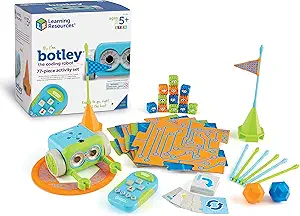 | Best Overall for Early Screen-Free Coding | Pieces: 77 | Ages: 5+ | Batteries: Requires 3 AAA for Botley and 2 AAA for remote (not included) | VIEW ON AMAZON | See Our Full Breakdown |
| Learning Resources Code & Go Robot Mouse |  | Best for Very Young Beginners Focused on Sequencing | Includes: Jack the robot mouse, 30 double-sided coding cards, activity guide | Batteries: Requires 3 AAA batteries (not included) | Features: Lights up, makes sounds, has 2 speeds | VIEW ON AMAZON | See Our Full Breakdown |
| Learning Resources Code & Go Robot Mouse Activity Set |  | Best for Educational Robotics and Maze Challenges | Ages: 4+ | Includes: Robot mouse, maze grids, walls, tunnels, coding and activity cards, cheese wedge, activity guide | Batteries: 3 AAA (not included) | VIEW ON AMAZON | See Our Full Breakdown |
| Learning Resources Botley the Coding Robot |  | Best for Versatile, Advanced Screen-Free Coding | Ages: 5+ | Includes: Botley robot, remote programmer, detachable arms, 40 coding cards, tiles, obstacles | Coding capabilities: Program up to 80 steps, use loops, create if/then logic | VIEW ON AMAZON | See Our Full Breakdown |
| Apitor STEM Coding Robot Toy 6-in-1 Building Kit for Boys 8-12 |  | Best for Creative Building and App-Controlled Coding | Item Count: 480 blocks | Age Range: 7-12 | Control Type: Bluetooth app control | VIEW ON AMAZON | See Our Full Breakdown |
| Teach Tech Mech-5 STEM Coding Robot Building Kit for Kids Ages 10+ |  | Best Overall for Hands-On Mechanical Coding | Recommended Age: 10+ | Build Type: DIY assembly | Features: Mechanical movement, coding buttons, mission-based activities | VIEW ON AMAZON | See Our Full Breakdown |
| Sphero Mini Green Coding Robot Ball |  | Best for Portable, Gamified Coding for Beginners | Size: Ping pong ball | Battery Life: 1 hour | Included Accessories: Traffic cones, bowling pins | VIEW ON AMAZON | See Our Full Breakdown |
| BeAndge Robotics STEM Kits for Kids Science Robot Building Crafts Age 8-12 |  | Best for Creative Multi-Project STEM Engagement | Number of Projects: 6 | Recommended Age: 8-12 | Includes: Reptile robot, balance car, bubble machine, fiber lamp, buzzer wire game | VIEW ON AMAZON | See Our Full Breakdown |
| Makeblock mBot STEM Coding Robot for Kids Ages 8-12 |  | Best for Programmers Ready to Expand | Batteries: 4 AA (not included) | Remote Controller Battery: CR2025 (not included) | Compatibility: Supports 100+ modules, LEGO parts | VIEW ON AMAZON | See Our Full Breakdown |
| Learning Resources Coding Critters Scamper & Sneaker |  | Best for Early, Screen-Free Coding Skills | Includes: Scamper cat, Sneaker kitten, 22-piece set, storybook, coding cards | Age Range: 3-7 | Features: Screen-free coding, storytelling, sequencing | VIEW ON AMAZON | See Our Full Breakdown |
| Learning Resources Botley 2.0 The Coding Robot Activity Set |  | Best for Early Hands-On Coding Experience | Number of Pieces: 78 | Includes: robot, remote, coding cards, obstacle pieces, boards | Age Range: 5+ | VIEW ON AMAZON | See Our Full Breakdown |
| Snap Circuits Jr. SC-100 STEM Electronics Kit, 100+ Projects, Ages 8+ |  | Best for Practical Electronics Education | Number of Projects: 100+ | Number of Parts: 29 | Ages: 8+ | VIEW ON AMAZON | See Our Full Breakdown |
| Playz Coding Learning Kit – Educational Science Kits for Kids Age 8-12 |  | Best for Creative STEM Activities | Age Range: 8-12 years | Tools and Parts: 30+ | Includes: Instructional guide, various tools | VIEW ON AMAZON | See Our Full Breakdown |
| Thames & Kosmos My Robotic Pet: Coding Chameleon STEM Building & Experiment Kit |  | Best for Screen-Free Coding and Robotics | Model Length: 15 inches | Sensors: Color sensor, infrared sensor, RGB LEDs | Recommended Age: 8+ (with adult help), 12+ (independent play) | VIEW ON AMAZON | See Our Full Breakdown |
| coding toys for kid | Includes |
|---|---|
| Learning Resources Botley The | — |
| Learning Resources Code & Go R | Jack the robot mouse, 30 double-sided coding cards, activity guide |
| Learning Resources Code & Go R | Robot mouse, maze grids, walls, tunnels, coding and activity cards, cheese wedge, activity guide |
| Learning Resources Botley the | Botley robot, remote programmer, detachable arms, 40 coding cards, tiles, obstacles |
| Apitor STEM Coding Robot Toy 6 | Building blocks, control module, LED lights, instructions, sorting tray |
| Teach Tech Mech-5 STEM Coding | — |
| Sphero Mini Green Coding Robot | — |
| BeAndge Robotics STEM Kits for | Reptile robot, balance car, bubble machine, fiber lamp, buzzer wire game |
| Makeblock mBot STEM Coding Rob | — |
| Learning Resources Coding Crit | Scamper cat, Sneaker kitten, 22-piece set, storybook, coding cards |
| Learning Resources Botley 2.0 | robot, remote, coding cards, obstacle pieces, boards |
| Snap Circuits Jr. SC-100 STEM | — |
| Playz Coding Learning Kit | Instructional guide, various tools |
| Thames & Kosmos My Robotic Pet | — |
More Details on Our Top Picks
Learning Resources Botley The Coding Robot Activity Set – 77 Pieces, Ages 5+
This set stands out for its comprehensive approach to introducing coding concepts without screens, making it perfect for young children just starting their STEM journey. Unlike the Learning Resources Code & Go Robot Mouse, which focuses solely on maze navigation, Botley offers a wider variety of activities, including obstacle courses and programmable features, fostering both problem-solving and creativity. However, its basic coding functions are limited compared to more advanced kits like the Apitor STEM Coding Robot Toy. The remote programming is straightforward but might feel too simple for older kids or those ready for more complex tasks. Batteries are not included, which can be a minor inconvenience. Overall, this pick makes the most sense for parents seeking an engaging, screen-free introduction to coding for early learners.
Pros:- Encourages active, screen-free STEM learning
- Includes a wide variety of accessories for creative play
- Easy to set up and use right out of the box
Cons:- Batteries are not included, requiring extra purchase
- Limited to basic coding functions suitable for beginners
Best for: Families with children aged 5+ who want a versatile, screen-free coding experience that encourages active play.
Not ideal for: Parents looking for a kit with advanced programming features or app integration for older or more experienced children.
- Pieces:77
- Ages:5+
- Batteries:Requires 3 AAA for Botley and 2 AAA for remote (not included)
Our verdict“This set is ideal for young children new to coding, prioritizing active, hands-on learning over advanced programming.”
Learning Resources Code & Go Robot Mouse
This toy makes a strong case for early coding skills through simple, hands-on command input, ideal for kids aged 4 and up. Compared with the Learning Resources Botley, which offers more complex activities, the Code & Go Robot Mouse emphasizes foundational skills like sequencing and problem-solving through button presses and coding cards, without requiring batteries or complex setup. Its limited coding capabilities mean it’s best for absolute beginners who are just exploring the idea of programming. The toy lights up and makes sounds to keep children engaged, but it lacks app or advanced programming features, which might limit growth for kids ready for more sophisticated tools. Overall, this makes sense for parents seeking a simple, engaging way to introduce young children to coding fundamentals.
Pros:- Encourages fundamental coding and problem-solving skills
- Simple, intuitive button interface for young users
- Lights and sounds enhance engagement
Cons:- Requires 3 AAA batteries (not included)
- Limited to basic command sequences without expansion options
Best for: Parents of children aged 4+ who want a straightforward, screen-free way to teach sequencing and logic.
Not ideal for: Older kids or those seeking more complex programming or app-based control, as the toy’s commands are quite basic.
- Includes:Jack the robot mouse, 30 double-sided coding cards, activity guide
- Batteries:Requires 3 AAA batteries (not included)
- Features:Lights up, makes sounds, has 2 speeds
Our verdict“This toy is perfect for young children just beginning to grasp programming logic in a simple, engaging way.”
Learning Resources Code & Go Robot Mouse Activity Set
Compared with the simpler Code & Go Robot Mouse, this activity set offers a more comprehensive experience with maze grids, tunnels, and additional activity cards, making it suitable for repeated classroom use or home practice. It introduces programming concepts through hands-on maze navigation, fostering critical thinking in children aged 4 and up. While it provides a richer set of components, it still requires 3 AAA batteries, which are not included, and its simplicity might not challenge older children or advanced coders. The variety of maze elements and activity options makes it a versatile choice for developing early robotics skills, but it may be too basic for those seeking more sophisticated control or app integration. This set suits parents and teachers aiming for structured, repeatable activities in early STEM education.
Pros:- Supports early coding and problem-solving skills
- Includes a variety of maze components for versatile play
- Suitable for classroom or group use
Cons:- Requires 3 AAA batteries (not included)
- May be too simple for older or more experienced children
Best for: Early education settings or parents wanting a hands-on, maze-based robotics activity for children ages 4+.
Not ideal for: Older children or those looking for advanced coding features or app-based programming, as the complexity is limited.
- Ages:4+
- Includes:Robot mouse, maze grids, walls, tunnels, coding and activity cards, cheese wedge, activity guide
- Batteries:3 AAA (not included)
Our verdict“This activity set is well-suited for introducing young children to robotics through structured maze challenges and hands-on play.”
Learning Resources Botley the Coding Robot
This version of Botley takes the core ideas from the original set and expands capabilities, making it suitable for a wider age range from 5 to 12. It supports up to 80 programmable steps, loops, and if/then logic, offering more depth than the Learning Resources Botley The Coding Robot Activity Set. Compared with simpler options like the Code & Go Robot Mouse, this robot allows for more complex programming, which can challenge children as they grow. However, the complexity can also mean younger children need guidance, and the set requires adult supervision for younger users. While batteries are not included, the extensive accessories—such as obstacle courses and detachable arms—provide diverse ways to learn. Overall, this kit makes the most sense for parents seeking a flexible, expandable coding robot that can grow with their child’s skills.
Pros:- Supports up to 80 programming steps, including loops and logic
- Includes multiple accessories for varied activities
- Suitable for children aged 5 to 12, growing with skills
Cons:- Requires adult supervision for younger children
- Batteries are not included, adding extra cost
Best for: Parents who want a durable, versatile coding robot that can be used for a wide age range and more complex activities.
Not ideal for: Very young children or families seeking a simple, minimal setup coding experience for beginners without supervision needs.
- Ages:5+
- Includes:Botley robot, remote programmer, detachable arms, 40 coding cards, tiles, obstacles
- Coding capabilities:Program up to 80 steps, use loops, create if/then logic
Our verdict“This advanced Botley model is ideal for parents wanting a long-term, expandable coding experience for children across a broad age range.”
Apitor STEM Coding Robot Toy 6-in-1 Building Kit for Boys 8-12
Compared with the more straightforward Botley options, the Apitor STEM Coding Robot emphasizes building as much as coding, appealing to kids who enjoy hands-on construction. Its 480 colorful blocks allow children aged 7 to 12 to assemble multiple robot models, which they can then control via an app, fostering both creative design and programming skills. The app offers multiple modes and activities, making it more engaging for tech-savvy kids. However, the assembly process can be challenging for some, especially since instructions may require patience. Batteries are not included, and device compatibility could be a limiting factor for some users. This kit makes the most sense for children who love building, are comfortable with slightly more complex setup, and want a dual-focus on construction and coding.
Pros:- Encourages creative building and engineering skills
- Includes multiple robot models for variety
- App-controlled with multiple modes for versatile play
Cons:- Batteries not included, additional purchase needed
- Assembly may be difficult for some kids or parents
Best for: Parents of children aged 7-12 who enjoy robotics, building, and app-based programming, seeking a flexible, multi-model kit.
Not ideal for: Younger children or families seeking an out-of-the-box, simplified coding experience without assembly challenges.
- Item Count:480 blocks
- Age Range:7-12
- Control Type:Bluetooth app control
- Includes:Building blocks, control module, LED lights, instructions, sorting tray
Our verdict“This kit is perfect for children who love hands-on construction combined with coding, especially those ready for more complex projects.”
Teach Tech Mech-5 STEM Coding Robot Building Kit for Kids Ages 10+
The Teach Tech Mech-5 stands out as the most engaging entry-level mechanical robot for older kids interested in engineering and coding. Its focus on building and programming actions like throwing, lifting, and drawing offers a tactile learning experience that surpasses simpler options like the Learning Resources Coding Critters Scamper & Sneaker, which is more suitable for preschoolers. While the assembly process can take hours—making it less ideal for impatient kids—this tradeoff results in a robust understanding of mechanical movement and coding logic. Compared to the Makeblock mBot, the Mech-5 emphasizes hands-on building over electronics expansion, making it perfect for those who enjoy physical construction. The main drawback is its lengthy setup, which could deter younger children or those seeking quick, less involved projects.
Pros:- Encourages deep STEM learning through mechanical building and coding
- Versatile actions that demonstrate mechanical principles
- Detailed instructions support engaging, step-by-step assembly
Cons:- Requires multiple hours of assembly, which can be time-consuming
- Limited to children aged 10 and up, not suitable for younger kids
Best for: Parents and educators seeking a comprehensive, hands-on STEM experience for children aged 10+ with patience for assembly.
Not ideal for: Younger children under 10 or families looking for quick, less involved coding activities.
- Recommended Age:10+
- Build Type:DIY assembly
- Features:Mechanical movement, coding buttons, mission-based activities
Our verdict“This kit is best for older kids ready for a detailed, hands-on engineering challenge that teaches foundational mechanical coding.”
Sphero Mini Green Coding Robot Ball
The Sphero Mini offers a compact, playful approach to learning coding, making it ideal for kids just starting with robotics. Its small size—about the same as a ping pong ball—makes it highly portable, perfect for on-the-go fun compared to bulkier kits like the Makeblock mBot. It supports multiple coding modes, including drag-and-drop and JavaScript, which can challenge complete beginners but might feel overwhelming for very young children. The included accessories, such as cones and pins, enable obstacle course play that adds a gamified element, yet the limited one-hour playtime per charge could frustrate those wanting extended sessions. Unlike the BeAndge Robotics STEM Kits, which focus on building projects, the Sphero emphasizes quick programming and mobility, trading off longer-term project engagement.
Pros:- Highly portable and easy to carry around
- Supports multiple coding methods, including block coding and JavaScript
- Includes accessories for obstacle course challenges
Cons:- Limited playtime of about 1 hour per charge
- Requires a compatible mobile device for full functionality
- May have a learning curve for absolute beginners
Best for: Parents seeking a portable, interactive coding toy that introduces basic programming through play for children aged 8-12.
Not ideal for: Children who want sustained play sessions without frequent recharging or complete beginners uncomfortable with app-based coding.
- Size:Ping pong ball
- Battery Life:1 hour
- Included Accessories:Traffic cones, bowling pins
- Connectivity:Sphero Edu and Sphero Play apps
- Sensors:Gyroscope, accelerometer
- Lights:Colorful LED lights
Our verdict“This robot ball is ideal for active, beginner coders who enjoy quick, portable, and gamified robotics experiences.”
BeAndge Robotics STEM Kits for Kids Science Robot Building Crafts Age 8-12
The BeAndge Robotics STEM Kits excel at offering a variety of projects—from a reptile robot to a fiber lamp—that cater to curious children aged 8-12. Compared with the Makeblock mBot, which emphasizes electronics and coding, this kit promotes broader hands-on experimentation with different gadgets, fostering creativity and family bonding. Its simple assembly and detailed instructions make it accessible, but the need for additional supplies like batteries and bubble solution adds complexity, especially for younger users. While not as focused on coding per se, it provides a well-rounded introduction to STEM concepts through multiple projects, making it more suited for kids who prefer diverse activities over a single robotic system.
Pros:- Offers a variety of engaging projects to spark creativity
- Easy to assemble with clear instructions
- Supports family bonding through shared activities
- Suitable for science fairs and educational gifts
Cons:- Requires additional items like batteries and bubble solution
- Some projects may need adult supervision
- Limited to specific age range
Best for: Families seeking a versatile, multi-project STEM kit that encourages creativity and hands-on learning for children aged 8-12.
Not ideal for: Children exclusively interested in coding robots, or those who prefer ready-to-use electronic kits without additional supplies.
- Number of Projects:6
- Recommended Age:8-12
- Includes:Reptile robot, balance car, bubble machine, fiber lamp, buzzer wire game
- Requires:Batteries, bubble solution
- Materials:Odorless, safety materials
Our verdict“This multi-activity STEM kit is perfect for kids who enjoy diverse projects and family projects over a single robotic focus.”
Makeblock mBot STEM Coding Robot for Kids Ages 8-12
The Makeblock mBot is a flexible, expandable robot kit that introduces children aged 8-12 to electronics, robotics, and coding through approachable tutorials. Its support for Scratch, Arduino, and over 100 modules makes it ideal for kids eager to grow their skills beyond simple drag-and-drop, especially compared with the Learning Resources Code & Go Robot Mouse, which offers more guided activities. Its quick assembly—around 15 minutes—appeals to impatient learners, while its compatibility with LEGO parts provides additional customization options. A downside is that batteries and some modules are sold separately, adding to the initial cost, and it requires some basic electronics understanding for advanced use. This makes it more suitable for motivated kids or those with an interest in electronics tinkering.
Pros:- Easy to assemble in about 15 minutes
- Supports multiple coding platforms including Scratch and Arduino
- Expandable with over 100 modules for advanced projects
- Compatible with LEGO parts for customization
Cons:- Batteries and modules are sold separately
- Requires some basic electronics knowledge for advanced projects
- Limited functionality without extra modules
Best for: Parents and educators who want a beginner-friendly, expandable robot that encourages deeper programming and electronics exploration.
Not ideal for: Very young children or families seeking a simple, out-of-the-box coding toy without additional purchases or technical setup.
- Batteries:4 AA (not included)
- Remote Controller Battery:CR2025 (not included)
- Compatibility:Supports 100+ modules, LEGO parts
- Material:Metal
Our verdict“This robot is geared toward motivated kids ready to explore coding and electronics through expandable, creative projects.”
Learning Resources Coding Critters Scamper & Sneaker
The Coding Critters Scamper & Sneaker offers a gentle, screen-free introduction to coding concepts for preschoolers. Its playful design and storytelling make it particularly appealing for children aged 3-7, contrasting with more technical kits like the Teach Tech Mech-5 which target older kids. The set’s programmable actions are limited to basic sequencing, making it ideal for early learners but less suitable for children ready for more complex coding or robotics. Its inclusion of a storybook and accessories enhances imaginative play, but the simple coding features may bore older children or those wanting deeper engagement. It’s a safe, engaging option for introducing foundational STEM skills before progressing to more advanced toys.
Pros:- Encourages early coding and problem-solving skills
- Screen-free and safe for young children
- Includes storybook and accessories for imaginative play
- Simple setup and easy to use
Cons:- Limited to basic coding concepts suitable for preschoolers
- Requires adult supervision for younger children
- Some users may want more advanced features as kids grow
Best for: Parents of preschoolers or kindergarteners seeking a safe, screen-free way to introduce basic coding and sequencing.
Not ideal for: Children over 7 or those looking for advanced robotics or programming features.
- Includes:Scamper cat, Sneaker kitten, 22-piece set, storybook, coding cards
- Age Range:3-7
- Features:Screen-free coding, storytelling, sequencing
Our verdict“This toy is ideal for introducing very young children to basic coding in a safe, story-driven format.”
Learning Resources Botley 2.0 The Coding Robot Activity Set
The Botley 2.0 activity set stands out for its engaging, multisensory approach to introducing coding concepts to children as young as 5. Compared to the simpler Botley (77 pieces), Botley 2.0 offers a broader array of challenges and features like lights, sounds, and music, which make learning more interactive. However, it relies on batteries (not included), and its coding scope remains basic, focusing on foundational skills suitable for preschoolers. This kit makes the most sense for families seeking a tactile, playful introduction to programming without overwhelming complexity. Not ideal for older kids ready for more advanced coding or robotics activities.
- Encourages early coding skills through hands-on play
- Includes a variety of challenges to develop problem-solving
- Multisensory features like lights, sounds, and music
- Requires batteries (not included)
- Limited to basic coding concepts for young children
Verdict: This pick is perfect for preschoolers just starting their coding journey with a tactile, engaging robot.
Pros:- Encourages early coding skills through hands-on play
- Includes a variety of challenges to enhance problem-solving
- Multisensory features like lights, sounds, and music
Cons:- Requires batteries (not included)
- Limited to basic coding concepts suitable for young children
Best for: Families with young children aged 5-7 who want a multisensory, beginner-friendly robotics experience
Not ideal for: Older kids or those seeking complex programming or advanced robotics features
- Number of Pieces:78
- Includes:robot, remote, coding cards, obstacle pieces, boards
- Age Range:5+
Our verdict“This set is ideal for young children beginning their journey into coding with a playful, sensory-rich experience.”
Snap Circuits Jr. SC-100 STEM Electronics Kit, 100+ Projects, Ages 8+
The Snap Circuits Jr. SC-100 offers a compelling hands-on introduction to electrical engineering, making it a strong choice for kids aged 8 and up. Unlike Botley 2.0, which focuses on programming logic, this kit emphasizes real-world circuitry with over 100 projects, fostering practical understanding of electronics. Its 29 colorful parts snap together easily, but this limited number of components might require additional kits for more complex projects. Batteries are needed (not included), and the parts are designed for safe, tool-free assembly. This kit is best suited for children interested in building and understanding electronics through tangible, guided experiments. It’s less suitable for very young kids or those who prefer digital coding activities. Compared to Playz’s STEM kit, it offers more technical depth but fewer open-ended activities.
- Over 100 engaging electronic projects for kids
- No tools or soldering required, easy to assemble
- Educational and fun, suitable for ages 8 and up
- Requires batteries (not included)
- Limited to 29 parts, possibly needing more kits for advanced projects
Verdict: An excellent choice for children eager to learn practical electronics with a straightforward, safe kit.
Pros:- Over 100 engaging electronic projects for kids
- No tools or soldering required, easy to assemble
- Educational and fun, suitable for ages 8 and up
Cons:- Requires batteries (not included)
- Limited to 29 parts, may need additional kits for complex projects
Best for: Kids aged 8+ interested in hands-on electrical engineering and building practical circuits
Not ideal for: Younger children under 8 or those seeking purely digital coding experiences
- Number of Projects:100+
- Number of Parts:29
- Ages:8+
- Batteries Required:Yes
Our verdict“Ideal for young electronics enthusiasts eager to understand circuitry through hands-on projects.”
Playz Coding Learning Kit – Educational Science Kits for Kids Age 8-12
The Playz Coding Learning Kit broadens the scope of STEM education by encouraging children aged 8-12 to explore computer science concepts through creative, hands-on projects. Unlike Botley or Snap Circuits, which focus on robotics and electronics, this kit emphasizes problem-solving with activities like binary necklaces and encryption puzzles, making it ideal for kids interested in coding logic and cryptography. With over 30 tools and a colorful lab guide, it promotes independent exploration but can be too complex for the younger end of its age range or children who need more guided instruction. It’s less suitable for very young children or those seeking straightforward programming. Compared to more structured robot kits, Playz offers more open-ended, creative projects that foster critical thinking.
- Engages children in STEM learning through fun activities
- Includes comprehensive tools and easy-to-follow instructions
- Suitable for home or classroom use
- May be too complex for children under 8
- Requires adult supervision for some activities
Verdict: Best suited for kids who enjoy creative coding puzzles and cryptography with a focus on problem-solving and STEM exploration.
Pros:- Engages children in STEM learning through fun activities
- Includes comprehensive tools and easy-to-follow instructions
- Suitable for home or classroom use
Cons:- May be too complex for children under 8
- Requires adult supervision for some activities
Best for: Children aged 8-12 with an interest in coding logic, cryptography, and STEM activities in a flexible learning environment
Not ideal for: Younger children under 8 or kids seeking simple, screen-free robotics
- Age Range:8-12 years
- Tools and Parts:30+
- Includes:Instructional guide, various tools
Our verdict“This kit is perfect for inquisitive kids interested in coding, cryptography, and creative problem-solving beyond basic programming.”
Thames & Kosmos My Robotic Pet: Coding Chameleon STEM Building & Experiment Kit
The Thames & Kosmos Coding Chameleon offers a unique, screen-free approach to programming by letting kids build and control a robotic chameleon that senses colors, reacts to gestures, and changes colors. Unlike Botley, which relies on remote control and basic programming, this kit emphasizes physical interaction and physical action cards, making it suitable for children who prefer tactile learning. Its assembly can pose a challenge for younger kids, and the programming options are limited to physical card commands, which may feel restrictive compared to digital coding apps like Sphero. For kids aged 8+ who enjoy hands-on building and physical programming, it provides a highly engaging STEM activity. It’s less appropriate for those who want more complex coding or digital interaction.
- Screen-free coding with physical action cards
- Realistic movements and color-changing features
- Educational and engaging STEM activity
- Requires adult assistance for younger children
- Limited to physical action card programming
Verdict: An excellent choice for kids who prefer tactile, physical programming and building a responsive robotic pet.
Pros:- Screen-free coding with physical action cards
- Realistic movements and color-changing features
- Educational and engaging STEM activity
Cons:- Requires adult assistance for younger children
- Limited to physical action card programming
Best for: Children aged 8+ who enjoy hands-on, screen-free robotics and physical programming with family or in educational settings
Not ideal for: Children seeking digital coding environments or more advanced, programmable robots
- Model Length:15 inches
- Sensors:Color sensor, infrared sensor, RGB LEDs
- Recommended Age:8+ (with adult help), 12+ (independent play)
- Manual Pages:48
Our verdict“This kit is ideal for children who enjoy physical building and tactile, screen-free coding with a fun robotic pet.”
How We Picked
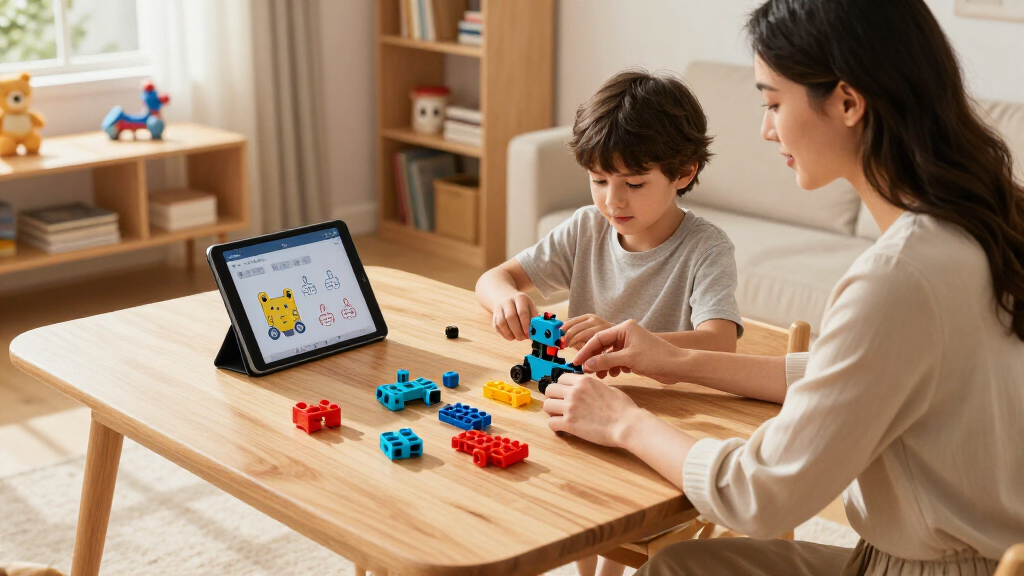
Our evaluation focused on a combination of factors including ease of use for different age groups, the depth of coding concepts introduced, durability, and overall value. We prioritized toys that balance instructional quality with engaging play, ensuring they promote learning while remaining accessible. Products were ranked based on versatility, user reviews, and how well they cater to both beginners and more advanced users. We also considered the longevity of the toy’s educational relevance and compatibility with other learning tools to recommend options suitable for a broad range of kids and budgets.Factors to Consider When Choosing Coding Toys For Kids
Choosing the right coding toy involves balancing several factors. First, consider the child’s age and experience level; a toy suited for a 5-year-old won’t challenge a 12-year-old, and vice versa. Next, think about ease of setup and use—complex toys might require adult supervision or technical skills. Durability is another key factor, especially if the toy will see frequent or rough handling. Compatibility with devices and future learning potential can extend the toy’s usefulness. Lastly, budget plays a role; investing more can mean more features and longevity, but there are quality options across price points.Age and Skill Level
Matching a coding toy to a child’s age and ability ensures they stay engaged and avoid frustration. Toys designed for younger children often focus on foundational concepts through simple block coding or storytelling, while those aimed at older kids introduce more complex programming and robotics. Choosing age-appropriate toys prevents boredom or overwhelm, making the learning process enjoyable and effective.Ease of Use and Setup
A successful coding toy should be straightforward to set up and operate, especially for beginners. Simple interfaces, clear instructions, and minimal technical barriers help kids focus on learning rather than troubleshooting. For more advanced users, toys with programmable apps and customizable features might be preferable, but ensure these tools are user-friendly and supported by good instruction materials.Durability and Build Quality
Kids can be rough with their toys, so durability is critical. Look for sturdy materials, well-secured parts, and positive reviews about long-term use. A well-built toy withstands drops, spills, and frequent handling, providing better value and reducing the need for repairs or replacements.Compatibility and Learning Expansion
Many coding toys connect to tablets or computers, opening the door to expanded lessons and challenges. Check device compatibility before purchasing, and consider whether the toy allows for software updates or additional modules. Toys that grow with the child’s skills and integrate with other learning platforms tend to offer better long-term engagement.Budget and Value
While budget influences options, it’s worth investing in a toy that offers good educational value and durability. Cheaper toys may lack longevity or depth, whereas higher-end options often include more features, better build quality, and longer-term relevance. Aim for a balance that meets your child’s current needs while allowing room for growth.Frequently Asked Questions
At what age is a coding toy appropriate for my child?
Most coding toys are designed for specific age ranges, typically from ages 5 to 14. Younger children benefit from toys that focus on basic sequencing and problem-solving, while older kids can handle more complex programming concepts. Always check the manufacturer’s recommended age to ensure the toy matches your child’s developmental stage and avoid frustration or boredom.Do I need a tech background to help my child with coding toys?
Not necessarily. Many coding toys are designed with user-friendly interfaces and step-by-step instructions that require no prior coding experience. Your role may involve supervising initial setup or encouraging exploration, but most toys are intuitive enough for parents without a technical background to support their child’s learning effectively.Are coding toys suitable for absolute beginners?
Yes, many options are crafted specifically for beginners, with simple block-based coding or guided activities that introduce core concepts gradually. Look for toys that emphasize visual programming and have comprehensive instructions, as these foster confidence and foundational understanding before moving on to more advanced topics.How important is app compatibility for coding toys?
App compatibility can significantly enhance the learning experience by providing expanded features, challenges, and customization options. However, it also means depending on a device like a tablet or smartphone, which requires ensuring your child’s device meets the toy’s specifications. For younger children or those new to tech, toys with offline modes or physical coding interfaces might be more suitable.Should I prioritize features over price when buying a coding toy?
While budget is a factor, prioritizing educational value, durability, and age appropriateness generally leads to better long-term satisfaction. A slightly more expensive toy that offers comprehensive learning and withstands rough handling can be more cost-effective over time than cheaper, less durable options that quickly become unusable or fail to engage.Conclusion
For parents seeking the best overall experience, Learning Resources Botley The Coding Robot Activity Set offers a balanced mix of fun and education suitable for beginners. Those looking for the most value might prefer the Code & Go Robot Mouse for its affordability and engaging activities. If your child is more advanced or tech-savvy, the Sphero Mini provides deeper programming capabilities, while the Makeblock mBot caters to those interested in building and customizing. For younger kids or newcomers, simple, intuitive toys like Botley 2.0 remain excellent starting points, whereas more complex kits are ideal for dedicated learners ready for a challenge.Fall Picks
fall essentials
As an affiliate, we earn on qualifying purchases.