
For families seeking kids science kits with broad activity choices, I rank the National Geographic Earth Science Kit first for its 100-plus activities across several earth science topics. The UNGLINGA 150-Experiment Science Kit is a strong alternative for sheer experiment variety, while Snap Circuits Jr. suits kids more interested in building working electronics than mixing materials. The main tradeoff is breadth versus focus: large experiment counts offer choice, while subject-specific kits can provide a clearer path into chemistry, geology, or engineering. Age, adult help, cleanup, and whether materials can be reused also affect how often a kit is likely to come out. Read on for the full breakdown and a guide to matching a kit to a child’s interests.

Get the little things that make your day delivered free with Prime
- Fast, free delivery on millions of items
- Prime Video, Amazon Music and more included
- Member-only deals all year
Key Takeaways
- The Earth Science Kit leads for variety: its 100-plus activities span a wider subject mix than the geology-focused geode set or the chemistry-specific options.
- Activity count does not tell the whole story: UNGLINGA lists 150 experiments, but a focused kit may suit a child better when they already love a particular topic.
- Age fit changes the kind of help required: Doctor Jupiter’s first-experiment kits target ages 4+, while many National Geographic kits and Snap Circuits Jr. are aimed at older children.
- Hands-on science comes in different forms: Snap Circuits Jr. and LEGO Gear Bots center on building, while the microscope and terrarium focus on observation and care.
- Some kits are better as a single activity experience: geode breaking and terrarium growing offer distinctive results, but they do not provide the same range of repeatable experiments as broader sets.
| National Geographic Break Open 10 Premium Geodes for Kids Ages 8-12 |  | Best for Hands-On Discovery | Brand: Blue Marble | Recommended age: 8 years and up | Educational objective: STEM | VIEW ON AMAZON | See Our Full Breakdown |
| National Geographic Earth Science Kit with 100+ Activities for Kids | 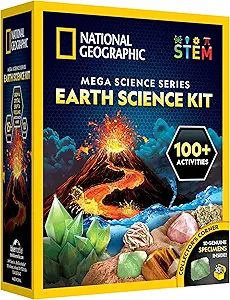 | Best for Earth Science Variety | Brand: Blue Marble | Recommended age: 8 years and up | Set name: Earth Science Kit | VIEW ON AMAZON | See Our Full Breakdown |
| National Geographic Amazing Chemistry Set with 100+ Experiments for Ages 8–12 |  | Best for Budding Chemists | Brand: Blue Marble | Recommended age: 8 years and up | Educational objective: STEM | VIEW ON AMAZON | See Our Full Breakdown |
| National Geographic Science Magic Kit for Kids, 100+ Experiments |  | Best for Science Shows | Brand: Blue Marble | Recommended age: 8 years and up | Experiments with included materials: 20 magic experiments | VIEW ON AMAZON | See Our Full Breakdown |
| National Geographic Gross Science Kit with 45 Experiments for Kids Ages 8–12 |  | Best for Gross-Out Science | Brand: National Geographic | Recommended age: 8–12 years | Total experiments: 45 | VIEW ON AMAZON | See Our Full Breakdown |
| Doctor Jupiter My First Science Experiments Kit for Kids Ages 4+ |  | Best for Experiment Variety | Brand: Doctor Jupiter | Set name: My First Science Kit | Recommended age: 4 years and up | VIEW ON AMAZON | See Our Full Breakdown |
| Doctor Jupiter My First Science Experiments Kit for Kids Ages 4+ |  | Best for Guided First Experiments | Brand: Doctor Jupiter | Recommended age: 4 years and up | Experiments: Over 50 | VIEW ON AMAZON | See Our Full Breakdown |
| National Geographic Junior Chemistry Set with 50 Experiments |  | Best for Household-Item Chemistry | Brand: Blue Marble | Set name: National Geographic Junior Chemistry Set | Recommended age: 4 years and up | VIEW ON AMAZON | See Our Full Breakdown |
| National Geographic Magic Chemistry Set for Kids Ages 8–12 |  | Best for Science-Magic Performances | Brand: National Geographic | Recommended age: 8–12 years | Experiments: 10 | VIEW ON AMAZON | See Our Full Breakdown |
| Snap Circuits Jr. SC-100 STEM Electronics Kit, 100+ Projects, Ages 8+ |  | Best for Hands-On Electronics | Model: SC-100 | Recommended age: 8 years and up | Projects: More than 100 | VIEW ON AMAZON | See Our Full Breakdown |
| Kuovei Science Kit for Kids – 80 Lab Experiments & Scientist Role Play |  | Best for Broad Experiment Variety | Brand: Kuovei | Recommended age: 6 years and up | Number of experiments: 80 | VIEW ON AMAZON | See Our Full Breakdown |
| Klutz LEGO Gear Bots Science/STEM Activity Kit for Ages 8-12 |  | Best for Hands-On Engineering | Recommended age: 8–12 years | Number of models: 8 | Building components: LEGO Technic bricks and papercraft components | VIEW ON AMAZON | See Our Full Breakdown |
| UNGLINGA 150-Experiment Science Kit for Kids | 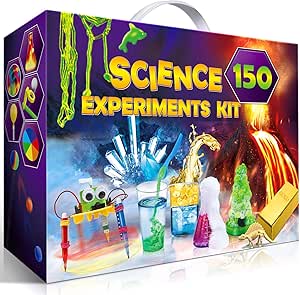 | Best for Multi-Topic Exploration | Brand: UNGLINGA | Recommended age: 8 years and up | Number of experiments: 150 | VIEW ON AMAZON | See Our Full Breakdown |
| Creativity for Kids Grow ‘N Glow Terrarium Kit |  | Best for Plant Science Beginners | Brand: Creativity for Kids | Recommended age: 6 years and up | Seeds: Chia and wheatgrass | VIEW ON AMAZON | See Our Full Breakdown |
| BMDSAE 1000x Handheld Digital Microscope for Kids with 2-Inch IPS Screen |  | Best for Portable Specimen Observation | Brand and model: BMDSAE 382 | Magnification: Up to 1000x | Camera resolution: 2MP | VIEW ON AMAZON | See Our Full Breakdown |
| kids science kit | Recommended age | Brand |
|---|---|---|
| National Geographic Break Open | 8 years and up | Blue Marble |
| National Geographic Earth Scie | 8 years and up | Blue Marble |
| National Geographic Amazing Ch | 8 years and up | Blue Marble |
| National Geographic Science Ma | 8 years and up | Blue Marble |
| National Geographic Gross Scie | 8–12 years | National Geographic |
| Doctor Jupiter My First Scienc | 4 years and up | Doctor Jupiter |
| Doctor Jupiter My First Scienc | 4 years and up | Doctor Jupiter |
| National Geographic Junior Che | 4 years and up | Blue Marble |
| National Geographic Magic Chem | 8–12 years | National Geographic |
| Snap Circuits Jr. SC-100 STEM | 8 years and up | — |
| Kuovei Science Kit for Kids | 6 years and up | Kuovei |
| Klutz LEGO Gear Bots Science/S | 8–12 years | — |
| UNGLINGA 150-Experiment Scienc | 8 years and up | UNGLINGA |
| Creativity for Kids Grow ‘N Gl | 6 years and up | Creativity for Kids |
| BMDSAE 1000x Handheld Digital | — | — |
More Details on Our Top Picks
National Geographic Break Open 10 Premium Geodes for Kids Ages 8-12
This kit trades a broad menu of activities for one memorable geology project: opening 10 natural geodes and examining what formed inside. The included safety goggles, magnifying glass, and display stand help turn the reveal into a closer look at mineral structure, rather than just a rock-breaking novelty. Compared with the National Geographic Earth Science Kit, it offers fewer kinds of experiments, but its focus makes it easier to build an activity around observation and discussion. The tradeoff is that geode sizes and crystal formations vary, so each reveal may differ, and breaking rocks can be messy. An adult should supervise, and a suitable space and safe method for opening the geodes are needed. I’d choose this for kids drawn to geology, not families seeking a kit they can use for many unrelated experiments.
Pros:- Ten natural geodes give the activity a clear focus on real geological specimens.
- Safety goggles are included for the rock-opening activity.
- A magnifying glass supports closer inspection of crystal formations.
- The display stand and learning guide help extend the activity into observation and display.
Cons:- Geode size and crystal results vary, so some reveals may be less dramatic than others.
- Breaking the geodes can be messy and requires adult supervision.
- The kit centers on geology rather than offering a wide range of experiment types.
Best for: Families with children ages 8 and up who enjoy rocks, collecting, and a supervised hands-on geology activity.
Not ideal for: Buyers seeking a range of experiments or a low-mess activity; opening geodes requires supervision and can scatter debris.
- Brand:Blue Marble
- Recommended age:8 years and up
- Educational objective:STEM
- Geodes:10 premium quality natural geodes
- Included components:Safety goggles, magnifying glass, display stand, learning guide
- Model number:NGGEO10
- Manufacturer:JMW Sales, Inc.
Our verdict“Choose this for a supervised, geology-focused reveal; pick the National Geographic Earth Science Kit for more varied activities.”
National Geographic Earth Science Kit with 100+ Activities for Kids
For kids who want to move between geology topics, this is the broadest earth-science choice in this group: highlighted activities include crystal growing, volcano experiments, rock collection, and geologic digs. That variety gives families more ways to revisit the kit than the geode set, which focuses on opening and examining specimens. It also comes with a full-color guide and clear instructions, useful when a child wants to follow a project with less help. I’d read the activity count carefully, though: the description mentions more than 15 experiments, while the title advertises 100-plus activities. The listing does not clarify how many are complete, distinct experiments or what materials are supplied for each. Compared with the Amazing Chemistry Set, this kit covers more earth-science themes but is less specifically centered on chemistry tools and reactions.
Pros:- Covers several earth-science activities, including crystal growing, volcano experiments, and rock collection.
- The full-color guide explains the science behind activities.
- Clear instructions can support more independent exploration.
- The range of topics suits sharing among siblings or classmates.
Cons:- The description’s 100-plus activity claim is not reconciled with its mention of more than 15 experiments.
- The listing does not clearly itemize the materials supplied for each activity.
- Its broad earth-science focus may be less appealing to children specifically seeking chemistry experiments.
Best for: Families and educators seeking several earth-science themes, such as volcanoes, crystals, and rocks, for children ages 8 and up.
Not ideal for: Buyers who need a clearly itemized count of fully supplied experiments or want a focused chemistry lab kit.
- Brand:Blue Marble
- Recommended age:8 years and up
- Set name:Earth Science Kit
- Advertised activities:100+ science experiments and activities
- Highlighted activities:Crystal growing, volcano experiments, rock collection, earth science activities, STEM projects
- Guide:Full-color learning guide with instructions
- Model number:NGMEGAEARTH
- UPC:816448027611
Our verdict“Pick this for topic variety across earth science, but choose the Amazing Chemistry Set if chemistry tools and reactions are the priority.”
National Geographic Amazing Chemistry Set with 100+ Experiments for Ages 8–12
This is the most lab-like option among these five, with test tubes, beakers, and pipettes that give children familiar tools for exploring reactions and crystal growth. The important distinction is that the advertised 100-plus experiments are split between 15 activities with included materials and 85 bonus ideas that use common household items. That makes it a more focused chemistry choice than the Earth Science Kit, but families should not expect supplies for every listed activity to come in the box. Compared with the Science Magic Kit, it puts more emphasis on chemistry equipment and less on performance or trick-based play. The kit is best for a child who likes following procedures and seeing materials change; it is less suited to buyers who want a large number of fully supplied experiments or a broad mix of science disciplines.
Pros:- Includes test tubes, beakers, and pipettes for hands-on chemistry activities.
- Supplies are provided for 15 experiments.
- Activities cover chemical reactions and crystal growing.
- The additional household-item experiments can extend use beyond the supplied materials.
Cons:- The 85 bonus activities require common household items not included in the kit.
- The advertised activity total can overstate how many experiments are ready to run from the box.
- Its chemistry focus offers less subject variety than the Earth Science Kit.
Best for: Children ages 8 and up who are curious about chemical reactions and want to work with basic lab-style tools.
Not ideal for: Families expecting materials for all 100-plus activities or children who prefer geology, electronics, or show-oriented experiments.
- Brand:Blue Marble
- Recommended age:8 years and up
- Educational objective:STEM
- Advertised experiments:100+ total: 15 with included materials and 85 bonus activities
- Included tools:Test tubes, beakers, and pipettes
- Highlighted activities:Crystal growing and chemical reactions
- Model number:NGMEGACHEMAR
Our verdict“Choose this for a child keen on chemistry tools and reactions, provided your family is comfortable sourcing supplies for many bonus activities.”
National Geographic Science Magic Kit for Kids, 100+ Experiments
This kit gives science a performance angle: children can combine magic tricks, chemistry activities, and hands-on experiments, then use what they learn to present demonstrations to family or friends. It includes materials for 20 magic experiments and a booklet with more than 85 additional activities, so its strongest distinction from the Amazing Chemistry Set is the show-and-tell format rather than a concentration on lab tools. That can help hold the attention of a child who enjoys performing, though the listing does not specify what household supplies the bonus experiments need. The 20 supplied activities also make the ready-to-start portion clearer than the larger advertised total suggests. Compared with the Gross Science Kit, this one favors tricks and presentation over deliberately gross themes. I’d skip it for a child who wants a straightforward, chemistry-only kit.
Pros:- Includes materials for 20 magic experiments.
- Combines magic, chemistry, and hands-on STEM activities.
- The bonus booklet adds more than 85 additional activity ideas.
- Its performance format gives children a reason to explain and demonstrate what they do.
Cons:- The listing does not clarify which supplies are needed for the 85-plus bonus activities.
- The focus on magic may not suit children looking for conventional science experiments.
- The advertised total is much larger than the 20 experiments listed as having included materials.
Best for: Children ages 8 and up who enjoy performing for others and want science activities with a magic-trick format.
Not ideal for: Kids seeking a focused chemistry curriculum or families who want details about supplies for every bonus activity before choosing.
- Brand:Blue Marble
- Recommended age:8 years and up
- Experiments with included materials:20 magic experiments
- Bonus booklet:85+ additional magic experiments
- Activity themes:Magic tricks, chemistry, and STEM experiments
- Set name:Mega Science Kit
- Model number:NGMEGAMAGIC
Our verdict“Choose this for a child who likes science with an audience, rather than one who wants the more tool-focused approach of the Amazing Chemistry Set.”
National Geographic Gross Science Kit with 45 Experiments for Kids Ages 8–12
The Gross Science Kit uses messy, silly subject matter to introduce real ideas: its activities cover polymers, chemical reactions, and pH science. It supplies materials for 15 experiments and adds 30 more ideas that use common household items, a more clearly stated split than the Earth Science Kit’s 100-plus activity claim. That helps set expectations, although the extra activities still require families to find their own supplies. Compared with the Science Magic Kit, this is a better fit for children who laugh at gross-themed demonstrations than those who want to perform magic tricks. The illustrated, kid-friendly instructions also make the activities approachable, but the listing does not detail which materials go with each supplied experiment. Pick it for its playful framing, not if the child wants a large collection of fully equipped lab projects.
Pros:- Introduces polymers, chemical reactions, and pH science through hands-on activities.
- Illustrated, kid-friendly instructions support independent participation.
- Materials are included for 15 experiments.
- The 30 household-item activities can provide additional project ideas.
Cons:- Only 15 of the 45 listed experiments come with materials.
- The other 30 experiments require families to supply common household items.
- Gross-themed activities may not appeal to children who prefer traditional science subjects.
Best for: Children ages 8–12 who enjoy gross-out humor and hands-on activities introducing basic chemistry concepts.
Not ideal for: Families who want materials for all listed experiments or children who prefer a neat, conventional science-kit theme.
- Brand:National Geographic
- Recommended age:8–12 years
- Total experiments:45
- Experiments with included materials:15
- Additional activities:30 using common household items
- Skills and concepts:Polymers, chemical reactions, and pH science
- Instructions:Illustrated, kid-friendly instructions
Our verdict“Choose this for a child motivated by gross-out humor and basic chemistry, but not if you expect supplies for all 45 experiments.”
Doctor Jupiter My First Science Experiments Kit for Kids Ages 4+
For families seeking a wide range of early science activities, this Doctor Jupiter kit stands out with over 100 experiments and illustrated, step-by-step directions. Its beakers, flask, spray bottles, funnel, and other tools give young children a simple lab setup, while the activities aim to build observation and problem-solving through hands-on play. Compared with the newer Doctor Jupiter kit with over 50 experiments, this version offers a larger stated experiment count and a broader set of included components. That variety may suit families who want to revisit the kit over time, though the listed activities can use up ingredients such as food coloring and baking powder. The age-4-plus design is a good introduction, but young children will still benefit from an adult helping with setup and cleanup.
Pros:- Over 100 experiments provide more activity options than the companion Doctor Jupiter kit listed here with over 50.
- Includes beakers, a conical flask, spray bottles, goggles, and other tools for hands-on play.
- Illustrated, step-by-step instructions can help adults guide activities with young children.
- Designed to introduce STEM concepts through observation and problem-solving.
Cons:- Some activities use consumable ingredients, including food coloring and baking powder.
- Children as young as four may need adult help interpreting directions and managing materials.
- The high experiment count does not mean every activity can be done using only the kit’s included materials.
Best for: Families with preschool or early-elementary children who want many guided activities and a starter collection of lab tools.
Not ideal for: Buyers seeking a kit that avoids replenishing household or consumable ingredients, or activities children can reliably complete without adult help.
- Brand:Doctor Jupiter
- Set name:My First Science Kit
- Recommended age:4 years and up
- Experiments:Over 100
- Included tools:2 beakers, 1 conical flask, 1 spatula, 2 stirring sticks, 2 spray bottles, 2 cups, 1 funnel, 1 pair of safety goggles, and 1 tray
- Other included components:Food essences, food additives, dried leaves, food colors, instruction manual, and bonus experiment booklet
- Safety standard:ASTM F963-17
- Model number:DJ Junior Science
Our verdict“Choose this version if your young scientist values a large menu of guided activities and you are comfortable supplying some consumable ingredients.”
Doctor Jupiter My First Science Experiments Kit for Kids Ages 4+
This Doctor Jupiter set is a straightforward starting point for children ages four and up: it pairs over 50 experiments with illustrated, step-by-step instructions, including activities such as oobleck, volcanoes, and perfumes. That gives adults a clear path for sharing simple science activities without asking a young child to interpret dense directions alone. Compared with the other Doctor Jupiter kit in this roundup, it has fewer stated experiments, so it is the more focused pick rather than the choice for the biggest activity library. The product details do not list its tools or materials, which makes it harder to judge how much equipment is ready to use straight from the box. Some experiments may also need adult guidance, so this is better for shared discovery than fully independent play.
Pros:- Offers over 50 activities, including recognizable projects such as oobleck and volcanoes.
- Illustrated, step-by-step instructions support adult-child participation.
- Aimed at children ages four and up, making it an early-entry choice in this lineup.
- Meets the stated ASTM F963-17 toy safety standard.
Cons:- Some experiments may require adult guidance, limiting independent use for younger children.
- The supplied product details do not specify included tools or materials.
- Its stated activity count is lower than the other Doctor Jupiter kit in this roundup.
Best for: Parents or caregivers introducing preschool and early-elementary children to simple, illustrated science activities they can do together.
Not ideal for: Families who want a clearly listed assortment of lab tools or the largest stated experiment selection; the other Doctor Jupiter kit lists over 100 activities and specific equipment.
- Brand:Doctor Jupiter
- Recommended age:4 years and up
- Experiments:Over 50
- Instruction format:Illustrated, step-by-step manual
- Example activities:Making oobleck, volcanoes, and perfumes
- Learning focus:STEM learning and critical thinking
- Safety standard:ASTM F963-17
Our verdict“Pick this kit for guided science time with a young child if a clear activity manual matters more than a detailed tool list or a larger experiment count.”
National Geographic Junior Chemistry Set with 50 Experiments
The National Geographic Junior Chemistry Set makes a good fit for families who want a defined collection of 50 chemistry experiments and a sizable assortment of child-safe lab tools. With more than 20 tools, including test tubes and goggles, it gives activities a more recognizable lab feel than the Doctor Jupiter My First kit, whose appeal centers on a larger experiment count and a broader mix of listed components. Many activities use familiar supplies such as baking soda and vinegar, which can make it easier to extend play with items already at home. The tradeoff is that those household ingredients are not all included, and this set offers fewer stated experiments than Doctor Jupiter’s over-100 option. Its age-4-plus positioning also points to adult-supported activity rather than advanced chemistry instruction.
Pros:- Includes 50 hands-on experiments with illustrated, step-by-step instructions.
- More than 20 child-safe tools, including test tubes and goggles, provide a lab-style setup.
- Many activities use common household items such as baking soda and vinegar.
- Designed for children ages four and up.
Cons:- Household ingredients used in activities may need to be supplied separately.
- Its 50 experiments are fewer than the over-100 activities listed for the Doctor Jupiter My First kit.
- The available product details do not identify the full tool list or specific adult-supervision needs.
Best for: Families with children ages four and up who want beginner chemistry activities, child-safe lab tools, and projects that use common household supplies.
Not ideal for: Buyers who want every experiment’s materials included or a larger stated activity library; the Doctor Jupiter kit lists over 100 experiments.
- Brand:Blue Marble
- Set name:National Geographic Junior Chemistry Set
- Recommended age:4 years and up
- Experiments:50
- Lab tools:More than 20
- Named included tools:Test tubes, goggles, and other lab tools
- Educational objective:STEM
- Model number:NGJRCHEMT
Our verdict“Choose this set for a young child who will enjoy using lab tools with familiar household ingredients, rather than for the largest experiment count.”
National Geographic Magic Chemistry Set for Kids Ages 8–12
This National Geographic set gives science a performance hook: its 10 experiments are designed as magic tricks, including making a coin float and changing water color. A magic wand, white gloves, and an illustrated guide help children present each activity while learning the science behind it. Compared with the broader Snap Circuits Jr. SC-100, which teaches electronics through many build projects, this kit is much narrower but better suited to children who enjoy demonstrations and explaining surprising effects. Its limited experiment count makes it less of an all-purpose science collection, and the 8–12 age range is more specific than the junior chemistry kits for ages four and up. Choose it for a themed activity or show-and-tell angle, not for sustained variety across science topics.
Pros:- Turns science activities into magic tricks, giving demonstrations a clear performance purpose.
- Includes a magic wand, white gloves, experiment tools, and an illustrated guide.
- The guide explains the science behind each trick rather than leaving activities as unexplained effects.
- Its distinctive theme contrasts with the construction-focused Snap Circuits Jr. kit.
Cons:- Only 10 experiments are listed, fewer than the activity counts in the other kits in this batch.
- The recommended age range is limited to 8–12 years.
- The product details do not specify whether extra household materials are needed for each trick.
Best for: Children ages 8–12 who like performing tricks and want a science explanation to accompany each demonstration.
Not ideal for: Families seeking a broad, repeatable science curriculum or a kit for preschoolers; it has 10 themed experiments and is designed for ages 8–12.
- Brand:National Geographic
- Recommended age:8–12 years
- Experiments:10
- Activity format:Experiments presented as magic tricks
- Example experiments:Making a coin float and changing the color of water
- Included accessories:Magic wand and white gloves
- Other included components:Experiment tools and illustrated guide explaining the science behind the tricks
Our verdict“Pick this set for an 8–12-year-old who would rather perform and explain science tricks than build a large collection of projects.”
Snap Circuits Jr. SC-100 STEM Electronics Kit, 100+ Projects, Ages 8+
Snap Circuits Jr. is the strongest choice here for children drawn to building working electronics rather than mixing ingredients or watching demonstrations. Its color-coded components snap onto a plastic grid, letting kids explore circuit basics through more than 100 projects, including a musical doorbell and flying saucer. The illustrated manual and solder-free assembly make the entry into electronics more approachable than a tool-heavy build, while offering a very different experience from National Geographic’s Magic Chemistry Set, which focuses on 10 science tricks. The tradeoffs are its narrower subject matter and battery requirement: it teaches circuits, not a broad spread of science topics, and activities depend on having batteries available. Product text also gives conflicting component counts, so the exact piece total is unclear.
Pros:- Supports more than 100 projects, giving learners many ways to explore circuit concepts.
- Color-coded, numbered components and an illustrated manual make connections easier to follow.
- Snap-together assembly requires no soldering or extra tools.
- Projects such as a musical doorbell and flying saucer turn circuit concepts into visible outcomes.
Cons:- Batteries are required and are not stated as included.
- The kit focuses on electronics rather than offering a broad range of science subjects.
- Product text lists conflicting component counts, so the precise number of pieces is unclear.
Best for: Children eight and up who enjoy assembling projects and want a reusable introduction to circuits without soldering.
Not ideal for: Families seeking broad coverage across chemistry, earth science, and biology, or buyers who need a clearly confirmed component count; this is an electronics-focused kit and its listed counts conflict.
- Model:SC-100
- Recommended age:8 years and up
- Projects:More than 100
- Components:Product text gives conflicting counts: 28, 29, 32, and over 30
- Assembly:Color-coded pieces snap onto a plastic grid
- Tools:No soldering or extra tools required
- Power:Batteries required
- Example projects:Musical doorbell and flying saucer
Our verdict“Choose Snap Circuits Jr. for an eight-plus child eager to build circuit projects, but pick a chemistry kit for more varied science topics.”
Kuovei Science Kit for Kids – 80 Lab Experiments & Scientist Role Play
With 80 guided experiments, this kit suits families who want varied, hands-on projects rather than a single science theme. Goggles, gloves, petri dishes, measuring cups, test tubes, and droppers support a lab-style setup, while illustrated cards explain the ideas behind each activity. Compared with the Klutz LEGO Gear Bots, which concentrates on building mechanisms and physics, Kuovei ranges across more traditional experiment activities, including volcano eruptions and rainbow fountains.
The tradeoff is that a larger assortment can mean more setup and supervision: younger children will need an adult nearby, and the included chemical materials may deteriorate if stored poorly. The description also does not identify every material, so I would favor this for households ready to organize supplies between sessions, not for a completely self-contained, low-maintenance activity.
Pros:- Offers 80 experiments for variety across multiple activity sessions.
- Includes goggles and gloves for a more lab-like experience.
- Illustrated guidance cards explain scientific principles step by step.
- Supplies include tools such as petri dishes, measuring cups, test tubes, and droppers.
Cons:- Younger children need adult supervision despite the included safety gear.
- Some chemical materials may deteriorate if they are not stored properly.
Best for: Families with children aged 6 and up who want a varied collection of guided lab activities and can supervise setup.
Not ideal for: Children expected to run experiments independently or families who want supplies that need little storage care.
- Brand:Kuovei
- Recommended age:6 years and up
- Number of experiments:80
- Educational focus:STEM, science, and hands-on learning
- Safety equipment:Goggles and gloves
- Included tools:Petri dishes, measuring cups, test tubes, droppers, balloons, and more
- Guidance:Illustrated experiment guidance cards
Our verdict“Choose Kuovei for a broad, guided experiment collection if you can supervise children and store the materials carefully.”
Klutz LEGO Gear Bots Science/STEM Activity Kit for Ages 8-12
This kit makes the most sense for children who learn by assembling and observing moving parts. Its eight kinetic models use LEGO Technic pieces and papercraft to demonstrate axles, cams, and cranks, while the 64-page STEM guide connects the builds to everyday engineering. Unlike Kuovei’s 80 lab experiments, Gear Bots focuses on a narrower set of mechanical ideas; that focus gives builders a clearer chance to see how a mechanism produces motion.
All required LEGO Technic pieces are included, so the activity does not depend on a separate brick collection. The main compromise is durability: papercraft components may not stand up to rough handling, making this less suited to children who treat finished builds as toys for repeated energetic play. Compared with the BMDSAE digital microscope, it also favors construction and motion over observing or recording specimens.
Pros:- Includes the LEGO Technic pieces needed for the eight models.
- Explains axles, cams, and cranks in a 64-page STEM guide.
- Step-by-step instructions make the builds approachable for the target age.
- Eight distinct kinetic creatures offer more than one construction activity.
Cons:- Papercraft components can be delicate and may not hold up to rough play.
- Its emphasis on mechanical models offers less variety across science topics than broad experiment kits.
Best for: Ages 8–12 who enjoy building models and want a concrete introduction to simple mechanical engineering.
Not ideal for: Children who prefer chemistry-style experiments, or families seeking robust models for rough play.
- Recommended age:8–12 years
- Number of models:8
- Building components:LEGO Technic bricks and papercraft components
- Guide length:64 pages
- Concepts covered:Axles, cams, cranks, and everyday engineering
- Model type:Physics-driven kinetic creatures
- Model number:9781338603453
Our verdict“Pick Gear Bots for a child who would rather build and study moving mechanisms than do a wide range of lab experiments.”
UNGLINGA 150-Experiment Science Kit for Kids
UNGLINGA stands out for the breadth of its stated curriculum: 150 experiments span chemistry, physics, earth science, and surface tension. That makes it a stronger fit for children who want to sample different areas of science than the Creativity for Kids Grow ‘N Glow Terrarium Kit, which stays focused on growing plants and decorating a small habitat. An illustrated, step-by-step manual gives children aged 8 and up a route through the activities, and some projects use ordinary household items.
That breadth comes with a planning tradeoff. Household supplies may be needed, and the product information does not spell out the kit’s full contents, so I would not choose it for a buyer who needs a clearly itemized, ready-to-go set. Compared with Kuovei’s 80-experiment kit, UNGLINGA lists more activities and broader topic coverage, but provides less detail about what is in the box.
Pros:- Lists 150 experiments across several science topics.
- Illustrated, step-by-step manual supports independent reading and following directions.
- Includes tools and materials for hands-on activities.
- Some projects use common household items, extending the set beyond its supplied materials.
Cons:- Some experiments require household items that are not included.
- The product description does not identify the full contents of the kit.
Best for: Families with children aged 8 and up who want to explore several science topics and do not mind gathering some household supplies.
Not ideal for: Buyers who want a fully itemized kit with every required material clearly listed and ready to use.
- Brand:UNGLINGA
- Recommended age:8 years and up
- Number of experiments:150
- Topics:Chemistry, physics, earth science, and surface tension
- Included components:Science experiment tools and materials
- Instructions:Illustrated, step-by-step manual
- Manufacturer part number:HZDZKH038
Our verdict“Choose UNGLINGA for broad topic coverage if you are comfortable checking instructions and supplying a few household materials.”
Creativity for Kids Grow ‘N Glow Terrarium Kit
Grow ‘N Glow offers a gentler entry into science through planting, observation, and care, with chia and wheatgrass seeds that may begin growing in as little as 3–4 days. Its plastic jar, vermiculite potting mix, colorful sand, and glow-in-the-dark decorations turn the activity into a display as well as a small lesson in plant growth. Compared with UNGLINGA’s 150-experiment set, this has far fewer activities, but its single ongoing project gives children a chance to watch changes over time.
The kit includes supplies for two plantings, which gives the activity another cycle after the first growth period. The tradeoff is that this is not a broad lab kit: children must add water and care for the plants, and results depend on that attention. I would choose it for a child drawn to nature and crafting, not for someone looking for varied experiments like Kuovei’s collection.
Pros:- Combines a craft project with hands-on plant care.
- Includes chia and wheatgrass seeds for two plantings.
- Glow-in-the-dark decorations make the finished terrarium visually engaging.
- Seeds may begin growing in as little as 3–4 days.
Cons:- Plants need water and continued care after the initial setup.
- The single terrarium theme offers less activity variety than multi-experiment kits.
Best for: Children aged 6 and up who enjoy crafts, nature, and checking on a project over several days.
Not ideal for: Families seeking many different experiments or an activity that does not require ongoing watering and plant care.
- Brand:Creativity for Kids
- Recommended age:6 years and up
- Seeds:Chia and wheatgrass
- Growing time:As little as 3–4 days
- Terrarium container:Plastic jar
- Potting mix:Vermiculite
- Growing cycles:Two plantings
- Decorations:Glow-in-the-dark forest figurines and star and constellation stickers
Our verdict“Pick Grow ‘N Glow for a child who will enjoy making and caring for a small growing project rather than cycling through lab experiments.”
BMDSAE 1000x Handheld Digital Microscope for Kids with 2-Inch IPS Screen
Unlike the experiment collections in this roundup, the BMDSAE is a reusable observation tool: children can inspect objects, adjust the LED lighting, and save photos or AVI videos. Its built-in 2-inch IPS screen lets a child view specimens without first connecting a computer, while USB-C connectivity supports viewing on compatible Windows and Mac systems. Compared with Klutz LEGO Gear Bots, this pick is about examining what is already around you, not building a model to show how a mechanism works.
The headline magnification reaches up to 1000x, but manual focus means younger users may need practice to get a clear image. Its battery is listed for up to two hours, so longer sessions may require recharging. Since the kit includes no prepared experiment materials in the supplied description, I would pair it with objects to examine rather than treat it as a complete activity set like Kuovei.
Pros:- Built-in 2-inch IPS screen supports viewing without a computer.
- Captures and stores photos and AVI videos.
- Eight adjustable LEDs offer lighting control for different specimens.
- USB-C connection supports Windows and Mac compatibility.
Cons:- Battery life is listed as up to two hours.
- Manual focus can take practice to produce a clear view.
- Does not include a described collection of prepared specimens or guided experiments.
Best for: Curious children who want to inspect everyday specimens, save images, and use a portable screen without a computer.
Not ideal for: Families seeking a boxed sequence of guided experiments or children who may struggle with manual focusing.
- Brand and model:BMDSAE 382
- Magnification:Up to 1000x
- Camera resolution:2MP
- Display:2-inch IPS screen
- Lighting:8 adjustable LEDs with 3 brightness modes
- Battery:600mAh; up to 2 hours
- Storage:32M; holds 200+ photos
- Connectivity and compatibility:USB-C; Windows XP/Vista/7/8/10/11 and Mac 11.0 or later
- Included items:Microscope, lanyard, USB-C data cable, and instruction manual
Our verdict“Choose the BMDSAE for portable, repeatable specimen viewing if the child is ready to practice focusing and supply objects to examine.”

How We Picked
I compared these kids science kits by the kind of learning they invite, the range of activities, age guidance, and how clearly a child can take part. I also considered practical factors: whether a project uses reusable components, calls for adult supervision, creates mess, or depends on ongoing care. A high experiment count helped only when it aligned with a useful range of activities; it did not automatically outrank a more focused kit.
The ranking gives priority to versatility and usable learning value, then recognizes kits that serve a distinct age group or interest especially well. That puts the Earth Science Kit first as a broad starting point, while electronics, microscope, terrarium, and geode options earn their places through more specific kinds of engagement. Duplicate Doctor Jupiter entries are treated as one product rather than separate recommendations.
| kids science kit | Brand |
|---|---|
| National Geographic Break Open | Blue Marble |
| National Geographic Earth Scie | Blue Marble |
| National Geographic Amazing Ch | Blue Marble |
| National Geographic Science Ma | Blue Marble |
| National Geographic Gross Scie | National Geographic |
| Doctor Jupiter My First Scienc | Doctor Jupiter |
| Doctor Jupiter My First Scienc | Doctor Jupiter |
| National Geographic Junior Che | Blue Marble |
| National Geographic Magic Chem | National Geographic |
| Snap Circuits Jr. SC-100 STEM | — |
| Kuovei Science Kit for Kids | Kuovei |
| Klutz LEGO Gear Bots Science/S | — |
| UNGLINGA 150-Experiment Scienc | UNGLINGA |
| Creativity for Kids Grow ‘N Gl | Creativity for Kids |
| BMDSAE 1000x Handheld Digital | — |
Factors to Consider When Choosing Kids Science Kits
Before choosing, I would match the kit to the child’s preferred way of learning—not just the number printed on the box. These factors can help you judge what will get used, what may need your help, and when a focused kit makes more sense than a large assortment.
Match the kit to the child’s science interest
A child who collects rocks may get more from a geology activity than from a broad experiment assortment, even if the latter lists more projects. Think about whether they enjoy mixing, building, observing, or growing; those activities call for different kinds of patience and attention. Building kits can appeal to children who like following steps and seeing a mechanism work, while observation tools reward curiosity without a single prescribed result. A common mistake is choosing what sounds educational to an adult rather than what the child already wants to investigate. For a first kit, a familiar interest can make it easier to begin, while a broader set may suit a child who likes sampling different subjects.
Read age guidance as a supervision signal
Age recommendations help set expectations, but they do not tell you exactly how much adult involvement a project needs. Younger children may be able to observe or carry out simple steps while an adult handles setup, measuring, or cleanup. Older children may work more independently, though projects involving small parts or liquids still call for attentive supervision. Check whether instructions rely on reading, careful sequencing, or fine motor control, since those demands can matter as much as the listed age. Avoid buying a kit for a child’s future ability; choose one they can engage with now, with the help your household can realistically offer.
Look beyond the experiment count
Large activity counts can be useful when a child wants plenty of choices, but the number alone does not show how different or repeatable the projects are. Some activities may use included materials once, while building components can support multiple configurations. Look for the subject range, what supplies are included, and whether the instructions suggest ordinary household materials. A kit with fewer, well-matched projects may hold attention longer than a bigger set whose activities feel repetitive or require extra shopping. If you are buying for a child who likes to revisit projects, reusable parts and clear instructions may matter more than a headline count.
Plan for mess, storage, and follow-through
Science activities often need a clear surface, time to set up, and a place to keep components between sessions. Chemistry-style experiments can call for more preparation and cleanup than a contained electronics build or a microscope observation session. Growing projects add a different kind of commitment: the activity continues after the initial setup and may need regular attention. Before buying, consider where the kit will be used and whether you are comfortable supplying containers, water, or other common materials. A practical storage plan helps small parts stay together and makes it more likely that the child will return to unfinished projects.
Choose the right kind of value
Paying more can make sense when a kit includes durable components, supports repeat builds, or provides a tool the child can use beyond one activity. A focused kit may be a better purchase than a large mixed set if it matches a sustained interest, such as electronics or close-up observation. On the other hand, a child who is still discovering what they like may benefit from a broader assortment rather than a specialized instrument. Consider the cost of replacement materials or additional supplies, not just what comes in the box. The strongest fit is the one that balances interest, repeat use, and adult effort for your household.
Frequently Asked Questions
Which kit makes the most sense if my child has not chosen a favorite science topic?
I would start with a broad activity set such as the National Geographic Earth Science Kit, since its range gives a child more than one direction to explore. A large assortment like UNGLINGA may also suit a child who enjoys trying many different experiments. If your child is easily overwhelmed by choices, a more focused beginner kit may be easier to start using. Think about whether they prefer guided variety or a single clear theme. Either way, check the activities for age fit and the adult help they require.
Are experiment-heavy kits a better choice than building or observation kits?
Not automatically; they support different habits. Experiment assortments emphasize following procedures and seeing changes, while Snap Circuits Jr. and LEGO Gear Bots put more weight on constructing and troubleshooting. A microscope centers on noticing details, and a terrarium adds care over time. If a child likes to repeat and adjust a project, building kits may offer a satisfying challenge. Choose based on the kind of activity they will return to, rather than treating the largest experiment count as the best measure.
Can I buy a kit labeled for older children for a younger child who is curious?
Sometimes, but plan to participate rather than assuming the age label is only a suggestion. Instructions, small components, measuring steps, and cleanup can all make an activity harder than its subject sounds. An adult can often help with setup and safety while letting the child observe or handle suitable steps. If you want more independent play, a kit designed for younger children, such as Doctor Jupiter’s first-experiment set, is a more straightforward starting point. Check the specific activity demands before deciding.
What should I check if I want a kit a child can use more than once?
Look for reusable construction parts, multiple configurations, or activities that invite a child to change one variable and try again. Electronics and mechanical building kits naturally lend themselves to rebuilding, while some experiments consume materials and may be one-time activities. Also check whether the instructions explain how to reset or repeat a project and whether extra supplies are needed. A high project count does not guarantee repeat use if many activities depend on limited materials. Match the kit to whether your child likes repeating a favorite or moving on to something new.
Which option is better for a child who dislikes messy projects?
Consider a building or observation format before choosing a kit centered on mixing or reactions. Snap Circuits Jr. focuses on connecting components, while the BMDSAE handheld microscope is aimed at looking closely at samples; both avoid the typical cleanup associated with many chemistry activities. A terrarium is also less about repeated experiments, though it does require ongoing care. Even relatively tidy kits need a suitable work surface and a place to store parts. Check the activity instructions for setup needs so the project fits your home routine.
Conclusion
For the best overall pick, I recommend the National Geographic Earth Science Kit for its broad activity range. The best value in activity variety is UNGLINGA’s 150-experiment set, particularly for children who enjoy sampling different projects. For a premium, focused experience, the BMDSAE digital microscope stands out as a dedicated observation tool; for beginners, Doctor Jupiter’s first-experiment kit is the age-conscious starting choice. Choose Snap Circuits Jr. for a child drawn to electronics, the geode set for a geology enthusiast, or the terrarium for someone who enjoys growing and caring for a project. The right kit is the one that fits the child’s interests, age, and the amount of adult involvement you can provide.