
To create a better charging station, start by choosing a dedicated, organized space that minimizes clutter. Incorporate wireless chargers to reduce cables and use cable clips or sleeves to keep cords neat and protected. Make sure your chargers meet safety standards and are compatible with your devices. Keep everything accessible and maintain it regularly for safety and efficiency. If you keep going, you’ll discover even more tips for making your station sleek, safe, and effortless.
Key Takeaways
- Incorporate wireless charging pads to eliminate cables and simplify device placement.
- Use cable management tools like clips and sleeves to keep cords organized and out of sight.
- Select safe, compatible chargers that meet electromagnetic standards for efficient and secure charging.
- Design designated charging zones with proper routing to prevent tangling and accidental disconnections.
- Regularly review and update your setup to maintain safety, functionality, and a clutter-free environment.
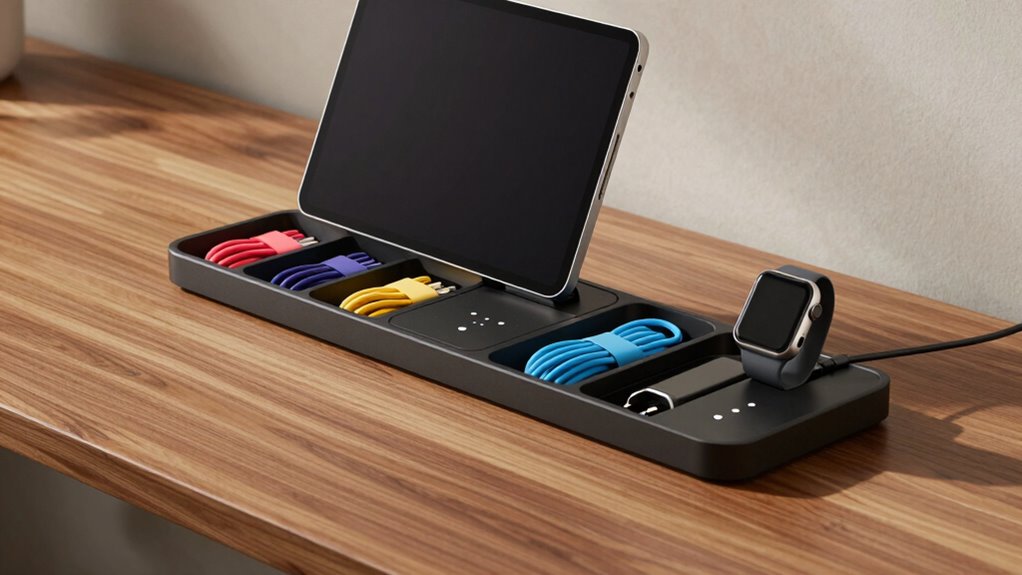
Creating a well-organized charging station can transform how you power up your phones, tablets, and wearables, making daily routines smoother. The key is to design a space where everything has its place, reducing clutter and frustration. Wireless charging plays a significant role here, allowing you to eliminate the jumble of cables and keep your devices charged effortlessly. By incorporating wireless chargers into your station, you can simply lay down your phone or wearable device without fumbling with cords. This not only saves time but also keeps your space looking tidy and modern.
Cable management is crucial to achieving this clean setup. Invest in cable clips, sleeves, or dedicated organizers that keep cords neat and out of sight. Instead of leaving tangled wires sprawled across your desk or bedside table, route them through designated channels or behind furniture. This approach prevents accidental unplugging and makes it easier to find the right cable when you need it. When using multiple devices, label cables or use color-coded ties to quickly identify which cord belongs to which device. Proper cable management reduces clutter, minimizes wear and tear on cords, and creates a visually appealing space. Additionally, understanding the contrast ratio of your cables and chargers can help ensure your devices receive consistent power without flickering or interruptions. Incorporating sound science principles in your setup can also help you choose the most efficient and safe charging options. Ensuring your setup adheres to electromagnetic compatibility standards can further enhance safety and device performance.
Frequently Asked Questions
What Materials Are Safest for DIY Charging Station Construction?
You should choose materials that balance material durability and aesthetic appeal for your DIY charging station. Opt for sturdy woods like maple or oak, which are durable and look attractive. Acrylic or tempered glass also work well, offering durability and sleek design. Avoid cheap plastics that may crack or degrade over time. These materials guarantee your station stays functional and visually appealing, providing a safe and long-lasting solution for your devices.
How to Prevent Overheating in a Charging Station?
To prevent overheating, you should guarantee proper ventilation, use heat-resistant materials, and avoid overloading your station. Keep devices spaced out to promote airflow, select power-efficient components, and opt for a cooling fan if needed. Doing so preserves battery lifespan, boosts power efficiency, and maintains safety. Regularly inspect your station for signs of heat buildup, and adjust your setup accordingly to keep everything cool and functioning at its best.
Can I Include Wireless Charging Pads in My Station?
Yes, you can include wireless charging pads in your station. Make sure your station has wireless compatibility, allowing devices to charge without cords. Place the charging pads strategically, considering ease of access and safety. Position them on flat, stable surfaces to prevent slipping and overheating. By planning the placement carefully, you’ll create a more efficient, organized charging station that keeps all your devices powered and ready to go.
How to Organize Cables for Minimal Clutter?
You can organize cables for minimal clutter by investigating the effectiveness of cable management tools, which truly do streamline your space. Use cable clips or sleeves to bundle cords neatly, and position a power strip with multiple outlets to centralize charging. This reduces tangles and keeps everything easily accessible. Proper cable management and power strip organization make your station look tidy, functional, and safer, ensuring your devices charge efficiently without the mess.
What Safety Measures Are Essential for a Family-Friendly Station?
To make your charging station family-friendly, start with child-proofing tips, like securing cables out of reach and using covers on outlets. Use secure mounting methods to attach chargers and power strips safely, preventing tipping or pulling. Keep sharp edges covered and guarantee cords are organized to avoid tripping hazards. Regularly check for wear and tear, and educate children about safe device use. This creates a safe, accessible space for everyone.
Conclusion
Think of your charging station as a well-tended garden, where each device is a precious plant. When you nurture it with organization and the right setup, it flourishes, staying healthy and vibrant. A thoughtfully designed station keeps chaos at bay and guarantees your devices are always ready to bloom at a moment’s notice. With a little care and planning, your charging station becomes a sanctuary—an oasis where technology and order grow hand in hand.