
TL;DR

Get the little things that make your day delivered free with Prime
- Fast, free delivery on millions of items
- Prime Video, Amazon Music and more included
- Member-only deals all year
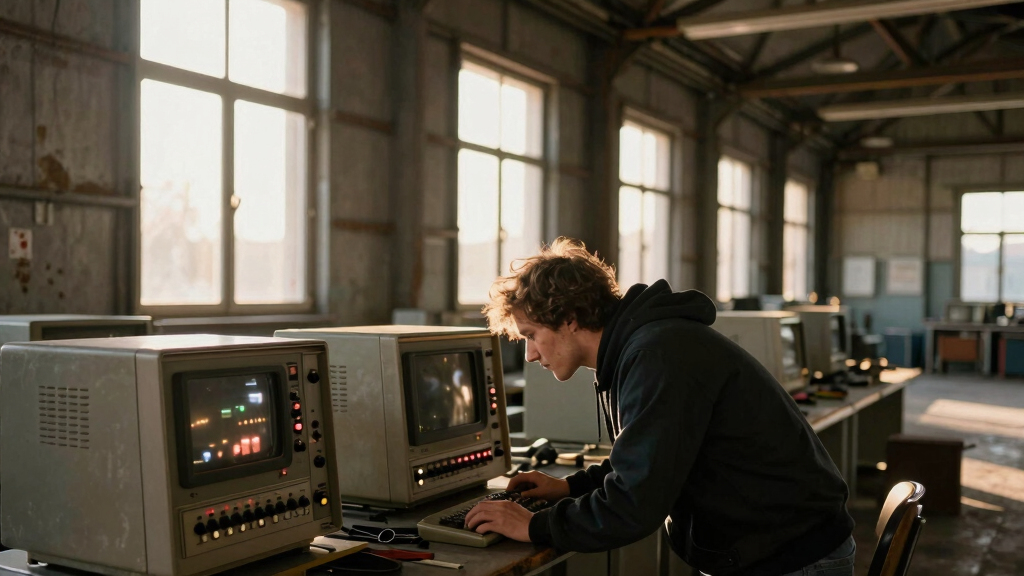
A warehouse in Castrop-Rauxel, Germany, contained hundreds of Cold War-era computers from Eastern Europe, along with documentation and hardware. The discovery was made by U.S. museum curators and highlights a previously unknown collection.
U.S. museum curators confirmed the discovery of a large collection of Cold War-era computers from Eastern Europe in a warehouse in Castrop-Rauxel, Germany, highlighting a significant, previously undocumented archive of historical technology.
On July 26, 2006, the Computer History Museum’s curators Dag Spicer and Alex Bochannek traveled to Germany after receiving an anonymous tip about a warehouse containing rare computing artifacts. Inside a three-story hangar, they uncovered hundreds of items spanning from the 1930s punched card systems to Cold War-era Eastern Bloc computers, including hardware from Soviet Bulgaria, East Germany, and other Eastern European countries.
The collection included mainframes, minicomputers, disk drives, punch card equipment, and documentation from major manufacturers like IBM, Siemens, and Telefunken. Notably, the warehouse housed analog, hybrid, and digital systems, many in surprisingly good condition, along with media such as magnetic tapes, punch cards, and paper tapes. The collection appears to have been assembled by Professor Walter Ameling, associated with RWTH Aachen University.
Over ten days, the curators cataloged and evaluated more than 1,000 objects, some destined for transfer to the Museum’s collection in California. During the visit, they also encountered a WWII unexploded bomb, which was safely removed by German military ordnance disposal teams.
Implications for Cold War and Computing History
This discovery provides a rare glimpse into the hardware and documentation of Eastern Bloc computing technology during the Cold War, a period with limited access to Soviet and Eastern European systems. It offers valuable insights into the technical capabilities and industrial efforts of these countries, which have been largely undocumented or lost.
The find enhances understanding of how Eastern European nations developed and maintained their computing infrastructure, and it may influence future research into Cold War history and computing evolution. Additionally, the collection’s preservation could lead to new scholarly work and public exhibitions, filling a significant gap in the historical record.
Cold War vintage computer hardware
As an affiliate, we earn on qualifying purchases.
As an affiliate, we earn on qualifying purchases.
Historical Context of Cold War Computing Collecting
During the Cold War, Western nations had limited access to Eastern Bloc technology, and much of their computing infrastructure and hardware was either destroyed or remained classified. While some systems have been recovered or preserved in Eastern Europe, comprehensive collections have been rare. The discovery in Germany sheds light on the extent of technological development and the efforts of Eastern European countries to build their own computing industries, often parallel to Western advances.
Prior to this find, most knowledge about Soviet and Eastern European computers came from scattered reports, declassified documents, and a few preserved artifacts. The collection in Castrop-Rauxel appears to be one of the most extensive holdings of its kind, offering a new perspective on the technological landscape of the Cold War era.
“This collection is a treasure trove that offers unprecedented insight into Cold War-era computing in Eastern Europe.”
— Dag Spicer, CHM Curator
Unresolved Questions About Collection Origins and Scope
It remains unclear how extensive the collection is beyond what has been documented during the visit, or whether additional artifacts are stored elsewhere. The full history of how and why the collection was assembled by Professor Ameling is also not yet confirmed. Additionally, the precise extent of the collection’s completeness and whether it includes all major systems from the era is still under investigation.
Next Steps for Preservation and Research
The curators plan to transport the verified artifacts to the Computer History Museum in Mountain View for detailed cataloging, preservation, and potential exhibition. Further research will focus on understanding the provenance of the collection, its historical context, and its significance for Cold War technology studies. Scholars and historians may also be invited to analyze the hardware and documentation in upcoming exhibitions or publications.
Key Questions
How significant is this collection for Cold War history?
This collection provides rare physical evidence of Eastern Bloc computing technology, filling a major gap in Cold War history and offering insights into the technological efforts of Eastern European countries during that period.
Are all artifacts from the Cold War era?
The collection includes artifacts from the 1930s through the 1980s, covering pre-war, wartime, and Cold War periods, with a focus on systems from Eastern Europe.
What is the condition of the hardware found?
Most hardware was in surprisingly good condition considering its age, with some needing restoration. Media such as tapes and punch cards varied from water-damaged to well-preserved.
Will the collection be publicly accessible?
The artifacts are expected to be transferred to the Computer History Museum, where they will be studied, preserved, and potentially displayed in future exhibitions.
How was the collection assembled originally?
It is believed to have been assembled by Professor Walter Ameling, but the full history and purpose of the collection are still under investigation.
Source: Hacker News
Halloween Picks
halloween
As an affiliate, we earn on qualifying purchases.