

A better chair setup supports your comfort, posture, and recovery by ensuring proper alignment of your spine, neck, and shoulders. When you adjust your seat height, lumbar support, and support cushions, you reduce muscle tension and strain, making long periods of sitting more comfortable. Durable, ergonomic designs help maintain these benefits over time. By optimizing your chair, you can enjoy improved relaxation and health. Keep exploring to discover how to make these adjustments work best for you.

Get the little things that make your day delivered free — and shop member deals
- Fast, free delivery on millions of items
- Access to Prime Big Deal Days deals on October 6–7
- Prime Video, Amazon Music and more included
Key Takeaways
- Proper ergonomic chair setup ensures better posture, reducing strain and discomfort during extended reading, resting, and recovery periods.
- Adjustable lumbar and support features promote natural spinal alignment, preventing long-term back and neck issues.
- Correct seat height and support improve circulation and comfort, facilitating relaxation and sustained periods of rest.
- Durable, high-quality materials maintain ergonomic benefits over time, supporting ongoing health and recovery.
- Proper alignment and ergonomic design minimize muscle tension, enhancing overall comfort and promoting effective rest and recovery.
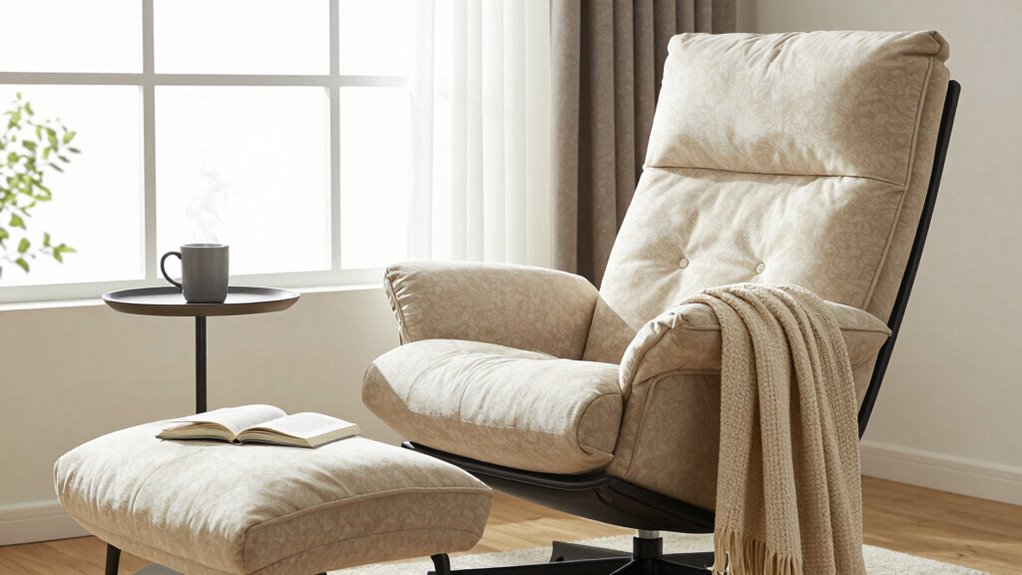
Ever wondered how your chair setup can impact your comfort and recovery while reading? The way you position yourself in your chair makes a big difference in how comfortable you feel and how effectively your body recovers after long periods of sitting. Making small ergonomic adjustments can notably improve your posture, reducing strain and preventing discomfort. When you fine-tune your chair, you’re actively supporting your spine, neck, and shoulders, which are often the first to suffer from poor posture. This means less muscle tension, fewer aches, and a more relaxing reading experience overall.
Proper chair positioning enhances comfort and recovery during extended reading sessions.
A good chair setup starts with your seat height. When you sit, your feet should rest flat on the floor, with your knees roughly at a 90-degree angle. If your feet don’t touch the ground, consider using a footrest. This simple ergonomic adjustment helps align your lower body, promoting better posture and stability. Your seat depth is also essential—make sure there’s a small gap between the back of your knees and the edge of the chair. This prevents pinching and allows for blood circulation, keeping you comfortable during extended reading sessions.
Next, focus on your back support. Your chair should have adjustable lumbar support that fits into the curve of your lower back. Proper lumbar support encourages posture improvement, preventing slouching and reducing strain on your spine. Sit back fully into the chair, ensuring your back is supported and your shoulders are relaxed. If your chair lacks built-in support, adding a small cushion or lumbar pillow can help maintain the natural curve of your spine, making your reading posture more ergonomic. Additionally, paying attention to ergonomic design principles can further optimize your comfort during long sitting periods. Being mindful of proper alignment can help you maintain these benefits and avoid long-term discomfort. Incorporating ergonomic principles into your setup ensures sustained comfort and health benefits over time. Moreover, choosing a chair with durability and quality materials can enhance your overall sitting experience and support better health during prolonged use.
ergonomic adjustable office chair
As an affiliate, we earn on qualifying purchases.
As an affiliate, we earn on qualifying purchases.
Frequently Asked Questions
How Often Should I Adjust My Chair During Extended Reading Sessions?
You should adjust your chair regularly during extended reading sessions, ideally every 30 to 45 minutes. This helps maintain proper posture correction and prevents strain. Check your cushion placement to guarantee comfort, and make small tweaks to your back and neck positions. Frequent adjustments keep your muscles engaged and reduce fatigue, so you stay comfortable and focused longer. Listening to your body is key for maximum support.
What Materials Are Best for Ergonomic Support in a Chair?
Imagine sitting comfortably during long reading sessions—that’s what the right materials can do. For ideal ergonomic support, choose a chair with adjustable lumbar support made from memory foam or high-density foam for cushioning. A cushion with moderate firmness offers enough support without sacrificing comfort. These materials help maintain proper posture, reduce strain, and promote better rest and recovery during your extended periods of sitting.
Can an Ideal Chair Setup Improve Sleep Quality?
An ideal chair setup can definitely improve sleep quality by promoting better sleep posture and enhancing rest ergonomics. When your chair supports your spine’s natural curve and keeps your body aligned, you reduce tension and discomfort that interfere with restful sleep. Adjusting your chair to fit your body helps you relax more deeply, leading to improved sleep quality. Prioritizing proper rest ergonomics creates a comfortable environment that fosters restorative sleep.
How Does Chair Height Affect Circulation During Rest?
A proper chair height promotes circulation improvement by keeping your legs and feet at a comfortable level, preventing blood flow restrictions. When your chair is too high or low, it can cause pressure points or hinder blood movement, disrupting your restful posture. Adjusting the height guarantees your body remains relaxed, supporting healthy circulation during rest. This way, you enhance comfort, reduce fatigue, and foster better recovery through an optimized seating position.
Are There Specific Chair Features Recommended for Back Pain Relief?
Ironically, your perfect back pain relief chair is simple—look for lumbar support that contours to your spine, providing essential pressure relief. Adjustable armrests help prevent shoulder strain, promoting better posture. These features work together to reduce discomfort, allowing you to read or rest longer. Investing in a chair with proper lumbar support and adjustable armrests isn’t just luxury; it’s a smart move for your back’s health and longevity.
Conclusion
Investing in a better chair setup truly makes a difference. When you prioritize proper support, you reduce the risk of discomfort and long-term health issues, allowing you to read, rest, and recover more effectively. Did you know that poor posture can lead to chronic pain, affecting up to 80% of adults at some point? By making simple adjustments, you can enjoy improved comfort and well-being—so why not start today? Your body will thank you.
Halloween Picks
halloween
As an affiliate, we earn on qualifying purchases.