
Raised garden beds make gardening easier and safer for you by reducing the need to bend or stoop, which can cause strain or injury. They improve accessibility, allowing you to work comfortably at a better height, and support longer gardening sessions without fatigue. With durable, eco-friendly materials, your beds last longer and require less maintenance. Plus, ergonomic tools help minimize effort and keep you comfortable. Keep going to discover how to make your garden even more enjoyable and safe.

Get the little things that make your day delivered free with Prime
- Fast, free delivery on millions of items
- Prime Video, Amazon Music and more included
- Member-only deals all year
Key Takeaways
- They reduce physical strain by minimizing bending and stooping during gardening tasks.
- Raised beds improve accessibility, allowing for easier reaching and movement.
- They support longer gardening sessions with less fatigue and physical discomfort.
- Durable materials ensure longevity and low maintenance, ideal for aging gardeners.
- Enhanced safety features decrease the risk of injury and promote a secure gardening environment.
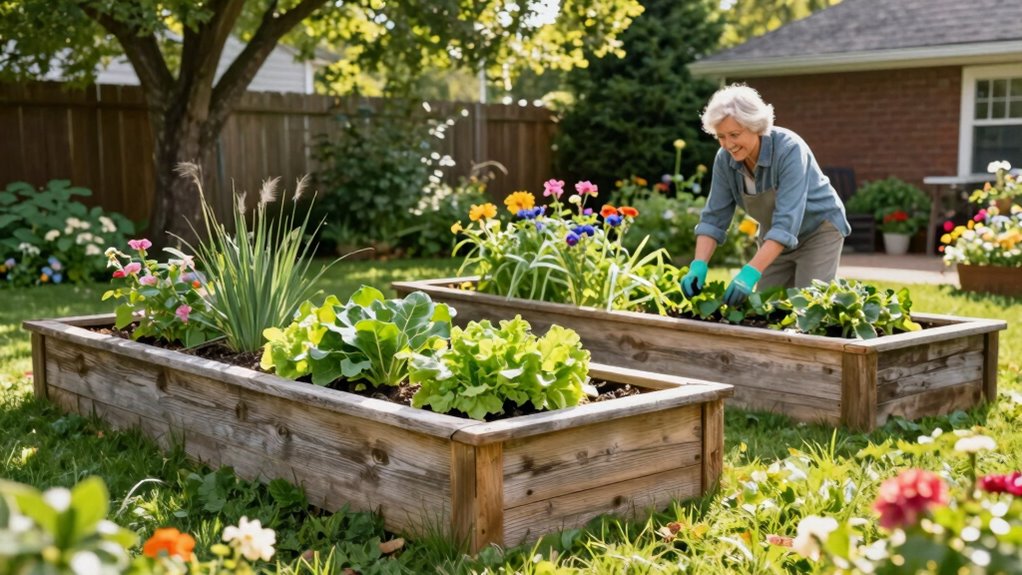
As you age, gardening can become more enjoyable and less physically demanding with the right setup. Raised garden beds are a game-changer, offering a level of comfort and accessibility that traditional ground plots often lack. When choosing your garden bed materials, you want options that are durable, low-maintenance, and safe for the environment. Cedar and composite materials are popular because they resist rot and pests, but there are also recycled plastics and metal options that last even longer. Selecting the right materials can significantly reduce the effort needed to maintain your garden, as well as minimize bending and stooping. This means less strain on your back and knees, making gardening more of a pleasure than a chore. Additionally, choosing durable materials can ensure your garden beds withstand the elements and continue to support your gardening goals for years to come. Using eco-friendly options can also contribute to a more sustainable garden environment.
In addition to the bed itself, ergonomic gardening tools play a crucial role in transforming your gardening experience. These tools are specially designed to reduce effort and improve comfort, which is essential as your mobility and strength change over time. Think about tools with long handles that allow you to work while standing or sitting, eliminating the need to bend over for extended periods. Tools with padded grips provide better control and reduce hand fatigue, letting you work longer without discomfort. Ergonomic tools also help you maintain proper posture, preventing strain and injuries. Incorporating raised garden beds can help improve your overall gardening ergonomics and accessibility, making your gardening experience more comfortable and sustainable over time. Additionally, being aware of family photoshoot fails related to unplanned mishaps can remind you to focus on creating a safe and enjoyable gardening environment, especially if young or pet family members are involved.
Frequently Asked Questions
Are Raised Beds Suitable for All Types of Soil?
Raised garden beds are suitable for most soil types because you can customize the soil mixture for ideal soil drainage and fertility. If your soil drains poorly, you can add sand or organic matter to improve it. For already fertile soil, you might need less amendment. This flexibility makes raised beds ideal for all soil types, ensuring your plants get the right environment to thrive, regardless of your garden’s natural soil conditions.
How Do Raised Beds Affect Weed Control?
Raised beds act as a shield, fighting weeds like a vigilant guardian. They substantially improve weed suppression by creating a barrier that prevents weed seeds from spreading easily. Plus, they reduce soil disturbance during planting and maintenance, which minimizes weed growth. As a result, you spend less time battling weeds and more time enjoying your garden. This setup makes gardening easier and more rewarding, especially for older gardeners seeking simplicity.
What Maintenance Is Required for Elevated Garden Beds?
You’ll want to regularly check your elevated garden beds for soil aeration, ensuring the soil stays loose and healthy. Remove any weeds promptly to prevent pest problems and maintain plant health. Keep an eye out for pests and pests’ damage, applying natural pest management methods when needed. Additionally, replenish nutrients with compost or organic fertilizers as necessary, and water consistently to keep your garden thriving, making maintenance manageable and effective.
Can Raised Beds Be Customized for Accessibility Needs?
Yes, raised beds can be customized for accessibility needs. You can choose adjustable height options to reduce bending and strain, making gardening easier and more comfortable. Pair these with ergonomic tools designed for comfort and grip, further easing physical effort. Customizing your raised beds this way creates a more inclusive gardening experience, allowing older gardeners or those with mobility challenges to enjoy gardening without discomfort or difficulty.
Do Raised Garden Beds Impact Plant Growth Compared to Ground Gardens?
Raised garden beds typically improve plant growth by enhancing soil drainage and root expansion. A study shows plants in raised beds grow 20% faster due to better conditions. You’ll notice healthier roots because the soil stays aerated, preventing waterlogging. This environment helps plants access nutrients more effectively, leading to stronger, more vigorous growth compared to ground gardens. So, raised beds can boost your garden’s productivity and plant health considerably.
Conclusion
Embracing raised garden beds gently eases the journey of gardening, making it more accessible and less taxing as years pass. They offer a welcoming space where your love for gardening can flourish without the weight of obstacles. With a little thoughtful change, you create a haven of beauty and tranquility, nurturing your passion while honoring the graceful passage of time. Your garden becomes a cherished sanctuary, a proof to your enduring spirit and gentle care.
NFL season / tailgating Picks
team gear
As an affiliate, we earn on qualifying purchases.