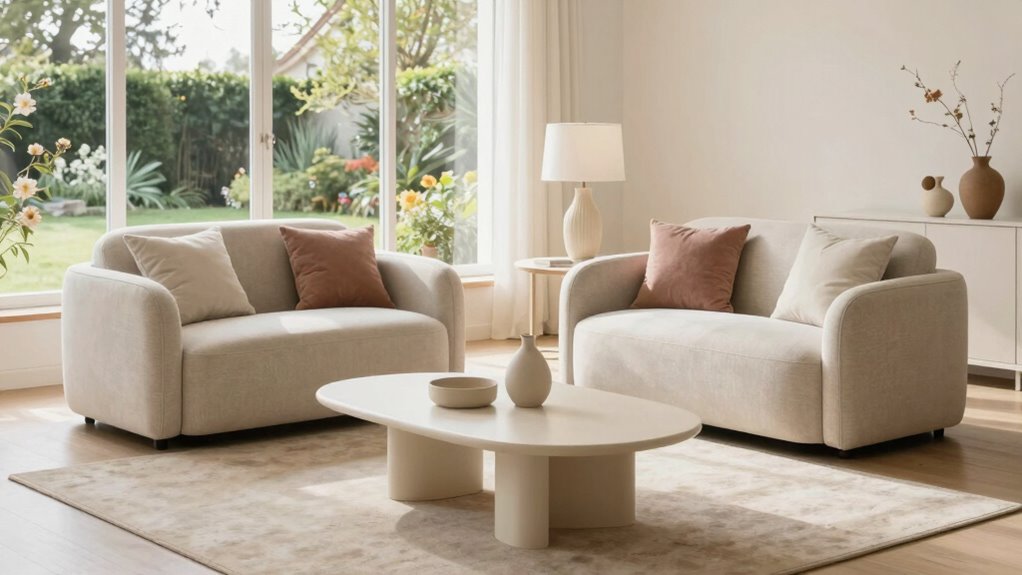

To create a space that’s both beautiful and functional for seniors, focus on ergonomic furniture with supportive cushions, adjustable heights, and rounded edges for safety. Incorporate smart technology like automated lighting and sensors for added convenience, and design with wider doorways, non-slip floors, and easy-to-operate handles. Choose warm colors and personalized decor to make the space welcoming. Keep exploring for more ideas on blending style seamlessly with safety and practicality.

Get the little things that make your day delivered free with Prime
- Fast, free delivery on millions of items
- Prime Video, Amazon Music and more included
- Member-only deals all year
Key Takeaways
- Incorporate ergonomic furniture with stylish designs, supportive cushions, and adjustable features for comfort and aesthetics.
- Use smart home technology like automated lighting and voice controls to enhance safety without compromising decor.
- Design wide doorways, non-slip flooring, and accessible hardware to ensure safety and ease of use while maintaining visual appeal.
- Add personalized decorative accents and artwork to create a welcoming, individual space that balances beauty and practicality.
- Integrate seamless, reliable technology solutions that support independence and safety, blending effortlessly with stylish interior elements.
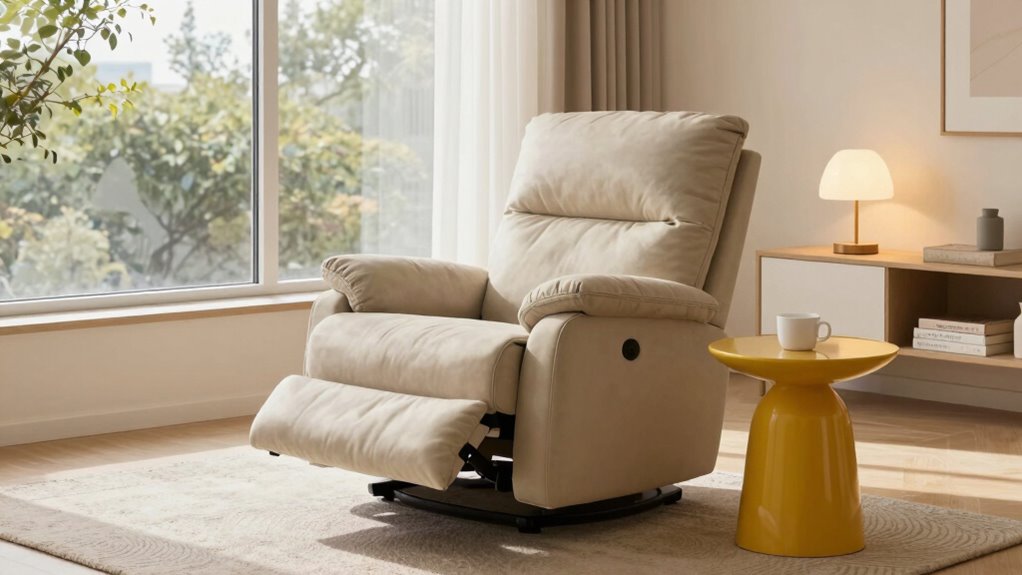
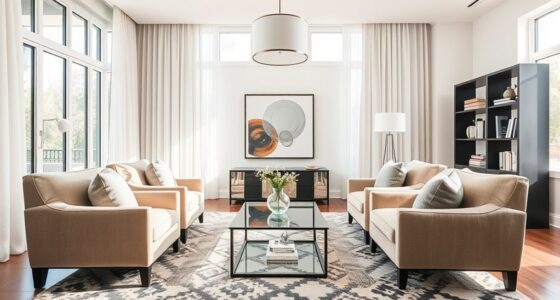
Designing spaces for seniors requires thoughtful consideration of comfort, safety, and accessibility. When you focus on creating a space that’s both beautiful and functional, you want to incorporate elements that support independence while enhancing aesthetic appeal. One effective way to do this is by choosing ergonomic furniture. This type of furniture is designed to support the body’s natural posture, reducing strain and discomfort. Think about chairs with supportive cushions, adjustable beds, and tables that are easy to reach without bending or stretching. These pieces make daily activities more comfortable and less tiring, helping seniors maintain their independence longer. Additionally, selecting furniture with rounded edges and stable bases minimizes the risk of accidents, giving you peace of mind.
Ergonomic furniture supports comfort and safety, helping seniors maintain independence with stylish, accessible design.
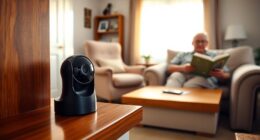
You can also leverage smart home technology to boost safety and convenience. Smart lighting that automatically turns on when you enter a room helps prevent falls at night, while voice-activated devices allow you to control lights, locks, and appliances without needing to move around too much. Installing smart sensors can alert caregivers if something unusual happens, like a fall or if a door is left open. These innovations seamlessly blend safety with modern design, making the space feel both secure and stylish. You don’t have to sacrifice beauty for functionality; today’s smart home tech comes in sleek, unobtrusive designs that complement any decor. Incorporating accessible features into your design is key, as they make navigation easier and reduce hazards.
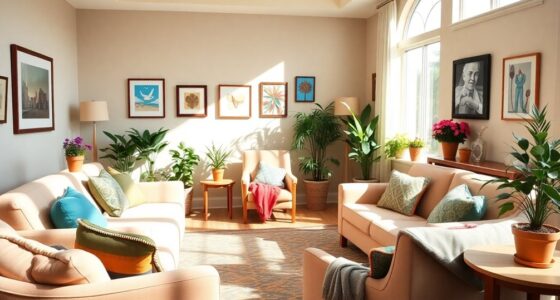
Wide doorways and hallways ensure easy navigation, especially for those with mobility aids like walkers or wheelchairs. Non-slip flooring minimizes the risk of slips and falls, while lever handles on doors and faucets are easier to operate than traditional knobs. Bright, natural lighting makes everything easier to see, reducing eye strain and creating a welcoming environment. Use warm, calming colors to foster a sense of comfort and tranquility, but don’t shy away from adding personal touches like artwork or decorative accents that reflect personality and style. Paying attention to universal design principles can further ensure that the space remains functional and inviting for everyone. Moreover, integrating technology-based solutions can enhance safety and ease of use for seniors who may have sensory or mobility challenges. Emphasizing molecular-level circuits in smart technology development can lead to more reliable and energy-efficient systems that benefit aging populations.
Ultimately, the goal is to craft a space that combines beauty with practicality. By choosing ergonomic furniture designed for comfort, integrating smart home technology for safety and convenience, and ensuring the environment is accessible, you create a home where seniors can thrive. It’s about making everyday life easier and more enjoyable without compromising on style. When you pay attention to these details, you turn a simple living space into a sanctuary that supports independence and celebrates personality.
Frequently Asked Questions
How Can Design Ideas Accommodate Varying Mobility Levels?
You can accommodate varying mobility levels by choosing ergonomic furniture that supports different needs and guarantees safety. Incorporate adaptive lighting to improve visibility and reduce fall risks, adjusting brightness as needed. Keep pathways clear and wide for easy navigation, and add grab bars or handrails where necessary. These design elements blend beauty with functionality, allowing seniors to move comfortably and confidently while maintaining an attractive living space.
What Safety Features Are Essential in Senior-Friendly Designs?
You should include essential safety features like smart lighting, which automatically adjusts to prevent falls and improve visibility, and non-slip flooring to reduce the risk of slips and falls. These features are vital in senior-friendly designs, ensuring safety without sacrificing style. Incorporate these elements seamlessly into your space to create an environment that’s both beautiful and safe, giving you peace of mind and independence.
How to Incorporate Technology Without Complexity?
You can make technology feel like a natural part of daily life by choosing intuitive options like smart lighting with voice control. These tools simplify routines without adding complexity, allowing you to adjust lighting effortlessly or turn on lights with a simple voice command. Focus on user-friendly devices that blend seamlessly into your space, making technology an unobtrusive yet helpful companion, enhancing both comfort and independence.
Are There Aesthetic Options Suitable for Small Spaces?
Yes, there are aesthetic options perfect for small spaces. You should choose compact furniture that maximizes your room without cluttering it. Bright color schemes, like soft pastels or light neutrals, make the space feel open and inviting. Mirrors can also create an illusion of more space. Combining these elements helps you enjoy a beautiful, functional environment that’s tailored to your needs, all while fitting comfortably into a cozy area.
How Can Designs Promote Social Interaction for Seniors?
You can promote social interaction for seniors by designing spaces that encourage community engagement, like cozy common areas or shared dining spaces. Incorporate sensory stimulation through vibrant colors, tactile textures, and interactive elements to spark conversations and participation. Arranging seating in circular or small group formations fosters connection, making it easier for seniors to engage with one another. Thoughtful design creates a welcoming environment that naturally invites social interaction.
Conclusion
So, after all these tips for blending beauty and function, you might think aging is just about sacrificing style. Ironically, embracing these thoughtful design ideas proves that elegance and practicality can coexist beautifully. It’s a gentle reminder that as you age, you don’t have to settle for the mundane. Instead, you can create a space that’s both stunning and sensible—showing that true beauty lies in smart, caring choices that serve you well, no matter your age.
Halloween Picks
halloween
As an affiliate, we earn on qualifying purchases.