
TL;DR
Play games included with Prime
Start a Prime free trial and play with Amazon Luna on your devices.
As an affiliate, we earn on qualifying purchases.
BYD plans to become the world’s largest automaker within five years, targeting over 10 million vehicles annually. This growth hinges on battery advancements, new models, and expanding global markets.
BYD Chairman Wang Chuanfu has publicly stated that the company aims to become the world’s largest automaker by volume within five years, exceeding 10 million units annually by 2028. This projection underscores BYD’s aggressive growth strategy amid ongoing technological and market expansion.
During a recent shareholder meeting, Wang Chuanfu indicated that BYD expects to achieve global leadership in vehicle production, contingent on maintaining an average annual growth rate of approximately 16.8%. The forecast assumes a decline in Toyota’s sales below 11.32 million units, which currently ranks as the world’s largest automaker.
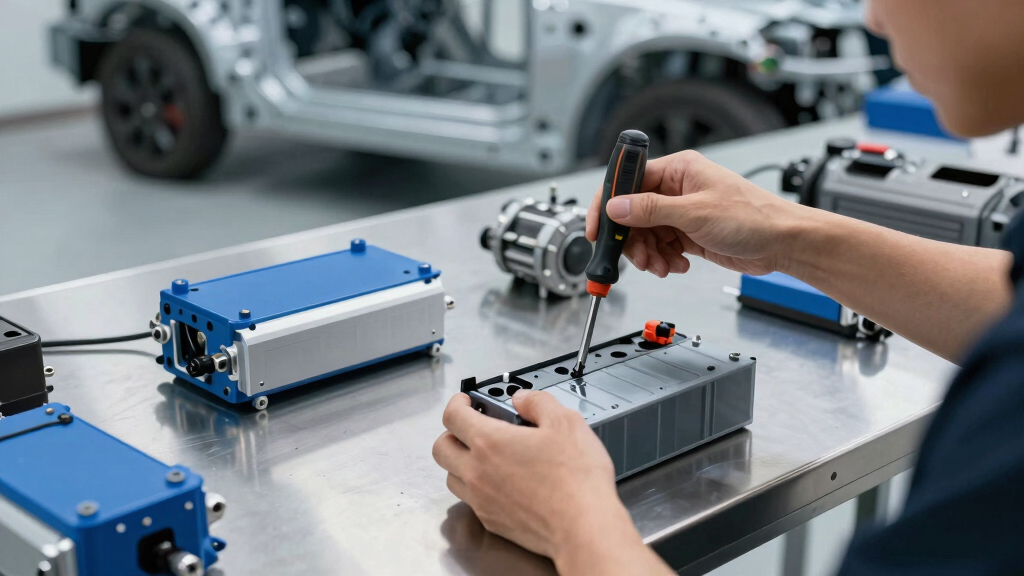
BYD’s growth is supported by significant advancements in battery technology, notably the ramp-up of their new Blade Battery 2.0, which is expected to boost production capacity by 20,000 to 30,000 units per month. The company also faces a major product transition that has temporarily suppressed sales in China but is anticipated to accelerate as new models like the Datang and Seal 08 are launched.
Executives highlighted that demand for BYD vehicles currently exceeds production capacity, with plans to increase localized manufacturing, including a new factory in Hungary set to start production in Q4. International expansion remains a core focus, with targets to surpass 1.6 million overseas vehicle sales by 2026, supported by new models tailored for foreign markets and faster charging infrastructure in regions like Europe and Australia.
Implications of BYD’s 5-Year Leadership Goal
This announcement signals BYD’s intent to challenge traditional automakers and dominate the global EV market, especially as it leverages advanced battery tech and rapid model rollout. Achieving this scale could reshape competitive dynamics, accelerate the global transition to electric vehicles, and influence supply chain investments worldwide.
For consumers, this could mean more affordable, technologically advanced EV options, particularly in China and emerging markets. For automakers, it presents a competitive challenge to innovate faster and scale more efficiently, potentially disrupting established industry leaders.
As an affiliate, we earn on qualifying purchases.
BYD’s Recent Technological and Market Developments
Over the past year, BYD has introduced several new models, including the Han, Datang, and Seal 08, with regulatory filings indicating upcoming launches. The company’s focus on battery innovation, especially the Blade Battery 2.0, has been central to its strategy of reducing costs and increasing range and safety.
Despite a temporary slowdown in Chinese sales due to the ongoing product transition, demand remains high, with over 100,000 pre-orders for the Datang alone. International expansion efforts include new manufacturing facilities in Hungary and plans for localized models in Europe and Japan. The company’s R&D workforce exceeds 120,000 engineers, enabling rapid development and deployment of new technologies.
“Five years from now, BYD will be able to achieve true global leadership in terms of scale.”
— Wang Chuanfu, BYD Chairman
Uncertainties Surrounding BYD’s Growth Timeline
It remains unclear whether BYD will meet its five-year target given potential supply chain disruptions, market competition, and technological hurdles. The timeline for widespread deployment of autonomous driving features and battery capacity ramp-up also lacks precise dates.
Additionally, the assumption that Toyota’s sales will decline significantly is speculative, and external factors such as regulatory changes or economic shifts could impact growth projections.
Next Steps in BYD’s Expansion and Technology Rollout
BYD will focus on increasing battery production capacity, launching new models like the Datang and Seal 08, and expanding its international manufacturing footprint. Monitoring the ramp-up of Blade Battery 2.0 and the deployment of autonomous driving features will be key indicators of progress toward their 2028 goals. Market responses and competitive actions over the coming year will also shape the trajectory of BYD’s global leadership ambitions.
Key Questions
Can BYD really become the largest automaker in five years?
While BYD’s leadership claims are ambitious, their growth projections depend on successful scaling of battery production, model launches, and market expansion. External factors could influence the timeline.
How will battery technology impact BYD’s growth?
The new Blade Battery 2.0 is expected to significantly increase production capacity and reduce costs, enabling BYD to supply more vehicles domestically and internationally, which is crucial for reaching their volume targets.
What markets are most critical for BYD’s global ambitions?
China remains the primary market, but expansion into Europe, Australia, and Japan is a key focus, with localized models and infrastructure investments supporting growth in these regions.
What challenges does BYD face in scaling up production?
Major challenges include retooling existing factories for new battery tech, supply chain constraints, and maintaining quality while rapidly increasing output. The company’s vertical integration helps mitigate some risks.
Will autonomous driving features be available soon?
BYD indicates that Level 3 and Level 4 autonomous driving will be implemented ahead of schedule, but no specific timelines have been provided, and regulatory approval remains a factor.
Source: CleanTechnica
NFL season / tailgating Picks
team gear
As an affiliate, we earn on qualifying purchases.