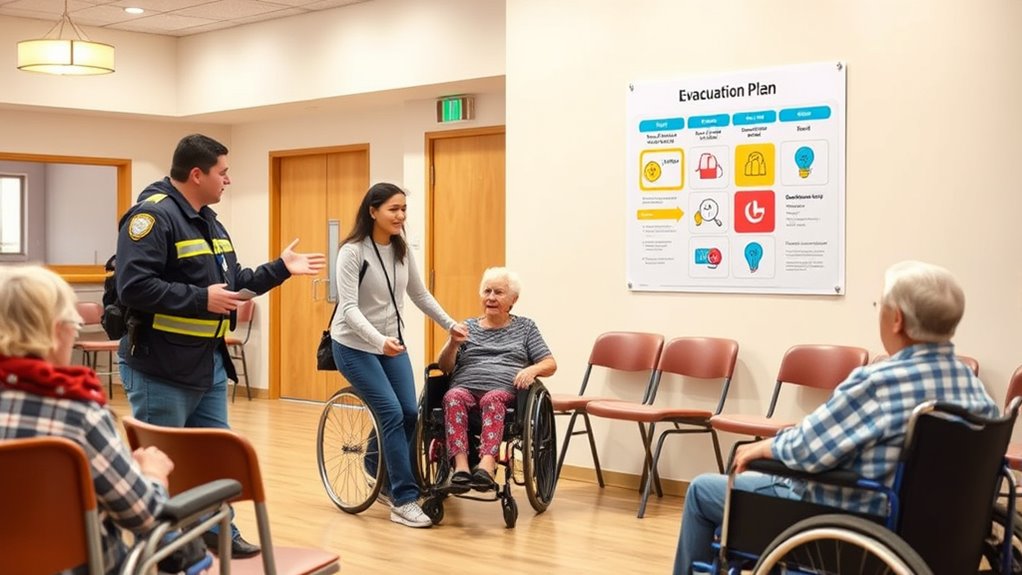

To effectively prepare for emergencies, organize your medical supplies and keep them accessible for quick use. Develop a clear evacuation plan with communication strategies, including contacts and backup methods, in case of power or equipment failure. Regularly practice emergency drills and update your plan to stay confident and adaptable. Ensuring your supplies and procedures are current helps reduce stress during crises. Keep exploring to learn more ways to strengthen your senior emergency preparedness plan.
Key Takeaways
- Develop a personalized evacuation plan including transportation, destination, and essential medical supplies tailored to seniors’ needs.
- Maintain organized, easily accessible medical supplies and mobility aids to ensure quick retrieval during emergencies.
- Establish clear communication strategies with emergency contacts, including backup methods for impairments and assistive devices.
- Regularly practice evacuation drills and role-playing scenarios to improve response confidence and identify potential gaps.
- Keep plans and supplies updated, and review them periodically to adapt to changing health conditions and ensure readiness.

Preparing for emergencies is essential, especially for seniors who may face unique challenges during evacuations. You need to plan thoroughly to ensure your safety and well-being in any crisis. One of the most critical aspects is assembling a well-stocked set of medical supplies tailored to your health needs. This includes prescription medications, first aid items, mobility aids, and any specialized equipment you rely on daily. Keeping these supplies organized and easily accessible means you won’t waste precious time during an emergency. Additionally, it’s smart to have extra supplies on hand in case evacuation takes longer than expected or if you’re separated from your main kit. Regularly review and update your medical supplies to make sure everything is current and functional.
Ensure your medical supplies are organized, accessible, and regularly updated for safe and efficient emergency evacuations.
Equally important are communication strategies that keep you connected with loved ones, caregivers, and emergency services. Developing a clear communication plan ensures you can quickly relay your location and needs during a crisis. This could involve setting up a list of emergency contacts, including neighbors, family members, and local authorities. Make sure your mobile phone is fully charged, and consider investing in a portable charger or a landline if possible. If you use any assistive devices like hearing aids or communication aids, know how to operate them under stress. You should also share your evacuation plan with trusted friends or family members so they understand your needs and can assist if needed.
Practicing your communication strategies regularly helps them become second nature, increasing your confidence and response efficiency. Role-playing emergency scenarios with family or caregivers helps you identify potential gaps and improves your response time. If you have hearing or vision impairments, ensure you have alternative methods of communication, such as visual signals or written notes. Keep emergency contact information, medical details, and your evacuation plan in a visible, easily accessible place—perhaps on your fridge or in a dedicated emergency kit.
Planning for emergencies isn’t a one-time task; it’s an ongoing process that requires attention and updating. The more prepared you are with your medical supplies and communication strategies, the more confident you’ll feel when an emergency strikes. Remember, the goal is to minimize stress and confusion, ensuring you can evacuate safely and efficiently. By taking these steps seriously, you’re better equipped to handle whatever nature or circumstances throw your way, securing your health and peace of mind during stressful times.
Frequently Asked Questions
How Often Should Evacuation Plans Be Reviewed for Seniors?
You should review evacuation plans for seniors at least once a year. Regular evacuation drills help guarantee familiarity and safety, while updating emergency kit planning keeps supplies current. Life circumstances, health changes, or new hazards might require adjustments, so consistent reviews are essential. By doing this annually, you help your loved ones stay prepared, confident, and ready to act quickly in any emergency.
What Special Transportation Options Are Available for Seniors During Emergencies?
You might find that special transport options, like wheelchair-accessible vans and med-van services, are available through local agencies to support senior mobility during emergencies. These services often coordinate with emergency responders, ensuring quick evacuation when needed. Having these options in place means you can navigate emergencies more safely and comfortably. Keep in mind, staying informed about available resources in your community can make a pivotal difference in your safety.
How Can Family Members Stay Informed About Senior Evacuation Procedures?
You can stay informed about senior evacuation procedures by maintaining open communication and using technology tools like emergency alerts and apps. Be aware of potential communication challenges seniors face, such as hearing or cognitive impairments, and adjust accordingly. Regularly check local government updates, sign up for community alerts, and keep a list of contacts. Staying proactive ensures you’re prepared to respond quickly and effectively during emergencies.
What Common Obstacles Do Seniors Face During Evacuations?
You’ll notice seniors often face obstacles like mobility challenges, making it hard to move quickly or access transportation during evacuations. Cognitive impairments can also cause confusion or forgetfulness, delaying their response or leading to safety risks. To help, you should plan ahead, guarantee clear communication, and arrange assistance. Addressing these obstacles proactively can make evacuation safer and less stressful for your loved ones.
Are There Financial Resources to Assist Seniors With Emergency Preparedness?
Did you know that over 60% of seniors worry about emergency costs? You can find financial aid and emergency grants specifically designed to help seniors prepare for emergencies. Local agencies, nonprofits, and government programs often offer these resources to cover evacuation expenses or safety supplies. By applying for these grants, you can alleviate the financial burden and ensure you’re better prepared for unexpected events.
Conclusion
You can prepare, you can plan, and you can stay safe. By creating clear evacuation routes, assembling essential supplies, and staying informed, you take control of your safety. Practice your plans regularly, communicate with loved ones, and stay alert to updates. Remember, preparation builds confidence, confidence saves lives. Your proactive steps guarantee you’re ready to face emergencies, protect yourself, and help others. Stay vigilant, stay prepared, and prioritize your safety every day.