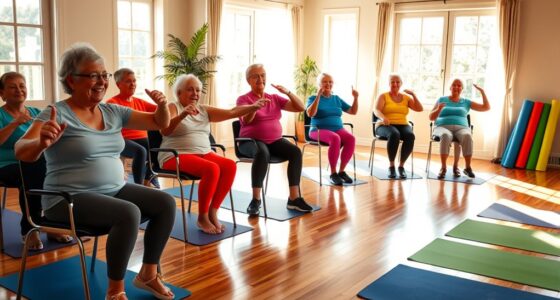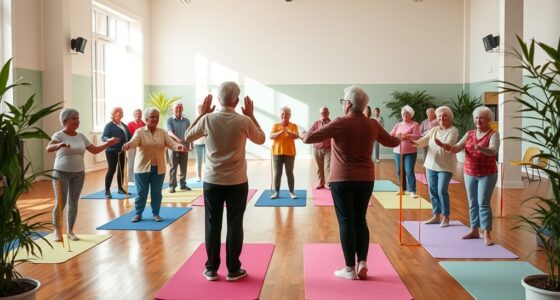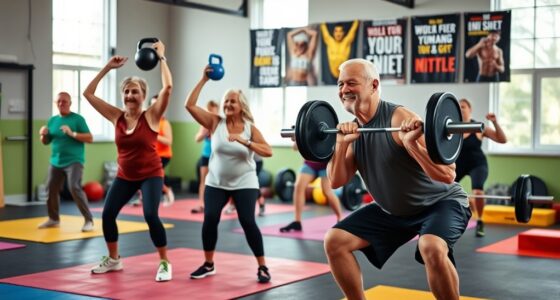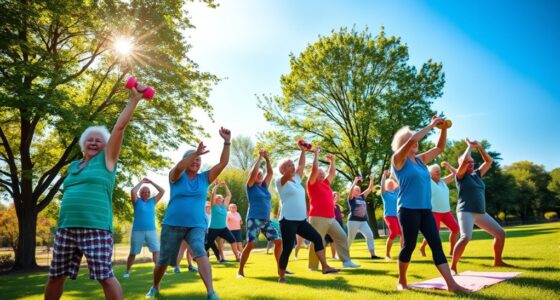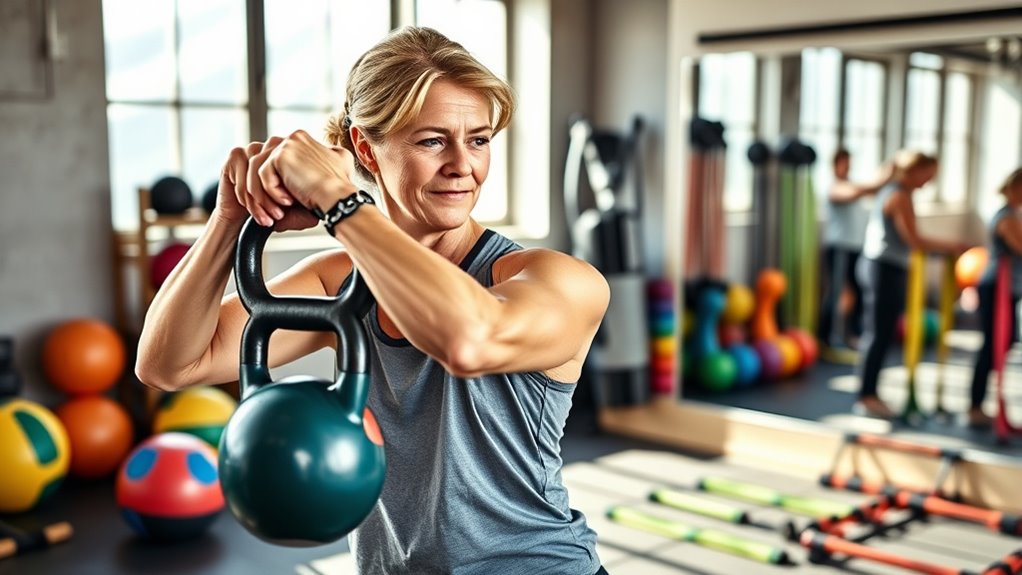

Functional fitness training improves your daily living skills by focusing on natural movements that mimic real-life activities like lifting, bending, and reaching. It boosts your strength, balance, and posture, helping you perform everyday tasks more safely and efficiently. This type of training also reduces injury risk and builds core stability, making daily motions easier and safer. Keep going, and you’ll discover how combining these skills can transform your overall movement and health.
Key Takeaways
- Enhances movements that mimic daily tasks, making chores like lifting and bending easier and safer.
- Corrects posture to reduce discomfort and support proper body alignment during everyday activities.
- Develops balance and stability, decreasing fall risk and improving coordination for daily movements.
- Integrates posture and balance training to build a strong, aligned body capable of handling real-life tasks.
- Promotes long-term health, injury prevention, and confidence in performing daily living activities effectively.
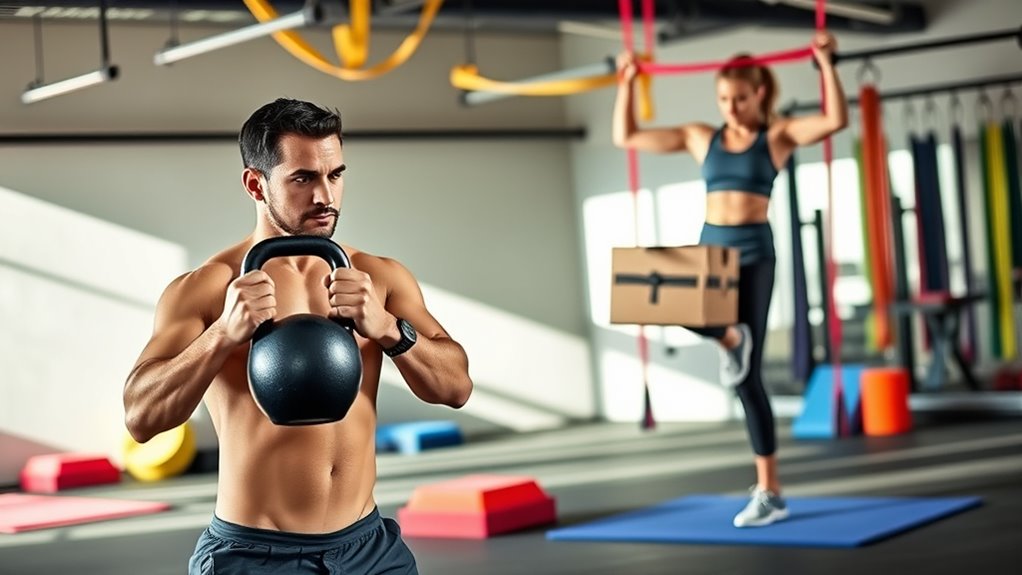
Have you ever wondered how to improve your daily strength and mobility? Functional fitness training is designed to do just that by focusing on movements that mimic real-life activities. It helps you become more capable of handling everyday tasks with ease, whether it’s lifting groceries, climbing stairs, or bending down to pick something up. One of the key benefits of this type of training is that it emphasizes exercises that enhance your body’s natural movements, making everyday motions safer and more efficient.
A vital aspect of functional fitness is posture correction. Poor posture can lead to discomfort, pain, and even injuries over time. When you incorporate posture correction exercises into your routine, you help realign your spine and strengthen the muscles that support good posture. This not only reduces strain on your neck, back, and shoulders but also improves your overall balance. Better posture means your body operates more efficiently, reducing fatigue and preventing long-term issues. As you work on posture correction, you’ll notice that everyday activities become less tiring, and you’ll stand taller and more confidently.
Balance training is another cornerstone of functional fitness. It’s not just about standing on one leg; it’s about developing stability and coordination that translate into real-world situations. Improving your balance helps prevent falls, especially as you get older, and enhances your ability to perform complex movements safely. Balance exercises challenge your core, legs, and stabilizer muscles, making your entire body more coordinated. Incorporating simple moves like standing on one leg, heel-to-toe walks, or using balance boards can greatly boost your stability. Over time, this training improves your proprioception—the sense of where your body is in space—making you more agile and reducing the risk of accidents.
When you combine posture correction and balance training within your functional fitness routine, you’re addressing core issues that affect daily movements. These elements work together to build a stronger, more aligned, and more stable body. This leads to better performance during everyday tasks and reduces the likelihood of injury. The beauty of functional fitness is that it emphasizes practical strength, which means the exercises you do are directly applicable to your daily life. You’ll find yourself more confident when lifting, bending, or reaching, knowing your body is conditioned for those movements.
In short, by integrating posture correction and balance training into your fitness regimen, you’re investing in a healthier, more capable body. It’s about making your daily activities easier, safer, and more enjoyable. Consistent practice can also help prevent injuries related to poor posture and imbalance, ensuring long-term health and mobility. You’ll notice improvements not just in your strength but in your overall sense of well-being and mobility.
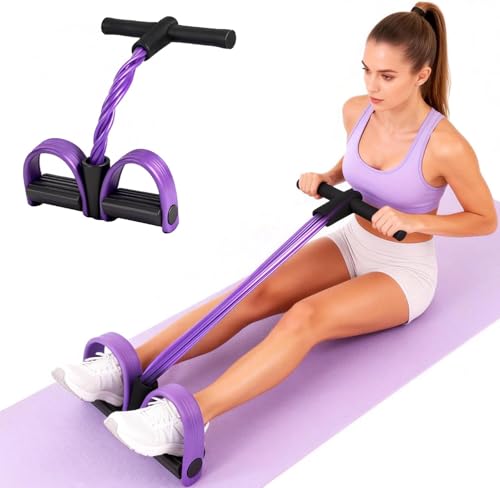
Multifunction Tension Rope, 6-Tube Elastic Yoga Pedal Puller Resistance Band, Natural Latex Tension Rope Fitness Equipment, for Abdomen/Waist/Arm/Leg Stretching Slimming Training (Purple)
👍【6 TUBES PEDAL RESISTANCE BAND】- FateFan 6 tube pedal fitness ropeis made of enviromental foam, and tube is…
As an affiliate, we earn on qualifying purchases.
As an affiliate, we earn on qualifying purchases.
Frequently Asked Questions
Can Seniors Safely Participate in Functional Fitness Training?
Yes, seniors can safely participate in functional fitness training. It helps with fall prevention and maintains joint health, making daily activities easier and safer. Just guarantee you start with low-intensity exercises tailored to your abilities, and work with a qualified trainer or healthcare professional. Always listen to your body, progress gradually, and focus on proper form to avoid injuries and enjoy the benefits safely.
How Often Should I Perform Functional Fitness Workouts?
Did you know that your exercise frequency can make or break your progress? To see the benefits of functional fitness training, you should aim for 2 to 3 workouts per week, giving your muscles time to recover. Consistent workout scheduling helps you stay on track without risking injury. Listen to your body, and gradually increase intensity to maintain safety and effectiveness.
Are There Specific Exercises for Improving Balance and Stability?
Yes, you can improve your balance and stability with specific exercises. Incorporate balance exercises like single-leg stands, heel-to-toe walks, and stability drills such as planks and bridge holds. These target your core and leg muscles, enhancing proprioception and coordination. Regularly practicing these exercises will help you develop better stability, reduce fall risk, and make daily activities easier and safer. Stay consistent for the best results.
What Equipment Is Necessary for Effective Functional Fitness Training?
Did you know that 80% of adults experience back pain at some point? To effectively train for daily activities, you need versatile tools like resistance bands, dumbbells, or stability balls. Home equipment like these makes functional fitness accessible and adaptable. They help improve strength, balance, and mobility, so you can handle everyday tasks more easily. Start with simple, multi-use equipment to maximize your workouts and see real life benefits.
How Does Functional Fitness Differ From Traditional Strength Training?
You notice that functional fitness differs from traditional strength training because it emphasizes multi-joint movements that mimic daily activities, rather than isolating muscles like in hypertrophy training. While traditional methods focus on muscle isolation to increase size and strength, functional fitness prepares your body for real-life tasks by improving coordination, balance, and overall movement efficiency. This approach helps you perform daily tasks better, making your workouts more practical and applicable.

The Posture Reset: A Starter Guide to Improve Your Posture, Address Tech Neck, Ease Pain, and Work Better From Home
As an affiliate, we earn on qualifying purchases.
As an affiliate, we earn on qualifying purchases.
Conclusion
By embracing functional fitness training, you naturally enhance your daily living skills, making everyday tasks feel easier and more manageable. It’s almost like life itself aligns to support your efforts, as improvements often surprise you when you least expect them. With consistent effort, you might find that the small changes ripple into unexpected benefits, quietly transforming your approach to routine activities. In the end, it’s a reminder that your journey toward better fitness can effortlessly intertwine with life’s own unpredictable harmony.
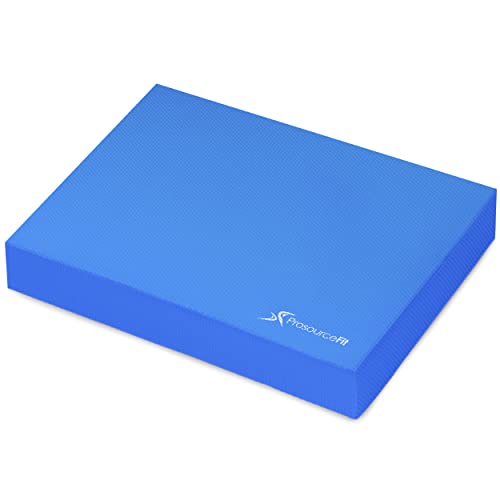
ProsourceFit Exercise Balance Pad – Non-Slip Cushioned Foam Mat & Knee Pad for Fitness and Stability Training, Yoga, Physical Therapy 15.5”x12.75”, Blue
IMPROVE BALANCE & STRENGTH – Foam creates unstable surface for working on balance & core strength, which also…
As an affiliate, we earn on qualifying purchases.
As an affiliate, we earn on qualifying purchases.
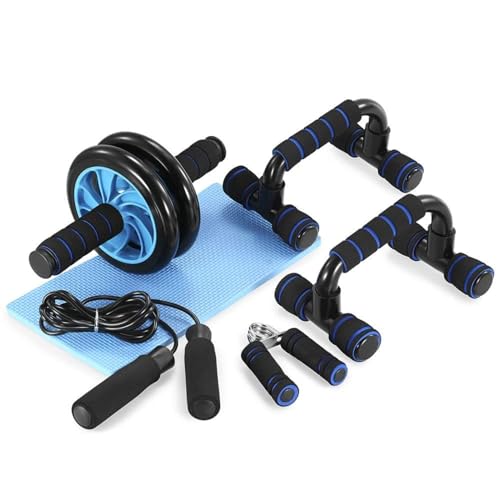
TOMSHOO AB Wheel Roller Kit with Push-Up Bar, Knee Mat, Jump Rope and Hand Gripper – Home Gym Workout for Men Women Core Strength & Abdominal Exercis
5 IN 1 HOME WORKOUT EQUIPMENT: The TOMSHOO ab wheel roller kit includes an Adjustable Jump Rope, Hand…
As an affiliate, we earn on qualifying purchases.
As an affiliate, we earn on qualifying purchases.