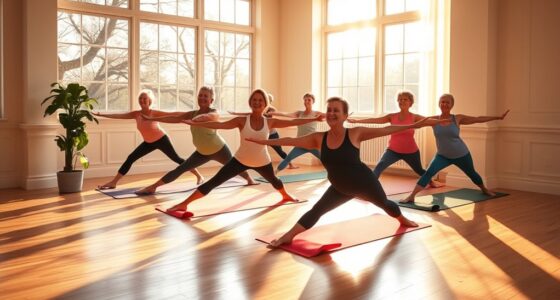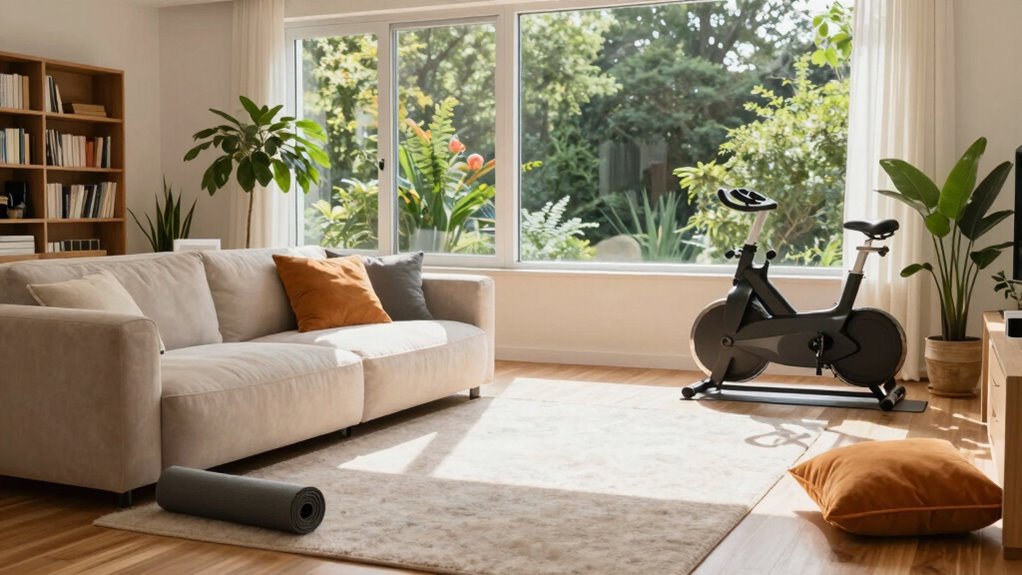

To encourage more daily movement at home without feeling pressured, incorporate ergonomic furniture like standing desks and supportive chairs to promote natural movement and posture. Create designated active zones with simple equipment, and reconfigure your space to allow open pathways for spontaneous stretching or walking. Keep essentials within easy reach and design pathways that invite effortless movement. Small changes in your environment can make a big difference—discover more tips to seamlessly integrate activity into your routine.
Key Takeaways
- Incorporate ergonomic furniture and standing desks to promote natural movement without feeling forced.
- Designate active zones with simple equipment like yoga mats or resistance bands for spontaneous activity breaks.
- Rearrange furniture to create open spaces that encourage stretching, leg lifts, or light exercises throughout the day.
- Use visual and physical cues, such as accessible items and clear pathways, to motivate movement seamlessly.
- Optimize lighting, layout, and flow to make movement intuitive and effortless within your home environment.

Creating a home that naturally encourages more daily movement doesn’t mean you have to overhaul your entire space or add complicated equipment. Instead, focus on subtle changes that promote activity without making your environment feel cluttered or overwhelming. One effective way is to incorporate ergonomic furniture, which supports proper posture and comfort, making it easier to stay active throughout the day. For example, swapping out your regular desk chair for an ergonomic office chair can encourage better movement during work hours, reducing stiffness and fatigue. Standing desks are another great addition, allowing you to alternate between sitting and standing, which keeps your muscles engaged and your energy levels high.
Beyond furniture, creating designated active zones within your home can make a surprising difference. An active zone is a specific area where movement is encouraged—think of it as a dedicated space for stretching, light exercises, or quick activity breaks. You might set up a corner with a yoga mat, resistance bands, or even a small step platform. This zone becomes a visual cue that movement is part of your daily routine, making it easier to integrate small bursts of activity into your day. You don’t need a large room; even a small, well-organized corner can serve as a go-to spot for quick exercises or stretching sessions.
Incorporating active zones also means rearranging your furniture to create open space. Move furniture aside when you’re not using it, leaving enough room to walk around freely and perform simple movements like lunges or leg lifts. Use lightweight furniture or modular pieces that can be easily shifted to create more room during active moments. When your environment invites movement rather than restricts it, you’ll find yourself naturally inclined to take short breaks, stretch, or do a quick set of exercises without feeling guilty or pressured. Additionally, understanding the importance of contrast ratio in projectors can help you create a comfortable environment for exercise and movement by managing lighting and visual clarity, which is essential for mental focus and motivation. Considering aspects like ergonomic principles when designing your space can further enhance comfort and encourage sustained movement habits. Incorporating knowledge of movement-friendly design can also guide you in making smarter choices that promote activity throughout your home.
Finally, think about the flow of your space. Design it so that movement is seamless and intuitive. For instance, place frequently used items like your water bottle, phone, or remote in spots that require a few steps to reach. This encourages you to get up and move instead of reaching while seated. Small door swings or pathways that facilitate easy movement between areas can make a significant difference in promoting activity. Simple changes like these, combined with ergonomic furniture and dedicated active zones, help transform your home into a space that promotes movement effortlessly, making it a natural part of your daily life rather than an added chore.
As an affiliate, we earn on qualifying purchases.
Frequently Asked Questions
How Can I Motivate Family Members to Stay Active at Home?
You can motivate family members by making movement fun and engaging, turning it into a shared activity. Address family challenges by setting achievable goals and celebrating progress together. Use motivation strategies like friendly competitions or rewards to encourage participation. Keep activities varied and flexible to suit everyone’s preferences. Your enthusiasm and support can inspire others to stay active at home without feeling pressured, fostering a positive, active lifestyle for the whole family.
What if My Space Is Too Small for Movement-Friendly Features?
Imagine you’re a modern-day Robin Hood, making the most of limited space. Even if your home feels like a shoebox, you can use compact furniture and create multi-use spaces to encourage movement. Fold-away desks, stackable chairs, and versatile zones let you stay active without extra room. By rethinking layout, you turn small areas into lively spots for stretching, dancing, or quick workouts — all without feeling cramped or pressured.
Are There Specific Furniture Choices That Promote Movement?
Opt for versatile furniture that doubles as movement-friendly pieces, like ottomans with storage or foldable tables. Choose open space layouts that prevent clutter and allow free movement. Keep pathways clear, and select multi-use furniture to maximize your space. By prioritizing furniture versatility and maintaining an open space, you make it easier to incorporate movement into your daily routine without feeling cramped or pressured.
How Do I Balance Movement Encouragement With Relaxation Areas?
Balancing movement encouragement with relaxation areas is like walking a tightrope over a canyon—delicate but doable. You should design your space with stretch zones for movement and flex zones for unwinding. Keep these zones distinct yet harmonious, maybe with movable furniture or rugs to switch between active and restful states. This approach guarantees you stay active without sacrificing the comfort of your relaxation areas, creating a home that nurtures both energy and calm.
Can Small Daily Changes Significantly Impact Overall Activity Levels?
Yes, small daily changes can markedly boost your overall activity levels. Incorporate quick exercise routines, like stretching or jumping jacks, into your day. Create designated movement zones in your home where you can easily switch between tasks and movement. These simple shifts make regular activity more accessible and enjoyable, encouraging you to stay active without feeling pressured, ultimately leading to a healthier, more dynamic lifestyle.
Conclusion
Think of your home as a gentle river, quietly guiding you toward more movement without demanding a surge of effort. By weaving small, inviting touches into your space—like a cozy walking trail or playful nooks—you create a haven that nudges you to move naturally and happily. When your environment feels like a supportive dance partner rather than a strict choreographer, daily activity flows effortlessly, turning your home into a sanctuary that encourages you to thrive with every step you take.